Top

Former PBOC Governor: CBDC Development Must Focus on Security

Policy & Regulation·October 17, 2023, 1:20 AM

Zhou Xiaochuan, a former governor of the People’s Bank of China (PBOC), has issued a call for China to prioritize security and vigilance against potential misuse as it advances the development of its central bank digital currency (CBDC), known as the e-CNY.

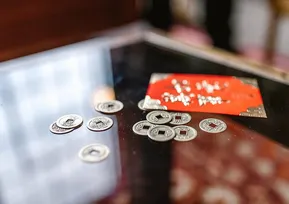
Photo by FLY:D on Unsplash


Safeguarding the CBDC ecosystem

Xiaochuan made this appeal during the Digital Finance Forum, which was held in Beijing last week. He emphasized the necessity of safeguarding the CBDC ecosystem.

The PBOC has been actively engaged in trials and innovations related to the e-CNY, even rolling out a pilot application in January 2022. The digital yuan’s journey, however, comes with significant responsibilities, particularly in terms of security and prevention of misuse.


Thwarting potential abuse

Zhou acknowledged that in the realm of finance, security has always been a paramount concern, and this sentiment couldn’t be more accurate when applied to the realm of digital currency. He stressed that, as technology costs continue to decline and systems become more user-friendly, the risks associated with misuse also decrease. In this context, it becomes imperative for China to adopt stringent security measures and robust regulatory frameworks to thwart any potential abuse.

Zhou underscored the illicit utilization of cryptocurrencies and stablecoins in facilitating various activities, including arms trafficking and drug trade. He pointed out that addressing these issues necessitates a concentrated effort, making it clear that a proactive approach to prevention is essential.

The development of the e-CNY has seen impressive progress, with pilot projects initiated in 2019 and later expanded to 26 locations across 17 provincial-level cities and regions, including major metropolitan areas like Beijing, Shanghai, Shenzhen, and Suzhou.

Last month another official from the PBOC spoke to the need to make the e-CNY accessible in all retail payment scenarios within China at a trade forum in Beijing. Digital yuan use is also being broadened to facilitate its availability in the special Chinese administrative area of Hong Kong.


Proposing two-tier system

Zhou advocated for a two-tier system in the operation of e-CNY, a structure already in place. The People’s Bank of China presides over the first tier, responsible for issuance and regulation, while the second tier comprises commercial institutions such as commercial banks, internet platforms, and telecommunications operators.

This dual-layered design promotes dynamic evolution within the digital currency landscape, enhancing service quality and fostering innovation through healthy competition. Zhou stressed the importance of exploring cross-border transactions, an area that entails both technological advancements and policy orientation.

Hong Kong has actively embraced e-CNY for cross-border payments, advancing into the second phase of technical testing and preparing to incorporate it into its predominantly local payment system.

On a related note, Lu Lei, the deputy administrator of the State Administration of Foreign Exchange (SAFE), highlighted the programmable features of CBDCs as tools for enhancing monetary policy effectiveness.

While current CBDCs are positioned as M0 currencies, strictly currency in circulation plus commercial bank reserve balances, he proposed that central banks could evolve them into M2 currencies. M2 is a measure of money supply that incorporates checking deposits and other forms of deposits that are readily convertible to cash, alongside cash itself.

More to Read
View All
Policy & Regulation·

Oct 29, 2025

EU bans Ruble-backed stablecoin A7A5 in latest round of Russia sanctions

The European Council has banned all transactions within the European Union (EU) involving the Russian Ruble-backed stablecoin A7A5, according to a press release published Oct. 23. The prohibition targets the stablecoin itself, its developer, its Kyrgyzstan-based issuer, and the operator of a platform that facilitates major A7A5 trades. The package also takes aim at Russian crypto exchanges.Photo by Christian Lue on UnsplashAdditional banking restrictionsThis measure is part of a broader set of economic sanctions against sectors the EU stated assist the Russian invasion of Ukraine, including energy, finance, and defense industries. As part of this financial clampdown, the EU will also impose a ban on five additional Russian lenders starting Nov. 12. One of those lenders, Alfa-Bank, recently began offering Bitcoin buying and selling services, according to an X post by journalist Pete Rizzo. The European body said the new crypto measures address Russia’s increasing use of digital assets to circumvent existing sanctions. Russian banks were cut off from the SWIFT international payment system in early 2022, following the onset of the Russo-Ukrainian war. Reports of Russia using cryptocurrency to finance malign activities have surfaced previously. Earlier this month, Sławomir Cenckiewicz, the head of the Polish National Security Bureau (BBN), told the Financial Times that Russia has employed crypto to finance attacks on EU countries. Cenckiewicz said that a network of agents recruited by Russia’s GRU military intelligence agency and uncovered in Poland in 2023 had been substantially funded with cryptocurrency. Reflecting this concern, lawmakers in Poland’s lower house approved a bill in September to strengthen national crypto oversight, a move also expected to help curb Russian funding channels. Cenckiewicz noted that Polish intelligence agencies are closely monitoring the legislation to prevent loopholes that allow foreign actors to support agents using digital assets. Russia’s evolving crypto policyThe EU’s action comes as Russia itself is attempting to refine its own cryptocurrency rules. According to the Moscow Times, Russia's central bank wants to limit cryptocurrency use strictly to cross-border payments within an experimental legal regime (ELR). The institution continues to reject recognition of cryptocurrency as a legal means of payment and has advocated banning its use for domestic payments and retail investment, while permitting trading only for high-net-worth individuals through licensed platforms. Russia’s finance ministry has expressed a more flexible view, pointing to the scale of crypto adoption among the public. Earlier this year, the central bank estimated that domestic crypto transactions exceeded 1 trillion rubles (about $12.4 billion) per month, and that as of March, wallets linked to Russian users held roughly 827 billion rubles (about $10.2 billion). The finance ministry and the central bank have agreed to tighten supervision of the crypto market, with officials expecting to finalize the new framework before the end of the year. 

news
Web3 & Enterprise·

Jul 27, 2025

OSL raises $300M to finance expansion

OSL Group, a Hong Kong-based publicly listed digital asset exchange platform, has raised $300 million to finance further expansion of the business.Photo by Towfiqu barbhuiya on UnsplashLargest publicly disclosed crypto equity raise in AsiaIn a press release published on July 25, the company claimed that it has completed the largest publicly disclosed equity raise to date within Asia’s digital asset sector. It suggested the funding signaled market confidence in the digital asset business model that the firm is pursuing.  OSL intends to allocate the funding across three primary areas. Acquisition opportunities are one core area the company plans to home in on. It says that it will continue its “aggressive global expansion drive” through a combination of licensing, partnerships and acquisitions.  As part of its global expansion strategy, last month the company acquired a 90% stake in Evergreen Crest Holdings, an Indonesian crypto exchange operator. In February, it rebranded CoinBest, a Japanese crypto exchange, as OSL Japan after acquiring it late last year. Stablecoin initiativesOSL plans to pursue new global business initiatives, including initiatives related to stablecoins and payments. It stated that it will accelerate its “build-out of global business and payment networks, integrating fiat currencies, stablecoins, and major digital assets.” The company feels that investment in infrastructure of this nature will facilitate its institutional and enterprise clients, giving them access to “secure, efficient, and seamless cross-border payment solutions.” The third core area it will allocate funding to is working capital. OSL believes that enhancing the strength and depth of its working capital will give the firm a competitive advantage over its rivals in terms of reach, coverage, scale and volume. The company’s Chief Financial Officer (CFO), Ian Wong, commented on this latest development, stating: "This US$300 million equity raise marks a major milestone in our journey and reflects strong conviction in OSL's digital asset strategy and execution.” OSL is already well established as a key player in the digital assets space in Hong Kong. Founded in 2003 as BC Technology Group, it later rebranded and in 2018 the company expanded its services to cater to the digital assets sector. In 2023, OSL, alongside rival HashKey, became the first digital assets companies in the Chinese autonomous territory to be licensed by the Securities and Futures Commission (SFC). Supporting spot crypto ETF issuersOSL supports asset management firms that have listed Bitcoin and Ether exchange-traded funds (ETFs) on the Hong Kong Stock Exchange (HKEX), through its staking and digital asset custody infrastructure. In April, the company was approved by the SFC to offer Ethereum staking services. In July 2024, the company claimed that 88% of spot digital asset ETF trading in Hong Kong had been carried out by firms that it has partnerships with. The timing of the announcement of this latest development is interesting, given that one of the focuses for the funds raised is to develop stablecoin-related business, against a backdrop of Hong Kong’s new Stablecoins Ordinance coming into effect in less than a week from now.Bloomberg reported last week that around fifty companies have expressed interest in obtaining stablecoin licensing in the city, with the local regulator and central banking institution, the Hong Kong Monetary Authority (HKMA), likely to issue ten licenses. 

news
Policy & Regulation·

Aug 09, 2023

Hong Kong’s SFC Issues Warning Against Unlicensed Crypto Platforms

Hong Kong’s SFC Issues Warning Against Unlicensed Crypto PlatformsIn a move to safeguard its financial ecosystem, the Hong Kong Securities and Futures Commission (SFC) issued a stern warning recently, cautioning against the activities of unlicensed cryptocurrency exchanges involved in what it termed “improper practices.”In a statement published to its website on Monday, the regulatory authority underscored the gravity of engaging in unlicensed operations within the crypto trading sphere, categorizing such activities as a “criminal offense” under Hong Kong jurisdiction.Photo by Chi Hung Wong on UnsplashDeceptive tacticsFurthermore, the SFC exposed the deceptive tactics employed by certain unlicensed crypto trading platforms, which misleadingly assert that they have submitted license applications to the commission. The reality, however, is quite the opposite, as these platforms remain unregulated.The warning coincides with the SFC's ongoing establishment of a novel regulatory framework for overseeing retail crypto trading. Notably, the SFC made it clear that applicants who fail to adhere to pertinent regulations might find themselves ineligible for licensing under the newly instituted regime.This initiative from the SFC aligns with the broader efforts undertaken by Hong Kong authorities to instill effective oversight and regulation within the cryptocurrency market. The primary objective remains the protection of investors’ interests and the preservation of the integrity of the overall financial system.Platforms must demonstrate ability to complyThe SFC emphasized, “VATPs (Virtual Asset Trading Platforms) which consider themselves eligible for deeming under the transitional arrangements are reminded that the SFC may decide that deeming is inapplicable if it does not see a reasonable prospect for the VATPs to successfully show that they are capable of complying with the applicable legal and regulatory requirements.”This development follows closely on the heels of Hong Kong’s recent announcement outlining plans to grant licensed cryptocurrency platforms the permission to cater to retail investors within the new regulatory framework.These comprehensive guidelines encompass critical facets such as cybersecurity protocols, asset custody safety standards, and the segregation of client assets. This regulatory evolution commenced on June 1, synchronizing with the launch of the novel licensing regime for virtual asset platforms.Drawing attention to the growing influence of the sector, it’s worth noting that in April, cryptocurrency exchange OKX registered an astonishing surge of over 10,000 new user sign-ups within a mere month of launching its operations in Hong Kong.Web3 implementationIn a recent tweet, Chris Lee, former CEO of both the Huobi and OKX crypto exchanges, said that “if Hong Kong wants to implement Web3 well, it still needs to complete the basic requirements, such as Web3 foundation laws and bills.” Lee added that “Hong Kong’s competitors will always be itself, not New York or Singapore.”The Hong Kong SFC’s warning to unlicensed crypto platforms is another step in creating the right foundation for Web3 in the city. It underscores the concerted effort to maintain a regulated and secure environment for cryptocurrency transactions within the Chinese autonomous territory.As the regulatory landscape continues to evolve, industry participants are gradually being compelled to adhere to the stipulated legal and compliance requirements in an effort to foster a robust crypto ecosystem.

news
Loading