Top

Japan’s Largest Airline Opens NFT Marketplace

Web3 & Enterprise·May 31, 2023, 12:29 AM

All Nippon Airways (ANA), Japan’s largest airline, has ventured into the world of Web3 by launching its own non-fungible token (NFT) marketplace through its subsidiary, ANA Neo.
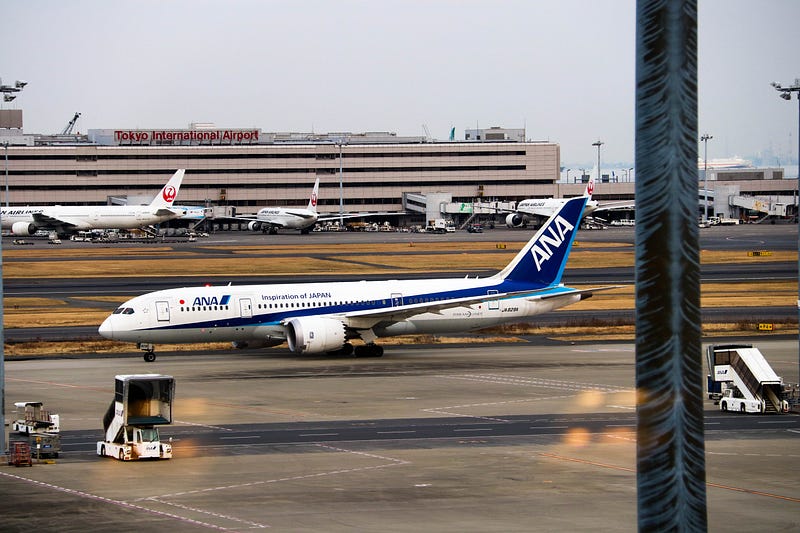
Photo by Marcus Ng on Unsplash


ANA GranWhale NFT marketplace

The newly introduced platform, called the “ANA GranWhale NFT Marketplace,” will showcase an exclusive digital art collection crafted by renowned aerial photographer Luke Ozawa.

The NFT marketplace commenced on Tuesday with the conversion of Ozawa’s first digital photograph into an NFT. One of these unique pieces will be auctioned alongside the positive film, which served as the source for the photo’s development. The starting price for this item is set at 100,000 yen, offering collectors the opportunity to acquire an NFT paired with a tangible artifact.

Following this initial collection, ANA plans to release its second batch of NFTs on June 7. This collection will feature the NFT rendition of the first Boeing 787 operated by ANA, presented in the form of a 3D model airplane. The offerings include a total of 1,574 items, comprising two types of 787 models, with each item priced at 7,870 yen.

ANA, a company with revenues of $12.2 billion in its previous fiscal year, aims to expand its NFT product line in the future. The airline envisions leveraging NFTs to enhance the customer experience and add value to its services.


Airline industry NFT Potential

The development of ANA Neo’s GranWhale initiative began in August of last year. The project focuses on creating a virtual travel platform that utilizes various technologies, including virtual reality (VR), to recreate destinations and cultures from around the world. These recreations take the form of metaverse parks, allowing users to explore and immerse themselves in virtual travel experiences.

ANA Neo President Mitsuo Tomita emphasized the significance of this venture, stating that the ANA GranWhale logo symbolizes the fusion of the virtual and the real, signifying the airline’s journey into the future, where Web3 and metaverse travel will become increasingly prevalent. “Through this initiative, we aim to unlock the potential of NFTs in the aviation industry, bringing together the digital and physical realms to create unique and memorable experiences that unite the world in wonder,” Tomita stated.


Club Toki NFTs

ANA is not the first Japanese airline to involve itself with the NFT space. Earlier this month, regional Japanese airline Toki Air announced the launch of Club Toki, a fan community centered around NFTs. The initiative claims that community members join by purchasing NFTs, and as NFT holders, they receive further club benefits. The NFTs can be purchased by credit card or payment in ETH, with the buyer needing a MetaMask wallet in order to receive the NFT.

In March, Argentinian low-cost airline Flybondi integrated Web3 into its ticketing process by issuing tickets as NFTs in a partnership with NFT ticketing firm, TravelX. With this initiative, Flybondi became the first airline to offer flight tickets as NFTs.

With its entry into the NFT marketplace, ANA joins the growing number of companies embracing Web3 technologies to offer unique digital assets and experiences. As the airline continues to develop its GranWhale platform, it seeks to cater to the evolving demands of the market and establish a presence at the intersection of aviation and the metaverse.
More to Read
View All
Web3 & Enterprise·

Nov 14, 2023

Covenant Labs and Haechi Labs join forces to integrate Web3 services into P2E game

Covenant Labs and Haechi Labs join forces to integrate Web3 services into P2E gameCovenant Labs, a subsidiary of South Korean smart city platform CityLabs, has signed a memorandum of understanding (MOU) with Haechi Labs, a blockchain service provider, to integrate Haechi Labs’s services into its Play-to-Earn (P2E) game Covenant Child and related non-fungible token (NFT) projects, thus expanding its presence in the blockchain ecosystem.Photo by ELLA DON on UnsplashElevating Web3 accessibility and securityThese services include Face Wallet — a non-custodial digital wallet geared towards onboarding Web2 users to Web3 — and Kalos, a blockchain and smart contract security audit service for Web3 enterprises.Face Wallet has gained recognition within the industry as a widely-used wallet across global blockchain mainnets, including Polygon, Solana, BNB, NEAR Protocol, Aptos and Avalanche.Notably, it addresses issues that users usually run into with traditional digital wallets like MetaMask, such as complicated login processes. It allows users to log in using their social media accounts, such as Google, Apple, X (formerly Twitter), Discord, Facebook and Kakao, without installing a separate wallet. Users can also enhance their wallet security through two-factor authentication (2FA) by setting a simple six-digit PIN code.Meanwhile, Kalos provides detailed and personalized security audit reports put together by security experts from around the world. The service specializes in areas like Solana Smart Contract, zero-knowledge proofs and Cosmos SDK.Enhancing the gaming experienceThese two services will be integrated into Covenant Child, which offers engaging content through both gameplay and game finance (GameFi). In particular, its GameFi system allocates two types of tokens — Covenant (COVN) and Child (CHLD) through P2E activities, such as mining compatible NFTs earned during gameplay.Covenant Labs CEO Jin Hyung-il and Haechi Labs CEO Moon Geon-ki expressed their anticipation for the agreement, stating that their respective companies would aim to provide gamers with a stepping stone to easily onboard Convenant Labs’ gaming ecosystem and gain access to various user-friendly services.

news
Policy & Regulation·

Nov 19, 2025

Hong Kong advances tokenization as institutions continue building amid market pullback

Hong Kong last week entered the pilot phase of Project Ensemble, an initiative focused on developing infrastructure for a tokenized market and creating a sandbox where institutions can test blockchain systems in real business environments. Set to run through 2026, the pilot involves the Hong Kong Monetary Authority (HKMA), several banks, and other industry participants. Its early work will examine how tokenized deposits can be used in money market fund transactions and how these tools might support real-time liquidity and treasury management. Interoperability key to tokenizationCommenting on the development, Hong Kong Securities and Futures Commission (SFC) CEO Julia Leung said, “To scale tokenisation of investment products, interoperability is key.” She added that the measure announced on Nov. 13 by the HKMA “will gradually allow interbank settlement of tokenised deposits in real time 24/7.”Photo by Ibrahim Rifath on UnsplashFollowing the HKMA’s announcement, Ant International, the global arm of Ant Group, revealed that it is joining Project Ensemble’s Architecture Community. As part of this digital finance effort, Ant International will help design and advance the tokenization ecosystem in the special administrative region, contribute to defining industry standards, and support broader industry adoption. Corporate initiatives in digital financeSeparately, Ant International also signed a memorandum of understanding with Swiss bank UBS to explore new opportunities in tokenized deposits, leveraging Ant’s blockchain platform Whale. Under this partnership, UBS Digital Cash, a blockchain-based payment solution developed by UBS, will be used to support Ant International’s global treasury operations. Young Jin Yee, Co-Head UBS Global Wealth Management Asia Pacific and Country Head UBS Singapore, said the collaboration with Ant aims to achieve “a real-time, multi-currency payment solution that sets standards for transparency and efficiency.” Hong Kong has been seeing a noticeable pickup in crypto-related activity more broadly. According to a post on X by Unfolded, AMINA, a Swiss-regulated institution, is now the first international banking group to roll out full crypto trading and custody services in Hong Kong. Adding to this momentum, companies are stepping up their Bitcoin accumulation. In its third-quarter results announcement, Boyaa International, a Hong Kong–listed firm specializing in online card and board games, reported a quarter-over-quarter increase of 738 Bitcoin. As of Sept. 30, its total holdings stood at 4,091 Bitcoin at an average cost of about $68,114 per coin. Adoption trends and market contractionThis push into the crypto sector aligns with broader digital asset adoption across Asia. A recent survey by CoinDesk and Protocol Theory of 4,020 individuals aged 18 to 64 in 10 Asian countries found potential crypto ownership of around 25% among respondents with internet access. The survey also noted that roughly half of adults familiar with crypto plan to use it within the next year or so. Despite the uptick in activity and interest, the market itself is currently in a downturn, with Bitcoin falling below the $90,000 mark on Nov. 18 for the first time since April 22. Analyzing the move, CoinDesk’s Omkar Godbole said Bitcoin looks oversold, as the 14-day relative strength index (RSI) has slipped under 30, indicating the drop may be steep enough to trigger a pause or a possible rebound. Godbole drew a parallel with price action earlier in the year, noting that February was the last time the RSI fell below 30, when Bitcoin was trading under $80,000. After that decline, the market bottomed out at around $75,000 in April, a pattern that traders may be watching closely as they assess the current pullback. At the time of publication, Bitcoin was trading around $90,400 against USDT on Binance. 

news
Policy & Regulation·

Jul 18, 2023

MAS Offers Guidelines for Banks Handling Crypto-Related Clients

MAS Offers Guidelines for Banks Handling Crypto-Related ClientsThe Monetary Authority of Singapore (MAS) has released a comprehensive set of guidelines to assist banks in managing clients who are involved in digital assets, such as cryptocurrency exchanges or individuals whose wealth is derived from cryptocurrencies.Photo by Meriç Dağlı on UnsplashIndustry working groupAccording to a report in local media source, The Straits Times, these non-mandatory guidelines, developed by an industry working group, aim to provide best practices for financial institutions to address concerns related to money laundering, terrorism financing, and sanctions risks associated with cryptocurrencies.The working group suggests that enhanced due diligence may be necessary for firms closely connected to facilitating crypto transactions. For instance, conducting site visits or walk-throughs of a client’s anti-money laundering and anti-terrorism financing processes and controls could be required.During the onboarding process, banks should request information documenting the customer’s crypto exposure and the intended usage of the account. Additionally, banks are advised to establish the source of the client’s funds or wealth.To evaluate the regulatory status of a merchant customer’s crypto-related counterparties, especially if they contribute significantly to the merchant’s transactions, banks should conduct thorough assessments.The working group also highlights the use of blockchain screening tools to review the on-chain activity of digital token payment service providers. Regular screening of new and existing wallet addresses owned or controlled by these providers against the sanctions list and designated wallets is also recommended.Comprehensive guidelinesLoretta Yuen, Head of Legal and Compliance at Oversea-Chinese Banking Corp (OCBC), a Singapore-headquartered bank, describes the guidelines as one of the most comprehensive in the world, providing insights into banks’ management of crypto-related money laundering, terrorism financing, and sanctions risks.She believes the guidelines will raise awareness among prospective customers regarding the key risk considerations banks prioritize and enable customers to proactively fulfill banks’ customer due diligence requirements during the onboarding process.Evy Theunis, DBS Bank’s Head of Digital Assets, views the guidelines as a codification of best practices across the industry, aligning with the bank’s existing protocols. United Overseas Bank (UOB) also acknowledges the benefits of the best practice paper, particularly given the diverse range of digital assets with varying levels of risk.Eight participating banksThe working group responsible for developing these guidelines includes representatives from eight banks, MAS, the Commercial Affairs Department, and Big Four audit firm Ernst & Young. Formed in August 2022 under the anti-money laundering and countering the financing of terrorism industry partnership (ACIP), the group aims to identify, assess, and mitigate money laundering and terrorism financing risks in Singapore through a collaborative private-public partnership involving the financial sector, regulators, law enforcement agencies, and other government entities.Singapore is vying to establish itself as a hub for digital asset business in Asia, alongside other centers such as Hong Kong. The Chinese autonomous territory has been making greater progress over the course of the past year.However, a report in The Wall Street Journal on Monday suggests that banking remains a difficulty for crypto businesses in Hong Kong. Hong Kong’s difficulty may be Singapore’s opportunity, given the work that this working group has carried out in smoothing the way for the banking of digital asset-related businesses.

news
Loading