Top

Alchemy Pay Enables Rupee Payments Through UPI

Web3 & Enterprise·May 02, 2023, 1:39 AM

Alchemy Pay, a Singapore-based platform that supports fiat to crypto purchases across 173 countries using Visa, Mastercard, regional mobile wallets and domestic transfers, has announced that it now provides a rupee-denominated on-ramp using India’s UPI real-time payments system.
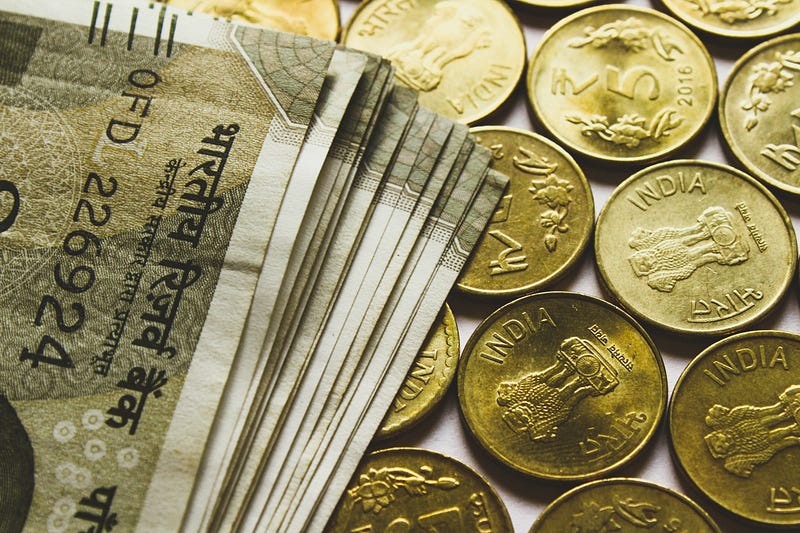
Photo by rupixen.com on Unsplash

In a recent blog post, the fiat to crypto payments solutions provider outlined that it now has the capacity to more effectively on-ramp India’s 1.4 billion citizens by enabling domestic transfer payments to effect crypto purchases through the Unified Payments Interface (UPI), a popular instant payments system in India.


Processing domestic transactions

The move means that Indian citizens can interact with the platform by way of simple, real-time domestic transfers, with a minimum purchase value of 1250 INR. First introduced in 2016, UPI has been wildly successful. In September 2022, the system recorded a monthly transaction volume of 6.7 billion transactions, representing a movement of $140 billion.

The platform has partnered with 358 banks and continues to grow and expand its network. In Alchemy Pay’s home territory of Singapore, UPI has recently secured an integration with PayNow, a Singaporean secure funds transfer service. Referring to the PayNow/UPI integration in its blog post, Alchemy Pay is likely to be extending its UPI-based transfer service as a direct consequence.

The payments facilitator claims that its plugin is “now being used by many wallets, DeFi, gaming and NFT marketplaces, as well as exchanges like OKX and LBank.”

The Alchemy Pay platform has focused in particular on emerging regional real-time payments platforms. Within emerging markets it supports similar systems such as Pix, SPEI, GCash, Dana and OVO. As the Singaporean start-up puts it, ”simplifying the on-boarding process is crucial for the widespread adoption of cryptocurrencies and by enabling local payment options, Alchemy Pay makes the adoption by a growing number of users possible.”

Off the back of this expanded service offering, the company is currently inviting developers of Web3 platforms and dApps to get in touch so as to enable them in adding its plugin and integrating its API.


Importance of bridging crypto with fiat

In another blog post on Monday, Alchemy Pay underscored the importance of an ability to on/off ramp to and from the crypto ecosystem. The company points out that in its recent history, the crypto space has been a complex and intimidating environment to enter or exit to/from the conventional world. It claims to be playing its part in changing this.

According to the firm, its available options of transferring fiat currency to a user’s credit card, savings card or bank account via SWIFT, IBAN or local bank transfer is far more seamless than what has been offered to crypto space participants up until now. These transfers can be effected in minutes, with the platform supporting 22 currencies and payouts facilitated in over 60 countries.

The digital assets space doesn’t exist in a vacuum. Current generations were all born into fiat-based monetary systems and naturally enough, the overwhelming majority of wealth is tied up within traditional systems.

While digital assets have garnered quite a bit of attention over the course of the past few years, the overall market capitalization of crypto, which stands at $1.2 trillion at the time of publication according to cryptocurrency data aggregator CoinGecko, is only a drop in the bucket by comparison with the wealth that exists within the conventional system. More seamless bridging in line with what Alchemy Pay is offering will be necessary for this space to have a realistic chance of conquering mass market adoption.


More to Read
View All
Policy & Regulation·

Aug 02, 2023

Nomura’s Crypto Subsidiary Secures Dubai VARA License

Nomura’s Crypto Subsidiary Secures Dubai VARA LicenseLaser Digital Middle East FZE, the digital asset subsidiary of Japanese global financial services group Nomura, has successfully obtained an operating license from Dubai’s Virtual Asset Regulatory Authority (VARA).This significant development, announced via a statement published to Laser Digital’s website on Tuesday, comes as part of Nomura’s strategic efforts to make a strong presence in the digital asset space.Photo by Paul MARSAN on UnsplashOpportunity to expand servicesThe newly acquired Virtual Asset Service Provider (VASP) license empowers Laser Digital to offer broker-dealer services and provide virtual asset management and investment solutions within the emirate. Additionally, the license will enable the company to carry out trading and asset management operations in the near future. This could potentially include the provision of over-the-counter (OTC) services, together with a diverse range of digital asset investment products.Jez Mohideen, the CEO of Laser Digital, expressed his confidence in VARA’s meticulous and collaborative process, which assures institutional investors looking to get involved in this emerging asset class. “We are very grateful to VARA for approving our Operating License. VARA’s thorough and consultative process provides institutional investors with the assurance they require to engage in this asset class. With the license now in place, we are looking forward to Laser’s growth over the coming years,” he stated.Established in September 2022 under the guidance of Nomura, Laser Digital was the brainchild of Steven Ashley, the former head of Nomura’s wholesale division, alongside Mohideen, who served as the firm’s former Chief Digital Officer and Co-Head of Global Markets for Europe, Middle East, and Africa (MENA). The company is headquartered in Switzerland, with sub-offices located in Dubai and London.Dubai’s rapidly growing crypto ecosystem has garnered global attention, especially after the establishment of its own virtual asset rules and the formation of VARA in March 2022. In February, the regulatory body issued the “Full Market Product Regulations,” comprising four compulsory rulebooks and activity-specific guidelines that delineate the framework for Virtual Asset Service Providers (VASPs).Following in Binance’s footstepsLaser Digital’s recent achievement coincides with Binance’s continuous efforts to solidify its presence in the United Arab Emirates. Its license award comes hot on the heels of Binance having achieved the same milestone. On Monday, Binance’s Dubai subsidiary, Binance FZE, received an operational Minimum Viable Product (MVP) from VARA, granting it permission to operate cryptocurrency exchange and virtual asset broker-dealer services locally.Apart from Binance, only two other entities, digital asset custodians Komainu MEA and Hex Trust MENA FZE, currently hold operational MVP permits in the region. Notably, crypto exchange BitOasis also secured a conditional license but it has faced a suspension from VARA for non-compliance with mandated conditions.Laser Digital’s successful licensing and entry into Dubai’s crypto landscape further enrich the diversity of players in the region’s digital asset market. The involvement of reputable financial institutions like Nomura contributes to the establishment of a robust and well-regulated ecosystem in the United Arab Emirates. The license paves the way for Laser Digital to serve institutional investors and individual clients alike, offering innovative digital asset solutions while complying with the region’s regulatory standards.

news
Web3 & Enterprise·

Nov 07, 2024

Paxos launches USDG stablecoin in Singapore

Regulated blockchain and digital asset solutions provider Paxos has announced the launch of its latest digital asset, the Global Dollar (USDG), a U.S. dollar-backed stablecoin. The company outlined in a press release published to its website on Nov. 31 that the USDG stablecoin is being issued by its local Singaporean corporate entity, Paxos Digital Singapore Pte. Ltd., with the product being regulated by the Monetary Authority of Singapore (MAS).Photo by Alexander Grey on UnsplashMAS compliant offeringThe company claims that the offering is “substantively compliant” with the stablecoin regulatory framework that MAS intends to roll out imminently. Paxos paved the way for this latest product offering back in July when it obtained a Digital Payment Token license from MAS, enabling it to issue U.S. dollar-backed stablecoins within the city-state. In terms of distribution, Paxos intends to partner with global crypto exchanges, wallets and platforms in an effort to get this new product out into the market.  DBS Bank partnershipIts first partnership with regard to the Global Dollar has already been struck with DBS Bank, Singapore and Southeast Asia’s largest bank based on assets held. DBS will play a role in the custody of USDG reserves and in cash management relative to the project.  Ronak Daya, Head of Product at Paxos, said that “USDG offers a trusted solution with a top-tier banking partner in DBS that will be the catalyst to drive stablecoin innovation and enterprise adoption at a global scale.” This latest product launch appears to be similar to the approach the company has taken in the Middle East. Back in June a United Arab Emirates (UAE)-based affiliate company launched the Lift Dollar (USDL), a yield-generating U.S. dollar-backed stablecoin under the regulatory oversight of the Financial Services Regulatory Authority (FSRA), the regulator within the Abu Dhabi Global Market (ADGM) free zone and international financial center. Running on EthereumThe USDL stablecoin started out on the Ethereum network, with it launching on the Arbitrum network in October. A similar roadmap has been set for USDG, with it launching on Ethereum while Paxos maintains that it “will be issued on more blockchains in the near term.” The Stellar network is likely to be one that it expands to in the future. In October the firm announced an integration with the Stellar Development Foundation, with a view towards expanding stablecoin adoption. Daya said that “enterprise interest in stablecoins has never been higher than it is today, but the market lacks a solution that combines regulatory compliance with real economic incentives for enterprises.” The company has developed an expertise in the issuance of digital assets, with USDG being its sixth such issuance. Last week Paxos outlined that it had launched a stablecoin payments platform with the objective of simplifying global transactions for payments providers and merchants. Paxos has also partnered with the Trump family venture, World Liberty Financial, which plans on launching a U.S. dollar stablecoin with the help of Paxos. The firm’s CEO, Charles Cascarilla, also encouraged both U.S. presidential candidates recently to embrace stablecoins as a mechanism through which to safeguard the continuing influence of the U.S. dollar on a global basis. 

news
Policy & Regulation·

Oct 21, 2025

Binance-Gopax deal under scrutiny as Korean lawmakers press for investor protection

During a National Policy Committee audit, South Korean lawmakers pressed financial regulators on their oversight of the domestic crypto market, focusing on Binance’s acquisition of local exchange Gopax, risks from order-book sharing with foreign platforms, and weaknesses in anti–money laundering (AML) controls.Photo by Kanchanara on UnsplashQuestions over Gopax compensationAccording to Kuki News, Democratic Party lawmaker Min Byeong-dug has urged regulators to reach out to Binance for details on its plan to compensate Gopax creditors following its acquisition of the local exchange. One of the nation’s five fiat-to-crypto exchanges, Gopax suspended withdrawals from its GoFi service, a yield-bearing product, in November 2022 after the collapse of the Bahamas-based FTX crypto exchange and the bankruptcy of Genesis, a U.S.-based crypto financial services firm. Citing investor losses estimated at 10 billion to 50 billion won (about $7 million–$35 million), Min said Binance had agreed to cover the shortfall as part of its cashless acquisition of Gopax, but full repayment to Korean users remains unresolved. He noted that the deal had faced delays due to concerns raised by the Financial Services Commission’s (FSC) Financial Intelligence Unit (FIU) over Binance’s eligibility as a major shareholder, and urged the FSC and FIU to ensure a clear and timely resolution for affected investors. Concerns over order-book sharingPeople Power Party (PPP) lawmaker Lee Heon-seung raised additional concerns about order-book sharing tied to the Binance–Gopax deal, warning it could create regulatory blind spots. According to Dailian, he asked the FIU about risks such as possible gaps in AML oversight at foreign exchanges and the potential exposure of Korean user data. FIU head Park Gwang said inadequate AML systems at overseas platforms can hinder fund tracing. He noted that separate approval is required before a domestic exchange can share its order book with a foreign platform, adding that no such request was under discussion. Park said the FIU would closely examine the matter and ensure protection of personal data. Lee also questioned how effectively regulators can supervise the crypto market given its scale, pointing to the Bithumb exchange as an example, where he had raised similar concerns about order-book sharing. Bithumb serves about 3.8 million users and records roughly 605 trillion won (approximately $426 billion) in annual trading volume. He said order-book sharing with major global exchanges such as Binance could complicate AML compliance, data protection, and regulatory oversight, and called for stronger enforcement. In response, Park said that the agency would ensure proper supervision to address these risks. Allegations of AML loopholes and illicit useAnother PPP lawmaker, Kim Jae-sub, flagged a potential AML loophole involving Binance, saying the exchange had allegedly been used by Cambodia’s Prince Group, which is linked to fraudulent schemes to conceal illicit funds. Last week, the U.S. Department of Justice filed a civil forfeiture complaint to seize roughly 127,271 Bitcoin linked to Prince Group’s operations, marking the largest seizure in its history. Kim also cited past allegations connecting Binance to illicit transactions involving Hamas and North Korea, and said the exchange’s founder faces related charges. He urged the FSC to conduct a thorough examination to determine the extent of any involvement if the claims prove accurate. As the parliamentary audit continues, lawmakers from both parties are pressing regulators to clarify standards, tighten oversight, and prioritize investor protection while maintaining fair and predictable rules for market participants. 

news
Loading