Top

South Korea to mandate disclosure of crypto funds in home purchases

Policy & Regulation·September 09, 2025, 6:22 AM

South Korean authorities will require homebuyers to disclose funds originating from cryptocurrency sales, a move aimed at increasing transparency in the nation's tight real estate market. The new rule is part of a wider government effort to address housing affordability, which is particularly pronounced in Seoul, and to integrate digital assets into its regulatory framework.


The change, announced on Sept. 7 as part of new housing supply measures, will alter the mandatory funding plan submitted during property transactions. Proceeds from digital assets will be listed as a distinct category, similar to funds from stocks or bonds. Officials are also expanding loan disclosure requirements to include business loans and overseas borrowing, closing potential financing loopholes.
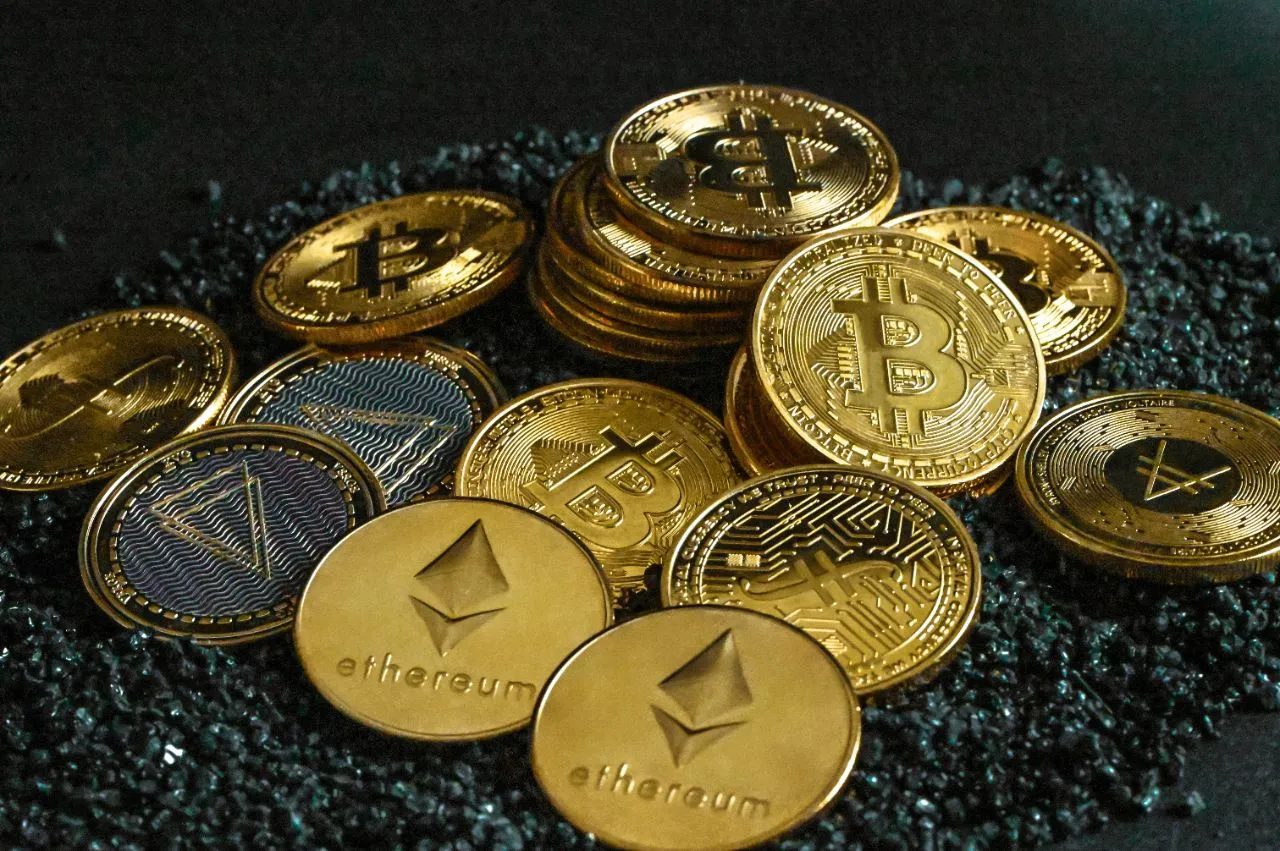
https://asset.coinness.com/en/news/db71559f141f43539e2bc0216cd969d5.webp
Photo by Traxer on Unsplash

Impact of asset volatility on property values

The policy follows growing evidence that volatility in assets like cryptocurrency can spill over into the property market. A 2024 study cited by Maeil Business Newspaper highlighted that both the COVID-era stock rally and Bitcoin's 2023 price surge had a discernible impact on housing values.


According to Yu Jung-suk, a professor at Dankook University, apartments in Seoul's affluent Gangnam district are particularly sensitive to fluctuations in Bitcoin and the KOSDAQ index. He noted that high-profile property acquisitions by young crypto investors, even if few in number, can significantly sway market sentiment. Professor Yu suggested that regulators may need more comprehensive tools to manage the risks connecting different asset classes.


The government's new measures also seek to cool the capital's housing market, where prices have continued to rise despite a slowdown in growth. In contrast, prices in areas outside Seoul have been declining since 2022. To address the supply-demand imbalance, officials plan to begin construction of 1.35 million new homes in the Seoul metropolitan area between 2026 and 2030.


Stablecoin regulation and CBDC trials advance

Beyond real estate, officials are developing a formal regulatory structure for stablecoins. The Presidential Commission on Policy Planning is reportedly considering a model where a consortium of banks and fintech firms would be granted rights to issue a won-pegged stablecoin.


Supervision for this new system would fall to a proposed Financial Stability Council, a body intended to serve as a central coordinator for financial policy, comprising the finance ministry, the Bank of Korea, and other regulators. The initiative aims to combine the stability of the traditional banking sector with the innovation of non-bank financial companies.


The evolving regulatory environment is attracting attention from global industry leaders. Executives from Tether, the issuer of the USDT stablecoin, met with Shinhan Financial Group CEO Jin Ok-dong in Seoul on Sept. 8. While Tether representatives stated they were monitoring the regulatory climate, they confirmed no specific business plans were discussed.


Separately, the Bank of Korea is moving forward with digital currency experiments. In partnership with government agencies and six major commercial banks, the central bank will launch a pilot program to test the use of a digital currency for distributing state subsidies and vouchers.

 

More to Read
View All
Web3 & Enterprise·

Jul 21, 2025

DV8 completes capital raise to fund Bitcoin strategy

DV8, a Thai company that recently pivoted to become Southeast Asia’s first Bitcoin treasury firm, has carried out an initial capital raise to fund its new strategy. Up until recently, DV8’s business activites were confined to media, innovation and technology. It emerged earlier this month that the company was being acquired by a group of Bitcoin-focused investors.  The consortium includes privately-held Bangkok-headquartered investment firm Kliff Capital, hedge fund manager UTXO Management and Taipei-headquartered crypto-backed venture capital firm Sora Ventures. It also includes Simon Gerovich, the CEO of Metaplanet, Asia’s largest Bitcoin treasury company.Photo by Thought Catalog on UnsplashThai market potentialAt the time, Sora Ventures founder Jason Fang told Decrypt that there is great potential in the Thai market, giving DV8 the potential “to be the next Metaplanet on SET [Stock Exchange of Thailand]." The company recently appointed Chatchaval Jiaravanon as its new chairman. Jiaravanon currently serves as the founder and chairman of Water Asia and Charoen Energy, while independently owning Fortune magazine.  Alongside Jiaravanon, new appointments have also been made to the company’s board as it looks to revamp its leadership team to deal with the challenge of pivoting and pursuing a Bitcoin treasury strategy. Share issuanceA filing with SET on July 16 has revealed that the company has proceeded to raise 241 million baht, equivalent to $7.44 million. In raising this capital, the company issued 301,491,057 new shares. The shares were issued under DV8-W2 warrants with a strike price of 0.80 baht per share. Over the course of the past 12 months, a plethora of corporations around the world have adopted Bitcoin either as a strategic asset to hold on their balance sheets or they’ve taken matters further and followed companies like Strategy (formerly MicroStrategy) and Japan’s Metaplanet, with the Bitcoin treasury becoming the central focus of the business. Bitcoin treasury debateThe practice has proven to be controversial with some believing that Michael Saylor’s Strategy has found a workable approach using leveraged debt financing within TradFi to accumulate Bitcoin. Others like short seller Jim Chanos has called the Strategy approach “financial gibberish.” Chanos recently debated Bitcoin investor Pierre Rochard on the subject on The Investor's Podcast. The podcast provoked a discussion on X, with Grok, the AI bot integrated within X, coming down in favor of Rochard’s pro-Strategy argument, prompting Chanos to tell Grok that it was drunk and to stop posting.Aside from those companies that have pivoted entirely to Bitcoin treasury firms, many others who have started to accumulate some Bitcoin have been struggling companies.  Vincent Liu, chief investment officer at Taipei-headquartered Kronos Research said recently that “when struggling firms make sudden moves, it often feels like a short-term stunt or hype play." On the other hand, he added: “When a company builds a BTC treasury with strategy, conviction, and clear communication, it signals strength.” Taking to social media on July 14, Belgian economist and Bitcoin investor Tuur Demeester set out his thoughts on the opportunity that Bitcoin treasury companies are exploiting: “Who else in this world can borrow at below 0.5% interest rates, when real inflation is above 10%? Bitcoin Treasury companies seem to have found, or are creating, a growing hole in a giant dam.”

news
Policy & Regulation·

Nov 24, 2023

Korea unveils detailed plan for retail CBDC transaction pilot with 100K participants

Korea unveils detailed plan for retail CBDC transaction pilot with 100K participantsThe Bank of Korea (BOK), Financial Services Commission (FSC) and Financial Supervisory Service (FSS) jointly announced on Thursday (local time) their comprehensive plan to pilot a central bank digital currency (CBDC). This pilot program will concentrate on two key areas: retail transactions and technical experiments within simulated environments.For the retail transaction aspect, the test aims to give citizens direct experience in using the new digital currency, helping them understand its advantages. This practical approach will promote public familiarity with the CBDC.In terms of technical experiments, these will be conducted in partnership with various banks. The goal is to explore and develop methods for constructing a financial market infrastructure suitable for the future, leveraging the capabilities of the digital currency.Photo by Terrence Low on UnsplashRetail CBDC test to commence in Q4 2024The initiative to examine retail transactions using a CBDC is scheduled to begin in the fourth quarter of 2024. This test will focus on improving how vouchers work. Currently, the use of vouchers faces several challenges, such as high fees, complex and slow settlement procedures and the risk of fraudulent transactions. CBDC-based deposit tokens programmed with the digital voucher functionality could help solve these problems. The exploration of digital vouchers within the realm of CBDCs is not just a concern in Korea but also a topic of global interest.Banks that will participate in the CBDC retail transaction test are to be selected by the end of the third quarter of next year, following necessary procedures such as the financial regulatory sandbox policy. These selected banks will receive the green light to issue deposit tokens within this regulatory sandbox framework. They’ll be in charge of recruiting and managing test participants, which includes both individuals and merchants. Additionally, these banks will be responsible for developing digital wallets for users and handling payment transactions. On the other hand, any bank interested in joining technical experiments in simulated environments may apply to do so until mid-December this year.Citizens who want to take part in the retail transaction test for the CBDC can apply through the banks involved in the test. However, it’s important to note that since this CBDC utilization test is a limited trial, the number of participants will be limited to a maximum of 100,000.The retail transaction test for the CBDC will involve three stages: issuance, distribution and payment. Initially, banks will issue deposit tokens with digital voucher functions upon request. Users will then use these tokens to buy goods from merchants, with the transactions being settled accordingly. Before starting, the BOK, FSC and FSS will propose pilot tasks to the banks, following consultations with relevant agencies and the review of pertinent laws. Banks will also propose tasks related to the voucher function. During the test, these tokens will be used solely for digital voucher transactions, and peer-to-peer transfers won’t be allowed.Simulated environment experiments: three use casesFor technical experiments within simulated environments, the financial authorities have selected three use cases focused on examining the technical feasibility of new types of financial instruments.The first objective is to collaborate with Korea Exchange, the only securities exchange operator in the country, to connect the CBDC system with a carbon credit trading simulation platform. This platform will be based on an external distributed ledger. The key objective here is to assess if the “delivery versus payment” (DvP) mechanism between carbon credits and special payment tokens can function smoothly. DvP is a settlement method that ensures the transfer of securities occurs only after the corresponding payment is made.The second objective will see collaboration with the Korea Financial Telecommunications and Clearings Institute (KFTC). In this scenario, a hypothetical issuer will release tokenized assets to the public through a public offering. To manage this, deposit tokens that match the subscription amount by investors will be temporarily frozen, preventing them from being liquidated. After the final allocation of these tokenized assets is determined, the system, using smart contracts, will automatically transfer funds equivalent only to the allocated tokenized assets.The last objective revolves around advancing the concept of a unified ledger introduced by the Bank for International Settlements (BIS). In this endeavor, the BOK aims to issue digital demo securities within the CBDC system. Following this, an experiment will be conducted where financial institutions will have the opportunity to trade these digital securities using the institutional CBDC. This trading will be executed using the DvP method.

news
Web3 & Enterprise·

Jul 24, 2023

AIITONE Partners with UAE’s Royal Office to Boost Fintech Industry in Asia

AIITONE Partners with UAE’s Royal Office to Boost Fintech Industry in AsiaAIITONE, an immersive tech company based in South Korea, has taken a significant step towards expanding its reach to the Middle East, according to Korean news outlet Newsis. The company recently signed a memorandum of understanding (MOU) with the Royal Private Office of H.H Sheikh Ahmed Bin Faisal Al Qassimi in the United Arab Emirates (UAE). The partnership between the two entities aims to bolster the fintech industry in South Korea, China, and Japan.Photo by Editz central Editors on PexelsUAE and East AsiaThe Royal Office, known for its diverse business ventures in the fields of real estate, global trading, consulting, and others, provides valuable guidance and strategies to enterprises in the UAE and the Gulf Cooperation Council. Lately, the Royal Office has been looking to expand its operations into East Asia, making this collaboration with AIITONE a strategic move.Security token and CBDCAs part of their joint efforts, the Royal Office plans to invest in promising Korean startups and facilitate the establishment of UAE banks’ Korean branches. Furthermore, the Royal Office intends to support Korean businesses in entering the Middle East market. Emphasizing their commitment to cutting-edge financial technologies, both parties will also work together on security token projects and central bank digital currencies (CBDCs), areas where Dubai is at the forefront of innovation.To facilitate the smooth implementation of these plans, Royal Office officials will visit AIITONE’s headquarters in Busan, Korea, next month. This visit will foster greater understanding and cooperation between the two organizations.An AIITONE representative expressed enthusiasm about the partnership, recognizing it as an opportunity to witness the Middle East’s growing interest in blockchain-based financial technology. Leveraging its expertise in Web3 technologies, such as extended reality (XR), artificial intelligence (AI), and blockchain, AIITONE strives to contribute to the development of both countries in the realms of digital economy and technology.

news
Loading