Top

EU bans Ruble-backed stablecoin A7A5 in latest round of Russia sanctions

Policy & Regulation·October 29, 2025, 6:31 AM

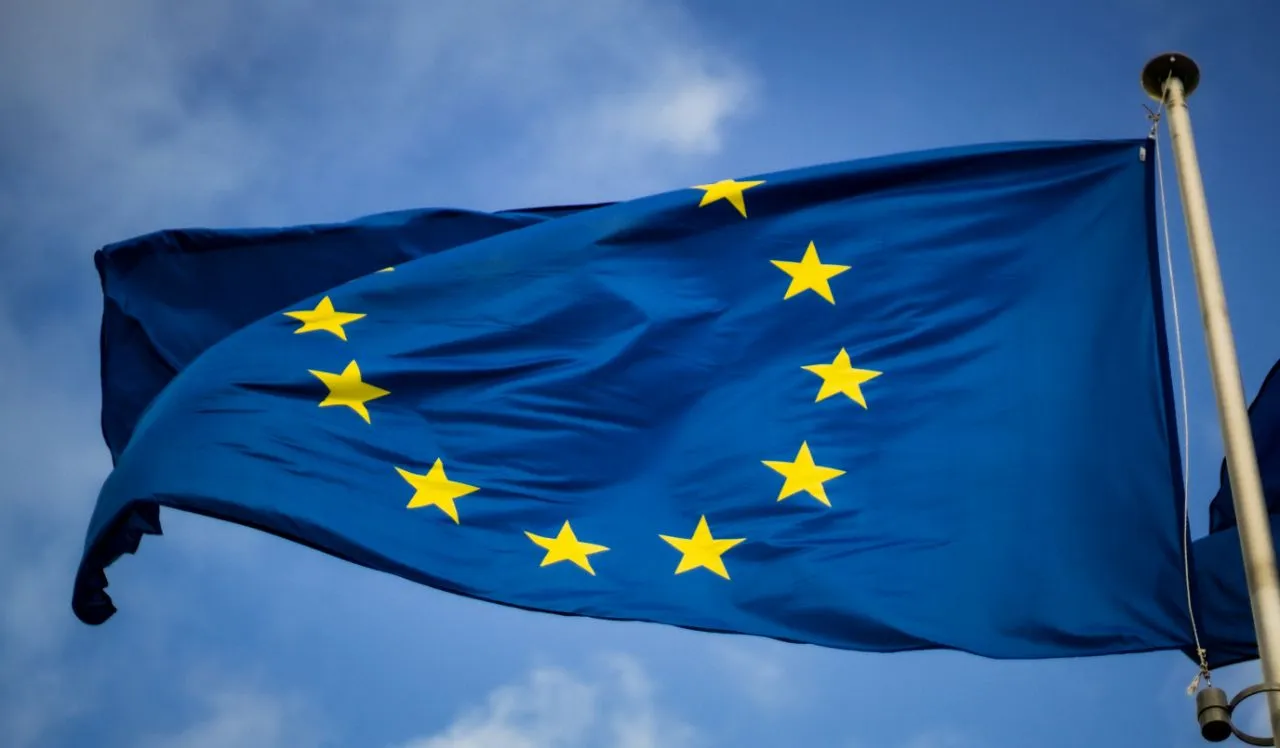
The European Council has banned all transactions within the European Union (EU) involving the Russian Ruble-backed stablecoin A7A5, according to a press release published Oct. 23.


The prohibition targets the stablecoin itself, its developer, its Kyrgyzstan-based issuer, and the operator of a platform that facilitates major A7A5 trades. The package also takes aim at Russian crypto exchanges.
https://asset.coinness.com/en/news/8d2f3591b98e3daf67502602aacc4069.webp
Photo by Christian Lue on Unsplash

Additional banking restrictions

This measure is part of a broader set of economic sanctions against sectors the EU stated assist the Russian invasion of Ukraine, including energy, finance, and defense industries. As part of this financial clampdown, the EU will also impose a ban on five additional Russian lenders starting Nov. 12. One of those lenders, Alfa-Bank, recently began offering Bitcoin buying and selling services, according to an X post by journalist Pete Rizzo.


The European body said the new crypto measures address Russia’s increasing use of digital assets to circumvent existing sanctions. Russian banks were cut off from the SWIFT international payment system in early 2022, following the onset of the Russo-Ukrainian war.


Reports of Russia using cryptocurrency to finance malign activities have surfaced previously. Earlier this month, Sławomir Cenckiewicz, the head of the Polish National Security Bureau (BBN), told the Financial Times that Russia has employed crypto to finance attacks on EU countries. Cenckiewicz said that a network of agents recruited by Russia’s GRU military intelligence agency and uncovered in Poland in 2023 had been substantially funded with cryptocurrency.


Reflecting this concern, lawmakers in Poland’s lower house approved a bill in September to strengthen national crypto oversight, a move also expected to help curb Russian funding channels. Cenckiewicz noted that Polish intelligence agencies are closely monitoring the legislation to prevent loopholes that allow foreign actors to support agents using digital assets.


Russia’s evolving crypto policy

The EU’s action comes as Russia itself is attempting to refine its own cryptocurrency rules.


According to the Moscow Times, Russia's central bank wants to limit cryptocurrency use strictly to cross-border payments within an experimental legal regime (ELR). The institution continues to reject recognition of cryptocurrency as a legal means of payment and has advocated banning its use for domestic payments and retail investment, while permitting trading only for high-net-worth individuals through licensed platforms.


Russia’s finance ministry has expressed a more flexible view, pointing to the scale of crypto adoption among the public. Earlier this year, the central bank estimated that domestic crypto transactions exceeded 1 trillion rubles (about $12.4 billion) per month, and that as of March, wallets linked to Russian users held roughly 827 billion rubles (about $10.2 billion).


The finance ministry and the central bank have agreed to tighten supervision of the crypto market, with officials expecting to finalize the new framework before the end of the year.


 

More to Read
View All
Policy & Regulation·

Apr 28, 2023

HK Regulators Facilitate Dialogue between Banks and Crypto Enterprises

HK Regulators Facilitate Dialogue between Banks and Crypto EnterprisesIn a recent column, Arthur Yuen, Deputy CEO at the Hong Kong Monetary Authority (HKMA), stated that the HKMA and the Securities and Futures Commission (SFC) will jointly convene a meeting on Friday to share opinions on providing banking services to virtual asset service providers (VASPs).Proportionate CDD measuresYuen said that banks should “differentiate the risk levels of customers and apply proportionate CDD [customer due diligence] measures,” and “refrain from adopting a ‘one-size-fits-all’ approach to reject account opening applications.” To address misconceptions about CDD, the HKMA issued a circular on Thursday, offering further clarification and sharing notable cases and best practices.The HKMA called on banks to enhance employee training on account opening procedures and create task forces to help companies seize new business opportunities. The HKMA plans to actively take part in developing and introducing international standards, and provide guidance and support for banks to adopt appropriate anti-money laundering measures.SFC’s guidelines in MayMeanwhile, SFC CEO Julia Leung said in a discussion with Bloomberg that the SFC will issue virtual asset guidelines in May.Reactions on TwitterIn his tweet, Justin Sun, the founder of blockchain DAO ecosystem Tron, hinted at the potential development of a Tron-based stablecoin in Hong Kong. The Hong Kong Innovation Encryption Fund (HKIEF), an investor in blockchain projects, also took to Twitter to predict the details of a regulatory framework for cryptocurrencies in the city.According to HKIEF, USDT and USDC will be classified as security tokens, while BTC and ETH won’t be deemed securities. Exchanges trading non-security tokens will need both a VASP license and a trust license. Hong Kong-based virtual asset exchanges will be required to obtain a full license by May 31, 2024.

news
Web3 & Enterprise·

Jan 26, 2024

Bithumb Burrito Wallet to integrate Smart Valor’s AI investment advisor service

Rotonda, the operator of the Bithumb Burrito Wallet, has agreed to work with Swiss digital asset AI platform Smart Valor, according to South Korean news website Greenpost Korea. Burrito Wallet will adopt the features of Smart Valor’s Elonn.ai – a digital investment advisor that provides investors with AI-generated market news analysis and research for optimized investment. Photo by Shubham's Web3 on Unsplash"Our collaboration with Smart Valor, who was the main sponsor of our NextBlock blockchain conference last year, is significant. The company will serve as an ideal partner for us to lay out the blueprint of the global Web3 market together," said Max Shin, CEO of Burrito Wallet. Leading the European Web3 industryFounded in 2017, Smart Valor is a Swiss-based Web3 AI company and the first European digital asset platform to be listed on the NASDAQ First North Growth Market. It specializes in crypto AI market intelligence application programming interfaces (APIs), as well as investment platforms and crypto trading and custody infrastructure for banks, fintech firms and European investors. Global expansion and market access in South KoreaThrough the newest partnership, Burrito Wallet aims to provide high-quality investment services for users and contribute to the expansion of the Web3 ecosystem as a key partner for Smart Valor's global expansion. In particular, the collaboration will also serve as a bridgehead for Smart Valor's entry into South Korea. The firm’s VALOR token is currently listed exclusively on Bithumb among Korean cryptocurrency exchanges and will be supported for trading on Burrito Wallet, offering Korean users the opportunity to experience a more expanded Web3 market. To celebrate their cooperation, the two companies will be holding a Valor token trading event until Feb. 1. The first thousand Bithumb users to trade at least 30 Valor tokens during the event will receive an additional 30. Also, the first 2,000 users who sign up for Burrito Wallet and trade at least 30 tokens will receive 60 tokens for free.  "Starting with this event, we will not only expand the scope of our partnership with Smart Valor but also initiate various collaborative activities and develop features to ensure that Burrito Wallet is recognized as a unique Web3 wallet,” Shin added. Burrito Wallet has been accelerating efforts to expand overseas. The service recently increased its number of supported blockchain networks to 18 and entered global markets in Asia and Latin America.

news
Web3 & Enterprise·

May 18, 2023

Coinbase Effects International Expansion By Extending Singapore Offering

Coinbase Effects International Expansion By Extending Singapore OfferingIn further proof of Coinbase’s recently-adopted strategy of focusing on global expansion, the company has just extended the range of its product offering to Singaporean customers.Photo by Meriç Dağlı on UnsplashNo Fees on USDCThe move was announced by way of a blog post published to the company’s website on Tuesday. The expansion entails the introduction of fee-less purchases of the USDC stablecoin for users who buy it with the Singaporean dollar (SGD). Furthermore, it is enabling Singaporean customers to earn rewards on the USDC that they hold on the platform. USDC trading pairs are being added that will allow users to trade USDC directly with over two hundred digital assets.Taking staking overseasAdditionally, Coinbase Global is rolling out staking to the Singaporean market. Users will be empowered with the ability to stake the following digital assets: ETH, SOL, ADA, ATOM, and XTZ.It’s interesting that Coinbase feels enabled in rolling out a digital asset staking service in this overseas market. In March of this year, the company received a Wells Notice — a formal notice informing the recipient that there are firm plans to bring enforcement actions against it — from the Securities and Exchange Commission (SEC) in the United States. The notice was sent in relation to digital assets covered under Coinbase’s staking product offering, Coinbase Earn.In highlighting the issue, the company bemoaned the fact that the SEC had gone down the route of issuing a Wells Notice without it expressing a single specific concern about any specific digital asset offered by the platform in advance of taking the action.Global strategyCoinbase Founder and CEO Brian Armstrong has been outspoken in criticizing the regulatory approach to crypto in the United States. He expressed that at the time of having received the Wells Notice earlier this year, and again last week, when he and key Coinbase executives visited Abu Dhabi and Dubai in the United Arab Emirates.On the day of SEC Chair Gary Gensler’s appearance before the House Financial Services Committee on Capitol Hill in Washington, D.C. a few weeks ago, Armstrong signaled that unless there was a more accommodating regulatory approach taken to crypto in the US, Coinbase would increasingly be looking to expand operations overseas.A short time later, it emerged that the company had obtained a license to trade in Bermuda. At last week’s Dubai Fintech Summit, Armstrong applauded the regulatory approach taken by the UAE and indicated that the company is interested in opening a base in Abu Dhabi.Positive survey resultsAgainst this background, it’s not surprising to hear that Coinbase has expanded its service offering in Singapore, another aspiring global hub for crypto business. As part of reviewing and updating its business offering in the city state, Coinbase carried out a survey of prospective customers in Singapore. It found that 25% of Singaporeans consider crypto as the future of finance, on a par with findings in the US, and higher than the 17% reported in the UK.Among its other findings, security concerns and price volatility of digital assets are still a barrier to entry for many. Of those who are already crypto-native, they tend to trade higher trade amounts, and with greater frequency, if from higher income backgrounds.

news
Loading
