Top

Seoul and Baobab Partners Face Controversy Over Unpaid Prize Winnings for SWF2023 Hackathon

Policy & Regulation·October 24, 2023, 8:53 AM

The city of Seoul has come under public scrutiny for failing to pay the winners of the Seoul Web3 Festival (SWF2023) Hackathon a cash prize worth KRW 150 million (approximately $112,000). The Seoul Metropolitan Government has argued that since it was simply a naming rights sponsor, the responsibility for paying the prizes lies with Baobab Partners, who co-hosted the event. However, critics argue that the city did not properly vet Baobab Partners more rigorously before hosting the event.
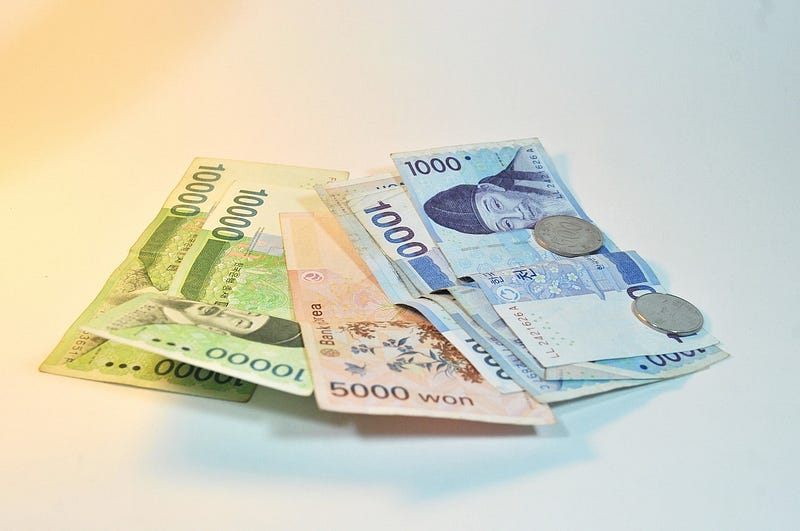
Photo by okaybuild on Pixabay


Unpaid prizes linger

The SWF2023 Hackathon took place from July 31 to August 2 at Dongdaemun Design Plaza (DDP) and was co-hosted by the city of Seoul, the Seoul Design Foundation, and Baobab Partners. It offered a total prize pool of KRW 150 million attracting 417 participants who made up 115 teams.

However, although over two months have passed since then, the winners are yet to be paid their prize money. “Baobab Partners initially proposed the SWF2023 event, and they were responsible for gathering the necessary sponsorship funds to run the event,” said a city representative.

According to industry sources on Monday, the company’s CEO, Choi Jin-beom, issued a handwritten apology last Friday regarding the incident. “We promised to pay the winners by today, but we were unable to deliver on that promise. We explored multiple avenues, including investors, new contractors, and other assets, but were ultimately unable to secure the funds to do so,” he said. “The narrative that the funds were diverted elsewhere or invested in cryptocurrencies or stocks is untrue,” he added, clarifying that related information was transparently disclosed to the city of Seoul.


Baobab Partners’ swift rise raises industry eyebrows

Baobab Partners had previously participated as an event planner at last year’s Blockchain Week in Busan, which turned out to be a success. “We also spoke with the Busan city government, who gave a positive opinion of the company,” the representative added. It was under this context that Seoul entered into a naming rights agreement with Baobab Partners. The agreement stipulated that the company would be in charge of attracting and managing sponsorships, and the prize money and operational costs would be covered by corporate sponsorship funds.

Nevertheless, questions have arisen within the industry about Baobab Partners’ short track record and its successive collaborations with public organizations. Baobab Partners is a startup that was founded in May 2021. In November of the same year, the firm signed memoranda of understanding with three blockchain companies during NFT Busan 2021, a large-scale NFT fair held in the southern port city to share the latest blockchain trends. As a result of its efforts, it was listed alongside prominent companies such as Coinone and Onther despite only six months passing since its establishment. Subsequently, Baobab Partners relocated from Seoul to Busan, and the following year, it participated as an event planner at Blockchain Week in Busan.


Accumulating allegations

Speculation suggests that this success was not solely due to Baobab Partners’s capabilities. The company’s CEO is believed to have political connections, according to an anonymous industry insider. Choi denied such claims and stressed that its technical expertise should not be downplayed, citing the fact that Baobab Partners was the first entity in Korea to develop virtual reality (VR) banking technology and had received a KRW 15 billion investment from Finger, a KOSDAQ-listed company.

Baobab Partners has also been mired in controversy over supposedly unpaid wages. In response to a claim made by an industry source that many former employees of Baobab Partners have still not received their due wages, a Seoul representative stated that there is no such dispute according to conversations with company representatives, seeking to dispel the dispute. Choi further explained, “We didn’t have wage disputes until last year. The difficulty in paying wages began in January this year due to the failure to execute promised investment funds.”

The city said that it is currently conducting legal examinations and looking into necessary measures for two matters involving Baobab Partners, including the handling of hackathon winnings.

More to Read
View All
Web3 & Enterprise·

Jan 18, 2024

Night Crows pre-registration NFT collection sells out

South Korean gaming publisher Wemade opened sales for its “The Night is Coming” NFT collection on Jan. 11 to 12 to celebrate pre-registration for the global version of the massively multiplayer online role-playing game (MMORPG) Night Crows. All 341 NFTs were sold out, according to an official press release on Thursday (KST).Photo by Choong Deng Xiang on UnsplashUnveiling exclusive NFTsThe NFT Collection featured NFTs of different tiers, including Uncommon and Rare NFTs that went on sale on Jan. 11, as well as Epic, Legendary and Mythical NFTs that were available on NILE – short for “NFT Is Life Evolution,” a decentralized autonomous organization (DAO) and NFT marketplace on WEMIX3.0 – the next day. All NFTs were sold out within a day. Blockchain-backed fantasy gameBuilt on Unreal Engine 5, a three-dimensional computer graphics engine used for game and content development, Night Crows features high-quality graphics, an immersive world, realistic action and major in-game battles. It has topped the popularity and revenue charts on major app markets in South Korea since its launch in April last year. The global version of the game, which is scheduled for release in March, will harness blockchain technology and a multifaceted tokenomics system that tokenizes in-game items. It will also introduce character NFTs that keep character and player data in one place, connecting the game’s internal and external economies. Wemade also stated that owners of the NFTs can exchange them with CROW, the game’s native token, starting on April 1. The token’s value is stabilized by a minting process controlled by the Peg Stability Module (PSM), which allows users to swap a native stablecoin for other protocol-accepted stablecoins at a 1:1 rate.

news
Web3 & Enterprise·

Aug 01, 2025

Philippine government introduces document notarization on Polygon

In the Philippines, the Department of Budget and Management (DBM) has introduced an on-chain system utilizing the Ethereum layer-2 network Polygon to notarize and track documentation and the expenditure of public funds. The government contracted Manila-headquartered blockchain technology company BayaniChain Ventures in order to implement the system. The firm took to social media on July 31 to provide details on the DBM Blockchain Project.Photo by GuerrillaBuzz on UnsplashBuilding trust into infrastructureBayaniChain Ventures CEO Paul Soliman outlined that the new system “builds trust into the infrastructure itself.” The DBM Blockchain Project connects a DBM internal platform, the Action Document Releasing System (ADRS), which creates official budget documentation, with the Lumen Blockchain-as-a-Service (BaaS) system created by BayaniChain.  Lumen functions as a core framework, enabling government systems to connect securely with blockchain infrastructure. Consequently, Lumen facilitates the tokenization of government documents, managing access to those documents and publishing data to a portal. A third system, Prismo Protocol, interacts with Lumen and ADRS, determining what documentation should be shared with the public and what documentation should remain accessible exclusively to DBM staff.The upshot of the interaction of these systems is that select budget documentation is published to the Polygon blockchain. Soliman stated that the system provides transparency, enabling members of the public to “see proof, not just promises” with regard to the activity of the government department. Integrating blockchain into public governanceThe Undersecretary at DBM, Maria Francesca Montes Del Rosario, took to Facebook on July 30 to confirm that the DBM blockchain initiative had gone live. She described it as the “first ever Transparency Government Blockchain for immutable and verifiable action documents.” She added: “We are using cutting edge technology like AI, blockchain, satellite imaging to enhance how we do public policy and governance.”Del Rosario was quoted by local media as stating that the technology combats the problem of AI deepfakes and fake documents. Another stakeholder in the development of the system was Exakt IT Services, a local company that specializes in assisting government organizations in the Philippines to bring about digital transformation. Exakt was awarded a contract by DBM to act as a technology partner, supporting the project with technical expertise and infrastructure in order to bring about the implementation of the blockchain solution. BayaniChain’s Soliman believes that the new system “sets a precedent for transparency and accountability in public finance.” However, the timing of the launch of the service proved to be unfortunate, as it coincided with an outage suffered by the Polygon network. The outage, which lasted for one hour, disrupted apps running on Polygon. On X, Polygon CEO and Founder Sandeep Nailwal asserted that the incident didn’t prevent the blockchain from operating or producing blocks and with that, user transactions on the network were still being processed.In better news for the blockchain network, Crypto Analyst Lennaert Snyder reported on July 31 that Polygon has reached a yearly high of $1.2 billion in total value locked (TVL), an 80% increase since March.

news
Policy & Regulation·

Dec 15, 2023

Banking giants in Turkey embrace crypto ahead of legislative change

Banking giants in Turkey embrace crypto ahead of legislative changeIt remains unclear what the underlying environment for the further development of the crypto sector in Turkey will be until such time as the country introduces a legislative framework to shape the industry’s development. However, that fact is not deterring a couple of Turkey’s leading banks, who have decided to embrace the digital asset realm.Photo by Michael Jerrard on UnsplashStablex acquisitionOn Monday CoinDesk Turkiye reported that the investment arm of Turkish bank Akbank had acquired local crypto company Stablex. Stablex was founded in May 2020 by Jihad Shannak with the objective of providing professional services, including trading relative to cryptocurrencies in Turkey. Majority shareholding passed to Ak Investment in May of this year, with initial negotiations on the sale having commenced in August 2022.A high-ranking official at Ak Investment expressed the group’s ambition to become a pivotal figure in the digital asset realm, signaling a proactive approach to the evolving financial landscape. Akbank also banks the majority of crypto start-ups based in Turkey.Speaking about the acquisition recently, Akbank executive Mert Erdoğmuş stated:“We have invested in Stablex to respond to the need for reliable and innovative service in the cryptocurrency market. Stablex reflects our values with its experience in the sector, pioneering achievements and professional service approach.”BBVA crypto walletAlongside Akbank’s move into the digital assets arena, Garanti BBVA, Turkey’s second largest private bank, recently unveiled its crypto wallet app. The feature-rich application includes a cold wallet, empowering users to seamlessly send and receive assets such as bitcoin (BTC), USD Coin (USDC) and ether (ETH).The pilot project for the app commenced in August, with the application currently available on iOS. In bringing the app to market, the bank created Garanti BBVA Digital Assets, a dedicated subsidiary firm. Commenting on that development back in August, the subsidiary’s Chairman of the Board, M. Çağrı Süzer, stated:”Our research shows that customers significantly value trust in their crypto transactions and especially on its storage. Hence, we are happy to launch our Crypto Custody Wallet addressing these real needs.”Despite uncertainties, Turkey has firmly established itself in the global crypto landscape, ranking among the top 20 countries in Chainalysis’ Global Crypto Adoption Index 2023. The instability of the Turkish lira in recent years has been a driver for crypto adoption in the country. In recent days, the bitcoin unit price has reached its highest exchange rate level against the local sovereign currency.Earlier this week, it emerged that crypto platform Blockchain.com is adding headcount and has its sights set on expansion into Turkey as one of its growth opportunities.FATF-compliant regulatory approachTurkey’s regulatory stance has been to take a cautious approach. In 2021, the central bank restricted the use of crypto for payments, although a complete ban on digital assets was ruled out by officials.Looking ahead, a government official revealed plans for crypto legislation to be presented to Parliament in November. While details remain scarce, this legislative move aligns with Turkey’s broader strategy to exit the Financial Action Task Force’s (FATF) “gray list.”

news
Loading