Top

CoinDCX Expands Okto Wallet’s Global Reach with Transak Integration

Web3 & Enterprise·October 06, 2023, 11:46 PM

Indian cryptocurrency exchange CoinDCX has moved to broaden the accessibility of its self-custody wallet, Okto. The exchange recently announced the addition of Transak, a major on-ramp platform that enables a fiat-to-crypto payment gateway integration, to enhance the wallet’s global capabilities.
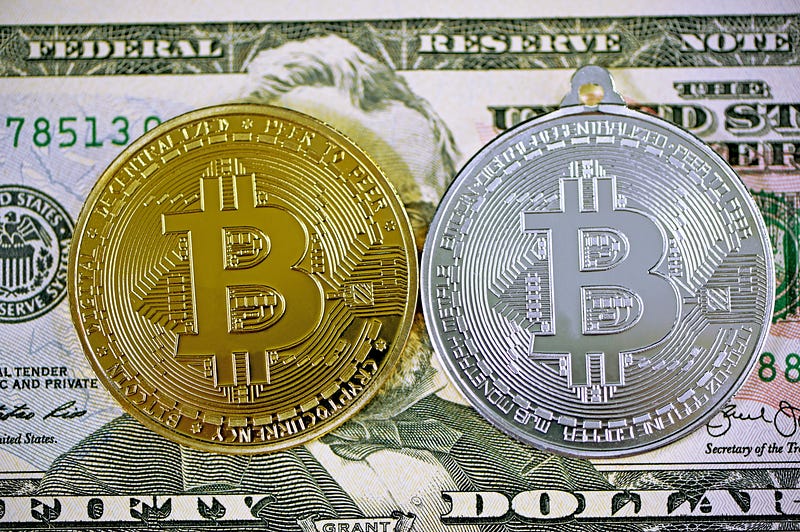
Photo by Kanchanara on Unsplash


Building on Okto

That’s according to a report published by Cointelegraph on Thursday. Okto was introduced by CoinDCX in August 2022, and the firm swiftly moved to expand its services. The integration with Transak represents a pivotal step in this direction.

This strategic integration immediately expands the reach of the Okto wallet from supporting 60 countries to an impressive 155 jurisdictions. Neeraj Khandelwal, Co-Founder of both CoinDCX and Okto, emphasized the significance of this move, stating that it allows users in numerous countries to engage with cryptocurrencies directly through Okto.

While Transak supports approximately 160 tokens, Okto goes above and beyond by allowing users to store more than 1,000 tokens across multiple blockchain networks, including Polygon, Fantom, Avalanche, and others. According to an Okto spokesperson, the wallet can accommodate up to 3,000 tokens, providing ample flexibility for cryptocurrency enthusiasts.


Seamless fiat-to-crypto conversion

Khandelwal also spoke to the value add that a more seamless asset conversion process will bring. He stated:

“The integration of Transak now allows users to seamlessly convert fiat to crypto right within the app. Prior to this integration, users had to transfer funds from another decentralized wallet, such as MetaMask.”

Transak’s integration brings a key feature to Okto — the ability for users to purchase cryptocurrencies like Bitcoin (BTC) directly within the wallet. Notably, this functionality accepts a wide range of fiat currencies, including the US dollar, euro, Hong Kong dollar, and others. Prior to the Transak integration, users were required to transfer digital assets from external wallets like MetaMask. With this development, Okto streamlines the process, enabling users to seamlessly convert fiat into crypto within the app itself.


Months-long integration process

It’s worth noting that although the announcement of Transak’s support on Okto was made on Thursday, the integration process began several months earlier. As early as August, some Indian users reported encountering Transak while Okto was in the testing phase. The integration process itself commenced in April, with the official roll-out to all customers occurring in mid-September.

Transak, a global Web3 payment and onboarding infrastructure provider, plays a crucial role in bridging the gap between traditional finance and the digital asset ecosystem. It is a well-established on-ramp solution in the cryptocurrency industry, with platforms like MetaMask, Coinbase, and PancakeSwap among its clientele.

In recent days, Okto has also announced a partnership with ReHold, a multi-chain protocol which has been developed to enable users to maximize their crypto earnings. In the coming weeks, Okto and ReHold will work towards integrating Okto’s wallet with ReHold.

The Okto-Transak integration is in line with Transak’s mission to facilitate crypto adoption by providing easy access to digital assets. Earlier this week, Transak also announced its integration with The Open Network’s (TON) wallet, known as Tonkeeper. This collaboration opens up Toncoin (TON) purchases directly with fiat currencies to users in more than 150 countries, marking a significant milestone in expanding the TON ecosystem.


More to Read
View All
Policy & Regulation·

Sep 30, 2024

Dubai regulator tightens crypto marketing rules

Dubai's regulator, the Virtual Asset Regulatory Authority (VARA), has been ahead of the curve by comparison with its peers internationally in getting a crypto regulatory framework in place, and now it's moving to tweak those regulations further. In a press release published via ZAWYA on Sept. 26, VARA announced an update to its crypto regulations which specifically deals with marketing. Its addition of “Marketing Regulations for Virtual Assets and Related Activities 2024” applies to virtual asset service providers (VASPs) operating within the Emirate of Dubai. In tandem with the updated regulations, VARA has published a marketing guidance document to assist VASPs in abiding by the regulations, providing detailed instructions and outlining best practices in terms of the application of appropriate marketing activities. Photo by ZQ Lee on UnsplashMandatory disclaimerOne of the new requirements demanded by the regulator is that marketing content related to digital assets should incorporate a disclaimer outlining to investors that there are financial risks associated with digital assets. To that end, from October 1 onwards, VASPs are required to add the following disclaimer, prominently displayed, within product marketing material: “Virtual assets may lose their value in full or in part and are subject to extreme volatility.” In its guidance documentation, VARA has stipulated that any content which contains contradictory messaging or information provided to users in “small print” is not deemed to be acceptable. The rules apply to both licensed entities and any unlicensed entities that attempt to offer a service within the Emirate of Dubai.  Consumer protectionThe motivation behind the regulatory update is the protection of consumers through the prevention of the dissemination of misleading information. The regulator wants consumers to be well-informed about crypto products, such that they’re aware of both the risks and opportunities associated with digital assets. VARA has set out a schedule of fines, broken down by category, with fines of up to 10 million United Arab Emirates (UAE) dirhams (AED), around $2.7 million, applying for those who do not comply. Commenting on the updated regulations, VARA CEO Matthew White stated: “Our updated marketing regulations and the newly issued guidance document reflect our commitment to maintaining Dubai’s position as a global leader in digital finance. We believe that by providing clear and actionable guidance, we can help VASPs deliver their services responsibly, while fostering greater trust and transparency in the market." The Dubai regulator isn’t the only one to home in on the marketing approach taken by crypto service providers. Since October 2023, the UK Financial Conduct Authority (FCA) has implemented new rules which specifically deal with the marketing of crypto products and services. Many crypto platforms found the new requirements too arduous to follow. Some withdrew from the market while others did so on a temporary basis while working towards becoming compliant. Within the European Union, the Markets in Crypto Assets (MiCA) regulation came into force in June 2023. Those regulations demand that crypto service providers provide information and conduct marketing activities in a clear, fair and non-misleading manner.

news
Policy & Regulation·

Oct 24, 2023

Coins.ph Suffers 12M XRP Exploit

Coins.ph Suffers 12M XRP ExploitCoins.ph, a leading cryptocurrency exchange in the Philippines, is grappling with the alleged loss of over 12 million XRP tokens, valued at $6 million, in a purported exploit.That’s according to various reports that have been emerging from the Philippines in recent days. The incident not only spotlights serious questions about the security protocols and regulatory oversight of crypto exchanges in the Philippines but it also sparked fears of an impact on market sentiment relative to the XRP unit price.Photo by Kanchanara on UnsplashHacker used various platformsThe reports revealed that an exploit targeted Coins.ph, resulting in the unauthorized transfer and exchange of 12 million XRP tokens in a mere 30 minutes. The hacker behind this incident managed to navigate through various platforms, including OKX, WhiteBIT, OrbitBridge, SimpleSwap, ChangeNOW, and Fixed Float, leaving users and investors alarmed.Coins.ph’s wallet, the focal point of the exploit, has a connection to BitGo, a California-based crypto custody firm, which initiated its activation back in 2018. At present, neither Coins.ph nor BitGo has issued any official statements regarding this reported breach.The alleged exploit brings to the forefront once again, the importance of robust security protocols and regulatory oversight within the cryptocurrency industry in the Philippines and elsewhere. Coins.ph is a major player in the crypto sector in the Southeast Asian country, having more than 10 million users.The hacker responsible for the exploit attempted to execute several transactions, trading nearly 13 million XRP tokens, with one transaction seemingly failing to go through. Following the successful acquisition of approximately 12.2 million XRP tokens, the hacker swiftly moved these assets to different exchanges.Responding to the incident, some platforms promptly blocked or marked the stolen XRP tokens and sought assistance from blockchain analysis firms such as Cristal and Chainalysis. This exploit is being deemed as one of the most substantial thefts of XRP tokens in recent history.It’s understood that WhiteBIT blocked the movement of some of the XRP that has been implicated in the hack. WhiteBIT told The Block: “WhiteBIT, as soon as received a request from the Philippines-based exchange Coins, promptly reacted and blocked 445,000 Ripple.”XRP impactXRP, the native cryptocurrency of the Ripple network, which primarily focuses on facilitating cross-border payments, has been grappling with its price stability in recent times. This has been largely due to the ongoing legal disputes between Ripple and the US Securities and Exchange Commission (SEC) over allegations of conducting unregistered securities offerings.While it had been speculated initially that the hack would have impacted the XRP unit price, XRP seems to have held up well. At the time of writing, it was trading at $0.526. There has been an overall uplift in the crypto market as a whole over the course of the past 24 hours which may be a contributing factor, with digital asset market cap being up 2.7%.As the crypto community waits for official responses from Coins.ph and BitGo, the incident serves as a stark reminder of the importance of safeguarding digital assets and enhancing regulatory oversight in an industry that continues to evolve and expand.

news
Policy & Regulation·

Aug 02, 2023

3AC Co-Founder Disputes US Jurisdiction Citing Singaporean Citizenship

3AC Co-Founder Disputes US Jurisdiction Citing Singaporean CitizenshipKyle Davies, the Co-Founder of the failed Singaporean crypto hedge fund Three Arrows Capital (3AC), has asserted that he is solely a citizen of Singapore and not of the United States.Photo by Towfiqu barbhuiya on PexelsEvading pursuit of damagesThe assertion may have relevance as it may mean that Davies can evade actions taken against him in a US court on the basis of a lack of jurisdiction. In a recent filing with the US Bankruptcy Court for the Southern District of New York (SDNY), Davies presented documents demonstrating that he had renounced his US citizenship in December 2020. He emphasized that he obtained citizenship in Singapore after being issued a passport in early 2021 and that he does not subject himself to the jurisdiction of US courts.$3.5 billion owedIn June it emerged that liquidators appointed for 3AC were seeking to recover $1.3 billion from the fund’s co-founders, Davies and Su Zhu. The firm reportedly owes creditors a staggering $3.5 billion.In the midst of public criticism surrounding the events leading to 3AC’s collapse, Zhu and Davies launched a platform called Open Exchange (OPNX), allowing trading claims against bankrupt crypto firms. Despite a deficit of goodwill for the duo in the crypto sector, they have been putting all their energies into the new venture.Last month, they outlined that they would donate future earnings from OPNX to 3AC creditors. It’s difficult to reconcile that claim when with this action, Davies is trying to evade contributing to creditors via the 3AC bankruptcy process and this legal action taken by the liquidator.Renounced citizenshipAccording to court documents, Davies officially renounced his US citizenship at the US Embassy in Singapore, citing his decision to reside in the country on a long-term basis. He revealed that he got married to a Singaporean national in 2017 and subsequently gained permanent residency in Singapore. Because Singapore does not permit dual nationality, Davies chose to renounce his US citizenship to establish himself fully as a Singaporean citizen.The submission of these documents came after 3AC’s liquidators requested a subpoena to gather information on the crypto hedge fund’s collapse. Both Kyle Davies and Zhu, were subpoenaed on Twitter, as their whereabouts were unknown. However, while Zhu, being a Singaporean national, might not be subject to the subpoena while residing outside the United States, Davies’ refusal to comply with the order led to discussions about holding him in contempt of court.In response to the subpoena controversy, Davies’ legal representatives claimed that he cannot be validly served with process as a non-party in the case, as he has not been a US citizen or resident since well before the case was initiated. They stated that the court lacks personal jurisdiction over him due to his renunciation of US citizenship. Accordingly, they requested that the Service Order and Compel Order, which were based on the assumption that Davies was a US citizen, be vacated.

news
Loading