Top

Singapore’s Regulator Imposes 9-Year Ban on 3AC Founders

Policy & Regulation·September 15, 2023, 12:50 AM

Singapore’s central bank and financial regulator, the Monetary Authority of Singapore (MAS), has handed down a nine-year prohibition order to Kyle Davies and Su Zhu, co-founders of the failed crypto hedge fund Three Arrows Capital (3AC).
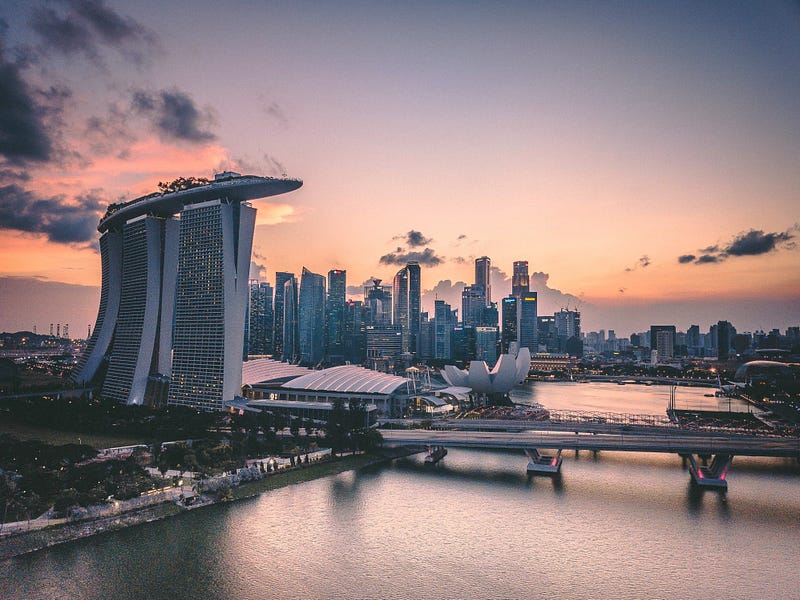
Photo by Swapnil Bapat on Unsplash


Severe restrictions

The penalty relates to alleged violations of the city-state’s securities laws. The prohibition order came into effect on Wednesday, carrying severe restrictions for Davies and Zhu.

During this nine-year period, Davies and Zhu are prohibited from engaging in any regulated activities in Singapore. They are also barred from managing, serving as directors, or holding substantial shares in any capital market services business within the territory of Singapore.

Loo Siew Yee, the Assistant Managing Director of Policy, Payments, and Financial Crime at MAS, emphasized the seriousness of the violations in a statement released by the central bank on Thursday. Yee stated:

“MAS takes a serious view of Mr. Zhu’s and Mr. Davies’ flagrant disregard of MAS’ regulatory requirements and dereliction of their directors’ duties.” She further asserted that MAS would take action against senior managers who engage in such misconduct.


Securities law violations

MAS’s decision to impose these sanctions on the 3AC co-founders was based on its findings of further securities law violations during investigations into 3AC and its founders. The regulatory authority accused Davies and Zhu of failing to inform MAS when 3AC hired a new business representative, providing false information to the regulator, and neglecting to establish an appropriate risk management framework.

3AC’s troubles stemmed from the crypto market crash that occurred last year, triggered by the Terra ecosystem’s collapse. The hedge fund’s leveraged crypto positions exposed it to billions in loan defaults, resulting in significant financial losses. Its lack of risk management had a cascading effect in crypto. Lenders like Celsius and BlockFi had exposure to 3AC, leading to further collapses later in 2022 as a consequence.

3AC’s creditors claim that the firm owes as much as $3.5 billion, and liquidators are now seeking to recover approximately $1.3 billion from Zhu and Davies, who allegedly incurred the debt when the firm was already insolvent.


Regulatory reprimands

This action by MAS follows last June’s reprimand of 3AC, which occurred just before the hedge fund filed for bankruptcy amid widely reported insolvency issues. At that time, MAS had criticized 3AC for providing false information, failing to report directorship changes involving Zhu and Davies, and exceeding the legal assets under management threshold.

It’s just the latest reprimand the duo have received from a regulator this year, though. Zhu and Davies have been busy in trying to get another start-up off the ground. Earlier this year, they launched OPNX, a crypto bankruptcy claims trading platform. The venture is based out of Dubai, and the firm reported in April that it had gotten significant VC backing.

Many of those that the company claimed were backing the venture disassociated themselves from those claims. The following month, the Dubai regulator, the Virtual Assets Regulatory Authority (VARA), reprimanded the OPNX founders, having issued an investor alert relative to the firm a few weeks prior to that. VARA's complaint was that the business had been operating without having acquired the appropriate licensing.

More to Read
View All
Policy & Regulation·

Aug 29, 2023

OKX and Bybit Exclude Sanctioned Russian Banks from P2P Services

OKX and Bybit Exclude Sanctioned Russian Banks from P2P ServicesIn response to the mounting pressure on crypto firms to improve general compliance standards, prominent digital asset exchanges OKX and Bybit, based in the Seychelles and Dubai, have decided to delist sanctioned Russian banks from their peer-to-peer (P2P) services.Photo by Eduardo Soares on UnsplashThe move by the two exchange platforms, brought to light by Russian media reports, comes just days after Binance had done the same.Tinkoff Bank and Sberbank, two significant Russian financial institutions, have been expunged from the P2P platforms of OKX and Bybit. This effectively removes the option for Russian crypto users to exchange their assets for fiat through these banks. The decision sees the exchanges fall into line with Western sanctions imposed on the banks due to Russia’s actions in Ukraine.Enforcement difficultiesWhile the removal of these banks from the platforms is a significant step, the nature of P2P transactions introduces complexities in enforcing such bans comprehensively. Reports indicate that certain users are still engaging in P2P transactions with these banks through private channels, showcasing the challenges in regulating this decentralized method of exchange.In the case of OKX, at the time of publication, the platform still allows Russian users to receive fiat through accounts held with the Russian Standard Bank and the Russian branch of Raiffeisen Bank.This action aligns OKX and Bybit with Binance, which faced a similar scenario last week. Binance came under scrutiny when it continued to list the sanctioned banks as part of its payment methods. Following a report by The Wall Street Journal, Binance eventually removed the banks from its platform.Binance’s compliance effortsA spokesperson from Binance conveyed that while the banks have been delisted, the company remains committed to ensuring compliance by continuously updating its systems.“We regularly update our systems to ensure compliance with local and global regulatory standards,” they said. “When gaps are pointed out to us, we seek to address and remediate them as soon as possible.”Despite this stance and the latest action it has taken, users on Binance’s P2P platform are still posting ads for the sale of crypto using the “green bank,” referring to the sanctioned banks, as the preferred method of payment.Western-imposed sanctions have led to significant economic challenges in Russia, pushing individuals and institutions towards cryptocurrencies as a potential solution. In a country that has previously banned private cryptocurrencies, the attraction of decentralized digital assets has grown stronger as a means to break through the sanctions-induced financial stranglehold.Sanctions impactReports from Russian financial institutions reveal dramatic declines in profits, some as high as 90%, as they find themselves cut off from the global payments network SWIFT. Tinkoff Bank, for instance, reported a substantial decline of 67% in the second quarter of 2022, attributing the drop to escalating global tensions.In April, the Bank of Russia introduced a bill that could potentially allow cryptocurrencies to be used in international trade, a measure aimed at mitigating the impact of sanctions. While this could potentially open doors for cross-border transactions involving cryptocurrencies, the restrictions on local transactions remain intact.

news
Markets·

Oct 07, 2023

BitMEX Co-Founder Forecasts $750K to $1 Million Bitcoin Price by 2026

BitMEX Co-Founder Forecasts $750K to $1 Million Bitcoin Price by 2026In a recent interview with YouTuber Tom Bilyeu, Arthur Hayes, Co-Founder of the Seychelles-registered cryptocurrency exchange and derivative trading platform BitMEX, has expressed his bullish outlook on Bitcoin’s future price, projecting a valuation of $750,000 to $1 million for the leading cryptocurrency by the year 2026.Photo by Kanchanara on UnsplashFinite supply to drive price dynamicHayes’ optimism is rooted in several factors that he believes will shape the next Bitcoin cycle. One of the key factors driving Hayes’ projection is Bitcoin’s limited supply. With a maximum cap of 21 million coins, Bitcoin’s scarcity is expected to propel the unit price of the asset in tandem with growing demand as more investors seek to secure a piece of this finite resource.The idea that Bitcoin’s scarcity will drive its value higher has been a fundamental tenet of the cryptocurrency since its inception. In 2010 the leading cryptocurrency’s pseudonymous Founder stated: “When someone tries to buy all the world’s supply of a scarce asset, the more they buy the higher the price goes.”ETF potentialHayes also highlighted the potential for Bitcoin spot exchange-traded funds (ETFs) to become available in major regulated markets. The introduction of Bitcoin ETFs could attract institutional investors and provide a more accessible way for the broader public to invest in Bitcoin, further boosting its demand.However, Hayes also speculates about the risks associated with a Bitcoin ETF. He stated: “Are we inviting in something that’s going to fundamentally change what Bitcoin is?”Geopolitical factorsGeopolitical uncertainty plays a significant role in Hayes’ forecast also. As global economic and political instability persists, investors may turn to Bitcoin and other alternative assets as hedges against traditional financial instruments.However, it’s important to note that Hayes contextualized his Bitcoin price prediction within a larger bullish macroeconomic environment. From his perspective the surge in asset prices will not be limited to cryptocurrencies alone. He anticipates a substantial boom in financial markets, with not only Bitcoin but also traditional assets like stocks experiencing substantial price growth.Hayes stated: “I think it will be the biggest boom in financial markets we have ever seen in human history. Bitcoin will have a ridiculous price, Nasdaq will have a ridiculous price, S&P will have a ridiculous price.”Known for his thoughtful and insightful writings on the subject area, Hayes wrote in July that he believes that Bitcoin will be the currency of choice when it comes to the growing need for artificial intelligence (AI) to work directly with a means of payment.$1 million BTC by 2026While Hayes’ projection of a $1 million Bitcoin price by 2026 may seem ambitious, his short-term predictions are more moderate. He foresees Bitcoin trading in the $30,000 range for the current year. Building upon that thesis, he maintains that the possibility exists of it reaching $70,000 by 2024.This aligns with the views of other industry analysts who anticipate challenges and headwinds in the near term. There’s little doubt that recent platform failures and speculation with regard to the health of other leading crypto platforms have been retarding market performance more recently.While the road ahead may hold fluctuations and challenges, many experts believe that Bitcoin’s long-term trajectory remains promising, driven by its unique attributes and the changing dynamics of global finance.

news
Policy & Regulation·

Jul 26, 2023

Netmarble’s MARBLEX Secures Whitelist Approval for MBX Token in Japan

Netmarble’s MARBLEX Secures Whitelist Approval for MBX Token in JapanSouth Korean gaming company Netmarble made an announcement today that its blockchain subsidiary, MARBLEX, has obtained whitelist approval for its governance token MBX in Japan. This marks a significant milestone for the project, opening up new opportunities for MBX’s utilization within the Japanese market.Photo by Eliobed Suarez on UnsplashCrypto listing in JapanIn Japan, crypto assets must undergo a rigorous review conducted by the Japanese Financial Services Agency (FSA) before being listed on crypto exchanges. Boasting its stability and reliability, MBX has become the first token from a Korean blockchain gaming project to be added to the Japanese whitelist of crypto assets.As part of its expansion plan, MARBLEX is in discussions with Zaif to arrange the listing of the MBX token on the Japanese crypto exchange in October.Utility expansion planMoon Jun-ki, Business Division Director of MARBLEX, expressed confidence in MBX’s competitiveness as a verified token. He highlighted MARBLEX’s strategy to introduce a token burn policy and expand the token’s utility, all aimed at establishing a sustainable and transparent ecosystem.These comments from Moon point to MARBLEX’s overhaul plan for MBX tokenomics. As a key step in this initiative, the blockchain firm burned 67% of its total 1 billion MBX distribution on July 19.

news
Loading