Top

HashKey’s New $100M Fund to Prioritize Altcoins

Web3 & Enterprise·September 02, 2023, 11:51 AM

HashKey Capital, the investment arm of Hong Kong-based crypto firm HashKey Group, is embarking on a new investment journey with the launch of a fund that predominantly targets major altcoins.
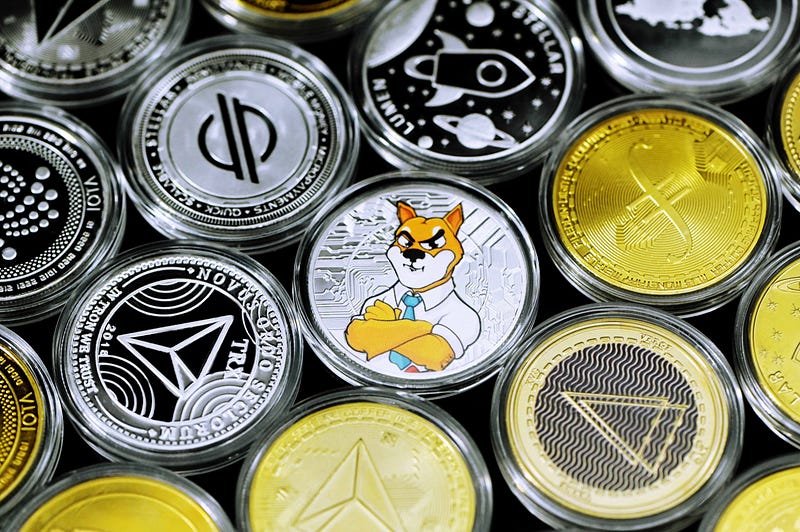
Photo by Kanchanara on Unsplash


50% altcoin allocation

In a recent interview with Reuters, Jupiter Zheng, the Portfolio Manager of the fund, revealed that less than 50% of the fund’s allocation will be directed towards Bitcoin (BTC) and Ethereum (ETH), the two largest cryptocurrencies.

The fund has already garnered attention from potential clients, primarily high-net-worth individuals and investment firms catering to affluent, high-net-worth Asian families. Zheng underscored the fund’s commitment to diversifying investment strategies, which he believes is necessary as a consequence of the Hong Kong stock market’s recent weakness.

“We see untapped demand from professional investors who wish to chase above-market returns in crypto,” Zheng noted, suggesting that the allure of crypto assets is becoming increasingly appealing to traditional investors.


$1 billion assets under management

HashKey Capital has $1 billion in assets under management, and the firm has set an ambitious target of raising $100 million for the newly launched fund within the next 12 months. This allocation strategy also includes a portion of the fund’s holdings in cash, allowing for flexibility in navigating the dynamic and volatile cryptocurrency market.

In addition to forging ahead with crypto investments, the company is actively establishing distribution channels with offshore Chinese financial institutions, expanding its reach and influence in the digital asset space.


Positive market outlook

Zheng remains optimistic about the crypto market’s future, expressing confidence that cryptocurrency prices are finding stability as industry liquidity improves. He cited several factors contributing to this stabilization, including the plateauing of US interest rates and the growing interest of large US asset managers in filing for spot Bitcoin ETFs, indicating a maturing and evolving industry sector.

Responding to news of the new fund, Ryan Selkis, CEO and Founder of crypto market intelligence firm Messari, said that he expected other funds to follow suit in 2024 given that “there’s a ton of inefficiency and mispricing in assets 50–500 by market cap.”

HashKey’s progression in the crypto investment space can be traced back to its acquisition of a Type 9 asset management license from Hong Kong’s Securities and Futures Commission last year. This license granted HashKey the ability to manage portfolios exclusively composed of virtual assets, laying the groundwork for its latest venture. It has since secured Type 1 and Type 7 licenses and recently started offering its products to retail investors in Hong Kong, being one of the first to do so.


Funding round

Earlier in the year, the company successfully closed a $500 million investment round for a fund dedicated to infrastructure, tooling, and applications that drive the widespread adoption of blockchain and crypto technologies. In April, it launched a wealth management service in response to demand from investors who were looking to gain exposure to digital assets.

Hong Kong’s welcoming stance towards cryptocurrencies and its proactive approach to addressing market demand for alternative assets have played a pivotal role in attracting digital asset firms. The city’s Securities and Futures Commission (SFC) has been granting licenses to crypto exchanges in alignment with its new licensing framework, opening up opportunities for retail investors to trade “large-cap tokens” on licensed platforms while implementing safeguards like knowledge tests, risk profiles, and reasonable exposure limits.


More to Read
View All
Web3 & Enterprise·

Oct 05, 2023

CMCC Global Launches $100 Million Fund for Asian Blockchain Startups

CMCC Global Launches $100 Million Fund for Asian Blockchain StartupsCMCC Global, a crypto-focused venture capital firm based in Hong Kong, has successfully raised $100 million for its newly established Titan Fund.That’s according to a report on Wednesday (local time) published by the South China Morning Post (SCMP). The fund is dedicated to providing crucial support to startups operating in Asia’s developing blockchain sector.Photo by Shubham Dhage on UnsplashProminent backersOver 30 prominent investors, including Winklevoss Capital and Animoca Brands Founder Yat Siu, have eagerly backed the initiative. Last month, CMCC led a funding round into Animoca. Among the notable investors joining this venture are EOS blockchain developer Block.one, Richard Li’s Pacific Century Group, and Hong Kong-based growth equity investment firm Jebsen Capital.The Titan Fund is structured to channel its capital into three primary investment categories: blockchain infrastructure, consumer applications, and crypto financial services. Martin Baumann, Co-Founder of CMCC Global, emphasized the fund’s commitment to fostering innovation in the blockchain space. He stated:“If Hong Kong continues on its route of embracing Web3, there will naturally be more and more entrepreneurs starting companies in that space. And we can be their first capital.”Exploiting Asia’s Web3 opportunityBased on commentary by Baumann earlier this year, the CMCC Global Co-Founder certainly believes that an opportunity has opened up in Asia where Web3 is concerned. In May Baumann told Bloomberg TV that regulatory issues unfolding in the United States represented an opportunity for Asia.In criticizing the US, Baumann stated:“The US has been quite negative from the regulatory perspective and it really seems to us that the US is shooting itself in the foot with a machine gun.”Developing upon the inherent opportunity implicated in that difficulty in the US, he said: “We see places like Hong Kong having a real opportunity at this point in time to bring those firms and entrepreneurs to the city.”There’s plenty of capital sitting on the sidelines waiting for the right entry valuations to pull the trigger,” he added.Hong Kong’s crypto ascendencyThe venture capitalist may have been right on both counts. This funding announcement coincides with Hong Kong’s resurgence in the crypto arena. Historically, the city had been home to industry giants like BitMEX and Alameda Research.Recent developments indicate that Hong Kong is actively collaborating with China to establish itself as a thriving hub for crypto innovation. The Chinese autonomous territory has been encouraging crypto start-ups on the Mainland to relocate to Hong Kong. In August, it granted licenses to HashKey Exchange and OSL to offer crypto trading services to retail traders.The Titan Fund’s successful capitalization demonstrates the growing interest and confidence in Asia’s blockchain ecosystem. CMCC Global, with its pool of investors, is aiming to play a pivotal role in supporting and nurturing the next wave of blockchain startups in the region.

news
Markets·

Sep 21, 2024

Hong Kong leads East Asia in crypto transaction growth

An analysis of data recently published as part of Chainalysis’ Global Cryptocurrency Adoption Index demonstrates that Hong Kong has recorded a year-on-year crypto transaction value growth rate of 85.6%.  On that basis, the territory accounts for the sixth-largest crypto economy in the world. Furthermore, Hong Kong ranks 30th in terms of global crypto adoption. That’s an improvement of 17 places, as it was ranked 47th in 2023. Regulatory framework aiding crypto adoptionAn excerpt from the 2024 Geography of Cryptocurrency Report by Chainalysis was published on September 18. It found that the steps taken in the Chinese autonomous territory in terms of laying down a regulatory framework for digital assets has led to this uptick in transactional activity, due to the increased adoption of digital assets by institutions.  Over the course of the past eighteen months, Hong Kong has launched crypto trading licensing. Earlier this year, exchange-traded funds (ETFs) were given the green light, with the subsequent launch of Bitcoin and Ethereum ETF products.  On the topic of ETF’s, Kevin Cui, CEO of digital asset trading platform OSL said that “as market conditions improve, we are seeing indications of a growing institutional interest that could lead to increased capital inflows in the near future.” Meanwhile, the Chinese autonomous territory is working towards the establishment of regulations that cover the issuance and trading of stablecoins.lil artsy on PexelsHong Kong key to Chinese crypto resurgenceIn terms of crypto adoption, mainland China ranked 11th this year, dropping down one place by comparison with last year. The report notes the complicated history China has had with cryptocurrency in recent years, given that a crypto trading ban remains in place. However, last year’s report pointed to the strong usage of centralized crypto exchanges by mainland China residents, which suggests that the ban has either been ineffective or poorly enforced.  The Chainalysis report speculates that “Hong Kong may finally influence China to re-open its doors to crypto.” This is not the first time that Chainalysis has made such an assertion. In last year’s report, it made a similar claim, suggesting that the development of Hong Kong as a crypto industry hub would lead to a softening in the stance of mainland China towards crypto. This year’s report suggests that mainland China residents have turned to over-the-counter (OTC) platforms in order to access crypto as a means towards preserving their wealth. The report quoted Ben Charoenwang, associate professor of finance at the INSEAD Asia Campus as stating: “Nowadays, if you want to move money out of China through traditional unofficial means like using mules, fees can be as high as 25 to 30 percent. The increasing use of OTC crypto in China suggests that people are looking for faster options to move money.” The report finds that five of the top 50 grassroots adopters of crypto, South Korea, China, Japan, Hong Kong and Taiwan, are located in East Asia. South Korea leads the region in terms of the most crypto value transacted metric. Chainalysis suggests that South Korea’s strong interest in altcoins signals that it will remain a leader in the region from a cryptocurrency innovation perspective.

news
Web3 & Enterprise·

Apr 16, 2025

Bitdeer pivots amid onset of Trump’s tariff war

In response to U.S. President Donald Trump’s imposition of tariffs on foreign imports into the United States, Singapore-based and Nasdaq-listed Bitdeer has pivoted in an effort to handle this latest challenge. In a discussion with Bloomberg, Jeff LaBerge, the company’s head of capital markets and strategic initiatives, said that rather than concentrating on sales and exporting crypto mining rigs, the company plans to utilize those rigs itself within its own mining operations.Photo by Traxer on UnsplashLaBerge stated: “Our plan going forward is to prioritize our self-mining.” 90-day windowThe company is also planning to take advantage of a 90-day tariff suspension period that the Trump administration put in place earlier this month, to ship mining machines from Southeast Asia to the United States.  In tandem with this short-term push on U.S. exports, it is expected that miners will focus on buying hardware during this time. Jaran Mellerud, CEO of Hashlabs Mining, told Cointelegraph last week that in the short term, there is likely to be a spike in mining rig imports into the U.S. Some reports have suggested that U.S.-based mining firms have chartered flights in an effort to quickly import mining equipment and avoid tariffs of up to 104%. Additional capital overheads for U.S. minersOver the longer term, the crypto mining services company CEO believes that tariffs will hurt U.S.-based miners, increasing their capital costs to a greater extent than in the case of overseas-based mining operations. Earlier this month Kristian Csepcsar, chief marketing officer (CMO) at Bitcoin mining technology firm, Braiins, similarly claimed that Trump administration tariff policy would likely harm domestic mining companies, while benefiting those located in regions such as Russia and Kazakhstan.  In another effort to deal with the challenge of tariffs on its products entering the United States, Bitdeer anticipates that it will begin production of its mining equipment in the U.S. sometime during H2 2025. Much has changed for the Singapore-based firm over the course of a short period of time. A month ago LaBerge told CoinDesk about its efforts to challenge the leading ASIC Bitcoin mining equipment manufacturers, Bitmain and MicroBT. He said that Bitdeer wants to become “the top player in the market,” while believing that it has the technology and know-how to do so. Challenging market conditionsEven before this tariff war bubbled over recently, the environment for Bitcoin miners was already proving to be difficult. Miners had been selling off Bitcoin reserves in recent weeks, taking profits while anticipating lower Bitcoin prices in the near future. American multinational financial services firm JPMorgan estimated recently that the market cap of the 14 U.S.-listed Bitcoin miners had fallen by 25% in March, writing off $6 billion in value in what was the third worst month for miners on record. Last month Bernstein analysts cut their 2025 price targets for a range of publicly-listed Bitcoin miners. Miners have been adapting to their business environment by upgrading equipment, cutting costs and diversifying into AI data hosting.

news
Loading