Top

Parameta and Solbric Korea to Create First Solar Power Plant Security Token Platform in Korea

Web3 & Enterprise·August 10, 2023, 5:55 AM

South Korean blockchain company Parameta (formerly known as Iconloop) said Tuesday it entered a business deal with Solbric Korea, a subsidiary of solar energy innovation company Next Solar Energy, to jointly establish the country’s first solar power plant security token platform that allows investors to make fractional investments in solar energy.
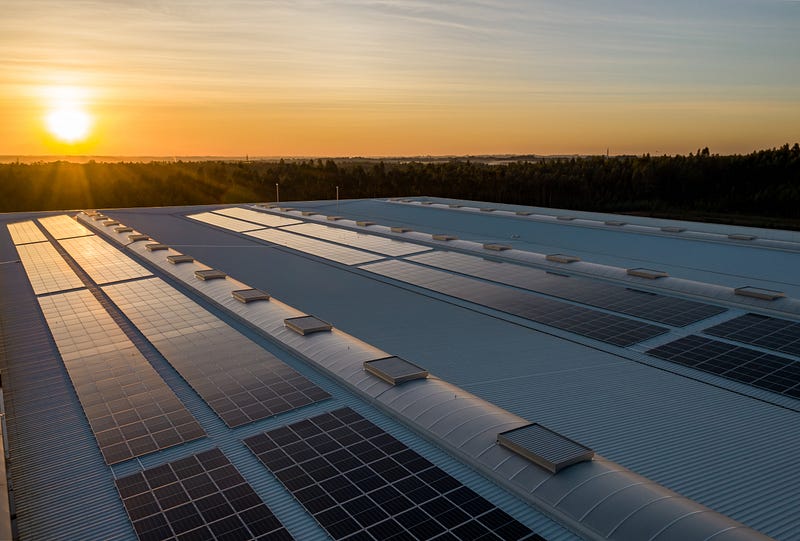
Photo by Nuno Marques on Unsplash


Receiving approval as an innovative financial service

In order to establish such a platform that designates solar power plants as underlying assets, they will jointly apply for a financial regulatory sandbox — a program introduced by the Korean government that offers a special and provisional regulatory exemption for financial services that have been recognized for their innovativeness.

Once the platform is recognized under the sandbox as an innovative financial service, the two companies will work together on the issuance and distribution of security tokens.


Expanding opportunities to invest in solar energy

Ultimately, Solbric aims to build a platform that brings security token technology to the solar power sector, which, until now, has presented limited investment opportunities for individual investors in Korea. It will allow them to trade securities and make small-scale, fractional investments in solar power plants.

To do so, Solbric intends to leverage the knowledge and expertise of its parent company, Next Solar Energy — an experienced veteran in the solar plant industry.

As its partner, Parameta will provide the necessary blockchain technology for constructing and managing the platform based on its security token offering service, Parameta S. This service uses tokens to allow fractional management of real-world assets (RWAs), making it easy to invest in and organize them. This offers more liquidity and flexibility compared to traditional investment methods.

“We will focus on providing investment returns to platform users as well as the unique experience of owning various solar power plants,” said Kang Jae-won, the CEO of Solbric Korea.


Increased institutional support

This project is made possible by the recent upturn in institutional support from Korean financial authorities that allows more security token offerings. Last month, the Korean Financial Services Commission ultimately granted regulatory exemptions to several fractional investment firms that have successfully completed the business reorganization as requested by the regulator. The Financial Supervisory Service has also decided to allow fractional investment businesses to apply for investment contract securities.

Taking advantage of this momentum, Solbric and Parameta plan to continually explore diverse business opportunities to establish their platform.

“We are currently working with various specialized companies, including Solbric, to expand our security token businesses in various fields such as solar power plants, mobility, real estate non-performing loans, carbon emission rights, and electric vehicle batteries,” said Kim Jong-hyup, CEO of Parameta.


More to Read
View All
Markets·

Nov 15, 2024

Sygnum survey reveals greater crypto allocation appetite in Singapore

Sygnum Bank, a digital asset bank based in Switzerland and Singapore, has conducted a survey which has identified that investors in Singapore are more interested in increasing their allocation to crypto than their international peers. The bank’s 2024 Future Finance survey states that while a global average of institutional investors of 47% plan to increase their exposure to crypto next year, in the case of Singapore-based institutional investors, 57% of them expressed the view that they would increase their crypto holdings in 2025.Photo by Precondo CA on UnsplashThe report states:  "Singapore investors exhibit a higher risk appetite and motivation to invest on average than respondents from other countries.” The annual survey, which was published on Nov. 14, collated insights garnered from more than 400 institutional and professional investors, distributed across 27 countries, with average investor experience of in excess of 10 years. 121 of the survey’s participants were based in Singapore, with the survey having been conducted during Q3 2024. Long-term confidenceSingaporean respondents suggested that they were confident in the long-term potential and outlook where cryptocurrencies are concerned. While the main reason for investing in crypto was to gain exposure to digital assets in line with a global trend (56%), 41% of respondents from the city-state cited portfolio diversification as their reason for investing in the emerging asset class.  75% of investors expressed the belief that regulatory clarity has improved recently. Growing confidence among institutional investors generally is likely to be developing due to increasing certainty relative to digital asset regulation. While Donald Trump had not been elected in the United States at the time that survey participants responded, it was looking increasingly likely that he would win the election.  That’s likely to have had a bearing on investor outlook, not just within the United States but internationally, given the implications in terms of positive regulation and an overall positive approach to crypto. 39% of Singaporean respondents cited yield-generation opportunities as their motivation in investing in digital assets. The recent advent of spot crypto exchange-traded funds (ETFs) stood out as another motivation for investors.  Breaking down specific areas of interest within the crypto sector, 71% of Singaporean respondents were interested in investment in layer-1 blockchain networks. Meanwhile, 56% expressed an interest in Web3 infrastructure investment options, with 41% showing an interest in layer-2 blockchain networks. Interest in asset tokenizationIn relation to tokenization, 47% of those surveyed in Singapore indicated an interest in tokenizing mutual funds and corporate bonds over and above other financial assets and products. When first proposed, real estate was considered the most obvious asset primed for tokenization but mutual funds and corporate bonds now appear to be gaining more traction. Asset tokenization has been garnering considerable attention in mainstream finance but especially so in Singapore. Local regulator, the Monetary Authority of Singapore, (MAS) has been running Project Guardian, a collaboration between MAS and the financial services industry with an emphasis on asset tokenization. The project recently brought in the German central bank, the World Bank, HSBC and markets infrastructure firm Euroclear as participants. 

news
Policy & Regulation·

May 21, 2024

Chinese police bust 1.9 billion USDT banking operation

In a major crackdown, the Chengdu Public Security Bureau announced on May 15 the dismantling of an extensive underground banking network, resulting in the arrest of 193 suspects across China in an operation that unveiled illegal businesses using the U.S. dollar stablecoin, Tether (USDT).Photo by DrawKit Illustrations on UnsplashUnauthorized foreign exchange settlements These activities involved illicit transactions amounting to approximately 13.8 billion yuan ($1.9 billion). The investigation began in November 2022 when authorities detected suspicious activities involving underground banks in Chengdu’s Longquanyi district. In response, a specialized task force was formed, integrating experts from various police departments, including economic investigation, cyber security and legal affairs. This team uncovered unauthorized foreign exchange settlements that bypassed national regulations. On June 1 of last year, acting on instructions received from the Ministry of Public Security, the task force conducted coordinated raids in several major cities, such as Shanghai and Shenzhen. These efforts led to the capture of key figures in the criminal syndicate, involving the arrest of 25 suspects. Law enforcement seized numerous bank cards, payment instructions and other digital payment instruments tied to the illegal operations during these raids. A broader investigation across 26 provinces has resulted in 193 suspects being arrested. Using USDT to evade regulationFurther investigations revealed that since January 2021, the syndicate exploited its import and export business to facilitate illegal activities. By using USDT as a medium, they bypassed official foreign exchange channels to service clients needing to transfer funds internationally. Moreover, these operations were intricately linked to other illicit activities, including financial fraud and smuggling. In a related development, on May 13, BeInCrypto reported that the Chinese government arrested six individuals responsible for illicit crypto transactions worth $295 million. These arrests highlight the challenges and risks associated with cryptocurrency in unregulated environments. Additionally, the Hong Kong police recently apprehended three men at a currency exchange shop following a deceptive transaction involving Tether’s USDT. The suspects allegedly showed a customer ceremonial "hell money" before deceitfully persuading him to transfer about $128,073 worth of USDT, only to refuse the agreed-upon cash exchange afterward.  According to the South China Morning Post (SCMP), hell banknotes are a form of ceremonial paper money burned as an offering to ancestors or deities in traditional Chinese culture. Late last year, USDT was used by a gang of gold smugglers in Nepal, who received $16 million in the Tether stablecoin in exchange for the precious metal. A joint investigation carried out by the authorities in Nepal and China led to the arrest of two Chinese and 13 Nepalese nationals in connection with the illicit activity. Over the course of the weekend, it emerged that two Chinese nationals had been charged by the authorities in the United States with money laundering through Bahamas-based Deltec Bank. Deltec acts as the primary banker for Tether, prompting longstanding Tether critics to suggest illicit activity relative to the stablecoin issuer’s dealings with the bank. This series of arrests and discoveries underscores the ongoing efforts of Chinese authorities to clamp down on illegal cryptocurrency activities. The activity also poses problems for Tether in its efforts to maintain compliance and stamp out illicit use in the face of ever-increasing regulatory scrutiny worldwide.

news
Policy & Regulation·

May 02, 2023

BitOasis Obtains First Early-Stage Broker Dealer License in Dubai

BitOasis Obtains First Early-Stage Broker Dealer License in DubaiBitOasis, a leading platform within the Middle East and North Africa (MENA) region for the purchase, sale and trading of cryptocurrency, has become the first crypto company to be awarded a broker-dealer license by the Dubai regulator.Photo by ZQ Lee on UnsplashMinimum viable productIn a blog post published to the company’s website on Monday, BitOasis outlined that it has received a minimum viable product (MVP) Operational License from the Virtual Asset Regulatory Authority (VARA) of Dubai. An MVP incorporates the minimum features necessary to satisfy early adopter clients.It’s a means through which a basic offering can be brought onto the market, feedback can be solicited and the product offering can be improved upon on that basis. From the regulator’s perspective, by offering an MVP licensing programme, it too can adjust regulation as products are further developed.BitOasis CEO and Co-Founder Ola Doudin took to Twitter to welcome the news, outlining that the award of the license is “an important milestone for @bitoasis , the Emirate of Dubai and the growing UAE crypto ecosystem.”The license award now allows BitOasis to provide broker-dealer services in respect of virtual assets under VARAs regulatory oversight, to qualified institutional and retail investors, while basing operations out of Dubai.Serving GCC and MENA regionsBitOasis was founded in 2016 by Doudin alongside Daniel Robenek. It’s focusing its efforts on servicing the Gulf Cooperation Council (GCC) area (which covers six Arab countries, Bahrain, Kuwait, Oman, Qatar, Saudi Arabia and the United Arab Emirates), together with the broader MENA region. BitOasis has also obtained “in-principle” approval from the regulator in Bahrain.The platform offers clients the ability to trade in excess of sixty cryptocurrencies in trading pairs with fiat currencies such as the US dollar (USD), the United Arab Emirates dirham (AED), the Saudi rial (SAR) and the Turkish lira (TL). In developing the business, BitOasis has undergone six funding rounds to date, including two initial seed rounds, together with Series A and Series B-level funding. Its backers include companies such as Banvest, Pantera Capital, Digital Currency Group, Wamda Capital and Global Founders Capital.Strategic partnershipsThe company stated that it intends to leverage the license to “launch strategic partnerships in Dubai and across the United Arab Emirates.” Additionally, the licensing will enable the company to launch new virtual asset products “with a continued focus on driving accessibility, consumer protection and utility across the virtual asset ecosystem.”VARAs CEO Henson Orser welcomed BitOasis to the Dubai regulator’s MVP programme phase and outlined that “the VARA ecosystem aims to strike a balance between value creation, risk mitigation, and enhanced investment opportunities with consumer protection at its core.”Dubai and the United Arab Emirates more broadly, have been moving at pace more recently in an effort to develop a regional hub for the virtual assets industry. Last month it emerged that the UAE had begun accepting licensing applications from crypto companies and only a number of weeks later, Dubai’s VARA has already awarded its first license.A number of weeks ago, crypto exchange Bybit announced that it was basing its operations out of Dubai. VARA is licensing crypto companies on a stage by stage basis. In response to a number of high profile crypto firm failures in other jurisdictions in 2022, the Dubai regulator outlined in April that it was stepping up its level of scrutiny of crypto businesses.

news
Loading
