Top

P2E Game Covenant Child Developer Partners with Pala for Global NFT Collaboration

Web3 & Enterprise·July 18, 2023, 6:49 AM

CityLabs, a South Korean smart city integration platform company, made an announcement today regarding its subsidiary, Metablock, which has entered into a memorandum of understanding (MOU) with Pala, the nation’s largest non-fungible token (NFT) trading platform.

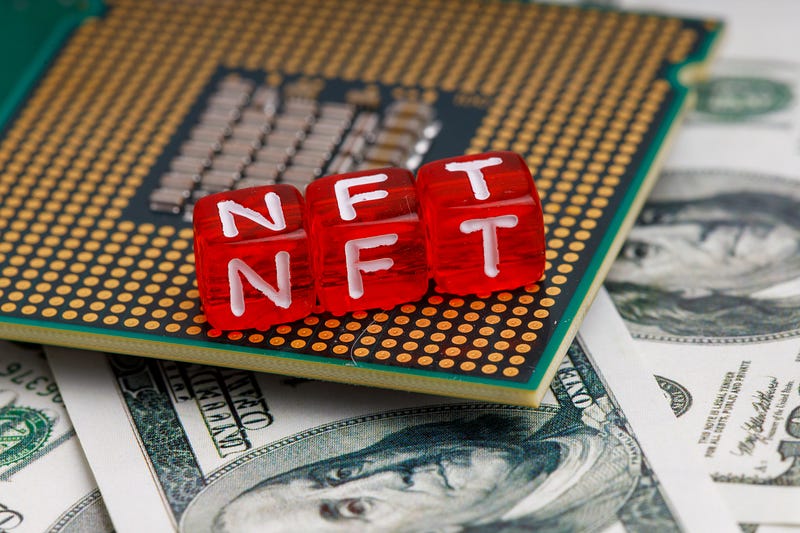
Photo by Andrey Metelev on Unsplash


Global expansion

According to a report by Newsis, the collaboration between the two companies aims to explore various cooperative efforts in the global development and expansion of NFT projects related to games. To accomplish this, they will utilize the intellectual properties (IPs) of Covenant Child, a global play-to-earn (P2E) game developed by MetaBlock.


NFT marketplace

The initial step of this partnership involves the establishment of an NFT trading platform. MetaBlock recently concluded the final closed beta test for Covenant Child on a global scale. In the upcoming months, the company plans to launch a dedicated NFT marketplace for Covenant Child sometime during the open beta test period. Additionally, MetaBlock will conduct pre-sales of NFTs and list the governance token on cryptocurrency exchanges.

Cho Young-joong, CEO of CityLabs, expressed enthusiasm for the partnership, noting that it will provide users with a more convenient and reliable NFT trading environment. Cho further emphasized the company’s commitment to creating an infrastructure that allows users to readily enjoy content developed on MetaBlock.

More to Read
View All
Markets·

Feb 03, 2025

StashAway opens access to Fidelity crypto ETFs in Malaysia

StashAway Malaysia, a Malaysian Securities Commission (SC)-licensed digital investment platform, has extended its market offering to include crypto exchange-traded funds (ETFs) within the Southeast Asian nation. Malaysian daily English language newspaper the Sun reported on Jan. 22 that StashAway will enable Malaysians to invest in two top-tier cryptocurrencies, Bitcoin (BTC) and Ethereum (ETH), through its regulated platform.Photo by Traxer on UnsplashFidelity productsThe company is providing its Malaysian clientele access to crypto investment products offered by American multinational financial services company Fidelity Investments. These include the Fidelity Wise Origin Bitcoin Fund (FBTC) and the Fidelity Ethereum Fund (FETH). StashAway Malaysia Country Manager Wong Wai Ken explained the company’s rationale in adding the two products. He stated: “Many of our clients have expressed interest in the long-term potential of major cryptocurrencies like Bitcoin but have been hesitant because of security concerns or the complexities of navigating crypto exchanges. We’re now offering them a familiar and safe way to diversify their portfolios by incorporating crypto through a platform they already know and trust.” On a previous occasion, Wong told the Sun that its role is to help investors to diversify their portfolios. Adding access to cryptocurrency fits that objective. The StashAway executive believes that while there may be growing mainstream adoption of cryptocurrency, many investors are turned off gaining exposure due to the risks involved with self-custody or the fees and counterparty risk involved with cryptocurrency exchanges. StashAway charges management fees ranging from 0.2% to 0.8%. The Fidelity crypto ETF products will be offered with a 0.25% annual management fee.  Last June, Malaysian commercial bank Affin Bank became the first entity to offer a crypto ETF in Malaysia. The bank partnered with local fund management company Cross Light Capital to launch the actively managed digital asset fund. Titled the “Performa Digital Asset Fund,” the product incorporates investment in Bitcoin and Ether exchange-traded products (ETPs), with the remaining third invested in blockchain-related equities. The approval of eleven Bitcoin ETFs in the United States led to greater consideration for the approval and addition of such products internationally. However, in the first few months following the launch of these products, regulators, exchange platforms and asset management firms still remained cautious.  In March of last year, Bursa Malaysia, Malaysia’s stock exchange, dismissed the notion of adding cryptocurrency to its multi-asset exchange. Within the region, regulators in Singapore and Thailand both dismissed the idea of enabling Bitcoin ETFs within their markets.  Since then, Thailand’s regulator has moved closer in its consideration of such a product offering. In the case of Malaysia, earlier this month, the country’s Prime Minister, Datuk Seri Anwar Ibrahim, called for stakeholders such as the central bank to focus on cryptocurrency so that the Southeast Asian nation doesn’t get left behind. StashAway is headquartered in Singapore. Besides Singapore and Malaysia, the company also serves investors in Thailand, the United Arab Emirates (UAE) and Hong Kong. The digital platform has 50,000 users in Malaysia, where it serves retail and accredited investors. The company was the first robo-advisor platform to acquire a Capital Markets Services License from the SC in Malaysia.

news
Policy & Regulation·

Jul 06, 2023

UAE’s RAK DAO Partners with HBAR Foundation to Support Web3 Startups

UAE’s RAK DAO Partners with HBAR Foundation to Support Web3 StartupsRAK Digital Assets Oasis (RAK DAO), the world’s first free zone dedicated to digital and virtual asset companies located within the United Arab Emirates (UAE), has announced a collaboration with the HBAR Foundation which aims to provide growth and funding opportunities to members of the free zone.Leveraging blockchain technologyThe Cayman Islands-based HBAR Foundation, the project team behind the Hedera public ledger, will assist RAK DAO members in leveraging cutting-edge technologies, including blockchain, and building economies and applications on Hedera.In a joint statement released on Tuesday, the partners outlined the benefits of the collaboration, which include a grant program, financial backing processes, and specialized expert support in technology, marketing, and business development. They also aim to support the scaling of adoption and innovation of new ideas in the Web3 space.Photo by Mostafa Ashraf Mostafa on UnsplashRas Al Khaimah free zoneSheikh Mohammed bin Humaid Al Qasimi, Chairman of RAK Digital Assets Oasis, expressed his excitement about the partnership, stating: “Together, we are unlocking a world of new possibilities, empowering entrepreneurs, and propelling innovation forward. This collaboration is a testament to our shared commitment to driving sustainable growth and shaping a future where Ras Al Khaimah emerges as a global leader in the digital economy.”Ras Al Khaimah is the largest city within the Emirate of the same name. It’s the sixth largest city in the UAE and home to the RAK DAO free zone.In March, Ras Al Khaimah enacted a law to establish RAK Digital Assets Oasis, demonstrating its commitment to diversification, attracting new businesses, and positioning itself as a global tech center. The free zone is exclusively focused on digital and virtual asset companies operating in various sectors such as the metaverse, blockchain, utility tokens, virtual asset wallets, non-fungible tokens, decentralized autonomous organizations (DAOs), decentralized applications, and other Web3-related businesses.Various initiativesAs part of the collaboration, RAK Digital Assets Oasis and HBAR Foundation will undertake several initiatives, including start-up and scale-up pitching sessions, opportunities for partners and investors to connect, and exploration of joint projects such as venture studios or accelerators. Grantees of the HBAR Foundation will also benefit from discounted set-up and licensing packages to establish their presence within RAK Digital Assets Oasis.Shayne Higdon, CEO of HBAR Foundation, acknowledged the UAE’s reputation as a dynamic hub for Web3 innovation and its ability to attract global enterprises and top-tier talent. Higdon stated: “Through this exclusive relationship we are honored to provide grantees with greater access to the UAE while working together to establish RAK Digital Assets Oasis as a major hub for the Web3 and digital assets sector.”The UAE has been actively investing in its infrastructure and implementing policy reforms to attract more entrepreneurs and businesses, aiming to grow its non-oil sector. The country’s digital economy is projected to surpass $140 billion by 2031, up from nearly $38 billion at present, according to a report by the Dubai Chamber of Digital Economy in February.

news
Policy & Regulation·

Sep 27, 2023

Upcoming Regulatory Framework in Taiwan Sees Crypto Exchanges Unite

Upcoming Regulatory Framework in Taiwan Sees Crypto Exchanges UniteIn preparation for the impending arrival of a regulatory framework for cryptocurrencies in Taiwan, nine prominent cryptocurrency firms have announced their collective efforts to establish an industry association.The nine exchange businesses announced the development via a press release which was published on Tuesday. The move comes in anticipation of Taiwan’s Financial Supervisory Commission (FSC) releasing comprehensive guidelines on cryptocurrency trading and payments by the end of September.Photo by Timo Volz on UnsplashDeveloping regulatory environmentThe industry body will include participation from native exchanges such as MaiCoin, BitoGroup, and ACE. While Taiwan has been behind the regulatory curve until now where crypto is concerned, the one measure that the FSC had already taken steps to mandate was that virtual asset services providers (VASPs) in Taiwan must adhere to the country’s anti-money laundering (AML) regulations. However, numerous other intricacies unique to the cryptocurrency industry still require careful consideration and regulation.Authorities in Taiwan have also put forward ten guiding principles for VASPs, designed to protect Taiwanese consumers.The forthcoming guidelines aim to address these concerns by introducing a comprehensive set of rules inspired by the VASP licensing framework in Hong Kong. One of the primary focuses of these proposed guidelines is consumer protection. They advocate for specific hot and cold wallet ratios for customer deposits with cryptocurrency exchanges, a measure designed to safeguard customer funds. Additionally, the guidelines suggest mandatory insurance against user losses to further enhance consumer confidence.Moreover, the FSC’s guidelines intend to prevent offshore cryptocurrency exchanges from operating onshore in Taiwan without proper compliance registration. This step aims to ensure that all participants in Taiwan’s cryptocurrency market adhere to uniform standards.In a bid to stabilize the Taiwanese financial system and prevent deceptive advertising practices, the guidelines also propose a ban on stablecoins linked to the Taiwanese dollar and impose restrictions on foreign exchange advertising within the country.Enabling self-regulationRegulators have also proposed the classification of crypto regulations within their own novel business category. As part of that initiative, officials expressed an interest in fostering self-regulation. The formation of this industry group could be deemed to be an encouraging sign relative to that aspiration.The nine cryptocurrency firms forming the industry association have established a working group led by Winston Hsiao, Co-Founder of XREX. This group aims to expedite the development of self-regulatory rules based on the forthcoming FSC guidelines.Wayne Huang, another Co-Founder of XREX, expressed his hope that the new FSC guidelines will provide the cryptocurrency industry with legitimacy, oversight, a clear growth trajectory, and an accelerated path to earn public trust.The formation of this industry association, coupled with the impending release of the FSC’s comprehensive regulatory guidelines, marks a significant milestone for Taiwan’s cryptocurrency sector. As the industry evolves, these proactive measures seek to ensure its stability, security, and compliance with international standards.

news
Loading