Top

BitMEX Launches Bespoke Service in Hong Kong

Web3 & Enterprise·May 24, 2023, 1:52 AM

Seychelles-based cryptocurrency exchange and derivative trading platform BitMEX announced on Monday that it is launching a dedicated virtual asset service for its Hong Kong customers.

The exchange published a blog post to its website in which it said that it is in the process of launching “BitMEX Hong Kong,” a dedicated service offering that will be set up on a transitional basis initially. The company is currently in the process of securing a virtual asset service provider (VASP) license from the Hong Kong regulator, the Securities Futures Commission (SFC). Licensing becomes effective in the Chinese autonomous territory on June 1.

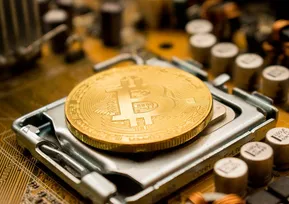
Photo by Karolina Grabowska on Pexels


Dedicated mobile app

Among the features the exchange intends to offer its Hong Kong-based customers is a bespoke app, catering specifically to users in the city. The platform will offer Hongkongers the ability to buy and sell cryptocurrencies with eleven spot trading pairs. From an on-boarding and off-boarding perspective, the firm will facilitate the conversion of cryptocurrencies into over thirty fiat currencies.

The company is looking to add value by offering additional services such as portfolio management and real-time deposits and withdrawals. BitMEX plans to enable additional functionality such as watchlists and detailed real-time data. Both of these features will enable service users to identify and follow crypto market trends.


Licensing preparations

While the offering attempts to meet the specific needs of Hongkongers, it's likely that the main motivation relates to VASP licensing. The regulatory requirements in Hong Kong are likely to have distinct facets that would necessitate the company to tease out its service to Hong Kong citizens from its global platform.

The SFC has indicated on Tuesday that it will enable crypto trading for retail investors. Notwithstanding that, it’s not doing that without the incorporation of several measures to protect the interests of retail users. Any promotions or incentives that lead a marketing effort with free gifts, and this will likely include token airdrops, will be prohibited.

Minimum capital liquidity requirements are being set. Furthermore, client assets will have to be segregated from exchange assets, although the Commission doesn’t mind if the VASP simply segregates said funds itself or does so by way of using an escrow service.

Stephan Lutz, acting CEO and group CFO at Bitmex, commented on the development: “We are optimistic that Hong Kong will achieve its ambition of becoming a world-leading Web3 role model city and potentially the Web3 hub for China in years to come.”

On May 29, the firm will transfer existing Hong Kong-based customers from its global platform to its new affiliated Hong Kong entity, HDR BMEX Limited. Remaining account balances will be transferred over on that date. There will be no requirement for Hong Kong-based users to undertake additional KYC (know-your-customer) checks or account verification.

Earlier this month, the exchange added two additional digital assets ($SUI & $PEPE) to its range of available perpetual contracts.


More to Read
View All
Web3 & Enterprise·

Aug 04, 2025

UAE crypto miner establishes $150M crypto treasury

Crypto infrastructure, mining and investment firm Phoenix Group, a company based in the United Arab Emirates (UAE) and publicly listed on the Abu Dhabi Securities Exchange (ADX), has established a $150 million crypto treasury.Photo by Jievani Weerasinghe on UnsplashFirst ADX-listed firm to establish crypto treasuryThe development emerged as the company released its results for Q2 2025. Phoenix Group explained in a press release that its activities in Q2 led to it becoming the first ADX-listed company to establish a strategic crypto treasury with Bitcoin (BTC) and Solana (SOL) holdings valued at $150 million. Phoenix asserted that unlike its competitors which are burdened by debt, it has a healthy balance sheet, with debt of just $16 million. This has enabled it to pursue the establishment of a strategic crypto reserve. The company is also expanding into AI-related activities, with plans to repurpose part of its U.S. infrastructure. That adjustment will allow the firm to establish a multi-use compute facility, enabling it to build out its AI vertical. Phoenix Group Co-Founder and CEO Munaf Ali said that Phoenix is working towards building out one gigawatt of hybrid infrastructure by 2027. Ali also commented on the pursuit of a crypto treasury, stating:“Holding Bitcoin and other strategic digital assets isn’t just about exposure. It’s about alignment. We believe in the long-term value these networks represent, and our treasury strategy reflects that belief.”DWF Ventures, the ventures arm of crypto market maker DWF Labs that relocated its headquarters from Singapore to Abu Dhabi earlier this year, released a report in June revealing that publicly-listed companies that have adopted a crypto treasury strategy have amassed holdings of $76 billion in crypto. Phoenix Group has disclosed that to date, it has accumulated 514 Bitcoin and over 630,000 Solana with a view towards holding these digital assets in the long term. Earlier this year, American digital asset investment firm Sarson Funds outlined that the UAE is playing a significant role in advancing Bitcoin adoption at a corporate level in the context of the ongoing trend towards the pursuit of a Bitcoin corporate treasury strategy. Miners accumulatingPhoenix Group isn’t the only company involved in crypto mining to establish a crypto corporate treasury recently. In June, American miner BitMine Immersion Technologies disclosed that it was raising $18 million through a public share offering to buy Bitcoin. Since then, it has been accumulating Ether (ETH). As of July 24, the firm held over 300,000 ETH, with plans to raise $4.5 billion to fuel further ETH purchases. MARA Holdings, a publicly-listed American Bitcoin miner, has also confirmed that its treasury now extends beyond Bitcoin that it mined itself. Phoenix Group confirmed that it mined 336 BTC in Q2, with 689 BTC mined over the course of H1 2025. Founded in 2017, the firm debuted on the ADX in December 2023 with its stock immediately surging by 50% from its initial public offering (IPO) launch price. The firm’s share price has also performed well in 2025, surging 72% from April to June.

news
Policy & Regulation·

Feb 01, 2024

Terraform Labs claims bankruptcy protection will help SEC lawsuit appeal

Singapore’s Terraform Labs, the company founded by incarcerated crypto entrepreneur Do Kwon, has filed for Chapter 11 bankruptcy protection as a mechanism to shield itself from potential severe penalties in the U.S. Securities and Exchange Commission's (SEC) securities fraud lawsuit.Photo by Melinda Gimpel on UnsplashPursuing an appealThe bankruptcy filing, submitted on Tuesday in the U.S. Bankruptcy Court for the District of Delaware, aims to allow Terraform Labs to pursue an appeal against the SEC's allegations. In the filing, Terraform Labs CEO Chris Amani emphasized the critical nature of the bankruptcy protection for the company's ongoing operations, preservation of value for creditors, including the Terra community, and the pursuit of an appeal against the SEC enforcement action. Amani expressed concerns that, without Chapter 11 protection, the company could face liquidation after the trial, forfeiting its right to appeal and leading to disastrous consequences for its business. Having acted as Terraform’s chief operating officer earlier in 2023, last July Amani was appointed as the firm’s CEO. Protection afforded by Chapter 11The estimated assets and liabilities of Terraform Labs fall between $100 million and $500 million, as disclosed in the firm’s bankruptcy filing earlier this month. Amani highlighted the potential financial strain resulting from a substantial money judgment, indicating that the company might not be able to satisfy such a judgment or post the necessary supersedeas bond for an appeal, a bond that must be provided by a petitioner who attempts to have a judgment set aside, without the protection afforded by Chapter 11. The SEC charged Terraform Labs and former CEO Do Kwon with securities fraud in February 2023, accusing them of orchestrating a "multi-billion dollar crypto asset securities fraud." The Commission claimed the company raised billions from investors through unregistered transactions, offering an interconnected suite of crypto asset securities. Terraform Labs disputes the SEC's summary judgment decision, asserting that the cryptocurrency tokens in question are not securities under the Acts and that the SEC's jurisdiction is not applicable. The potential consequences of liquidation extend beyond the company itself, impacting hundreds of thousands of Luna cryptocurrency holders, the same individuals the SEC purportedly seeks to protect. Luna operates on the Terra blockchain maintained by Terraform Labs. Terraform Labs, known for the algorithmic stablecoin TerraUSD and its sister cryptocurrency Luna, filed for bankruptcy protection in the wake of the infamous collapse of both in May 2022. The SEC's case stems from that $40 billion collapse of TerraUSD and a previous version of Luna, accusing Terraform Labs and Kwon of misleading investors about the stability of TerraUSD. Kwon was arrested in March of last year in Montenegro for using false documents. He is currently detained in Montenegro, following his attempt to travel to Dubai with a fake Costa Rican passport. The Terraform founder is currently awaiting extradition to either the United States or South Korea. Both Do Kwon and Terraform Labs deny committing fraud, with the SEC trial scheduled to commence in New York in late March.   

news
Markets·

Jan 18, 2024

Circle report highlights APAC moving ahead in stablecoin adoption

In a recent report, Circle Internet Financial, the issuer of the USDC stablecoin, emphasized the growing adaptability of the Asian population towards digital currencies. This trend indicates a substantial potential for increased stablecoin usage in the Asia Pacific region. On Monday, the firm published "The State of the USDC Economy 2024 Report," providing a trove of relevant and timely data. Since its launch in 2018, the USDC stablecoin has facilitated over $12 trillion in blockchain transactions. The focus of the report is on the surge in remittances flowing into Asia, highlighting its growing presence. Remittances of $130 billion into AsiaAccording to a World Bank press release, remittances to Asia reached $130 billion in 2022, with the average cost of transferring $200 standing at 5.7% in the last quarter of the year. Meanwhile, the region accounted for 29% of all global digital asset value received, surpassing North America's 19% and Western Europe's 22%. Against this backdrop, the report sheds light on Circle's strategic partnership with Coins.ph, a crypto exchange in the Philippines, which aims to tap into the country's personal remittance demand, estimated at around $36 billion annually.  In another blog post, the company also dispels the notion that stablecoins are primarily used for speculative trading, citing a 90% decline in such activities over the past five years. This shift in usage patterns highlights the growing acceptance and adoption of stablecoins for practical applications like remittances and trade finance.Photo by Marjan Blan on UnsplashIncreasingly important role in trade financeImportantly, Circle asserts that USDC can play a role in closing the region's $510 billion trade finance gap. This gap represents the lack of liquidity available to companies for cross-border remittances and credit, particularly affecting emerging markets with capital outflow restrictions. The report underlines how businesses in these markets often struggle to secure funding for international trade, and USDC is emerging as a solution. One notable case study is Taipei-based XREX, which utilizes USDC to build financial pipelines between countries, leveraging the deep dollar liquidity in Taiwan to address the dollar scarcity in other Southeast Asian economies. This exemplifies how stablecoins like USDC are contributing to bridging financial gaps and facilitating international trade in regions with limited access to traditional banking services. Stablecoin-specific regulationThe regulatory landscape in the Asia-Pacific region is also evolving to accommodate stablecoins. Countries like Singapore, Hong Kong and Japan have implemented or proposed frameworks for stablecoin regulation, aligning with the growing importance of digital assets in the financial ecosystem. Circle has become increasingly active within the APAC region. In November, the firm joined forces with Japanese financial services conglomerate SBI Holdings to increase the circulation of USDC within Japan. Having been awarded a Major Payments Institution (MPI) license in Singapore in June, Circle followed that up later in the year by launching a zero-fee USDC minting facility within the city-state. Considering these developments, the Asia-Pacific region, with its large unbanked population and significant digital wallet usage, is predicted to witness quick adoption of stablecoins for cross-border payments.

news
Loading