Top

ClayStack expands into Ethereum restaking ahead of token launch

Web3 & Enterprise·January 25, 2024, 7:35 AM

ClayStack, the crypto liquid staking platform, has made a strategic move into the Ethereum restaking arena through EigenLayer, providing users with reward points in anticipation of its upcoming token launch.
https://asset.coinness.com/en/news/339af2bbef0b5d7051cc6407458b2a5f.webp
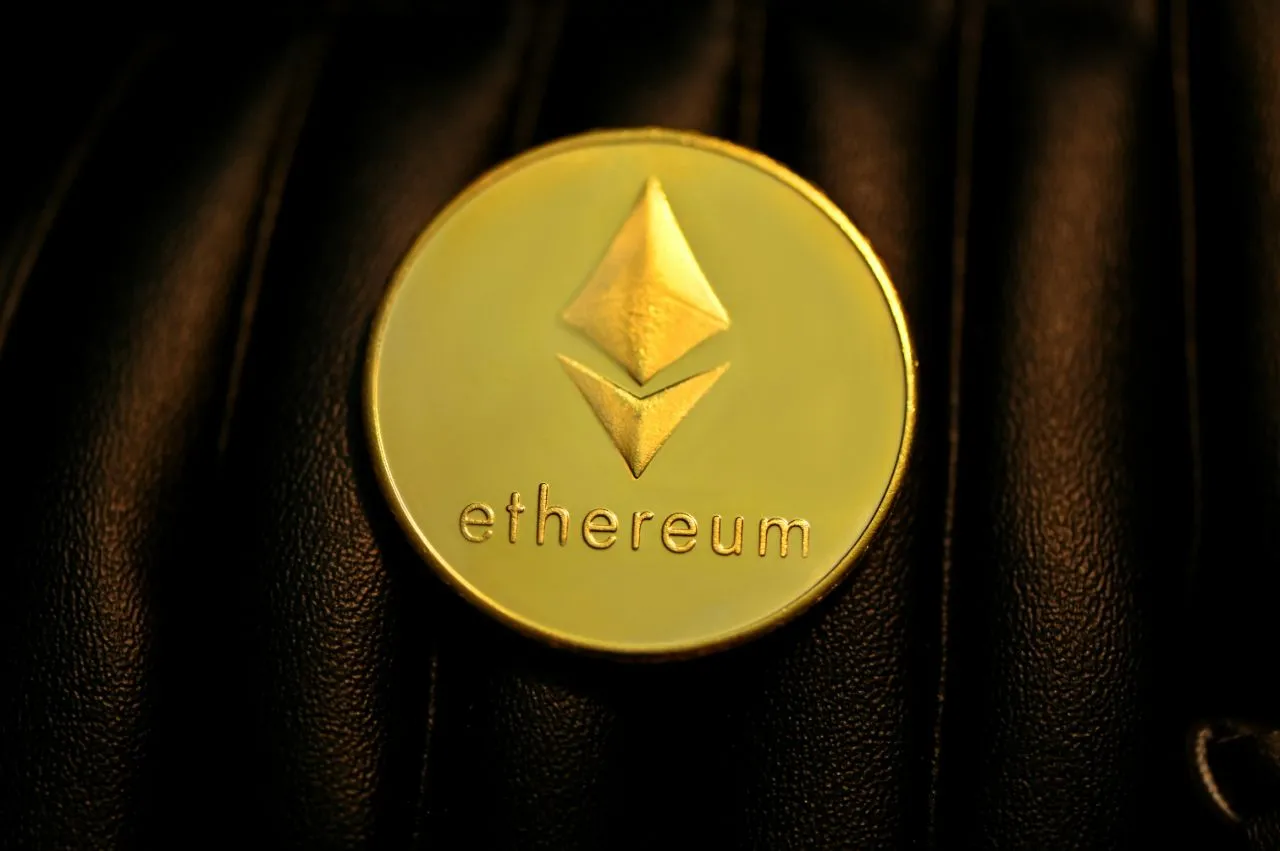
Photo by Kanchanara on Unsplash

‘Redefining the staking landscape’

The Singaporean platform describes its mission as redefining “the staking landscape by helping users unlock the underlying value of their crypto assets, and we are doing this by building a decentralized cross-chain liquid staking protocol.”


In its efforts to deliver on that mission, it appears that the crypto startup is set to convert its Ethereum liquid staking token, csETH, into a liquid restaking token, leveraging the Ethereum restaking protocol offered by EigenLayer. Eigenlayer enables restaked sidechains, through which ETH restakers can participate in Ethereum-centric consensus protocols.


Reward points

In an announcement on Tuesday, ClayStack revealed its plan to offer reward points to users participating in Ethereum restaking, with a 1:1 ratio for redemption when the platform's token is launched. Each clay point earned will be redeemable for one clay token during the token launch. Notably, the platform distinguishes itself by offering a 1:1 redemption system, setting it apart from other points programs.


Founder and CEO Mohak Agarwal explained how the project is adopting EigenLayer's protocol for this new service. Agarwal had teased that the project had something new to offer in the pipeline when taking to social media last week, writing:

”We are entering into a new era where staking will become more dynamic, accessible, and rewarding for the entire DeFi community.”


Currently, ClayStack accepts native ETH for direct restaking on EigenLayer. Agarwal confirmed to The Block that other liquid staking tokens, such as Lido staked ether (stETH) and Rocket Pool ether (rETH), will be integrated into the platform in the coming days. He emphasized that these tokens will be directly deposited on EigenLayer, streamlining the restaking process.


Growing interest in restaking

Ethereum restaking has gained significant traction since EigenLayer's launch in June of the previous year, with a total value locked (TVL) in smart contracts reaching approximately $1.7 billion. Renzo Protocol recently entered the Ethereum restaking space via EigenLayer, securing a $3.2 million seed funding round. Despite being in beta, Renzo has already achieved a TVL exceeding $116 million.


ClayStack's TVL currently stands at around $2.25 million, having initially launched liquid staking for Polygon's MATIC token in 2022. Following that, the platform introduced Ethereum liquid staking in September. However, the latest move marks a shift in focus towards Ethereum restaking due to challenges faced on the Polygon network.


Agarwal outlined the reward structure, stating that 20 clay points will be allocated per ETH per week, with rates subject to change every Monday but generally remaining constant throughout the week. There are no minimum or maximum points for individual users, although there is a weekly total cap for all users combined, which refreshes at the beginning of each week.


More to Read
View All
Web3 & Enterprise·

Dec 20, 2023

MEVerse and XPLA forge partnership to herald new era of blockchain gaming

MEVerse and XPLA forge partnership to herald new era of blockchain gamingMEVerse, the blockchain metaverse platform operated by South Korean gaming company ME2ON Group, and global layer 1 blockchain XPLA have established a partnership to share their respective technologies and create content to popularize Web3 gaming, according to an official announcement on XPLA’s Medium on Wednesday (KST). Their larger goal outlines a commitment to redefining the industry’s landscape by creating a dynamic and engaging metaverse for users worldwide.Photo by Scott Graham on UnsplashHigh hopes“XPLA aims to broaden the horizons of the Web3 industry and contribute to the popularization of blockchain through collaboration with various projects. We plan to work closely with the MEVerse platform, which has secured a high-level lineup of Web3 games, to provide participants with an even richer experience,” said Paul Kim, Team Leader at XPLA.Seamless metaverse experienceMEVerse is known for leveraging its high-speed blockchain technology, which can process 9,000 transactions per second, to help users immerse themselves in the metaverse and enjoy the content it has to offer. Notably, it employs a Proof of Formulation (PoF) consensus algorithm developed by blockchain service platform FLETA — a more eco-friendly alternative to Proof of Work (PoW) that prevents forks by confirming blocks and transactions in real time. The platform also implements cross-chain technology to enhance scalability and interoperability.MEVerse’s blockchain infrastructure includes the Web3 P2E casual game portal MEVerse GameZ, non-fungible token (NFT) marketplace MEVerse DEX, blockchain explorer MEVerse Scan, and more. It also features games like X Heroes: NFT War and Pocket Battles: NFT War.This development is the newest partnership in XPLA’s growing lineup. The platform recently teamed up with Study-to-Earn (S2E) project EDUM and Game and Earn (G&E) platform PERPLAY in an effort to branch out its business.

news
Web3 & Enterprise·

Jun 02, 2023

Gemini Targets UAE Crypto License

Gemini Targets UAE Crypto LicenseGemini, the US-headquartered cryptocurrency exchange owned by the Winklevoss twins, has announced its intention to obtain a cryptocurrency service license in the United Arab Emirates (UAE). The move comes as the exchange seeks to navigate the perceived “hostility and lack of clarity” surrounding cryptocurrency regulations in the United States.In a blog post published on Wednesday, Gemini highlighted the growing interest in cryptocurrencies among UAE citizens and referred to positive interactions with UAE regulators as driving factors behind its pursuit of the license. The co-CEOs of Gemini, Cameron and Tyler Winklevoss, explained in an interview with The National that their decision was influenced by the challenges they faced with crypto regulation in the US. Gemini CEO Tyler Winklevoss expressed optimism about the regulatory environment in the UAE, stating:“We’ve been super encouraged with our conversations here with the regulators. There’s an effort to make the UAE a home and a hub for crypto and, most importantly, to enact thoughtful regulation that connects, that protects both consumers, but also a company’s ability to innovate.”Photo by Nextvoyage on PexelsAbu Dhabi or Dubai — or bothAs of now, the Winklevoss twins have not yet determined the specific location for Gemini’s operations in the UAE. They hinted that the exchange’s headquarters could be established in both Abu Dhabi and Dubai, reflecting the potential for growth and development in both cities.Gemini’s decision to pursue a crypto license in the UAE underscores the country’s growing importance in the cryptocurrency industry. With its efforts to create a favorable regulatory environment and attract crypto-related businesses, the UAE aims to position itself as a crypto hub while safeguarding the interests of both consumers and innovators.Discouraging US outlookAccording to Gemini’s Global State of Crypto Report, which provides insights into cryptocurrency adoption and usage, more than 35% of respondents surveyed in the UAE reported purchasing crypto. In contrast, only 20% of respondents in the United States said they had bought cryptocurrencies.The report also revealed that nearly 32% of non-crypto owners in the UAE expressed their intention to enter the market within the next year. Furthermore, 33% of UAE crypto holders indicated that they plan to use their digital assets for in-person purchases at physical retailers, a significantly higher percentage compared to the global average of 19%.Although still a US-headquartered business, Gemini has been turned off the US market more recently. The Winklevii twins have taken a similar stance to Coinbase’s Brian Armstrong and Ripple’s Brad Garlinghouse. Coinbase has expanded in Singapore, acquired digital asset licensing in Bermuda, and has the intention of establishing a presence in Abu Dhabi.Garlinghouse has matched Armstrong’s outspokenness in criticizing the regulatory approach to digital assets in the United States. Likewise, he has acted to place Ripple on an international footing, establishing a presence in Dubai. In April, Gemini announced the opening of an engineering center in India, together with plans to expand its base in Singapore.As Gemini proceeds with its application for the UAE crypto license, industry observers will be closely monitoring the development, anticipating the potential impact of this expansion on the exchange’s operations and the broader cryptocurrency landscape in the region.

news
Web3 & Enterprise·

Mar 08, 2024

World’s oldest exchange gains in-principle approval in Singapore

Bitstamp, regarded as the longest-running cryptocurrency exchange in the business, declared on March 6 that it has obtained in-principle approval for a license to function as a Major Payment Institution (MPI) from the Monetary Authority of Singapore (MAS).Photo by Zhu Hongzhi on UnsplashFirst major Euro exchange in SingaporeThis preliminary approval, a precursor to a full-fledged license for operation in Singapore, marks a significant milestone for Bitstamp towards offering digital payment token services within the city-state. According to the exchange's press release, it's the first crypto trading platform with a substantial presence in the European Union (EU) to secure such approval from MAS. The nod from Singapore’s financial regulator arrives amidst notable regulatory strides in the crypto domain, including the European Union’s rollout of the Markets in Crypto-Assets (MiCA) framework and the green light given by the U.S. for Bitcoin ETFs. Focusing on AsiaBitstamp's strategic focus on the Asia Pacific region, with Singapore as its central hub, underscores its focus in delivering services to both institutional and retail clientele across the region. The firm’s intent in this regard became clear in August of last year when Bitstamp sought capital funding to enable it to extend the platform’s reach into various markets across Asia. Whilst the company’s origins can  be traced back to Slovenia, it has since developed further ties with Asia. In 2018, the company was acquired by NXMH, a subsidiary of South Korea’s NXC Corporation. The same holding company owns Korean crypto exchange Korbit. Compliance strategyWhile the licensing is quite the achievement, the company already boasts a robust regulatory track record, surpassing the 50-license mark across key markets such as Luxembourg, the Netherlands, Italy, Spain, France the United States (with coverage in 40 states including New York, Washington, Texas and Florida) and the United Kingdom. In its press release the company referred to its ever-growing licensing collection, outlining that “compliance and regulation [are] at the heart of all operations.” Leonard Hoh, Bitstamp's APAC General Manager, lauded Singapore's proactive stance in establishing a regulatory framework for crypto exchanges, positioning the city-state as a pivotal player in the digital assets landscape. Singapore has already granted full licenses to several crypto service providers, including Blockchain.com, Circle, Coinbase and Ripple. In late 2023, Bitstamp initiated talks with three major European banks regarding the potential introduction of cryptocurrency services in 2024. This signals a broader trend within the EU, where the crypto regulatory initiative, MiCA, is smoothing the path for traditional financial institutions to venture into the digital assets realm. Robert Zagotta, Bitstamp’s Chief Commercial Officer, highlighted the surge in interest surrounding its “Bitstamp-as-a-Service” offering, especially within European circles. This service furnishes a white-label licensing framework, coupled with requisite technology, to aid banks and fintech entities in facilitating cryptocurrency transactions for their clientele. However, the regulatory landscape isn't as welcoming in India, where the country’s Financial Intelligence Unit (FIU) urged the Ministry of Electronics and Information Technology to block the URLs of nine major global crypto exchanges, including Bitstamp, in late 2023. 

news
Loading