Top

Sony Singapore partners with Crypto.com to enable USDC payments

Web3 & Enterprise·April 04, 2025, 3:06 AM

Sony Electronics Singapore has partnered with Singapore-headquartered Crypto.com to enable USDC stablecoin payments for local consumers on Sony’s online store.


In a statement published on April 2, Crypto.com provided details on the development. By accessing Crypto.com’s payment system, Sony customers in Singapore can pay for items on the Sony platform using the U.S. dollar-pegged stablecoin.
https://asset.coinness.com/en/news/1e5ee601573a408cf2e42d6240d5733f.webp
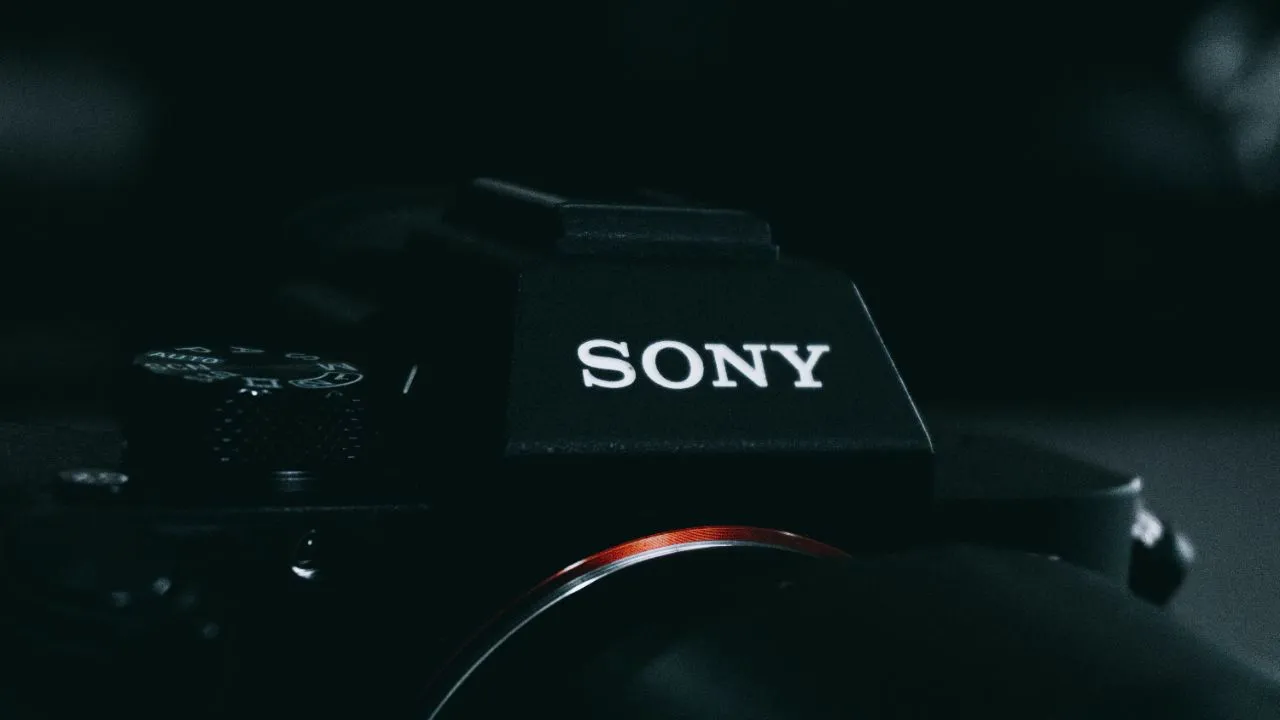
Photo by Alwin Thomas on Unsplash

Plans to expand payment options

The gaming, entertainment and consumer electronics giant also outlined that USDC payments are a starting point, with plans to expand the offering to include other crypto payment options in the future.


Commenting on the development, Crypto.com’s General Manager for Singapore, Chin Tah Ang, stated:


“We’re pushing to make paying in crypto more mainstream and partnering with a well-established and forward-thinking brand like Sony Electronics Singapore further raises awareness of how simple it can be to pay for everyday goods and services using crypto.”


The Crypto.com executive added that a high-profile brand like Sony would provide further visibility with regard to crypto payments. Sony dominates the gaming console market in Singapore, with a 61% share of the market within the city-state. A successful roll-out of this crypto payment option in Singapore could potentially lead to further roll-outs in other regions.


Keeping pace with shift towards crypto

Blockchain industry pioneer Kyle Chasse, outlined on X that the development demonstrates that adoption isn’t coming, rather that it has already arrived. Sony sees the move as an effort the firm is making to “stay ahead of the curve” and future-proof its operations. It has formed the view that diversifying payment options to include crypto payments is necessary in order to keep pace with what it perceives as a global shift towards the use and integration of crypto. 


Ang sees upside for both companies as a consequence of the development. He stated:


“This payment integration will not only benefit our users by giving them another way to utilise their crypto in the real world, but we believe adding a new and streamlined crypto payment method will also broaden [Sony Electronics Singapore’s] customer base.” 


This development is not Sony’s first touchpoint with crypto and blockchain. In recent times, it has developed its own blockchain, Soneium. The Ethereum layer-2 network officially launched its mainnet in January.


In 2024, Sony Group acquired Amber Japan, the Japanese subsidiary of Singaporean crypto market maker Amber Group. Last year, another Sony Group company, Sony Bank, announced plans to develop a stablecoin in partnership with Astar Network, a Polkadot-based smart contract platform. 


Commenting on Sony’s participation within the crypto and blockchain space last year, independent game designer Chad Steingraber said, “Sony entering crypto is a MUCH bigger deal than people realize yet.” He predicted that the entire entertainment sector will become engulfed by crypto assets. 


At the time, Steingraber was reacting to the news that Singaporean financial services firm Phillip Securities and Securitize were planning a security token offering in connection with a Sony movie production.
More to Read
View All
Web3 & Enterprise·

May 09, 2023

Artifact Labs Raises $3.25M

Artifact Labs Raises $3.25MArtifact Labs, a Hong Kong-based start-up company that concerns itself with Web3 and metaverse products from leading brands, has raised $3.25 million in a recent funding round.Photo by Pixabay on PexelsThe NFT-focused company, which was spun out of Hong Kong’s South China Morning Post (SCMP) in 2022, has received funding from Blue Pool Capital and Animoca Ventures, with Blue Pool leading the funding round. Blue Pool Capital is the investment vehicle of Alibaba founders Jack Ma and Joe Tsai.The company was borne out of a decision taken by the SCMP in 2021 to launch an NFT standard called artifact, which was geared toward recording historical data. Its starting point in that endeavor was the sale of NFTs of its very own historical front pages. That included iconic historical snapshots such as the return of Hong Kong to the Chinese in 1997, the outbreak of avian flu, the onset of the Asian financial crisis and the death of the UK's Princess Diana in 1997.Expansion of operationsArtifact Labs has said that it intends to use the funding to expand company operations. Executing on that, the firm intends to fill multiple developer positions.Phillip Pon, CEO of Artifact Labs commented on the development via a press release:“It’s not about creating new IPs for speculation — for example NFT hype projects — it’s about driving new engagement with historically significant collections by using Web3. We want to carve new space in the younger public’s consciousness for historical brands and artifacts, while supporting these important organizations with new revenue streams to fund their preservation work, we are also solidifying immutable on-chain data preservation through NFTs.”It appears that the firm will release NFT collections on behalf of preservation organizations, while at the same time developing technology to assist institutions in preserving their archives on the blockchain.NFTs with inherent valueLast year, Artifact Labs Founder and former CEO of the SCMP, Gary Liu, said in an interview that NFTs need to contain a certain inherent value beyond just being endorsed by a number of people. Liu stated: “There has to be intrinsic value in the asset itself or the underlying asset that it represents. That’s what is going to drive NFT innovation.”That philosophy is borne out by one of Artifact’s recent collaborations. In February, the firm partnered with RMS Titanic, Inc, a company that’s dedicated to preserving the legacy of the infamous sunken ship. Central to the partnership was an intention to mint NFTs based upon over 5,500 artifacts that have been recovered from the sunken wreckage.In January Artifact Labs partnered with Dubai-based data intelligence and marketing technology firm, MEmob+. The objective of the firms in teaming up is to have the complete range of expertise necessary between them in order to offer brands and companies a strategic advisory service when it comes to delving into the metaverse. Artifact’s art platform Materia, will be harnessed by MEmob+ to assist brands who want to develop art projects in the metaverse.

news
Web3 & Enterprise·

Mar 14, 2024

OKX and KuCoin lead $9M investment into UXLINK

UXLINK, a Web3 social network headquartered in Singapore, has announced a successful funding round raising $9 million, supported by a mix of private crypto and publicly listed companies including OKX and KuCoin. UXLINK announced details of the funding round in a social media post published to X on March 13. The startup, known for its innovative approach to social networking merging with transactions, has seen its user base grow to 3.5 million users. Among the investors contributing to this round are OKX Ventures, Web3Port Foundation, Cypher Capital, KuCoin Ventures, Gate Labs and Matrixport Ventures. ZhenFund, 7UPDAO, Signum Capital, ECV and GGV Capital were also participants. In a blog post Dora Yue, Founder of OKX Ventures, expressed enthusiasm about UXLINK's concept, stating:"This innovative concept merges social networking and transactions, creating a robust ecosystem where people can fully leverage their digital assets."Photo by Towfiqu barbhuiya on UnsplashAcquaintance-based social networkingYue described UXLINK as a game-changer in the field of Web3 social infrastructure. The project differentiates itself by relying on acquaintance social networking. Other Web3 social protocols such as Farcaster, Nostr, Cyberconnect and Lens Protocol are structured around one way follower relationships between key opinion leaders (KOLs) and followers. By contrast UXLINK takes a different approach, building a social network by placing emphasis on the existing social relationships of users with acquaintances. The idea is that real-life acquaintances are established through trust and implicate a much deeper personal connection by comparison with opinion leaders and followers. Speaking to that unique approach, pseudonymous crypto trader and investor Bull Flash stated on X on March 13: “Forget one-sided connections! UXLINK focuses on REAL-WORLD social interactions. Users can connect with each other AND with dApps in real-time through innovative Groups – a game-changer for web3. UXLINK is more than just a platform – it's a MOVEMENT.” Potential for further fundingWhile the exact valuation post-funding remains undisclosed, UXLINK indicated a potential for further funding rounds before its token generation event, signaling continued investor interest in its growth trajectory. With the freshly secured capital, UXLINK aims to introduce the "Social Liquidity Chain," leveraging Optimism and EigenDA technologies to support third-party developments. This initiative is expected to enhance the platform's capabilities and foster a more dynamic user experience. Since its establishment in April 2023, UXLINK has seen rapid adoption, hosting more than 75,000 decentralized groups. The vast majority of its users are located in Southeast Asia, the Middle East, Europe, South Asia and Africa. The platform's unique approach to social finance, facilitated by its Web3 "UXGroups” on Telegram, emphasizes bridging real-world trust dynamics with decentralized applications. In addition to being an investor in the company, last month the OKX Wallet was integrated with UXLINK in an effort to improve user experience, allowing UXLINK users to manage their Web3 assets more efficiently. UXLINK's successful funding round underscores growing investor confidence in the potential of Web3 social networks and belief in their ability to revolutionize traditional social interactions and financial transactions. As the platform continues to expand and innovate, it is positioning itself to make further strides in reshaping the landscape of digital social interactions and finance. 

news
Policy & Regulation·

Oct 02, 2025

Iran caps stablecoin transactions amid currency devaluation and sanctions

Iranian authorities last week introduced new restrictions on stablecoin transactions, limiting individuals to an annual purchase cap of $5,000 and a total holding limit of $10,000. According to a report from Iran International, licensed digital platforms have one month from the effective date to enforce these new regulations on all users.Photo by Hadis Malekie on UnsplashRial decline fuels stablecoin uptakeThe move coincides with the continued devaluation of the national currency, with the Iranian rial reaching an all-time low of 1,136,500 per U.S. dollar on Sept. 27. This currency plunge occurred just before the reimposition of United Nations sanctions, which took effect at 00:00 UTC on Sept. 28. Since then, the rial has weakened further, reaching a new low of 1,170,000 per U.S. dollar as of publication, as per data from Bonbast.  For many Iranians, stablecoins like USDT have become an essential financial tool, providing a hedge against inflation and a means to transfer funds internationally, bypassing the traditional banking system. The adoption of these U.S. dollar-pegged digital assets has reportedly grown since the escalation of conflicts with Israel and the U.S. earlier in the year. These new financial controls follow recent actions by the U.S. to counter what it describes as Iranian "shadow banking" networks. On Sept. 16, the U.S. Department of the Treasury’s Office of Foreign Assets Control (OFAC) sanctioned two Iranian financial operatives and their network of companies in Hong Kong and the United Arab Emirates (UAE). A press release stated these entities used cryptocurrency and front companies to transfer funds from oil sales, benefiting Iran’s IRGC-Qods Force (QF) and its Ministry of Defense and Armed Forces Logistics (MODAFL). The U.S. Treasury asserts these funds are funneled into regional proxy groups and the development of advanced weapons programs.U.S. dollar to rial chart Source: BonbastHack on Iran’s top crypto platformIran’s private digital currency sector has also faced mounting security pressures. In June, Nobitex, the country’s largest crypto exchange, was hit by a major exploit that drained about $90 million in assets, including Bitcoin (BTC), Ethereum (ETH), Dogecoin (DOGE), Ripple (XRP), Solana (SOL), Tron (TRX), and TON. A pro-Israel hacker group known as Predatory Sparrow, or Gonjeshke Darande, later claimed responsibility in a post on X. The attack took place during heightened military tensions that began with Israeli strikes on Iranian military and nuclear facilities on June 18, 2025. According to analysis by TRM Labs, digital assets are increasingly integral to Iran's efforts to navigate international sanctions and advance its geopolitical interests. Iranian exchanges, including Nobitex, process billions in cryptocurrency transactions. These platforms have been noted for permitting large withdrawals without stringent Know Your Customer (KYC) protocols and for employing sophisticated methods to obscure the origins and destinations of funds. At the same time, these exchanges are not used solely for state-level purposes. For many ordinary Iranians, grappling with inflation and economic isolation, digital assets represent a practical tool for safeguarding savings and maintaining limited access to the global economy, underscoring the dual role that cryptocurrency plays in the country. 

news
Loading