Top

South Korea’s crypto market hits $968.5B in H2 2024 as Bitcoin rally lifts activity

Markets·May 20, 2025, 11:25 PM

South Korea’s cryptocurrency market experienced notable growth in the second half of 2024, as total trading volume climbed to 1.35 quadrillion won ($968.5 billion). This marks a 24% increase compared to the 1.09 quadrillion won ($782.7 billion) recorded in the first half of the year. The data was released on May 20 by the Financial Intelligence Unit (FIU), which operates under the Financial Supervisory Service (FSS).
https://asset.coinness.com/en/news/a48db2ed16b755dda641855583bf4409.webp
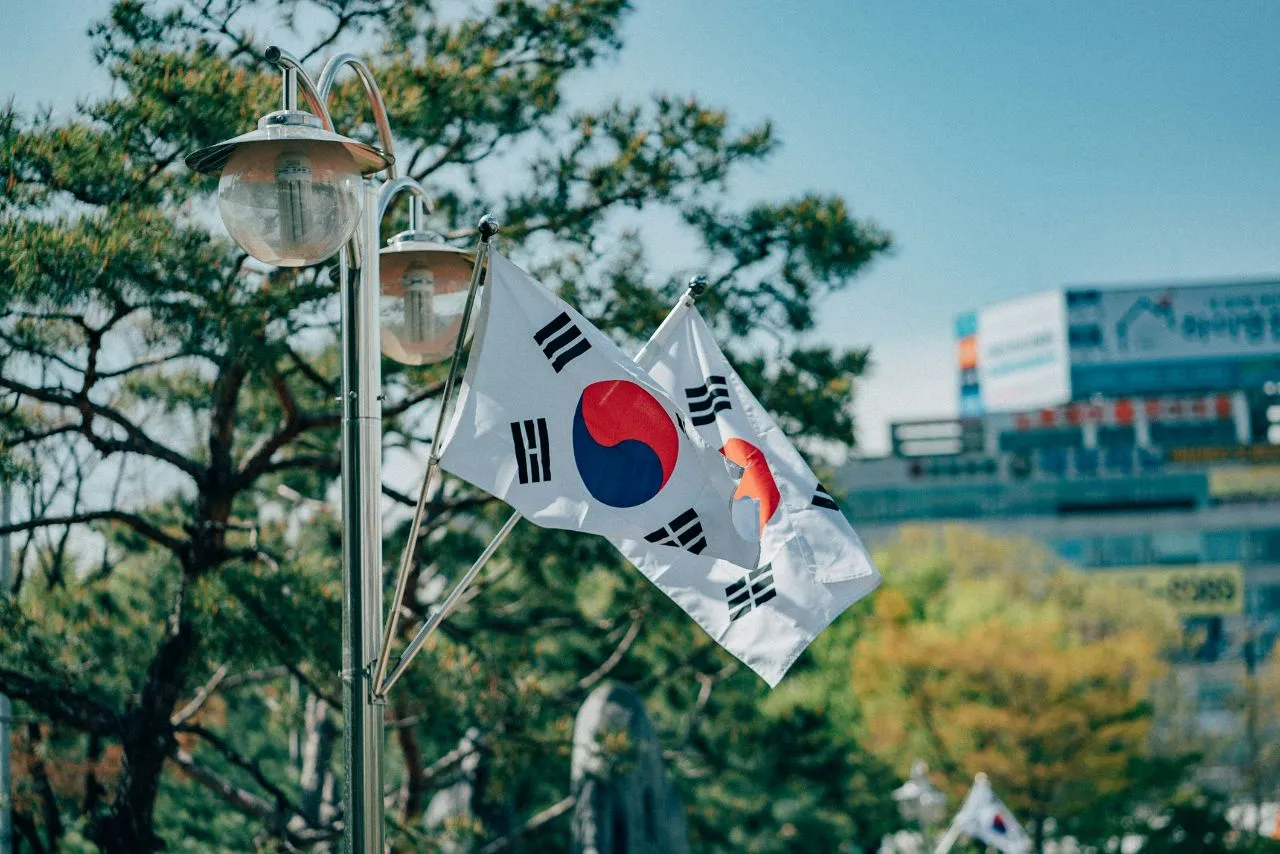
Photo by Daniel Bernard on Unsplash

Trading volume and market cap surge

The average daily trading volume rose by 22%, reaching 7.3 trillion won ($5.26 billion), with a significant surge observed after October. According to the financial authority’s report, this sustained momentum was driven by a broader bullish trend in the global crypto market, led by Bitcoin hitting all-time highs. Growing institutional interest following the launch of multiple spot Bitcoin ETFs in the U.S. and increasingly favorable crypto-related policies have further fueled the rise in asset prices.


To evaluate the state of the domestic crypto market, the FIU conducted a survey of 25 virtual asset service providers (VASPs) during the second half of 2024. The survey covered 17 exchanges as well as eight entities providing either custodial or wallet services.


By the end of 2024, South Korea’s total crypto market cap had surged to 107.7 trillion won ($77.55 billion), representing a 91% increase from 56.5 trillion won ($40.68 billion) in June. In contrast, the global crypto market grew by 60% over the same period, reaching a total of $3.59 trillion.


However, the Korean market experienced a sharp decline in assets held by custodial and wallet service providers, which fell by 89% to 1.5 trillion won ($1.08 billion). This drop was largely attributed to a rise in business closures. Additionally, the number of users on these platforms plummeted by 99%, falling to just 1,300 customers who had completed Know Your Customer (KYC) verification.


Performance and token preferences

Despite these setbacks, the 25 VASPs reported combined revenues of 1.22 trillion won ($878.5 million), marking a 15% increase. Operating profit also rose by 27% to 744.6 billion won ($536.2 million). However, capital adequacy weakened, with the capital-to-asset ratio falling by 12 percentage points to 36.5%. Meanwhile, Korean won deposits—cash held on platforms for trading—more than doubled, surging 114% to 10.7 trillion won ($7.7 billion).


The number of employees at crypto exchanges increased by 18%, reaching 1,862, while staff dedicated to anti-money laundering (AML) efforts rose by 46% to 207 individuals.


On average, fiat-to-crypto exchanges offered trading in 224 different tokens, an increase of 28 compared to the previous half-year.


Among the top 10 cryptocurrencies by market cap in Korea, six—Bitcoin (BTC), Ethereum (ETH), Ripple (XRP), Solana (SOL), Dogecoin (DOGE) and Cardano (ADA)—also appeared in the global top 10. Collectively, these accounted for 71% of Korea’s total crypto market cap. However, the remaining four differed: Korean investors favored Ethereum Classic (ETC), Shiba Inu (SHIB), Stellar (XLM) and Bitcoin Cash (BCH), whereas global investors leaned toward Tether (USDT), Binance Coin (BNB), USD Coin (USDC) and TRON (TRX).


User base growth and demographic trends

The number of KYC-verified users eligible to trade reached 9.7 million in the second half of 2024, representing a 25% increase from the previous period. Individual users accounted for the vast majority, while corporate users made up less than 0.01% of the total. By age group, users in their 30s accounted for the largest share at 29%, followed by those in their 40s (27%), 20s and younger (19%), 50s (18%) and 60s and older (7%).


The majority of users—66%, or roughly 6.37 million people—held less than 500,000 won ($360) in digital assets. In contrast, 12% of users held over 10 million won ($7,180), while 2.3% had portfolios exceeding 100 million won ($71,820).

 

More to Read
View All
Web3 & Enterprise·

Aug 04, 2023

Hyosung TNS and APoT Join Hands to Promote NFT Portal Service

Hyosung TNS and APoT Join Hands to Promote NFT Portal ServiceSouth Korean IT infrastructure and financial solutions provider Hyosung TNS announced that it is teaming up with APoT Platforms, a company specializing in developing blockchains for real-world assets (RWAs), to promote NFTtown — Hyosung TNS’ portal service dedicated to providing information, news, and educational content on NFTs.Photo by Andrey Metelev on UnsplashBringing real-world assets to blockchainAPoT Platforms is equipped with technology that is able to embed data on RWAs, such as artwork and luxury goods, thereby connecting them to the blockchain. The company also maintains an extensive network of collaborative relationships with various NFT artist organizations and communities both domestically and abroad.Hyosung TNS plans to bring APoT’s artist network to NFTtown, allowing users to easily access information regarding NFT artists and their works.The two companies will also work together on other efforts, including introducing NFT artworks, digital product transfers, and events for NFT holders.NFT art exhibitionAs the first step of their collaboration, they plan to exhibit and sell works by renowned NFT artists such as Han Kwang-suk, Quiet Eye, and HAN (Han Sun-ok) this month at the Lotte Department Store Ilsan’s Spazio We;R Gallery.

news
Web3 & Enterprise·

Sep 04, 2023

Ethereum Co-Founder Highlights User-Friendly Crypto Wallets at Ethcon Korea 2023

Ethereum Co-Founder Highlights User-Friendly Crypto Wallets at Ethcon Korea 2023Ethereum co-founder Vitalik Buterin delivered a keynote speech last Friday at Ethcon Korea 2023 — a hackathon and conference sponsored by Ethereum for the Korean Ethereum community in Seongsu-dong, Seoul — where he emphasized the importance of making crypto wallets user-friendly by striking a balance between user familiarity and decentralization.Photo by Nenad Novaković on UnsplashEnhancing security and convenienceParticipating in the event via video call, Buterin explained Ethereum’s ERC-4337 account abstraction upgrade during his speech, which was livestreamed on the Ethcon Korea YouTube channel. “The goal of account abstraction — a field that many wallets are currently working on developing — can be broadly categorized into two areas: security and convenience,” he said.Deployed on the Ethereum mainnet in March, the ERC-4337 is a standard that makes it possible to transact and create contracts in a single contract account, paving the way for more user-friendly crypto wallet designs. At its core are features such as easy account recovery, improved security, and customized services like auto-pay and bundled transactions. This provides a more convenient alternative to other crypto wallets, which mostly rely on private keys for account access, complicating setup and recovery procedures especially if a user loses their seed phrase.“Wallets must fundamentally be secure in a decentralized way, but there should also be ways to recover passwords as hardware wallets do,” Buterin stated. “However, many projects still rely on methods such as account recovery via email.”Simplifying transactionsAnother change introduced through the update is gas flexibility. Gas is a fundamental fee that users must pay to conduct transactions or execute a contract on Ethereum. Wallets backed by ERC-4337 can pay gas fees with any Ethereum utility tokens and more, including USD coins (USDC).From a convenience standpoint, Vitalik argued, it is very useful for first-time Ethereum users to be able to pay for gas with the USDC they already have. Sponsored transactions, where applications pay for fees, will be a great way to attract new users, especially for non-financial applications.He further elaborated that in order to transition from being user-friendly but centralized to more decentralized, a combination of a faster but precarious centralized approach with a slower but safer decentralized approach is required.He also stressed the importance of utilizing the various options available in modern technology concerning convenience, security, and decentralization, saying that it is essential to utilize these options effectively, continuously improve them, and take advantage of the benefits.Since 2019, Buterin has used Ethcon as a platform to announce Ethereum’s development roadmap and major technical updates.

news
Policy & Regulation·

Jan 24, 2024

3AC Co-founder offers unusual perspective on Singapore prison time

Su Zhu, the co-founder of the now-defunct Singaporean crypto hedge fund Three Arrows Capital (3AC), raised some eyebrows within the crypto community recently, having shared unconventional thoughts on his time spent in a Singaporean prison. Zhu's arrest took place in October of last year in Singapore, where he was apprehended while attempting to flee. Liquidators of 3AC had tipped off police in the city-state that Zhu was going to Changi airport, a number of days after they had secured a court order against him for failing to cooperate with their efforts to wind up the company. Alongside his business partner, Kyle Davies, Zhu was sentenced to four months in prison for contempt of court following a committal order.Photo by Christian Lue on Unsplash‘Enjoyable experience’Clips from an unreleased podcast were published on social media on Monday, in which Zhu referred to his time in prison as an "enjoyable experience overall." In the video podcast, Zhu expressed gratitude for his incarceration, even going so far as to claim that he had the "best sleep" of his life while behind bars. Zhu suggested that everyone should have the opportunity to experience prison at least once, believing it to be a beneficial and enlightening experience. He provided insights into his daily life during incarceration, emphasizing the simplicity of entertainment and drawing parallels with activities from "ancient days." The disgraced crypto boss discussed the routines and privileges within the prison facility, including access to ample reading material, opportunities for exercise and a structured diet. He highlighted the ability to read books and engage in physical activities like push-ups during his time in prison. What particularly impressed Zhu was the quality of sleep in the prison environment. He also found a sense of connection with his ancestors through the use of mats instead of beds. Crypto community responseCrypto users on various platforms responded with mixed feelings toward Zhu's philosophical insights. Some viewed his perspective with skepticism, while others found humor in the apparent contrast between his experiences and traditional notions of imprisonment. Taking to the X social media platform, pseudonymous crypto restructuring lawyer "Wassielawyer" wrote:”Singapore prison is widely regarded as one of the shittiest prisons you can find in a first world country. And the man made it sound like a 5-star mindfulness retreat everyone needs to go on in order to revitalize mind, body and soul. Man is blessed with a superpower…” The hedge fund collapsed in June 2022, resulting in over $3.5 billion in losses for investors, making it one of the largest hedge-fund trading losses ever. Zhu and fellow 3AC founder Kyle Davies have been active online over the course of the past year, despite their whereabouts largely remaining unknown during that time. The duo have launched a new crypto exchange and bankruptcy claims platform called Open Exchange (OPNX). However, their troubles continue, as liquidator Teneo seeks to recover $1.3 billion directly from the founders, alleging misuse of investor funds after 3AC became insolvent. In September, the Monetary Authority of Singapore (MAS) prohibited both from floating regulated investments for nine years. Teneo has estimated a 46% recovery rate in respect of creditor claims.  

news
Loading