Top

Ant Group preparing to apply for stablecoin licenses in Hong Kong & Singapore

Web3 & Enterprise·June 13, 2025, 5:59 AM

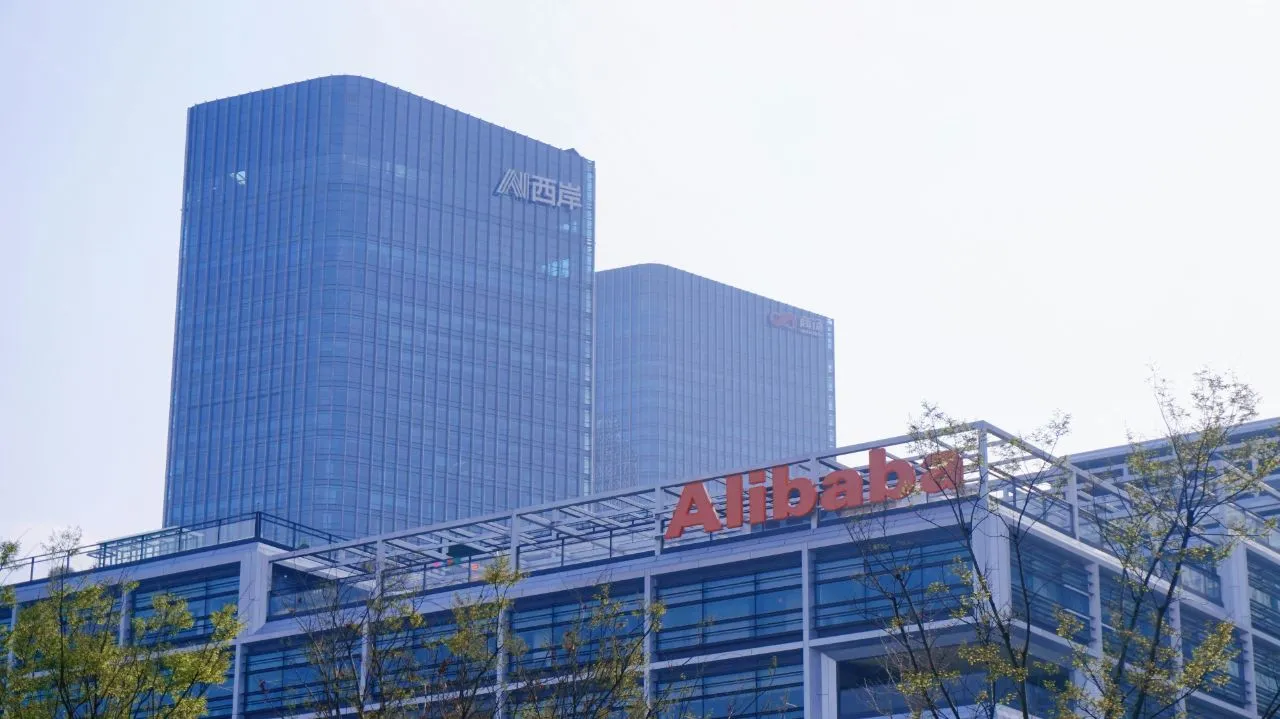
Ant Group, a Chinese financial services conglomerate and affiliate of the Alibaba Group, has plans to acquire stablecoin licenses across Asian markets and further afield.


Its Singapore-headquartered global digital payments and financial technology subsidiary, Ant International, plans to file an application for a stablecoin license in Singapore and in Hong Kong once the Chinese autonomous territory implements its stablecoin regulation later this summer. 


That’s according to a report published by Bloomberg on June 12, citing unnamed sources familiar with the matter. Beyond the Asia-Pacific (APAC) region, Ant International also plans to seek a stablecoin license in Luxembourg.
https://asset.coinness.com/en/news/8a94c7778ce55cc098baaa0d3442d6ea.webp
Photo by Ban Daisy on Unsplash

2 Hong Kong stablecoin license applications

In a statement, Ant International stated:


“We plan to apply for the fiat-referenced stablecoins (FRS) issuer's license once the process is open after the [Hong Kong] Stablecoins Ordinance takes effect on August 1.”

Additionally, Bian Zhuoqun, president of Ant Digital Technologies, another Ant Group subsidiary focused on applying digital technologies, confirmed that it too will be applying for stablecoin licensing in Hong Kong. 


Zhuoqun told reporters that the company has already opened dialogue with the regulator in Hong Kong, while also participating in a regulatory sandbox. While the company wasn’t a named participant within Hong Kong’s stablecoin sandbox, it had previously participated in Project Ensemble, an initiative run by the Hong Kong Monetary Authority (HKMA) aimed at establishing a tokenization ecosystem in the city.


Exploring stablecoin applications

On June 10, Ant International and German multinational investment bank Deutsche Bank announced a strategic partnership geared towards establishing integrated cross-border payment solutions to global merchants. 


The two firms stated that they would explore tokenized bank deposits while also looking into stablecoin applications for global payments. It highlighted the potential use of stablecoins within Ant companies, facilitating real-time cross-border treasury management, reserve management and on-ramp and off-ramp services.


Back in November, Singapore-headquartered StraitsX, a stablecoin-based payments startup, launched a cross-border payments product in association with AliPay+, Ali International’s offshore digital payments platform. A key component of the product offering is the use of the XSGD stablecoin.


Hong Kong passed its stablecoin bill last month. Last week, the city’s government outlined that the effective date for the resultant Stablecoin Ordinance has been set for Aug. 1. Under the Ordinance, only licensed institutions are authorized to offer fiat-referenced stablecoins in Hong Kong, while the issuer of such a stablecoin must be licensed in order for it to be offered to a retail investor.


Last month, multinational banking and financial services group HSBC launched Hong Kong’s first blockchain-based settlement service, utilizing tokenized deposits for swift transactions. The company collaborated with Ant International, which became the first client of the service.


Entering the financial mainstream

A Financial Times report published on June 12 asserted that stablecoins are entering the financial mainstream, a development that “could have profound implications for the global financial system.” Earlier this week, the South China Morning Post (SCMP) reported that Hong Kong’s stablecoin law could lead to a boom in digital assets.

Daniel Tse, managing director of Hong Kong brokerage firm Futu Securities, told the SCMP:

“We’re seeing a significant trend in investments related to stablecoins on our platform, which highlights the growing importance of this sector.” 

More to Read
View All
Markets·

Aug 13, 2024

OSL Executive: Crypto ETFs have challenge to overcome in Hong Kong

At the Foresight 2024 Hong Kong Summit on Aug. 11, Gary Tiu, director and head of regulatory affairs for OSL, a crypto market custodian, exchange and prime brokerage, outlined in a panel discussion that the crypto exchange-traded fund (ETF) market in the Chinese autonomous territory is challenged insofar as it lacks market incentives.Photo by Cecelia Chang on UnsplashThe intermediary problemTiu’s company hosted the event, alongside Foresight News and crypto publication The Block, who reported on Tiu’s comments. The OSL executive said that when it comes to funds and structured products in Hong Kong, there’s a “very rich layer of intermediaries— brokers, banks, private banks, retail banks, etc.” involved. Tiu explained that they make a lot of money from the distribution of such products, resulting in unlisted products being marketed far more effectively by comparison with listed products. It’s against that backdrop of misaligned incentives that Tiu identifies challenges for crypto ETFs on the public markets in Hong Kong. He stated: “So I think the incentive system in Hong Kong is one of the reasons why ETFs do have a bit of a hard time growing as a financial instrument.” In the case of ETFs, the OSL executive explained that equity brokers take just a few basis points in commission, only about 1-2% of what they make on the sale of structured products. Bias against Bitcoin and EtherTiu is also of the belief that cryptocurrencies like Bitcoin and Ether have a reputational problem among Hong Kong’s investment community, stating: “I think there is still a bit of a bias in the eyes of the regulators and also in the eyes of the financial institutions, that somehow bitcoin ETF is just this unique class of risk that you need to be extra cautious about.” Chen Zhao, who heads up the digital assets section of Hong Kong-based independent financial advisory firm Fosun Wealth, chimed in with his own concerns. According to Zhao, the crypto ETF products currently marketed in Hong Kong are lacking in terms of the depth of dealers and brokers offering the products. Zhao explained that there are three main types of market participant active on the Hong Kong markets, namely western institutions, Hong Kong-based institutions and their counterparts from mainland China.  Zhao stated: “Chinese brokers and dealers, they’re not allowed or they choose not to deal with the product, and for the western financial institutions, they don’t have the necessity of dealing the products because they acquire more fees and incentives, and have easier access to the U.S. ETFs.” While progress is far more modest by comparison with the U.S. market, the Hong Kong crypto ETF market continues to develop, with spot Bitcoin and Ethereum ETFs setting a record trading volume last week. In the same week, Mox Bank, a subsidiary of British banking multinational Standard Chartered, launched trading services relative to spot Bitcoin and Ethereum ETF products in Hong Kong. Last month, OSL CEO Patrick Pan, anticipated that an Ethereum ETF product that incorporated staking would launch in Hong Kong within six months. Many commentators have suggested that institutional interest in Ethereum ETFs will begin in earnest once a yield-producing staking product hits the market.

news
Policy & Regulation·

Jun 22, 2023

New Kazakh Platform Underscores Binance’s Push Eastwards

New Kazakh Platform Underscores Binance’s Push EastwardsGlobal cryptocurrency exchange Binance is making a significant move towards the East in response to mounting regulatory challenges in Western markets. The exchange has recently launched a regulated digital asset platform in Kazakhstan, marking a milestone in its expansion strategy.The announcement was made during a press conference held on June 20, attended by distinguished guests including representatives from Kazakhstan’s banking sector and Binance Kazakhstan’s leadership. The company followed up with a blog post detailing the development, published to its website on Wednesday.This milestone achievement follows Binance’s preliminary approval for operations in Kazakhstan received last August. By October, the Astana Financial Services Authority (AIFC) granted the exchange a permanent license to establish a digital asset platform and provide custodial services at the Astana International Financial Center.Photo by Engin Akyurt on PexelsBespoke platformThe newly established Binance platform in Kazakhstan aims to cater specifically to the needs of Kazakhstani users. It offers a comprehensive suite of services encompassing cryptocurrency exchange, conversion, fiat currency deposits and withdrawals, as well as custody of crypto assets.These financial services will be facilitated through a partnership with Freedom Finance Bank, Kazakhstan’s banking partner for Binance. Users of the platform will be able to transfer fiat funds to their accounts, with deposits and withdrawals currently supported through bank transfers or bank cards via Freedom Finance Bank.Adverse Western market conditionsBinance’s expansion into Kazakhstan comes at a time when the exchange is grappling with legal challenges in the United States and several European countries. In the US, Binance is currently embroiled in a lawsuit with the Securities and Exchange Commission (SEC) and the Commodity Futures Trading Commission (CFTC).Last month, Binance announced its withdrawal from the Canadian market, citing regulatory changes which the company described as “untenable.” Meanwhile, in Europe, the company has faced regulatory pushback, including an investigation into alleged “aggravated money laundering” in France and its exit from the Dutch market due to the absence of a virtual asset service provider license.Binance’s withdrawal from European markets has been attributed to its efforts to comply with the European Union’s approved Markets in Crypto Assets (MiCA) regulations, although there are reports indicating collaboration between European regulators and the SEC in their investigations into Binance.Eastern expansionWhile Binance has been facing ongoing setbacks in Western markets, it continues to expand eastwards. Late last month, the firm announced plans to establish a dedicated platform in Japan. Around the same time, it secured a trading license through its Thai joint venture company.Binance is not the only major crypto firm making a strategic shift towards Asia. Other global cryptocurrency exchanges such as Gemini and Coinbase, have also expressed their intention to strengthen their presence in the Asia Pacific region. This trend highlights a broader pattern of the crypto exchange landscape gradually shifting towards the East, reflecting a reconfiguration of the global market.As Binance expands its regulated operations in Kazakhstan, it aims to navigate the complex regulatory environment and continue providing secure and compliant services to users in a key market. The move not only positions Binance strategically but also underscores the evolving dynamics that may well be playing into a regional shift in leadership where the development of digital assets is concerned.

news
Policy & Regulation·

Dec 23, 2023

3AC liquidators estimate 46% recovery while BVI court freezes $1B

3AC liquidators estimate 46% recovery while BVI court freezes $1BThe joint liquidators of the now-defunct Singaporean crypto hedge fund Three Arrows Capital (3AC) have provided creditors with an estimated 45.74% recovery rate for their claims in the bankrupt estate. Meanwhile, in parallel proceedings in the British Virgin Islands (BVI), a court has frozen $1 billion of founders’ assets.According to The Block, the details were disclosed in a December report to creditors by joint liquidators Russell Crumpler and Christopher Farmer of Teneo, the firm appointed to oversee the liquidation of the failed business.$1.16B in assetsAs of Dec. 18, the estimated value of 3AC’s assets was reported to be $1.16 billion, while claims totaling $2.7 billion are expected to be recognized for distribution. The liquidators highlighted that settlements in litigation against various parties, including DCG, Genesis and BlockFi, increased reported assets by an estimated $292 million. It’s important to note that the BlockFi settlement is still pending approval.A total of 154 claims, valued at $3.4 billion, were filed against the 3AC estate. The report indicates that $200 million of claims were not admitted for distribution, and $322 million in claims have either been rejected or are expected to be rejected. Additionally, $76 million in claims are currently under dispute. The report reveals that initial distributions to creditors are being planned for the first quarter of the upcoming year.Illiquid tokensThe breakdown of assets reveals that a large majority are illiquid tokens, subject to vesting periods, comprising 82% of the total. Only 6% of the portfolio is liquid, while equity and investments account for 6.9% and 4.8% is in cash. These illiquid tokens, totaling $563 million at current prices, consist of 13 different tokens with vesting schedules unlocking assets over the next three years, reaching $200 million by the end of 2024.To date, the liquidators have staked some of these tokens, resulting in $5.4 million in staking rewards. Liquidation efforts, including the sale of $34.5 million worth of liquid tokens and $15 million in NFTs, along with other asset sales, have generated a total of $66 million.Photo by Kemp Fuller on UnsplashFrozen assetsIn a related development, Bloomberg reported on Thursday that a British Virgin Islands court has frozen assets totaling $1.1 billion belonging to 3AC co-founders Su Zhu and Kyle Davies, along with Davies’ wife Kelly Chen. The liquidators filed a claim for insolvent trading against the founders for $1.078 billion, with additional claims against Davies for $66 million and Chen for $4.6 million.Teneo outlined the rationale behind the move in the following statement it made to Decrypt:“The worldwide freezing order has been sought in connection with claims that are being pursued by the liquidators that allege, amongst other things, that the Founders should be held responsible for causing 3AC’s position to deteriorate by an amount that is equivalent to the value of the freezing orders sought.”Su Zhu, who was under house arrest for the last few weeks, became free on Dec. 20. Zhu had been arrested in Singapore on Sept. 29 and sentenced to four months imprisonment, serving two-thirds of his sentence under house arrest.Throughout the bankruptcy proceedings, legal fees have accumulated to $49.7 million while the report suggests ongoing efforts to maximize creditor recovery.

news
Loading