Top

Hong Kong to launch spot Solana ETF ahead of U.S.

Markets·October 23, 2025, 6:49 AM

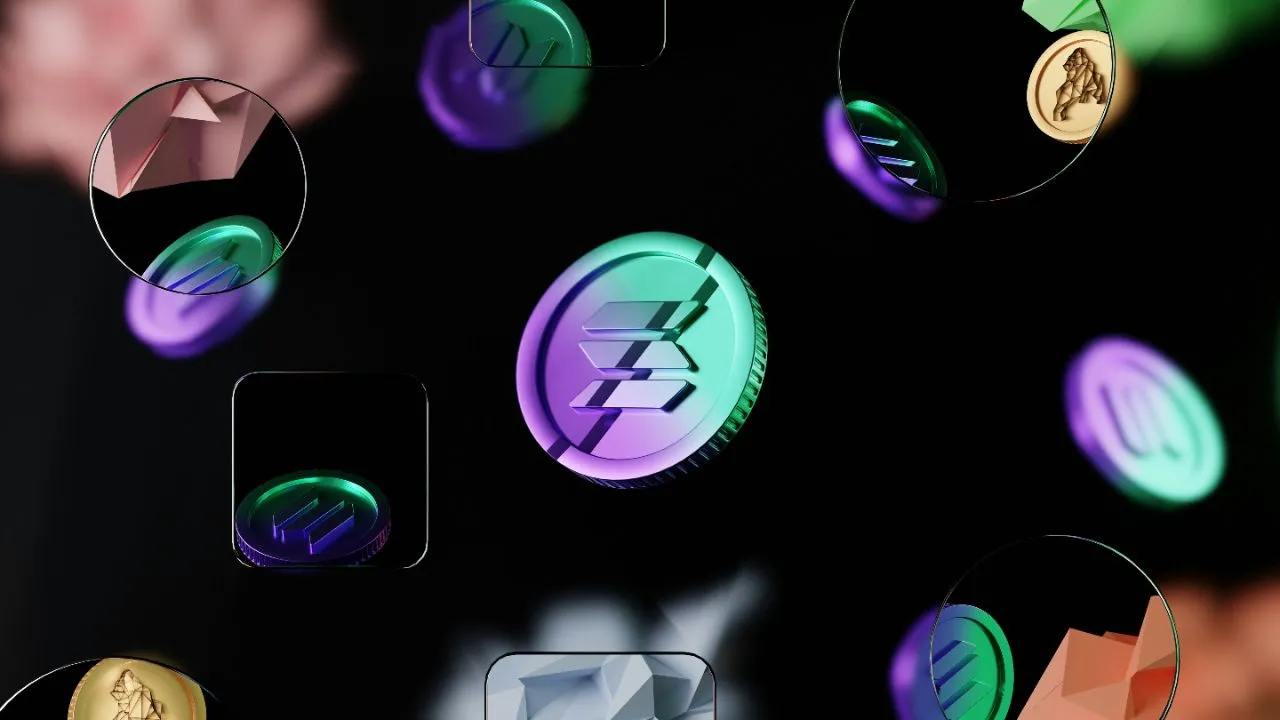
A spot Solana (SOL) exchange-traded fund (ETF) is set to debut in Hong Kong next week, according to the South China Morning Post. Managed by ChinaAMC (HK), the Hong Kong subsidiary of Chinese financial services company China Asset Management, the product will begin trading on Oct. 27 and will be available against both Hong Kong and U.S. dollars.


The Hong Kong listing comes amid growing global interest in Solana-based investment products. While this marks a first for the city, the first country to trade a spot Solana ETF was Canada, where four products from 3iQ, Purpose, Evolve, and CI Financial went live on the Toronto Stock Exchange in April 2025.
https://asset.coinness.com/en/news/8d604e77d310e11e5a00cde9e5b27fe0.webp
Photo by GuerrillaBuzz on Unsplash

U.S. institutions await regulatory approval

In the U.S., institutional interest is also high, though a product has yet to be approved. According to Bloomberg senior ETF analyst Eric Balchunas, 23 separate ETP filings for Solana have been submitted in the U.S. This matches Bitcoin, with both assets having the highest number of filings among 35 cryptocurrencies tracked, out of a total of 155 crypto ETP filings overall.


The push for exchange-traded products mirrors rising institutional investment in the Solana ecosystem itself. Several firms have recently established corporate SOL treasuries. Forward Industries spent $1.6 billion on its treasury and filed with the U.S. Securities and Exchange Commission (SEC) to raise up to $4 billion from share sales to acquire more SOL. Similarly, Sharps Technology announced a collaboration with Coinbase Global to expand its reserve strategy, and an SEC filing showed that Citadel and its affiliates hold a portion of the outstanding shares in DeFi Development Corp. (DFDV), another SOL treasury firm.


Uniswap expands to Solana network

Solana's platform has also seen wider technical integration. On Oct. 16, the decentralized exchange Uniswap began supporting the network, allowing its users to connect Solana wallets and swap SOL tokens. Uniswap stated the move helps address fragmentation issues by supporting both Solana and Ethereum, the two largest DeFi ecosystems. According to DefiLlama data, SOL currently boasts $10.88 billion in total value locked (TVL) in decentralized finance, while ETH TVL amounts to $83 billion.


Separately, the Solana team recently promoted the network's technical resilience. Following a recent Amazon Web Services (AWS) outage, the team shared an analysis on X indicating a 97.6 resilience index, noting that only 77 of its 1,295 nodes were affected, suggesting a 6% dependency on AWS.


Market performance lags despite growth

Despite these developments, the price of SOL, the sixth-largest cryptocurrency by market capitalization, has not reflected the positive sentiment in the short term. Trading at roughly $186, SOL is down 13.74% over the past month, according to Kraken data. The asset remains 36.49% below its all-time high of $293.31, which was reached on Jan. 19, 2025.

More to Read
View All
Web3 & Enterprise·

Feb 20, 2025

Standard Chartered joins with local partners in Hong Kong to launch stablecoin

Standard Chartered Bank Hong Kong, a licensed bank and subsidiary of British multinational banking group Standard Chartered, has partnered with local companies to launch a Hong Kong dollar-based stablecoin in the Chinese autonomous territory.Photo by Chapman Chow on UnsplashJoint venture formed In a press release published by Animoca Brands, a blockchain-based gaming and Web3 venture capital firm based in Hong Kong, the company outlined details of the partnership between it and Standard Chartered, alongside Hong Kong Telecom (HKT), Hong Kong’s dominant fixed-line, mobile and broadband telecommunications firm. The partnership has been structured as a joint venture between the three companies, with the objective of launching the Hong Kong dollar-backed stablecoin. Local regulator and central bank, the Hong Kong Monetary Authority (HKMA) has been working towards implementing a regulatory framework specifically dedicated to stablecoins.  Legislative framework incoming As of the end of 2024, proposed legislation that would enable such a framework had advanced to Hong Kong’s Legislative Council. Before the bill can be enacted into law, the legislative process requires three readings of the bill accompanied by a series of debates and the scrutiny of lawmakers.  Once the legislation has been signed into law, it will require stablecoin issuers to obtain a license from the HKMA. In the case of this particular joint venture, the promoters plan to apply for a license in due course. Standard Chartered is already deeply embedded in Hong Kong’s financial system, making this latest development all the more significant. Alongside HSBC and Bank of China (Hong Kong), Standard Chartered issues the local currency, the Hong Kong dollar. That activity is carried out under the oversight of the HKMA.  The HKMA launched a sandbox environment relative to stablecoins in order to provoke an exchange of views between the regulator and market participants. The three parties to this latest joint venture have been sandbox participants since July of last year, alongside JINGDONG Coinlink Technology and RD InnoTech. JINGDONG declared its intention to launch a Hong Kong dollar-backed stablecoin last year. RD InnoTech plans to launch the HKDR stablecoin in conjunction with HashKey Exchange. Stablecoins ‘starting to eat the world’Earlier this month, Rene Michau, Standard Chartered’s global head of digital assets, set out the bank’s thoughts on stablecoins in an article published on the company’s website and co-authored by Circle Chief Financial Officer (CFO) Jeremy Fox-Green. Within it, Standard Chartered recognized the potential of stablecoins, suggesting that they are key to unlocking a future where blockchain acts as a new “internet of money.” The article went on to state that it is critical for stablecoin issuers “to maintain deep connections with strong banks and for those banks to be building digital asset capability.” The company recognizes that stablecoins are “starting to eat the world,” referring to a global stablecoin circulation that has already surpassed $100 billion.  Evan Auyang, President of Animoca Brands, pointed out that “we are still in the early stages for mass adoption of stablecoins across retail, enterprises and institutions.” He added that Hong Kong has a bright future as a global Web3 hub. Susanna Hui, Managing Director at HKT, believes that “issuing an HKD-linked stablecoin will enhance payment efficiency, streamline transactions, and provide greater security and transparency through advanced Web3 innovations.”

news
Web3 & Enterprise·

Jan 21, 2025

Jio launches JioCoin reward token

Indian multinational technology firm Jio Platforms, a subsidiary of India’s largest private sector company, Reliance Industries, has launched JioCoin, a rewards-based token, on the Polygon blockchain. While Jio Platforms has yet to make an official announcement related to JioCoin, Kashif Raza, the founder of Indian crypto education startup Bitinning, took to the X social media platform on Jan. 16 to highlight his discovery that JioCoin had been launched and that the tokens could be accumulated via the JioCoin Wallet, a Web3 wallet. Polygon Labs partnershipLast week, it emerged that Jio Platforms had entered into a partnership with Polygon blockchain developer Polygon Labs. Polygon co-founder Sandeep Nailwal told Cointelegraph that Polygon Labs intends to support Jio to enable blockchain integration across a spectrum of Jio applications. In a follow-up post, Raza provided a more detailed account of the offering. The crypto educator explained that the token “is a mechanism to reward internet users for surfing the internet on the JioSphere browser.”Photo by GuerrillaBuzz on UnsplashUse case speculationOn that basis, it’s likely that the emergence of JioCoin is the first demonstration of one of the outcomes of that collaboration.  In the absence of an official announcement and a specific clarification of the intended use case for JioCoin, Raza speculated that its likely use case will be to act as a currency within the Jio network. He explained that within Jio’s sphere, thousands of companies are interacting with each other. Raza speculated that in the future, users would be able to use JioCoin to pay for gas at gas stations or renew mobile phone services. Jio’s parent company operates a network of gas stations in partnership with BP. He believes that JioCoin could potentially give Jio an edge in competing with other internet browser providers like Google, Brave and Microsoft, while suggesting that Reliance Industries group companies could run one of the most significant rewards programs in the world via JioCoin. Polygon adoptionIndian venture capitalist and blockchain enthusiast Aditya Singh suggested that the move will help Polygon from an awareness and adoption perspective. However, he outlined that while this is a big deal, it’s not the first time that Polygon has struck big-name partnerships, having done so in the past with Meta, Disney, Nike, Adidas, Adobe, Reddit and others. Raza believes the partnership provides significant validation for Polygon, given Jio's reputation. He suggested that, as a consequence, other large Indian corporations may choose to launch an ecosystem coin on the Polygon blockchain. If JioCoin fulfills its potential and turns out to be a success, the Polygon network will see a significant rise in the overall number of transactions processed. In a similar vein, Jio could bring a substantial user base to Polygon.  While Singh and Raza see JioCoin as a largely positive development, its introduction hasn’t occurred without criticism. Author and crypto analyst Sunil Aggarwal took to social media to warn the community to investigate the token further before automatically assuming it to be a huge milestone for Polygon and crypto generally. He cited concerns related to the transparency and integrity of the token offering.

news
Policy & Regulation·

Jul 25, 2023

Bybit CEO Applauds Hong Kong and UAE Regulatory Approaches

Bybit CEO Applauds Hong Kong and UAE Regulatory ApproachesBen Zhou, the CEO of Dubai-based crypto spot and derivatives trading platform Bybit, has recently lauded the regulatory approach of Asian and Middle Eastern countries.In a recent interview with CoinDesk, Zhou singled out Hong Kong and the United Arab Emirates (UAE) in particular, while also drawing attention to the contrasting approach taken to regulation of digital assets in North America, particularly Canada.Photo by Alex King on UnsplashDiffering regulatory approachesThe Bybit CEO believes that the tone set by regulators towards the crypto industry differs significantly between regions, with Asia and the Middle East displaying a more collaborative and supportive stance compared to North America. He perceives a shift in the attitude of regulators, seeing cryptocurrencies as an opportunity rather than a crisis.Praising Hong Kong and Dubai Regulators, Zhou highlights Hong Kong’s aggressive efforts to attract crypto companies by tapping into the talents within the industry. While recognizing the common goals among regulators worldwide, he notes that Dubai’s crypto regulatory framework has advanced even further than Hong Kong’s.Bybit’s strategic moves underline Zhou’s praise for these regions’ regulatory environments. On April 1, Bybit announced plans to establish its core operations in Hong Kong, positioning its research and development (R&D) and marketing teams in the Chinese autonomous territory.Subsequently, on April 17, Bybit officially unveiled its headquarters at the Dubai World Trade Center, a year after receiving in-principle approval to operate its crypto asset business in the UAE.Canadian market exitHowever, Bybit faced challenges in Canada due to its evolving regulatory landscape. While the company claimed not to operate in the United States, it had onboarded customers in Canada in the past. The situation changed in May when Bybit withdrew its services from Canada following the fallout from the FTX exchange scandal in November 2022.The regulatory environment became increasingly stringent, prompting Bybit to exit the Canadian market. Despite having ongoing conversations with Canadian regulators and receiving an invitation to apply for a crypto license, the restrictions on stablecoin usage played a significant role in the company’s decision to withdraw.Fifth most popular exchangePresently, Bybit ranks as the fifth most popular crypto exchange in the world, according to a report by CoinGecko for the second quarter of 2023.The company has been extending out its product offering, recently entering the crypto lending arena. Towards the end of May, the business received “in-principle” approval from the Astana Financial Services Authority (AFSA) to operate as a digital asset trading business and digital asset custodian in Kazakhstan.In June the crypto exchange followed the lead of other global crypto platforms such as Crypto.com and Binance by integrating artificial intelligence-driven trading tools into its platform for the benefit of its users.As the crypto sector continues to evolve, the differing regulatory approaches in different regions will play a crucial role in shaping its future. Bybit’s CEO, Ben Zhou, advocates for collaboration between regulators and crypto companies, emphasizing that viewing cryptocurrencies as an opportunity will foster innovation and growth in the industry.

news
Loading