Top

Turkish Lira emerges as dominant fiat trading pair on Binance

Policy & Regulation·November 11, 2023, 12:47 AM

The Turkish Lira (TRY) claimed the top spot as the most influential fiat trading pair on Binance throughout the month of September, as per the latest research from the leading cryptocurrency exchange.
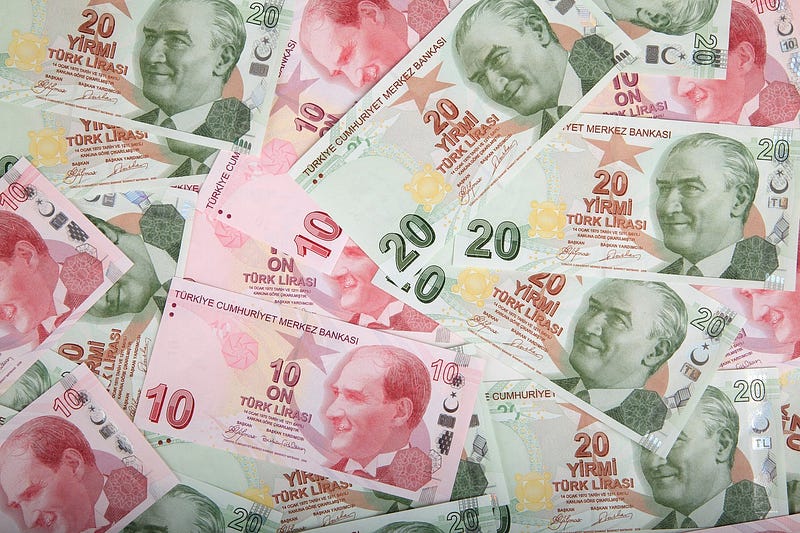
Photo by PublicDomainPictures on Pixabay


75% of all fiat volume

According to a report by Cointelegraph on Friday, despite being the fourth-largest crypto market globally in terms of transaction volume, following the United States, India and the United Kingdom, the Turkish Lira commanded a staggering 75% of all fiat volume in early September. This surge in the TRY trading pair is attributed to a recent influx of crypto investors into the Turkish market.

In its analysis last month, crypto market data provider Kaiko put Turkish Lira dominance at 81% on Binance. Kaiko also pointed to growth in the volume of the Brazilian Real on Binance, while dominance of the British Pound and the Euro were fading.

It’s important to note that the disproportionate level of lira-based fiat volume on the Binance exchange may also have come about due to difficulties Binance has had in recent months in keeping various fiat on and off-ramps open. In June Binance US suspended USD deposits while pausing fiat withdrawals.

It has also faced disruption when it comes to Euro payments, withdrawals and deposits. In May Binance Australia users experienced difficulties relative to AUD deposits and withdrawals following a decision to terminate the availability of PayID services to Australian account holders.


27% new crypto sector participants

Binance’s research revealed that 27% of participants in Turkey initiated their crypto investment journey within the past year, with 8% joining in the last six months alone. Most respondents indicated holding up to $175 (5,000 TRY) in cryptocurrencies, expressing a strong inclination towards investing in real estate.

The profitability factor emerged as a significant motivator for Turkey’s interest in crypto, with ease of monitoring, no minimum threshold, and low transaction costs standing out as key drivers for new investors. However, the inherent risks associated with crypto investments contribute to the hesitancy observed among many Turkish investors.

The evolving landscape of crypto adoption in Turkey is evident in the statistics, showing a substantial increase from 16% to 40% over the last three years. Chainalysis’ Global Crypto Adoption Index 2023 ranks Turkey at 12th place. Moreover, the country received humanitarian aid in the form of cryptocurrency during the 2023 earthquake, underscoring the growing integration of digital assets in various aspects of Turkish society.


Protecting long-term wealth

A report by KuCoin earlier this year identified a marked increase in crypto investors in Turkey. It found that one of the main motivations for the pursuit of crypto investments in Turkey was the desire to create long-term wealth. Recent years have seen the Turkish sovereign currency suffer from runaway inflation. Recent data put the year-on-year inflation rate at 59%.

It’s likely that the ongoing loss of buying power of the Turkish Lira is a key motivator for Turkish citizens in choosing to onboard into crypto, in an effort to safeguard their savings and wealth.


More to Read
View All
Web3 & Enterprise·

5 days ago

Token Cat authorizes up to $1B in corporate crypto purchases

Token Cat Limited, a Nasdaq-listed Chinese automotive marketplace formerly known as TuanChe Limited, has approved a new digital asset investment policy that will allow the company to deploy up to $1 billion into cryptocurrencies as part of its treasury strategy. In a press release distributed via Chainwire, the Beijing-headquartered company said its board of directors signed off on a Crypto Asset Investment Policy authorizing the use of a portion of its cash reserves to acquire selected tokens under internal risk-management controls. Any purchased assets will be held with third-party custodians rather than managed in-house, the company said.Photo by Precondo CA on UnsplashThe initial allocation will focus on tokens tied to newer projects in areas such as artificial intelligence, RAW-to-chain infrastructure, and token–equity hybrid models. Further deployments will be evaluated over time and will remain subject to additional board approval, according to the statement. The policy will be implemented under the oversight of Sav Persico, who was recently appointed chief operating officer. Token Cat said he brings decades of experience in technology and blockchain-related businesses and emphasized that the initiative reflects a long-term approach to digital assets rather than a speculative trade. China’s regulation and softer DAT inflowsToken Cat’s decision comes even as China’s central bank continues to stress that crypto-related business activity remains off-limits domestically. According to Reuters, the People’s Bank of China (PBOC) recently reiterated that services involving virtual assets constitute “illegal financial activities” and highlighted that cryptocurrencies do not have the legal status of fiat currency. The statement was issued against the backdrop of what the central bank characterized as a renewed pickup in speculative crypto trading and broader concerns about financial risks. Beyond China, Token Cat’s move fits into a wider trend of companies experimenting with so-called digital asset treasuries (DATs), in which companies commit varying portions of their balance sheets to crypto. Those strategies, however, have seen softer momentum in recent months. Cointelegraph, citing data from DefiLlama, reported that DATs drew about $1.32 billion in fresh capital in November, the lowest monthly intake of 2024. Bitcoin-focused DATs accounted for the bulk of that activity with roughly $1.06 billion of inflows, while Ethereum-based DATs saw about $37 million in outflows. Bitwise chief investment officer Matt Hougan said on X that DATs have generally moved in tandem over the past six months, but he expects that pattern to change as investors begin to differentiate between firms with clearly articulated strategies and those without. He said a limited number of DATs could emerge with more resilient valuations, while others may continue to trade at persistent discounts. Biotech Sonnet advances HYPE-token planDespite the recent slowdown in inflows, new corporate efforts to gain exposure to digital assets continue. One example is Sonnet BioTherapeutics Holdings, a North Carolina–based biotechnology company developing immuno-oncology drugs. On Dec. 2, Sonnet said its shareholders had approved a proposed business combination with Hyperliquid Strategies Inc. (HSI) and Rorschach I LLC. That vote followed an agreement reached in July for Sonnet to merge with Rorschach to form Hyperliquid Strategies, a new entity expected to hold roughly 12.6 million HYPE tokens valued at about $583 million, along with at least $305 million in cash, for a projected combined value of $888 million. Hyperliquid is a decentralized exchange (DEX) built on its own layer-1 blockchain. Its native token, HYPE, has a total supply of one billion and is used for network governance, staking, and smart contract functions on HyperEVM, the platform’s EVM-compatible environment. Sonnet’s move, together with Token Cat’s newly adopted investment policy, adds to a steady stream of corporate initiatives testing the role of digital assets in balance-sheet management. With companies ranging from biotech firms to automotive marketplaces exploring similar strategies, the coming months will show whether crypto holdings can establish themselves as durable components of corporate treasuries. 

news
Policy & Regulation·

Aug 31, 2024

Global crypto fraud suspect arrested in Istanbul

Accused of one of the world's largest cryptocurrency scams, Andreas Szakacs, a Swedish national who became a Turkish citizen under the name Emre Avcı, was detained in Istanbul. The alleged international fraud scheme, led by Szakacs, began in 2019 under the guise of OmegaPro, a company dealing in forex and cryptocurrency trading. OmegaPro claimed to generate significant profits for its investors through complex financial algorithms and high-risk leveraged trading. The company, registered in opaque jurisdictions like Saint Vincent and the Grenadines and headquartered in Dubai, promised returns as high as 300% within 16 months, attracting investors from across the globe. High-profile endorsements and lavish eventsTo bolster credibility, Szakacs and his partners, including well-known figures in the finance and crypto sectors like Dilawar Singh and Mike Sims, organized extravagant events. These included the OmegaPro Legends Cup, a football tournament featuring former stars like Ronaldinho, Kaka and Iker Casillas, who were branded as OmegaPro ambassadors. The company also sponsored car races and held opulent conferences in luxury hotels, where gifts and prizes were distributed to participants, further enticing new investors. OmegaPro's operations spanned multiple continents, with representatives in countries such as Colombia, Mexico, the UK and Nigeria. Over time, the company claimed to have attracted 1.5 million investors. However, in late 2022, as withdrawals were suddenly halted, suspicions grew. By July 2023, the company had shut down, leaving an estimated three million investors defrauded and $4 billion unaccounted for.Photo by Xiaoyi Huang on UnsplashAs OmegaPro collapsed, investors from around the world began filing complaints. In France alone, over 1,500 victims have initiated a class-action lawsuit. Similar legal actions have been reported in countries including Mexico, Congo and Myanmar. Despite multiple investigations, the whereabouts of Szakacs and his partners remained unknown—until recently. A tip-off leads to arrest in IstanbulThe breakthrough came on June 28, when an anonymous informant tipped off Turkish authorities about Szakacs' presence in a luxury villa in Istanbul's Acarkent neighborhood. Following an investigation, the Istanbul Gendarmerie identified 18 complainants connected to OmegaPro. On July 9, Szakacs was arrested in a raid on the villa, where authorities found 32 cold wallets containing cryptocurrencies, along with extensive documentation related to OmegaPro’s operations. During questioning, Szakacs denied all allegations, claiming that OmegaPro was a legitimate business that went bankrupt in late 2022, resulting in significant losses for him and his partners. He also refused to provide access to the cold wallets and the encrypted data on his devices. Despite his defense, Szakacs was charged with fraud using information systems and detained by the Beykoz Criminal Court of Peace on July 10. Ongoing legal battles and future implicationsAs the investigation continues, authorities are scrutinizing Szakacs' digital transactions, which reportedly involve $160 million in movements over a single month. His legal team argues that investors knowingly took on risks in the forex market, but the sheer scale of the losses—especially the $103 million claimed by a Dutch complainant representing 3,000 victims—has intensified the case. The outcome of this case could set a precedent for how international crypto-related fraud is handled, particularly in an era where digital currencies and high-risk investments are increasingly intertwined. 

news
Web3 & Enterprise·

Sep 15, 2023

Hong Kong and Kazakhstan Pilot SWIFT’s CBDC Solution

Hong Kong and Kazakhstan Pilot SWIFT’s CBDC SolutionCentral bank digital currency (CBDC) development globally is unrelenting, with the latest iteration of that involving global financial messaging network SWIFT.The global member-owned cooperative recently disclosed that three central banks are currently participating in beta-testing of this revolutionary solution, including the Hong Kong Monetary Authority (HKMA) and the National Bank of Kazakhstan.Photo by NASA on UnsplashBuilding upon initial successThe company provided details on the initiative via a press release published to its website on Wednesday. Simultaneously, an extended consortium of over 30 financial institutions is embarking on sandbox experiments to explore a multitude of potential use cases.The impetus behind SWIFT’s commitment to CBDC interoperability grew stronger after a successful round of sandbox testing. Participants in the initial phase quickly recognized the potential and intrinsic value of SWIFT’s solution.Building on this success, the beta version of SWIFT’s CBDC connector solution is now being integrated into the infrastructure of three central banks and monetary authorities.Second phase testingIn tandem with the beta testing, SWIFT has inaugurated a second phase of sandbox experiments, drawing in a consortium of commercial banks, central banks, and financial market infrastructure providers. This phase is dedicated to exploring an array of use cases, ranging from trigger-based payments for digital trade platforms to foreign exchange models, delivery vs. payment mechanisms, and liquidity-saving techniques.Eighteen central and commercial banks had taken part in the first phase of those sandbox experiments. Equally, the second phase has attracted a long list of entities, including the Reserve Bank of Australia, Deutsche Bundesbank, HKMA, Bank of Thailand, CLS, and others. With thirty leading global financial institutions participating in this latest testing round, that makes for a 66% increase in participation by comparison with the first phase. Their collective input and collaboration will contribute towards shaping the future landscape where CBDCs are concerned.Tom Zschach, Chief Innovation Officer at SWIFT, commented on the use of the technology in bridging from existing systems, stating:“The financial community has already recognized the strong potential of our CBDC innovations for preventing digital islands while securely bridging the payment systems of today and the future.”Global hotbed of innovationThe American think tank, the Atlantic Council, has been tracking CDBC projects on a global basis. Its endeavors in that respect demonstrate the expansive efforts that are being made to develop this technology.19 of the G20 countries are in advanced stages of CBDC development, with nine already in pilot phases. While this proliferation signifies the growing importance of CBDCs on the global stage, it also raises concerns about potential fragmentation as countries predominantly focus on domestic usage.SWIFT has taken a proactive stance in addressing the potential challenges of a fragmented CBDC landscape. The company embarked on its CBDC journey over 18 months ago, with the initial sandbox phase simulating nearly 5,000 transactions between different blockchain networks and existing fiat-based payment systems.

news
Loading