Top

HashKey’s New $100M Fund to Prioritize Altcoins

Web3 & Enterprise·September 02, 2023, 11:51 AM

HashKey Capital, the investment arm of Hong Kong-based crypto firm HashKey Group, is embarking on a new investment journey with the launch of a fund that predominantly targets major altcoins.
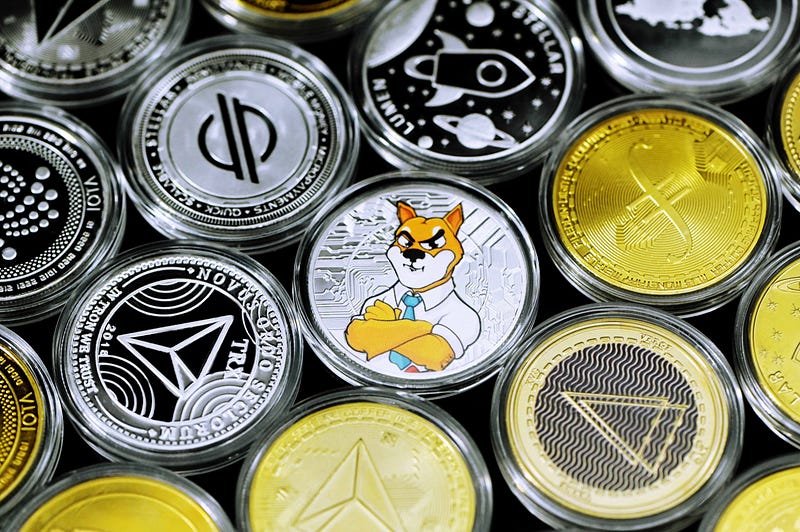
Photo by Kanchanara on Unsplash


50% altcoin allocation

In a recent interview with Reuters, Jupiter Zheng, the Portfolio Manager of the fund, revealed that less than 50% of the fund’s allocation will be directed towards Bitcoin (BTC) and Ethereum (ETH), the two largest cryptocurrencies.

The fund has already garnered attention from potential clients, primarily high-net-worth individuals and investment firms catering to affluent, high-net-worth Asian families. Zheng underscored the fund’s commitment to diversifying investment strategies, which he believes is necessary as a consequence of the Hong Kong stock market’s recent weakness.

“We see untapped demand from professional investors who wish to chase above-market returns in crypto,” Zheng noted, suggesting that the allure of crypto assets is becoming increasingly appealing to traditional investors.


$1 billion assets under management

HashKey Capital has $1 billion in assets under management, and the firm has set an ambitious target of raising $100 million for the newly launched fund within the next 12 months. This allocation strategy also includes a portion of the fund’s holdings in cash, allowing for flexibility in navigating the dynamic and volatile cryptocurrency market.

In addition to forging ahead with crypto investments, the company is actively establishing distribution channels with offshore Chinese financial institutions, expanding its reach and influence in the digital asset space.


Positive market outlook

Zheng remains optimistic about the crypto market’s future, expressing confidence that cryptocurrency prices are finding stability as industry liquidity improves. He cited several factors contributing to this stabilization, including the plateauing of US interest rates and the growing interest of large US asset managers in filing for spot Bitcoin ETFs, indicating a maturing and evolving industry sector.

Responding to news of the new fund, Ryan Selkis, CEO and Founder of crypto market intelligence firm Messari, said that he expected other funds to follow suit in 2024 given that “there’s a ton of inefficiency and mispricing in assets 50–500 by market cap.”

HashKey’s progression in the crypto investment space can be traced back to its acquisition of a Type 9 asset management license from Hong Kong’s Securities and Futures Commission last year. This license granted HashKey the ability to manage portfolios exclusively composed of virtual assets, laying the groundwork for its latest venture. It has since secured Type 1 and Type 7 licenses and recently started offering its products to retail investors in Hong Kong, being one of the first to do so.


Funding round

Earlier in the year, the company successfully closed a $500 million investment round for a fund dedicated to infrastructure, tooling, and applications that drive the widespread adoption of blockchain and crypto technologies. In April, it launched a wealth management service in response to demand from investors who were looking to gain exposure to digital assets.

Hong Kong’s welcoming stance towards cryptocurrencies and its proactive approach to addressing market demand for alternative assets have played a pivotal role in attracting digital asset firms. The city’s Securities and Futures Commission (SFC) has been granting licenses to crypto exchanges in alignment with its new licensing framework, opening up opportunities for retail investors to trade “large-cap tokens” on licensed platforms while implementing safeguards like knowledge tests, risk profiles, and reasonable exposure limits.

More to Read
View All
Web3 & Enterprise·

Nov 02, 2023

Hivemind Capital Partners expands into Hong Kong market

Hivemind Capital Partners expands into Hong Kong marketHivemind Capital Partners, a prominent player in the world of Web3 and digital asset investment, has officially unveiled its plans for expanding its operations to Hong Kong.Photo by Chromatograph on UnsplashNew Head of Asia appointmentIn a press release published by the New York-headquartered firm on Tuesday, Hivemind outlined that alongside this significant Asian expansion, the company has appointed Stanley Huo as Head of Asia. Huo is a seasoned investment banker with over 15 years of experience at prestigious institutions like China Renaissance, UBS, Citi and BAML across Asia and Europe.Huo expressed his excitement, stating: “I’m thrilled to be joining Hivemind at such a transformative period. The intersection of traditional finance and burgeoning digital asset technologies in Hong Kong presents unmatched opportunities and I’m looking forward to leading our initiatives in this vibrant ecosystem.”Identifying an opportunityHivemind Capital Partners had nothing but praise for Hong Kong as a significant crypto hub. The company highlighted the distinct advantages that come with operating in the city-state, including a well-established ecosystem that facilitates access to traditional financial infrastructure, capital-raising opportunities and the exploration of blockchain-related innovations.Huo told The Block: “It was very interesting to see that the Hong Kong government welcomes all the Web3 capital and talents… They want to build up a Web3 center.”Matt Zhang, Founder and Managing Partner of Hivemind, is equally enthusiastic about the Hong Kong expansion, stating:“Our expansion into Hong Kong not only represents our firm’s growth, but our commitment to being at the center of financial innovation and technology. With Stanley leading our business in Asia, we are positioned to significantly contribute to, and influence, the evolving narrative of blockchain technology and digital assets in the region.”Zhang is a speaker at Hong Kong Fintech Week later this week, where he will participate in a panel discussion titled “The Future of Stablecoins: Exploring Virtual Asset Payment Infrastructure and the Rise of Non-USD Stablecoin Frameworks.” He founded Hivemind in November 2021, with a view towards deploying capital within verticals such as crypto infrastructure, virtual worlds, programmable money and blockchain protocols.Hivemind has been on a significant growth trajectory, as evidenced by its recent launch of a $1.5 billion investment vehicle, with available funds still waiting to be deployed. Additionally, the company introduced the Liquid Opportunity Fund, a $300 million crypto fund, earlier in the year, securing $60 million for the fund in June.Following a regional trendThe company’s move to Hong Kong aligns with the broader trend of cryptocurrency firms recognizing the region’s potential and considering it for their expansion plans. Notably, Zodia Custody, a digital asset custodian backed by Standard Chartered, recently announced its launch in Hong Kong.While Hong Kong has actively positioned itself as a hub for Web3 companies, boasting recent developments like the introduction of retail trading for licensed crypto exchanges in August, it has also faced challenges. The city recently witnessed the largest Ponzi scheme in its history, involving the embezzlement of approximately $166 million from JPEX crypto exchange users. The investigation into this incident is still ongoing.

news
Web3 & Enterprise·

Jan 23, 2024

HTX bounces back following DDoS attack

Well-known crypto exchange HTX and its decentralized autonomous organization (HTX DAO) have restored services following a distributed denial-of-service (DDoS) attack. The attack, which occurred late last week, briefly disrupted operations. However, HTX swiftly addressed the issue, highlighting the robust security protocols in place. The Seychelles-incorporated exchange confirmed the outage on social media last Friday, only to post an update shortly afterwards to confirm that service had been restored.Photo by Tekton on Unsplash‘Funds are SAFU!’Key industry figure and HTX advisor Justin Sun also took to social media to announce the recovery and express gratitude to the user community for their support. He reassured users that all funds remained secure, underscoring the exchange's dedication to safeguarding user assets. Sun borrowed a phrase first coined by Binance founder Changpeng Zhou (CZ), stating:”All funds are SAFU!” Latest in a string of incidentsThis DDoS attack adds to a series of challenges faced by HTX. In September, the same month in which the company rebranded from Huobi to HTX, hackers exploited the exchange, resulting in a loss of approximately 4,999 ether (ETH) valued at $7.9 million. In November, two Sun-linked protocols, HTX and Heco Bridge, experienced a combined $100 million hack. Despite these incidents, prompt measures, including statements from Justin Sun, ensured the protection of user assets. Having originated in 2013, HTX has evolved into a comprehensive blockchain ecosystem, encompassing digital asset trading, financial derivatives, wallets and various other blockchain-related services. The firm maintains offices in Hong Kong, Singapore, Tokyo and the United States. Its South Korean branch is set to close its operations on Jan. 29. Since 2018 the business has been a publicly listed company on the Hong Kong Stock Exchange (HKEX). HTX DAOOnly hours before experiencing this DDoS attack, the firm had launched HTX DAO. The DAO allows users to actively participate in the exchange's operations. Users can contribute to decision-making processes through voting, engaging in community discussions and selecting representatives. The DAO’s whitepaper outlines that governance will be conducted through the use of HTX tokens. The HTX DAO website alludes to various privileges that HTX token holders can benefit from on both the DAO and the HTX exchange. However, it remains unclear as to the specific nature of these privileges as yet. In a bid to strengthen its security infrastructure, HTX DAO recently underwent a comprehensive security audit conducted by ChainSecurity. This integration of the exchange business into the HTX DAO ecosystem reflects a broader trend within the cryptocurrency sector towards decentralization. In a long post on the X social media platform on Thursday, Justin Sun suggested that through HTX DAO, the HTX exchange would become “The People’s Exchange.” Sun added:”HTX currency holders should eventually become the owners of the platform.” Despite the high hopes and aspirations, Sun continues to have his perennial detractors. Travis Kling, founder of Ikigai Asset Management, posted on X on the very same day, stating:”We may be getting close to showtime here. We need [Justin Sun] gone. He’s a cancer.” 

news
Web3 & Enterprise·

Nov 15, 2023

Aptos charts success in South Korea through bridging Web2 and Web3

Aptos charts success in South Korea through bridging Web2 and Web3Aptos, a major layer 1 blockchain network developed by the experts behind Meta’s canceled stablecoin payment system Diem, is growing in South Korea. In a recent Aptos Day conference held at the Hashed Lounge in Seoul, the Aptos team shared its vision for developing its ecosystem in Korea and attracting users by actively bringing content from Web2 to Web3, instead of simply focusing on cultivating a Web3-only ecosystem.Photo by GuerrillaBuzz on UnsplashDavid Wolinsky, a software engineer at Aptos and a former developer at Facebook, presented Aptos’ key advantages and achievements since its launch last year and outlined the blockchain’s future plans for growth.High-speed Web3 powerhouseIn particular, he highlighted Aptos’ high compatibility with social media, its solid security framework built with the Move programming language and a rapid processing speed of up to 200,000 transactions per second (TPS) — with a time to finality (TTF) of less than one second. Thanks to this impressive speed, Wolinsky explained, lots of projects have onboarded the network, which is anticipated to grow into a bigger ecosystem with more decentralized applications (dApps).Aptos has also carried out over 300 million transactions since its launch in October of last year, creating seven million unique addresses. Just two months following its launch, there were already over 200 projects on the blockchain. Aptos could thus play a significant role in revolutionizing Web3, which is currently dominated by the Ethereum virtual machine (EVM).Facilitating the transition from Web2 to Web3To grow the ecosystem further, Wolinsky emphasized the importance of bringing Web2 users to Web3 in an efficient and seamless manner. Aptos aims to achieve this by facilitating the creation of Aptos-based wallets through integration with platforms like Facebook, X (formerly Twitter) and Google, allowing users to enjoy various dApps.Wolinsky also noted that Aptos uses Move — an open-source programming language developed by Facebook for writing smart contracts on the Diem blockchain — which is designed to be developer-friendly, employing similar mechanisms that developers generally use to build applications on Web2. This language can attract not only Web2 users but also Web2 developers who are transitioning to Web3 without worrying about the complexity of the process. Aptos argues that Move is more secure than EVM’s Solidity language.Positive prospects in KoreaAptos also regards Korea as a key market for growth, as Korean developers are actively contributing to the Aptos ecosystem and providing helpful feedback. The blockchain disclosed that as of Q3 this year, Korea has 13 Aptos validators — second only after the U.S., which has 14.Christie Lee, Head of Business Development and Partnerships in Korea at Aptos, argued that Korea is innovating the most at the larger corporate level while also contributing to the ecosystem. Lots of endeavors are playing out in the Korean market, she said, as regulatory restrictions in fields like gaming, entertainment, finance and more are starting to loosen.She also added that the Korean market is not only driven by innovation from large companies but also by small developers who can contribute to the ecosystem, noting that the market is a favorable environment for developers to thrive. In addition, Korean users are sensitive to trends and adept at incorporating technology, which would allow them to quickly adopt Web3 culture.

news
Loading