Top

Two Asian nations turn down spot bitcoin ETFs

Policy & Regulation·January 19, 2024, 2:50 AM

In a contrasting move to the recent approval of several spot bitcoin exchange-traded funds (ETFs) by the U.S. Securities and Exchange Commission (SEC), regulators in both Singapore and Thailand have turned down permission to list spot bitcoin ETFs.
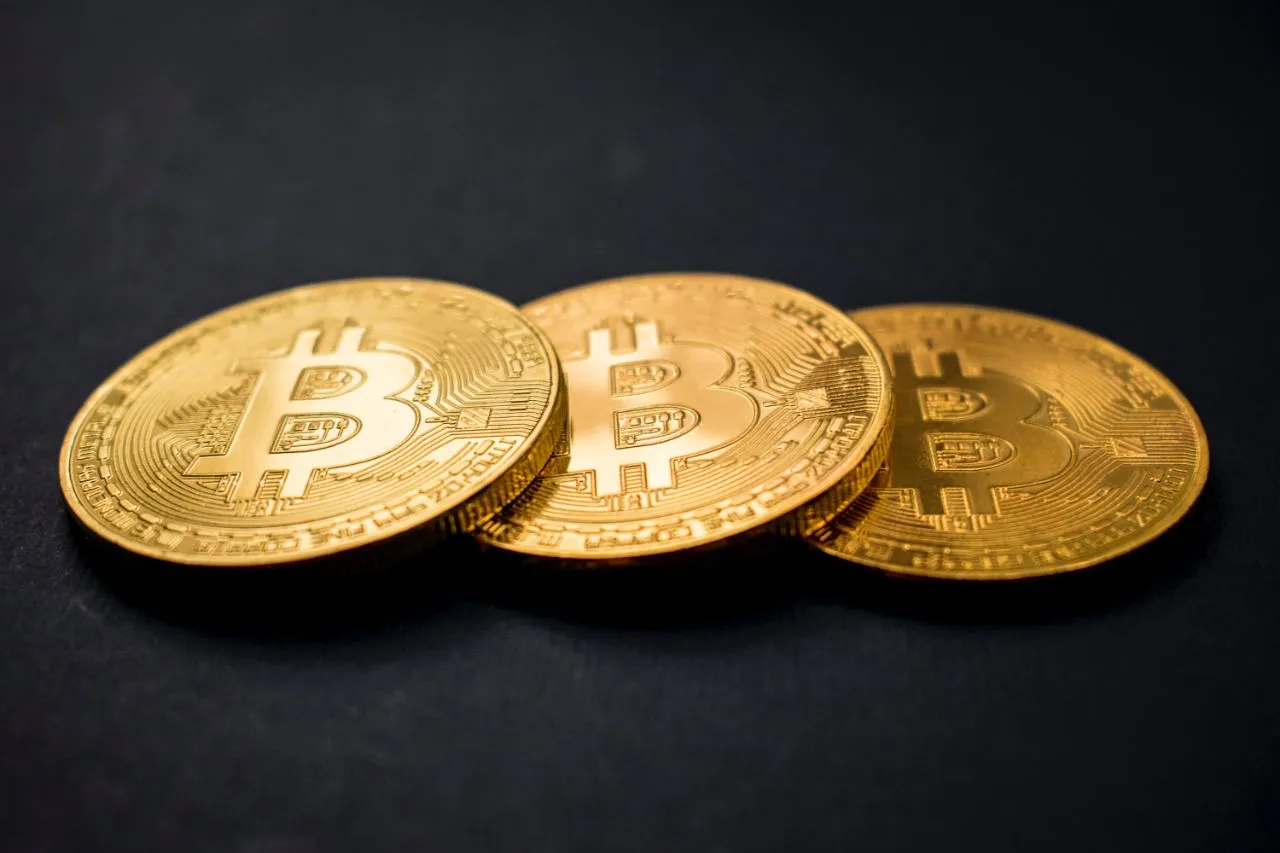
https://asset.coinness.com/en/news/5c20fe2ebeb33d6997e51486fa52cb42.webp
Photo by Dmytro Demidko on Unsplash

Bitcoin not a qualified asset

According to local news media on Wednesday, Singapore's Monetary Authority (MAS) has announced its decision not to permit the listing of spot ETFs in the country. The MAS argues that cryptocurrencies, including bitcoin, do not meet the criteria for qualified assets within the context of ETFs.


This regulatory divergence means that retail investors in Singapore won't see the introduction of spot bitcoin ETFs domestically. However, they still have an avenue to trade such ETFs as they can turn to local brokerages for access to overseas markets. Despite this allowance, the MAS emphasizes the need for these retail investors to exercise caution due to the inherent high volatility and speculative nature of cryptocurrency trading.


A spokesperson from the regulatory authority clarified that while collected investment schemes (CIS), falling under the Securities and Futures Act regulation, include ETFs, they do not encompass bitcoin or any other cryptocurrency.


Future potential

While MAS may be turning down spot bitcoin ETFs at this point, there’s potential for a change of heart in the future. The FIMA Bill is currently working its way through the city-state’s legislative process. If enacted, it would give broader regulatory oversight of crypto to MAS. Lasanka Perera, CEO of Independent Reserve Singapore, recently suggested that the bill could make an ETF more likely.


Thailand says no

Meanwhile, Thailand’s Securities and Exchange Commission (SEC) has stated that it currently does not plan to allow asset management firms to launch spot bitcoin ETFs in the country.


Thai securities brokerage firms have been encouraging investors to consider investing directly in U.S. spot bitcoin ETFs. The Thai SEC clarified that while it closely monitors these developments, there is no immediate policy to allow spot bitcoin ETFs in Thailand. The regulator emphasizes that Thai investors can still engage in digital asset investments through domestic exchanges licensed by the SEC under the Digital Assets Decree.


India, too, doesn’t appear to have been looking favorably on the potential for such products. The governor of the Reserve Bank of India (RBI) said last week that “the way we look at crypto remains unchanged, irrespective of who does what.”


Asian optimism

In the wake of ETF approval in the U.S., many industry commentators had suggested that Asia would respond positively. Australian venture capitalist Mark Carnegie has suggested that the developing bull market would be “an Asian story.”


Yat Siu, co-founder of Hong Kong’s Animoca Brands, expressed the view that U.S. ETF approval would have a substantially positive impact within the Asian region. Hong Kong appears to be the most positive in the region in its outlook with regard to embracing spot bitcoin ETFs. Immediately following approval in the U.S., a Hong Kong legislator spoke out to encourage a proactive response relative to launch of similar products within the Chinese autonomous territory.


Meanwhile, recent news reports indicate that spot bitcoin ETFs experienced substantial trading volume, accumulating $10 billion just three days after their approval in the U.S. 

More to Read
View All
Policy & Regulation·

May 19, 2023

BOK Staffers Assess Crypto Market Vulnerabilities and Their Implications

BOK Staffers Assess Crypto Market Vulnerabilities and Their ImplicationsOn Thursday, the Bank of Korea’s (BOK) staff members published an assessment of the vulnerabilities in the cryptocurrency market and their potential implications. Here is the summary of the report.Photo by D Tan on Unsplash2022 crypto winterThroughout 2022, the worldwide crypto market faced a series of adverse occurrences, such as significant drops in the prices of major crypto-assets and the collapse of prominent crypto companies. These events shed light on the vulnerabilities that had accumulated during the rapid growth of the market.The first major event occurred in May 2022 when the algorithmic stablecoin TerraUSD experienced a sharp decline, resulting in substantial losses and bankruptcies for numerous retail investors and crypto firms. This incident significantly eroded confidence in the overall crypto market. The subsequent bankruptcies of prominent crypto lender Celsius and hedge fund Three Arrows Capital (3AC) further highlighted the realization of risks commonly associated with traditional financial markets, such as multiple collateral loans and maturity and liquidity mismatches, within the crypto market.In November 2022, the well-known crypto exchange FTX filed for bankruptcy, demonstrating that the activities of a large crypto company can propagate risks through moral hazard and excessive profit-seeking behavior when it operates outside the realm of regulatory oversight.Similarities with TradFiThese negative events that unfolded in the global crypto market in 2022 share similarities with issues previously observed in financial markets, such as unsustainable business models, liquidity risk, leverage, and lack of transparency in financial conditions. These parallels suggest that if the crypto markets were subjected to comparable levels of regulation as traditional financial markets, it is plausible that the triggering of these risks could have been avoided altogether, or at the very least, the resulting damage could have been mitigated to some extent.Implications for the Korean marketAt present, it is deemed unlikely that events akin to those witnessed in overseas crypto markets will transpire in the Korean market. The Korean crypto-asset market has primarily evolved through exchanges, with limited influence from other enterprises such as crypto issuers and decentralized lending platforms. In addition, Korean crypto exchanges are subject to regulation under the Act on Reporting and Using Specified Financial Transaction Information. This mandates the separation of customer deposits from exchange assets and the strict management of custodial crypto-assets through secure wallets. Additionally, Korean exchanges are prohibited from listing their own tokens on their platforms.However, there remains a dearth of information regarding the business structures of crypto companies that offer services similar to those in the traditional financial industry. This lack of information poses challenges in accurately assessing risk and providing adequate investor protection. Meanwhile, there is a potential for a deeper integration between the crypto market and users’ daily lives, particularly through major technology companies, gaming companies, and security tokens.SuggestionsIt is vital to ensure that crypto-assets are regulated based on the principle of “same activity, same risk, same regulation” through the ongoing development of crypto-asset-related legislation. The Financial Stability Board, an international body monitoring the global financial system, explained this principle in a 2022 paper: “Where crypto-assets and intermediaries perform an equivalent economic function to one performed by instruments and intermediaries of the traditional financial sector, they should be subject to equivalent regulation.”Additionally, it is necessary to stay aligned with major countries in terms of the speed and comprehensiveness of regulatory measures to prevent regulatory discrepancies across borders due to the global nature of crypto risks.Enhancing the effectiveness and efficiency of regulation requires the establishment and maintenance of a close cooperation system between authorities. This collaborative effort should encompass various aspects, including monitoring, information gathering, and supervision of the crypto-asset market. Notably, the widespread adoption of stablecoins can affect the stability of the overall financial system, including monetary systems and payment and settlement systems. Hence, it is necessary to strengthen the involvement of central banks in the monitoring and supervision framework for crypto-assets, including stablecoins, as demonstrated by legislative approaches adopted by major economies like the EU. Furthermore, imposing disclosure requirements, external audits, and documentation submission obligations on crypto-asset operators is advisable.

news
Policy & Regulation·

Dec 13, 2023

Hong Kong court grants trademark injunction against Huobi

Hong Kong court grants trademark injunction against HuobiThe Hong Kong Special Administrative Region High Court has resolved a trademark dispute between X-Spot Global Limited and Huobi Global Limited, ruling in favor of X-Spot.Back in June, X-Spot alleged that Huobi Global infringed on its trademark rights related to the “Huobi” name. In the legal process which followed, the court sided with X-Spot, compelling Huobi Global to cease using the “Huobi” trademark or any similar name or logo in Hong Kong.Photo by Tingey Injury Law Firm on UnsplashPotential confusionThe court’s official judgment highlighted concerns about potential confusion among the public and industry professionals arising from Huobi Global’s use of the “Huobi” trademarks. It emphasized that such confusion could lead people to believe that X-Spot Global, as the registered trademark owner, is actively engaged in cryptocurrency business associated with the trademark. In response, the court dismissed Huobi Global’s plea to revoke the service order and halt negotiations, also instructing the covering of X-Spot Global’s legal expenses.Post-acquisition conflictThe background to this dispute originates in the acquisition of Huobi Global last year. It’s widely believed that TRON blockchain network founder Justin Sun purchased the exchange for $1 billion although Sun has subsequently suggested that he is just an advisor to the crypto exchange business. The acquisition was made by About Capital Management, an entity associated with the controversial crypto entrepreneur.In May of this year, Sun claimed that Wei Li, a brother of Huobi founder Leon Li, had unjustly profited from the sale of Huobi’s native HT token. The disagreement escalated and as a consequence of that conflict, it became apparent that the acquisition agreement explicitly prohibited the buyer from using the “Huobi’’ trademark.Leon Li accused the cryptocurrency exchange of violating the acquisition agreement’s rules by unauthorized use of the “Huobi” trademark. This legal battle has shed light on the strained relationship between Leon Li and Justin Sun.The court’s decision adds a layer of complexity to Huobi Global’s legal challenges, intensifying existing regulatory issues. Notably, the cryptocurrency exchange is already grappling with a recent order from Malaysian authorities to cease operations in the country due to alleged illegal activities.The ruling comes at a critical juncture for Huobi Global. In September the business rebranded to HTX, signaling aspirations for global expansion amidst a shifting legal landscape. At the time, Justin Sun provided the rationale behind the rebrand. Taking to the X social media platform, he wrote:“It’s very hard for foreigners, Westerners, to pronounce ‘Huobi’… It doesn’t make any sense to them.” Sun went on to explain that the word Huobi means fire and coin in Chinese, adding, “That’s why we rebranded as HTX for international branding.”In light of this trademark infringement injunction decision, it could equally be speculated that the company was acting in advance of an unfavorable ruling in compliance with the terms of the business acquisition agreement.In reaching a decision on the matter, Judge Mimmie Chan J noted the lack of a defense mounted by Huobi against the trademark infringement action.

news
Policy & Regulation·

Apr 21, 2023

UAE Starts to Accept Crypto License Applications

UAE Starts to Accept Crypto License ApplicationsEarlier this week, the United Arab Emirates (UAE) announced that it has commenced the process of accepting license applications from crypto companies.©Pexels/Andrea PiacquadioThe announcement was made by the Middle Eastern country’s Securities and Commodities Authority (SCA) on Monday. The decision comes in the wake of last year’s UAE Council of Ministers opting to regulate the country’s crypto sector as per Decision №111.VASP approval processAs part of the process, virtual asset service providers (VASPs) are obliged to apply to the SCA for approval with those already licensed within the UAEs financial-free zones not required to undertake the process.When it comes to the individual Emirates of Dubai and Abu Dhabi, both have already implemented their own licensing process relative to crypto service providers. In the case of Dubai, it already has its Virtual Assets Regulatory Authority (VARA) and its procedures have been deemed to be unified with the process now being implemented by the UAE.The SCA suggested that the initiative offers the opportunity for crypto companies to “regularize their status.”Key rulesThe SCA has set out nine articles as part of the process it is asking crypto companies to apply for and sign up to. Article 3 stipulates that VASPs can only trade digital or virtual assets that have been accepted and approved within an official list of virtual assets.Article 4 sets out the tasks and responsibilities of the virtual assets platform operator. It considers the need for integrity, transparency and professional behavior. Service access must be organized through procedures that facilitate access only for permitted persons.Article 5 highlights the obligations of VASPs relative to seven areas. These include operational efficiency and flexibility, and the provision of operational rules. That incorporates the need for the setting and maintenance of operational business rules and meeting operational rules according to a predefined set of standards.The policy sets out the right of the SCA to request provision of documents and data from a VASP and their receipt within a specified time period.Jurisdictional arbitrageThe UAE and particularly its Abu Dhabi and Dubai emirates are demonstrating that they’re open for business where the digital assets sector is concerned. It’s one location that’s on the rise in terms of coming to global prominence in competing for crypto business alongside places like Singapore and Hong Kong.The Biden administration in the United States has shifted policy relative to digital assets to the down side. On Wednesday it emerged that leading US exchange Coinbase has received approval to operate in Bermuda. It’s being speculated that negotiations are also underway in Abu Dhabi to secure a license for the company to trade there.On the day in which Securities and Exchange Commission (SEC) Chair Gary Gensler received a harsh grilling in front of the House Financial Services Committee on Capitol Hill, Coinbase CEO Brian Armstrong confirmed that the company is prepared to move overseas if the regulatory environment doesn’t improve in the United States.Meanwhile, earlier on Thursday, the European Union officially passed its Markets in Crypto-Assets (MiCA) legislation in the European Parliament, providing clarity for the digital assets industry in Europe. In moving forward with crypto licensing, the UAE is jockeying for position among a field of global centers that are vying for crypto business while the US falls behind.

news
Loading