Top

Crypto rally drives surge in South Koreans’ offshore disclosures

Markets·August 28, 2025, 2:43 AM

Fueled by a crypto rally and higher overseas stock balances, South Korea’s National Tax Service (NTS) reported a sharp jump in disclosures of offshore accounts. On Aug. 26, the agency said 6,858 taxpayers declared overseas financial accounts this year, with a combined balance of 94.5 trillion won ($67.6 billion), up 38.3% in filers and 45.6% (29.6 trillion won or $21.2 billion) in value from last year.
https://asset.coinness.com/en/news/78789fd059c5f2a53bf10e538946fe4f.webp
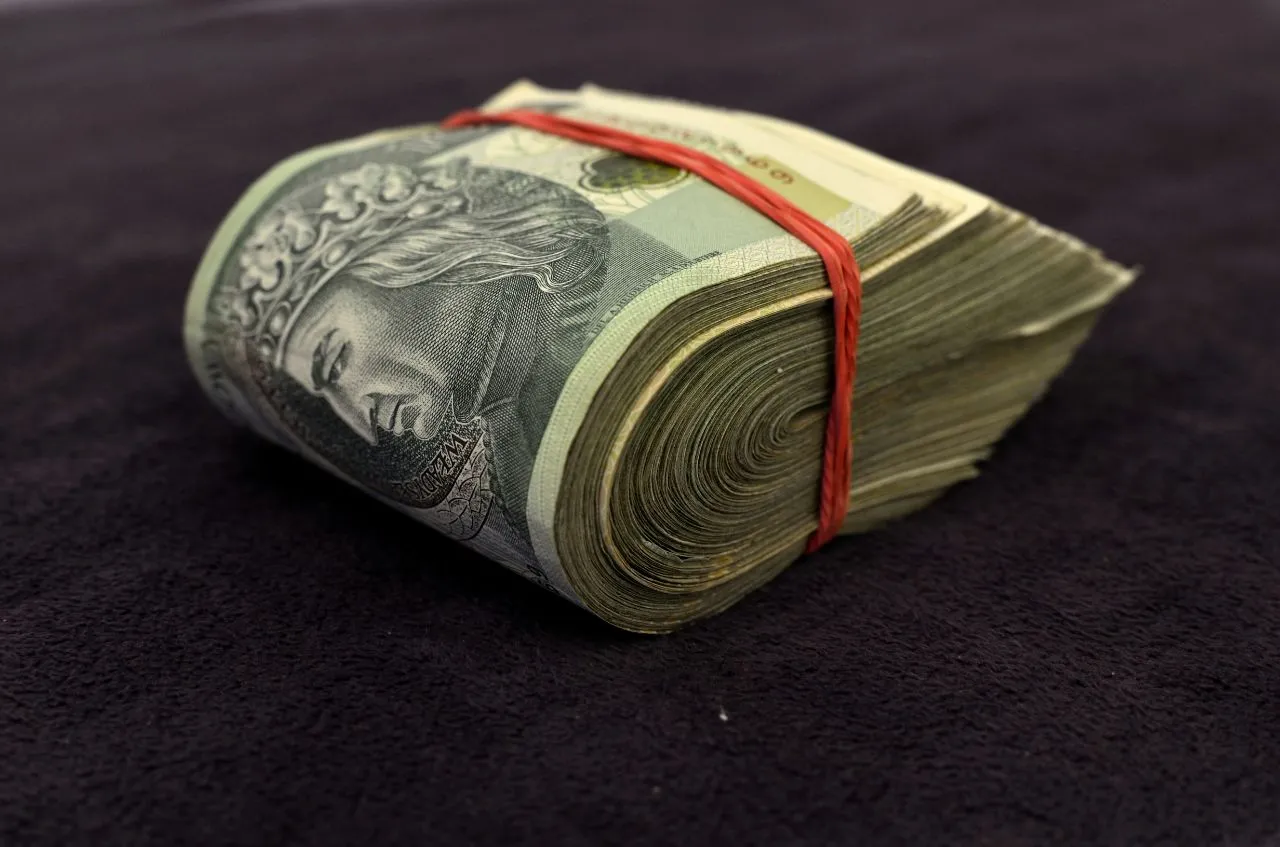
Photo by Piotr Łaskawski on Unsplash

Crypto gains drive offshore filings

Within that, reports of overseas bank deposits and cryptocurrency accounts rose to 46.4 trillion won ($33.2 billion) this year, more than 12% above 2024. That figure excludes stock accounts, which alone totaled 48.1 trillion won ($34.4 billion). Tax officials attributed the increase largely to the surge in crypto prices and higher balances in overseas stock holdings. The trend is underscored by CoinMarketCap data: the crypto market cap now stands roughly at $3.87 trillion, up 86% from $2.08 trillion a year ago.


By asset type, the largest share of filers reported overseas bank deposits (3,197 people), followed by cryptocurrency (2,320) and stocks (1,992). By value, stock accounts dominated with 48.1 trillion won ($34.4 billion), compared with 23.5 trillion won ($16.8 billion) in bank deposits and 11.1 trillion won ($7.94 billion) in cryptocurrencies.


Korean law requires residents and domestic corporations to disclose foreign financial accounts if their combined balance exceeds 500 million won ($358,000) on any month-end date during the year. Reports must be filed with the local tax office by June of the following year.


The NTS said it will step up enforcement against suspected non-filers, using cross-border information-exchange data to verify offshore holdings. Penalties will include administrative fines, penalty notices, criminal referrals, public naming of violators and the collection of back taxes. The agency added that it is preparing to share crypto transaction data under the OECD’s Crypto-Asset Reporting Framework (CARF) and urged anyone subject to the rules to promptly file amended or late reports for overseas crypto accounts.


The recent bullish sentiment in crypto, which fueled the uptick in foreign financial disclosures, has also been driving public interest in digital assets and boosting expectations for altcoins. A survey by CoinNess and Kratos conducted between Aug. 18 and 22 with 2,000 respondents found that 38.5% expect a limited bull run in a handful of altcoins, either with strong real-world use cases or serving as the underlying assets of launched ETFs. Another 28.5% predicted gains would remain centered on Bitcoin and Ethereum, while 20.7% anticipated a broader altcoin season reminiscent of past cycles. The remaining 12.3% forecast the end of the rally and the start of a downturn.


Won stablecoins: policy and risks

Policy momentum around stablecoins is also picking up in South Korea. The Financial Services Commission (FSC) plans to introduce a bill in October governing won-pegged stablecoins as part of the second phase of the Virtual Asset User Protection Act. The legislation is expected to set rules for issuance, collateral management and internal controls.


Amid these changes, companies are showing growing interest in launching won-based stablecoins. Kaia, an EVM-compatible, layer-1 blockchain, recently signed a memorandum of understanding (MOU) with blockchain solutions provider Open Asset to collaborate on projects tied to Korean won–backed stablecoins. The partnership will focus on issuance, distribution, service launches and developing practical use cases.


Circle President Heath Tarbert has recently joined calls for a won-backed stablecoin. In an interview with The Korea Economic Daily, he underscored South Korea’s world-class payments infrastructure and said a digital won could help the country play a leading role in blockchain finance. Blockchain transactions, he noted, operate differently from traditional payment rails, making some form of digital currency, whether a stablecoin or a central bank digital currency (CBDC), a necessity.


Meanwhile, at a recent meeting with top executives from the country’s four major financial groups, Tarbert ruled out collaborations on won-denominated stablecoins. Instead, he promoted Circle’s dollar-pegged stablecoins and suggested exploring joint initiatives centered around them.


Not everyone sees stablecoins as a net positive. NICE Investors Service, a local credit rating agency, warned in a recent report that if banks issue won-based stablecoins, their interest income could suffer. The agency said adoption would likely weigh on banks, benefit securities firms and leave credit card companies largely unaffected. It added that a large shift of funds into stablecoins could shrink banks’ deposit base and weaken their intermediary role. Still, banks that issue stablecoins directly could soften the blow by tapping new fee-based revenue streams.
 

More to Read
View All
Web3 & Enterprise·

Mar 07, 2024

Korean blockchain firms Creder and ITCEN partner with Malaysia STO exchange Green-X

South Korea’s blockchain venture Creder and IT solution company ITCEN Group (ITCEN) announced today their partnership with Green-X, a Malaysia-based exchange, local media outlet Decenter reported. Through the partnership, the three companies plan to launch a security token offering (STO) business, introducing tokenized real-world assets (RWAs) to investors. Creder is a joint venture founded in 2022 by ITCEN and blockchain service developer BPMG.  The planned business aims to tokenize various RWAs – including jewelry, real estate, rare earth, antique goods – and issue them in the form of NFTs, which will then be fractionalized and traded on Goldstation, the gold-pegged coin (GPC)-centered DeFi platform developed by Creder. Photo by Jingming Pan on UnsplashThe initial project of the RWA business would be to offer trading services for Dignity gold tokens (DIGNITY) on Goldstation, a digital token issued by Dignity Gold LLC. The company owns a gold mine valued at over $6 billion in Nevada, U.S., according to data from Green-X. As of March 26, gold reserves yet to be excavated from the mine reportedly stand at 3.44 million ounces. Green-X, a Malaysia STO exchange accredited by Sharia certificate The Malaysia-based STO exchange Green-X is a wholly owned subsidiary of Greenpro Captial Corp., a company listed on Nasdaq. In February 2022, Green-X received an STO exchange license along with Sharia certificate, a proof of compliance that is only given to firms that follow the Islamic law, Sharia. This religious certificate is known to serve as a significant criterion for Islamic investors.  James Lim, CEO of Creder, said that the company aims to expand its business to the global market by further introducing more RWAs in cooperation with Green-X.  

news
Web3 & Enterprise·

Nov 01, 2023

OKX maintains robust asset reserves with 103% BTC backing

OKX maintains robust asset reserves with 103% BTC backingSeychelles-incorporated cryptocurrency exchange OKX has recently released its 12th asset reserve certificate, with its latest report revealing that the company maintains reserves of 103% for its top coins, which include Bitcoin (BTC), Ethereum (ETH), Ripple (XRP), Tether (USDT) and USD Coin (USDC). The measure is meant to reassure users that their funds are well-backed and, in fact, more than covered by the exchange’s reserves.Photo by rc.xyz NFT gallery on UnsplashBitcoin, Ether reserve surplusesOKX provided details on its latest asset reserve status via a blog post published to its website on Monday. Alongside providing the relevant asset reserve data, the exchange celebrated its first complete year of having utilized a proof-of-reserve-based system.For BTC, OKX holds a substantial reserve of 140,484 BTC, effectively exceeding the 136,227 BTC held in user accounts. Similarly, ETH reserves stand at 1.46 million ETH, providing a surplus over the 1.42 million ETH owed to OKX users.The exchange also demonstrated its considerable holdings in stablecoins, with over $5 billion in USDT reserves and over $327 million in USDC reserves. In an interview with CoinDesk recently, OKX Chief Marketing Officer (CMO) Haider Rafique, referred to the need to provide a mechanism to reassure platform users. He stated:“Customers often express concerns in person about centralized exchanges, highlighting issues with security, solvency and downtimes, even if they don’t always voice these concerns digitally.”Use of zero-knowledge technologyIn April, OKX upgraded its proof of reserve system, opting for the use of zero-knowledge scalable transparent argument of knowledge (zk-STARK) technology. This approach allows OKX platform users to independently verify exchange solvency, confirming their assets are backed by OKX reserves. A zero-knowledge proof demonstrates the truth of a statement without sharing the statement’s contents. Therefore, no account balances are made public to other service users, maintaining user privacy.Regular transparency is now crucial for exchanges like OKX, as it aims to provide users with the certainty that their funds are genuinely available for withdrawal at any given time. After the FTX insolvency incident, verifiable proof of reserves has become paramount in reassuring users about the safety of their investments.Trend towards improved standardsIn the wake of several high-profile crypto platform failures in 2022, many exchanges are making greater efforts towards reassuring users that their funds are safe and accounted for. This has given rise to the popularity of proof of reserve systems.On that basis, OKX hasn’t been alone in implementing a proof of reserves-based system. In July another Seychelles-incorporated crypto platform, Bitget, announced that it could demonstrate the debt-free status of its business through its proof of reserves system.Nic Carter, Partner at crypto venture capital and private equity firm Castle Island Ventures, has carried out some research into the various proof of reserve systems employed by a number of global crypto platforms. While accepting that the approach is not foolproof, Carter maintains that it’s still a move in the right direction. “The way PoR works is, if enough exchanges do it, the few exchanges that don’t do it end up sticking out like a sore thumb,” he states.

news
Policy & Regulation·

Nov 04, 2023

SEC seeks summary judgment against Terraform Labs

SEC seeks summary judgment against Terraform LabsThe U.S. Securities and Exchange Commission (SEC) is making a strong push for a summary judgment in its ongoing legal battle against Singapore’s Terraform Labs and its co-founder Do Kwon. Such an outcome would spare the need for a protracted trial.According to a motion filed by the SEC on Thursday, the record shows that there is “no genuine dispute as to any material fact and that the moving party is entitled to judgment as a matter of law.”Photo by Caleb Fisher on UnsplashRelying on the Howey TestThe SEC’s filing underscores its central argument that Kwon and Terraform Labs were involved in the sale of securities. The document categorically states:“There is no dispute that purchasers made an investment of money, either through fiat currency or crypto assets, for each crypto asset — LUNA, wLUNA, MIR, and UST, thereby satisfying the first prong of Howey.” The Howey Test refers back to a U.S. Supreme Court case — SEC v. Howey — which took place in 1946. The case set a precedent and has subsequently become the cornerstone of determining what is or is not a security in the United States.This argument hinges on the idea that funds were pooled in a common enterprise with the expectation of profits primarily derived from the efforts of the promoters.Citing fraud as well as unregistered securitiesThe SEC’s assertion is two-fold, contending that not only did Terraform and Kwon engage in selling securities, but they also engaged in fraudulent activities and disseminated misleading information. The SEC reiterates these claims in its filing, emphasizing that the defendants committed fraud by duping investors about the stability of UST.They allegedly falsely attributed the algorithm for price stabilization while orchestrating clandestine third-party interventions. This purported deception made their claims regarding the algorithm’s effectiveness deceptive and involved the omission of crucial information. The fallout from Terra’s collapse in May of the previous year resulted in the destruction of substantial investor wealth, totaling billions of dollars.Similar defense team filingThe SEC’s move to seek summary judgment comes in the wake of a similar filing by Kwon’s defense team last Friday. Kwon is currently serving a sentence for document forgery in Montenegro, a situation stemming from his arrest at an airport with forged passports.Notably, Terraform’s co-founder, Daniel Shin, who is currently on trial in South Korea, has attributed the collapse of Terraform Labs to Kwon’s mismanagement. Shin has claimed his separation from the company and its activities occurred two years before its eventual collapse.In this legal battle that holds significant implications for the cryptocurrency and blockchain space, the SEC continues to emphasize its position, asserting that Kwon and Terraform Labs engaged in the sale of securities through deceptive means. The outcome of this case could have far-reaching consequences, setting precedents for future regulatory actions in the industry.

news
Loading