Top

EU bans Ruble-backed stablecoin A7A5 in latest round of Russia sanctions

Policy & Regulation·October 29, 2025, 6:31 AM

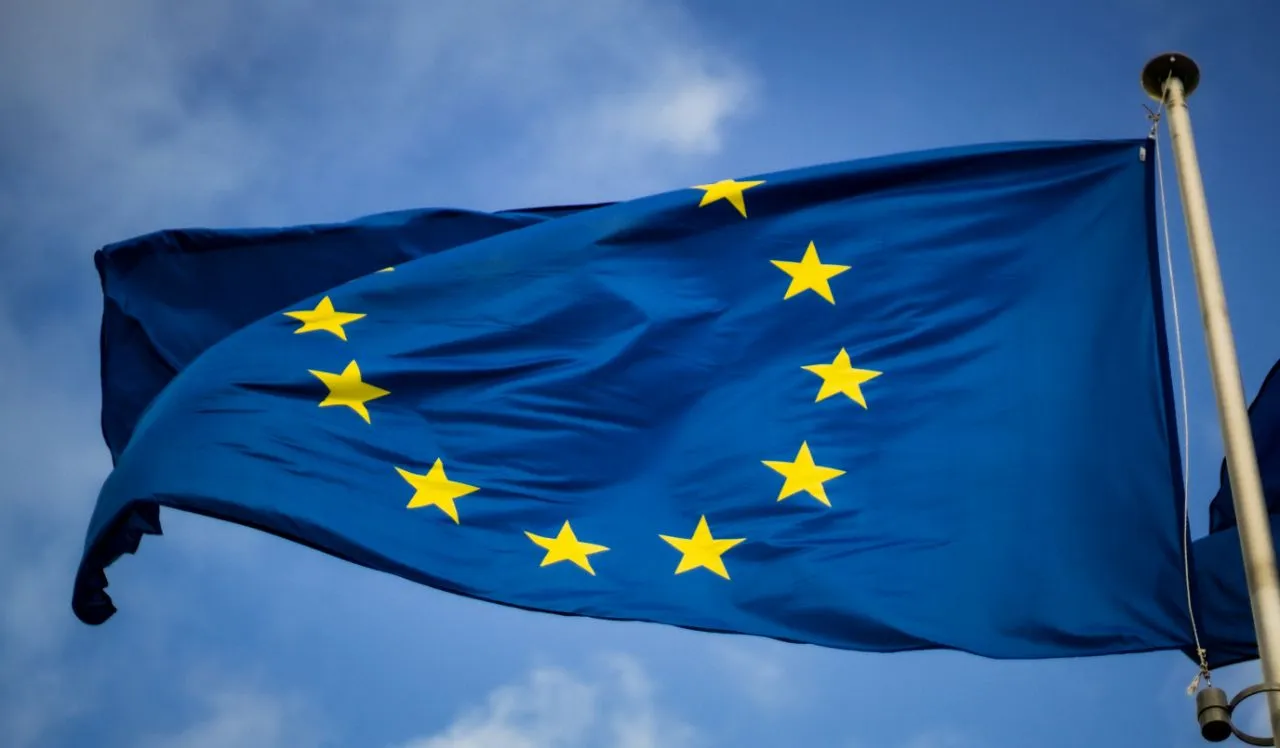
The European Council has banned all transactions within the European Union (EU) involving the Russian Ruble-backed stablecoin A7A5, according to a press release published Oct. 23.


The prohibition targets the stablecoin itself, its developer, its Kyrgyzstan-based issuer, and the operator of a platform that facilitates major A7A5 trades. The package also takes aim at Russian crypto exchanges.
https://asset.coinness.com/en/news/8d2f3591b98e3daf67502602aacc4069.webp
Photo by Christian Lue on Unsplash

Additional banking restrictions

This measure is part of a broader set of economic sanctions against sectors the EU stated assist the Russian invasion of Ukraine, including energy, finance, and defense industries. As part of this financial clampdown, the EU will also impose a ban on five additional Russian lenders starting Nov. 12. One of those lenders, Alfa-Bank, recently began offering Bitcoin buying and selling services, according to an X post by journalist Pete Rizzo.


The European body said the new crypto measures address Russia’s increasing use of digital assets to circumvent existing sanctions. Russian banks were cut off from the SWIFT international payment system in early 2022, following the onset of the Russo-Ukrainian war.


Reports of Russia using cryptocurrency to finance malign activities have surfaced previously. Earlier this month, Sławomir Cenckiewicz, the head of the Polish National Security Bureau (BBN), told the Financial Times that Russia has employed crypto to finance attacks on EU countries. Cenckiewicz said that a network of agents recruited by Russia’s GRU military intelligence agency and uncovered in Poland in 2023 had been substantially funded with cryptocurrency.


Reflecting this concern, lawmakers in Poland’s lower house approved a bill in September to strengthen national crypto oversight, a move also expected to help curb Russian funding channels. Cenckiewicz noted that Polish intelligence agencies are closely monitoring the legislation to prevent loopholes that allow foreign actors to support agents using digital assets.


Russia’s evolving crypto policy

The EU’s action comes as Russia itself is attempting to refine its own cryptocurrency rules.


According to the Moscow Times, Russia's central bank wants to limit cryptocurrency use strictly to cross-border payments within an experimental legal regime (ELR). The institution continues to reject recognition of cryptocurrency as a legal means of payment and has advocated banning its use for domestic payments and retail investment, while permitting trading only for high-net-worth individuals through licensed platforms.


Russia’s finance ministry has expressed a more flexible view, pointing to the scale of crypto adoption among the public. Earlier this year, the central bank estimated that domestic crypto transactions exceeded 1 trillion rubles (about $12.4 billion) per month, and that as of March, wallets linked to Russian users held roughly 827 billion rubles (about $10.2 billion).


The finance ministry and the central bank have agreed to tighten supervision of the crypto market, with officials expecting to finalize the new framework before the end of the year.

 

More to Read
View All
Policy & Regulation·

Oct 10, 2024

Hong Kong regulator set to grant additional crypto exchange licenses

Hong Kong’s Securities and Futures Commission (SFC) is gearing up to issue additional crypto exchange licenses before year’s end.  11 applicants under considerationThat’s according to SFC CEO Julia Leung. Leung commented on the matter while speaking with Hong Kong-based online news portal, HK01, on Oct. 7. She stated that 11 companies are considered as applicants for licensing and new progress is expected before the end of the year. Overall, 16 firms have applied for licenses and of these, the regulator is indicating that 11 will likely be awarded licenses at this stage. The 11 firms underwent reviews carried out by the SFC in August to determine and ensure their compliance with the current regulatory framework. The virtual asset service providers (VASPs) inspected included HKbitEX, PantherTrade, Accumulus, DFX Labs, Bixin.com, EX.IO, YAX, WhaleFin and Matrixport HK. Overseas applicants inspected included Crypto.com and Bullish. The regulator’s intention is to work towards an SFC objective of drafting these VASPs into the regulated environment established by the SFC. Leung explained that the SFC intends to award licenses in batches. Those applicants who have already had SFC on-site reviews carried out have been asked by the regulator to rectify issues identified based on the regulators findings. "Applicants who do not meet the requirements will lose their qualifications for licensing, while applicants who meet the requirements will be granted a license conditionally,” Leung told HK01.Photo by Bowen Chin on UnsplashSFC roadmapLeung also told the media outlet that relative to over-the-counter (OTC) crypto services, a new licensing system has been put in place to regulate OTC custody provision. The SFC CEO outlined that the organization’s roadmap for the period 2024 to 2026 incorporates plans to promote the tokenization of real-world assets (RWAs), further advance regulations relative to virtual asset platforms and gain further understanding of Web3 technologies and regional blockchains. Last week the regulator awarded a license to HKVAX, allowing it to join OSL and HashKey as the only fully licensed VASPs in Hong Kong thus far. While Hong Kong has made great strides over the course of the past two years to work towards becoming a regional hub for crypto businesses, it has faced criticism recently for having an overly restrictive regulatory framework.  Regulators felt the need to tighten up regulations in the aftermath of the collapse of the JPEX crypto exchange which implicated fraud and resulted in around 2,600 Hong Kong residents experiencing financial losses in the region of $200 million. The regulatory requirements have resulted in some platforms turning away from attempts to acquire licensing. In May, Gate.io’s local platform Gate.HK ceased operations in Hong Kong, while withdrawing its licensing application.In July HKX followed suit, advising its users to withdraw their funds from the platform, while notifying them that it had withdrawn its application for Type 1 and Type 7 licensing, as well as VASP licensing.

news
Policy & Regulation·

Oct 17, 2023

Incheon Unveils Ambitious Four-Year Plan to Become a Leading Blockchain Hub

Incheon Unveils Ambitious Four-Year Plan to Become a Leading Blockchain HubIncheon Metropolitan City, home to the largest international airport in South Korea, revealed on October 16 that it has successfully formulated a four-year comprehensive plan that aims to position Incheon as a blockchain hub and spearhead the digital economy sector. This ambitious strategy is slated from 2024 to 2027. The formulation of this plan was entrusted by Incheon to a third-party entity back in April.Shaping Incheon as a blockchain hub has been one of Mayor Yoo Jeong-bok’s policy objectives. Under his leadership, Incheon is dedicated to fostering an industrial ecosystem that supports the digital economy, with a special emphasis on blockchain technology — an essential component in the Web3 era.Photo by Shubham Dhage on UnsplashStrategic roadmapIncheon has crafted an action plan for the upcoming four years, with the primary aim of transforming itself into a city that promotes public involvement, fosters sustainable development, encourages cutting-edge innovation, provides a favorable environment for businesses, and advances technology.Mainnet launchAs the first step, Incheon will establish a blockchain mainnet in 2024. This infrastructure will serve as the foundation for the development of associated services and will offer citizens firsthand experiences of convenience.Through the construction of blockchain infrastructure, encompassing mainnets and testnets, Incheon strives to simplify the process for companies in need of blockchain technology. Even those without their own technological resources or substantial capital will find it more accessible to develop services utilizing blockchain within the city.Blockchain-based public servicesThe city has also discovered various blockchain-based public services for Incheon residents. One of them is constructing digital wallets that leverage resident identification cards through decentralized identifiers (DIDs). These digital wallets are designed to offer a streamlined, one-stop solution, allowing citizens to conveniently access a wide array of public services. For instance, Incheon residents will have the capability to gain entry to public facilities, access various discounts, make online reservations, and accumulate loyalty points, all through the straightforward authentication provided by these digital wallets.Furthermore, the city is looking to implement blockchain technology in the following public services. The “eco platform” will serve as an integrated system aimed at incentivizing citizens who actively engage in environment-friendly activities. The “volunteer platform” will simplify volunteer work processes, including certification and recognition. The “safety management platform” will ensure transparent and safe operations on construction sites.Incheon also plans to create a cluster for the blockchain industry in the Incheon Free Economic Zone (IFEZ). The plan is to attract a blockchain technology innovation support center in the Songdo area of Incheon to create synergies with local businesses.Support for blockchain startupsThe city seeks to create a support system for blockchain startups, assisting them from their inception to growth and global expansion. Additionally, efforts will be made to build a global cooperation network and attract foreign investment funds to further bolster the blockchain ecosystem.The four-year plan also delves into more specific objectives. Among them are the establishment of a system to nurture blockchain talent, creating a conducive environment for refining governance and policies, and initiating a branding campaign to bolster Incheon’s competitive edge in the global arena.Son Hye-young, who leads the Data Industry Division in Incheon City, emphasized that the four-year plan represents Incheon’s ambitious vision to establish itself as a blockchain technology hub. She also expressed the city’s commitment to actively support the growth of businesses in this sector and to create tangible and beneficial services.The detailed implementation strategy for the master plan will be disclosed at the Global Blockchain Incheon Conference (GBIC) 2023, a two-day event set to commence on October 30 at the Songdo Convensia.

news
Policy & Regulation·

Nov 07, 2023

Hong Kong regulators consider opening up crypto ETFs to retail

Hong Kong regulators consider opening up crypto ETFs to retailHong Kong regulators are now exploring the possibility of allowing retail investors to participate in spot crypto exchange-traded funds (ETFs).The CEO of Hong Kong’s Securities and Futures Commission (SFC), Julia Leung, was cited by Bloomberg on Sunday as having indicated that provided that the necessary regulatory approvals and checks are in place, the regulator may be open to the notion of retail participation where spot crypto ETFs are concerned. Leung emphasized the regulator’s openness to innovative technology that enhances efficiency as long as it addresses potential new risks.Photo by Markus Winkler on Pixabay‘Happy to give it a try’She stated: “We welcome proposals using innovative technology that boosts efficiency and customer experience. We’re happy to give it a try as long as new risks are addressed. Our approach is consistent regardless of the asset.”While both the United States and Hong Kong currently permit futures-based cryptocurrency exchange-traded funds (ETFs), the adoption of such instruments has been relatively modest in comparison to the broader fund industry.In Hong Kong, there are currently ETF listings for products like Samsung Bitcoin Futures Active, CSOP Bitcoin Futures and CSOP Ether Futures, with a total combined asset value of approximately $65 million. In June, Hong Kong’s largest ETF manager, Hang Seng, suggested that it too was considering a crypto product offering.In accordance with the SFC’s digital asset regulations, individual investors already have the opportunity to trade prominent cryptocurrencies like Bitcoin and Ether on licensed cryptocurrency exchanges since June 1. Presently, BC Technology Group Ltd.’s OSL and HashKey Exchange are the only platforms in Hong Kong with permits for cryptocurrency trading. Additionally, there are expectations that mandatory regulations concerning stablecoins will be introduced over the course of the next year.Prioritizing investor protectionLeung expressed the regulator’s cautious approach, stating:“As the crypto ecosystem evolves step-by-step to the point where we’re comfortable, then we’re happy to open up more access to the wider investing public.”Notably, Hong Kong also recently unveiled its Web3 plans, highlighting its commitment to embracing blockchain and decentralized technologies.Hong Kong introduced a specialized regulatory framework for virtual assets in June which are designed to attract businesses while prioritizing investor protection. That need to protect consumers has been underscored recently by the alleged fraud that has subsequently been uncovered involving HK$1.6 billion ($204 million) at the unlicensed JPEX cryptocurrency exchange in the city.Market reactionThe significance of such a move isn’t lost on crypto market participants. Taking to X, one wrote: “Seismic shift. Hong Kong’s play could reshape the Asian crypto landscape. #Bitcoin ETFs? A strategic move to anchor HK as the digital nexus of Asia.” Another claimed that this “might redefine the crypto landscape and fuel the next bull market.”A report published by the Hong Kong Stock Exchange in April found that crypto ETFs have the potential to play a significant part in the next phase of digital asset innovation in Asia.Leung emphasized the importance of a strong and comprehensive regulatory structure, highlighting the SFC's efforts to enhance transparency in processing license applications for virtual asset exchanges.Moreover, the Hong Kong Monetary Authority (HKMA), the Chinese autonomous territory’s central bank, is actively exploring the possibility of offering guidance to banks regarding the provision of digital asset custodial services. These services are considered vital for nurturing the growth of a digital asset ecosystem and ensuring investor security.

news
Loading