Top

Chinese Central Bank Official Emphasizes Need for Digital Yuan Retail Payments

Policy & Regulation·September 05, 2023, 12:11 AM

A senior official from the People’s Bank of China (PBOC) has underscored the importance of making China’s digital yuan, commonly referred to as the e-CNY, accessible in all retail payment scenarios within China.
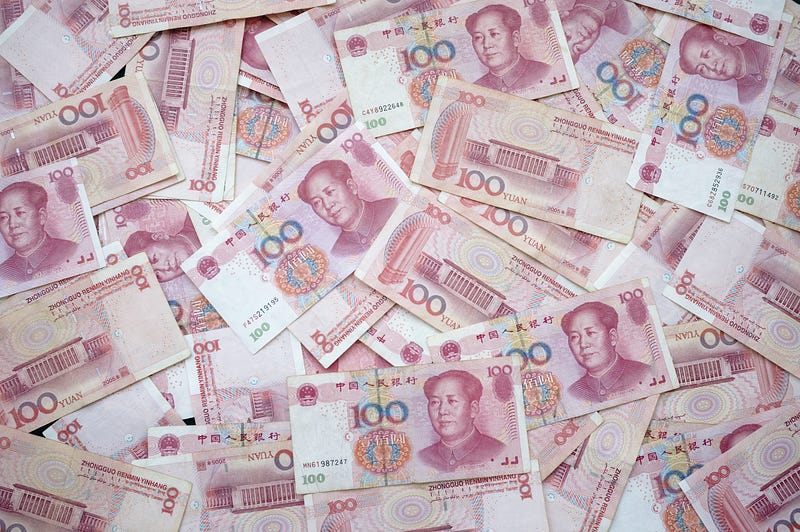
Photo by Eric Prouzet on Unsplash


Streamlining retail e-CNY payments

The remarks were delivered by Changchun Mu, Head of the Digital Currency Research Institute, during a trade forum in Beijing. Mu emphasized the need for standardizing QR codes in payment systems, particularly those dominated by giants like WeChat Pay and Alipay.

Local media reported on Sunday that the central bank official highlighted that various wallet providers, including WeChat, Alipay, commercial banks with mobile banking apps, and other payment apps associated with e-CNY operations, must remain vigilant about complying with relevant financial regulations and obtaining the necessary licenses. He stressed that the initial step in this process should involve the adoption of the digital yuan as the preferred payment method for all retail transactions.


Standardizing QR code payments

Mu explained that in the short term, authorities can start by unifying QR code standards on a technical level to achieve barcode interoperability. In the long run, he suggested that they will steadily implement the upgrade of payment tools.

The move towards standardizing QR code payments aligns with the central bank’s commitment from the previous year to promote universal QR payment codes. This initiative aims to allow consumers to make payments by scanning a unified barcode. Currently, QR code payment systems are widely prevalent in China, with WeChat Pay and Alipay being dominant players.

The PBOC has been actively testing the e-CNY, having introduced a pilot app in January 2022. The digital yuan pilot programs, initiated in late 2019, have expanded to encompass at least 26 locations across 17 provincial-level cities and regions, including major cities like Beijing, Shanghai, Shenzhen, and Suzhou, according to state media Xinhua.

The extent of China’s promotion of its digital yuan has been unmatched despite the fact that most central banks globally have had ongoing central bank digital currency-related (CBDC) projects open for a number of years already.

Recent months have seen the launch of a whole host of initiatives to further the use of the CBDC. These initiatives have included integration of the currency into the education system in Jiangsu province, the installation of digital yuan ATMs in Hainan, among many other such projects, and paying state employees with the currency in Changshu. That said, despite these efforts, widespread adoption of the e-CNY remains a work in progress.


Bringing about e-CNY integration

Mu also emphasized that the existing interbank payment and settlement systems function effectively, indicating that there is no immediate need to replace them with the CBDC system. Instead, he suggested that seamless integration could be achieved by ensuring comprehensive interoperability between the e-CNY and existing electronic payment tools and commercial bank deposit systems.

Moreover, at a wholesale level, Mu proposed the use of the digital yuan for settlement within the financial market infrastructure. Smart contracts could also be leveraged for such activities, thereby enhancing efficiency in wholesale payments.

Mu’s remarks underscore the Chinese central bank’s determination in advancing the development and adoption of the digital yuan while ensuring it remains integrated into the existing financial ecosystem.


More to Read
View All
Markets·

Dec 19, 2023

Analysts expect crypto market cap to triple or more next year

Analysts expect crypto market cap to triple or more next yearThe Korbit Research Center, affiliated with South Korean cryptocurrency exchange Korbit, published a report last Friday that provides projections for the crypto market in 2024.The paper includes contributions from its team, notably head of research Peter Chung, as well as research analysts Choy Yoon-young, Kang Dong-hyun and Kim Min-seung.Peter Chung predicts that the total market capitalization of cryptocurrencies could soar to $5 trillion, more than three times greater than its current level of $1.6 trillion. He attributes this potential growth to three key factors: the possibility of the U.S. Federal Reserve easing its monetary policy, the potential approval of spot bitcoin and ether exchange-traded funds (ETFs), and the anticipated Bitcoin halving event expected in April 2024.Photo by Pierre Borthiry — Peiobty on UnsplashFactors driving crypto market growth in 2024Peter Chung suggests that the growth of the crypto market will be driven by the expanding utility of virtual assets. He believes that once ETFs for bitcoin and ether are approved, these cryptocurrencies will become more versatile as investment options. This, in turn, is expected to enhance their reputation and foster wider adoption, having a significant influence on the broader crypto ecosystem beyond the two most dominant cryptocurrencies.Real-world assets and financial firmsChoy anticipates that the U.S. Securities and Exchange Commission (SEC) will approve spot bitcoin and ether ETFs by the first half of next year. On a different note, Kang focuses on the importance of blockchain technology, particularly emphasizing real-world assets (RWAs) and roll-up solutions. Kang highlights that since RWAs are closely linked with traditional financial institutions, an influx of capital from these entities is likely to boost the RWA market. This interaction between traditional finance and blockchain technology could be a key driver of growth in the sector.Regulatory changes and landscape shiftKim Min-seung, another analyst from the team, forecasts that upcoming regulatory developments could alter the dynamics of the cryptocurrency market. A notable development in this regard is the forthcoming implementation of the Virtual Asset User Protection Act in South Korea, set for July next year. According to Kim, these changes might result in a scenario where only competitive cryptocurrencies survive.Kim elaborates that the perception of virtual assets is poised for a shift. Currently, crypto investors tend to base their decisions on expectations of arbitrary cryptocurrency inflation. However, once new regulations are implemented, investors are likely to start assessing the actual value of virtual assets more critically. This shift in approach could lead to a more value-driven and stable cryptocurrency market, as speculative tendencies might decrease and a focus on intrinsic value increases.According to local news outlet website The Asia Business Daily, Peter Chung anticipates further growth in the cryptocurrency market next year, following its rebound this year. He suggests that this growth trajectory will not only continue but also attract increased attention from the public.

news
Policy & Regulation·

Dec 01, 2023

Korea requires lawmakers and senior officials to declare crypto holdings

Korea requires lawmakers and senior officials to declare crypto holdingsSouth Korea’s Ministry of Government Legislation announced on Thursday (local time) that 84 new legislative statutes are set to be implemented in December. Among these statutes, an amendment to the Public Service Ethics Act stands out, which will require lawmakers and senior government officials to report their virtual asset holdings.Photo by Huy Phan on UnsplashStarting Dec 14The Public Service Ethics Act requires public officials in political service, government officials of rank four or higher and executives of public service-related organizations to declare their own wealth as well as that of their spouses and lineal relatives. In Korea, public servants are ranked from one to nine, with one being the highest and nine being the lowest. As it stands, disclosing cryptocurrency holdings isn’t mandated, but this will change from Dec. 14 due to recent amendments. Records of cryptocurrency transactions will also be subject to disclosure.Possible restrictions on departments or employeesFurthermore, the leader of a national or local government organization has the authority to enforce restrictions on the acquisition of virtual assets for specific departments or employees under their jurisdiction. This action is applicable if their roles are associated with accessing cryptocurrency information or having an impact on the crypto market. In such scenarios, the chief officer is obligated to report their methods of imposing these restrictions to the pertinent government ethics committee. The committee then holds the right to recommend adjustments to these strategies.

news
Web3 & Enterprise·

Jan 09, 2024

Japanese e-commerce giant Mercari planning bitcoin payments

Mercari, one of Japan's leading e-commerce platforms, has declared its intention to accept bitcoin payments starting from June of this year. The decision, which was reported by Japanese financial media outlet Nikkei on Friday, outlines that the processing of bitcoin payments will be managed through Mercari's Tokyo-based crypto subsidiary, Melcoin.Photo by Dmytro Demidko on UnsplashSeamless BTC conversionIt's noteworthy that Melcoin will convert all BTC payments into yen, ensuring vendors receive fiat currency despite the buyer's choice of bitcoin for payment. While the company won't display prices in bitcoin, listing items for sale in fiat yen, customers will have the option to select BTC as a payment method during the purchase process on the platform. In recent months, Mercari has introduced various crypto-related products, including the Mercari bitcoin crypto trading service. This service allows users to buy and sell bitcoin using the proceeds from their sales on the platform. The integration of a loyalty points system further enhances the crypto trading experience, enabling Mercari users to exchange their points for bitcoin. Remarkably, Mercari announced that its bitcoin trading service surpassed the 1 million user milestone in October, just seven months after its launch. At the time of the launch of the trading service, the company outlined that it would “make bitcoin more accessible to people who have never tried crypto trading before.” Notably, around 80% of the crypto users on Mercari had no prior experience with crypto-asset trading in June of the previous year. Expanding its crypto-related offering to include bitcoin payments unleashes much more potential relative to crypto adoption. 22 million monthly usersEstablished in 2013, Mercari has evolved into Japan's largest community marketplace platform, boasting 22 million monthly users as of July 2023. It’s a flea market application, making it a consumer-to-consumer platform that could play a significant role in bringing about bitcoin adoption in Japan among ordinary people. The company has also expanded its footprint internationally, with a particular focus on Europe. Market observers have labeled Mercari's crypto service, along with a competitor operated by Rakuten, as a potential "gateway" for bitcoin and crypto investors and traders. Rakuten, another major Japanese e-commerce platform deeply involved in the crypto space for an extended period, operates the Rakuten Wallet crypto trading service. Like Mercari, Rakuten has integrated its loyalty points program with its crypto arm, allowing users to trade their points for crypto-assets. Rakuten had also emerged last year among a shortlist of Asian companies expressing an interest in purchasing failed crypto exchange FTX. A recent survey highlighted the growing influence of these e-commerce giants in the crypto space. Japanese individuals who entered the coin trading scene towards the end of 2022 overwhelmingly favored either Mercari's bitcoin trading app (24.7%) or Rakuten's Rakuten Wallet platform (24.2%). This revelation dealt a blow to traditional crypto exchanges, with bitFlyer, the long-standing market leader, securing the third position with a share of 11.3%. This move contributes towards a more progressive crypto environment in Japan, where lawmakers recently indicated a willingness to consider making tax rules more accommodative of the crypto sector.

news
Loading