Top

Koscom Adds Crypto Market Data to Investment Data Platform CHECK Expert+

Web3 & Enterprise·August 03, 2023, 2:59 AM

South Korean financial IT company Koscom Corp. said Wednesday that it has started offering market data for virtual assets on its investment analysis information terminal service, CHECK Expert+. CHECK Expert+ provides a variety of information and news on foreign exchanges, bonds, overseas markets, and more to professional investors.
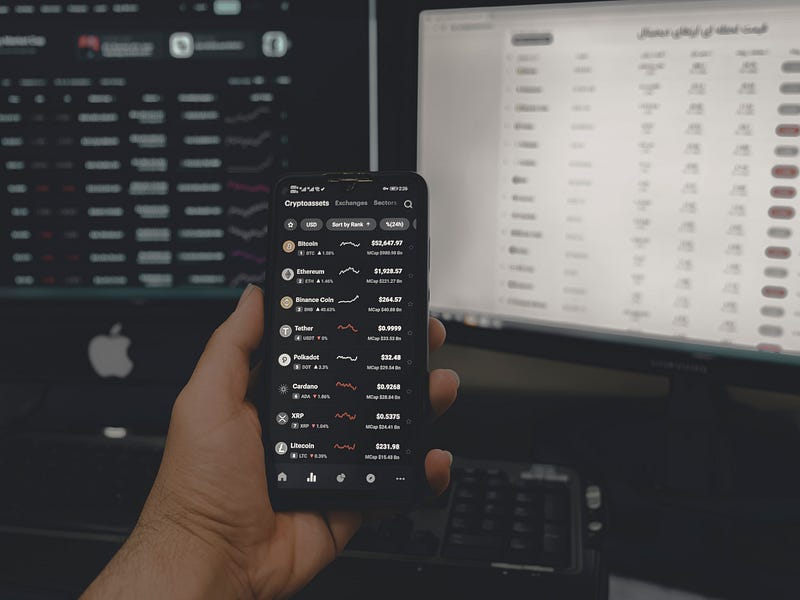
Photo by Sajad Nori on Unsplash


Cross-platform data collection

Starting last month, Koscom has been combining the market price information of virtual assets that are scattered across the websites of four major domestic and foreign virtual asset exchanges into one platform on CHECK Expert+. By doing so, investors can now easily compare the current prices of different assets traded on multiple platforms.


Cryptos compared with other assets

Through the terminal, investors can also compare the performance of the popular cryptocurrency Bitcoin with other assets across exchanges such as KOSPI, KOSDAQ, S&P500, NASDAQ, and the US 10-Year Treasuries. This feature allows for more intuitive and straightforward performance comparisons.

Given the fact that prices of the same asset can vary depending on the exchange, this service can provide investors with a broader perspective and allow them to make more informed decisions, Koscom said.

“This is our first step into virtual asset-related market data services. Leveraging our experience in operating CHECK Expert+ and our expertise in processing capital market data, we aim to provide valuable investment information in the virtual asset market to our users,” said Hwang Sun-jeong, the Executive Director of Koscom.

This move by Koscom reflects the growing interest and relevance of the virtual asset market in Korea, and CHECK Expert+ is expected to provide investors with valuable insights in the midst of a rapidly evolving financial landscape.


More to Read
View All
Web3 & Enterprise·

Jan 17, 2024

Binance Thailand launches exchange services to the public

Binance, in collaboration with Gulf Innova, a subsidiary of Gulf Energy Development, has officially opened its joint venture crypto exchange, Binance Thailand, for public trading. Challenging the market incumbentThis move had been eight months in the making, signaling Binance's entry into the Thai crypto exchange market, following an announcement in 2023 that it intended to extend its offering to Thailand. While Binance is the largest global crypto exchange platform, in Thailand it will be challenging the dominance of an incumbent exchange. Bitkub is based in Bangkok, currently holding around 77% of the market share, with a daily volume of approximately $30 million, primarily trading the Thai baht and Tether USDT pair.Photo by Sara Dubler on UnsplashRegulatory approvalThe launch comes after Binance received regulatory approval from the local Securities and Exchange Commission (SEC) in 2023. Initially introduced on an "invitation-only" basis, the exchange is now accessible to all eligible users, with Binance having followed through on its plans to expand its presence in the region. In a statement released on Tuesday, Binance TH announced the implementation of a dedicated order book tailored for Thai baht trading pairs. Users can seamlessly deposit and withdraw local currency through integration with domestic banking systems. Binance has managed to push its service offering forward in Thailand despite regulatory concerns. In the aftermath of the company’s $4.3 billion settlement in relation to securities law violations with the authorities in the United States in November, concerns had been expressed that the charges brought against the firm in the U.S. would challenge the feasibility of the Binance TH venture. At present, the platform focuses solely on spot trading, with a Binance spokesperson revealing ambitious long-term plans for additional services pending regulatory approvals. Nirun Fuwattananukul, CEO of Gulf Binance, expressed gratitude, stating:"We are deeply humbled to finally announce the launch of our local platform to the general public in Thailand. Over the past year, we have been working closely with Thai regulators, putting substantial effort into detailed planning." Binance TH facilitates digital asset exchange services, collaborating with local banks in Thailand in enabling its service offering. The exchange has also partnered with Binance Kazakhstan for brokerage services, operating under the supervision of Thailand’s SEC. Richard Teng, CEO of Binance, emphasized the strategic significance of the venture, stating:“This is a strategic step forward, setting the stage for Thailand’s impending role as a key player in the global digital finance landscape.” No access for foreignersOne limitation of the service pertains to foreign nationals. There is a restriction on access for foreigners residing in Thailand, as Binance TH requires a Thai National Digital ID to complete Know Your Customer procedures. Despite regulatory challenges and tax implications on overseas income from stock and crypto traders announced by the government in September 2023, Binance remains optimistic about the future of crypto trading in Thailand. The exchange released its themes for 2024 report on Jan. 15, outlining key growth areas such as the Bitcoin ecosystem, ownership economy applications, artificial intelligence, real-world assets, on-chain liquidity and institutional adoption.

news
Web3 & Enterprise·

Jan 25, 2024

ClayStack expands into Ethereum restaking ahead of token launch

ClayStack, the crypto liquid staking platform, has made a strategic move into the Ethereum restaking arena through EigenLayer, providing users with reward points in anticipation of its upcoming token launch.Photo by Kanchanara on Unsplash‘Redefining the staking landscape’The Singaporean platform describes its mission as redefining “the staking landscape by helping users unlock the underlying value of their crypto assets, and we are doing this by building a decentralized cross-chain liquid staking protocol.” In its efforts to deliver on that mission, it appears that the crypto startup is set to convert its Ethereum liquid staking token, csETH, into a liquid restaking token, leveraging the Ethereum restaking protocol offered by EigenLayer. Eigenlayer enables restaked sidechains, through which ETH restakers can participate in Ethereum-centric consensus protocols. Reward pointsIn an announcement on Tuesday, ClayStack revealed its plan to offer reward points to users participating in Ethereum restaking, with a 1:1 ratio for redemption when the platform's token is launched. Each clay point earned will be redeemable for one clay token during the token launch. Notably, the platform distinguishes itself by offering a 1:1 redemption system, setting it apart from other points programs. Founder and CEO Mohak Agarwal explained how the project is adopting EigenLayer's protocol for this new service. Agarwal had teased that the project had something new to offer in the pipeline when taking to social media last week, writing:”We are entering into a new era where staking will become more dynamic, accessible, and rewarding for the entire DeFi community.” Currently, ClayStack accepts native ETH for direct restaking on EigenLayer. Agarwal confirmed to The Block that other liquid staking tokens, such as Lido staked ether (stETH) and Rocket Pool ether (rETH), will be integrated into the platform in the coming days. He emphasized that these tokens will be directly deposited on EigenLayer, streamlining the restaking process. Growing interest in restakingEthereum restaking has gained significant traction since EigenLayer's launch in June of the previous year, with a total value locked (TVL) in smart contracts reaching approximately $1.7 billion. Renzo Protocol recently entered the Ethereum restaking space via EigenLayer, securing a $3.2 million seed funding round. Despite being in beta, Renzo has already achieved a TVL exceeding $116 million. ClayStack's TVL currently stands at around $2.25 million, having initially launched liquid staking for Polygon's MATIC token in 2022. Following that, the platform introduced Ethereum liquid staking in September. However, the latest move marks a shift in focus towards Ethereum restaking due to challenges faced on the Polygon network. Agarwal outlined the reward structure, stating that 20 clay points will be allocated per ETH per week, with rates subject to change every Monday but generally remaining constant throughout the week. There are no minimum or maximum points for individual users, although there is a weekly total cap for all users combined, which refreshes at the beginning of each week.

news
Policy & Regulation·

Jan 16, 2024

United Nations report cites popularity of USDT for fraud in Southeast Asia

USDT, the leading U.S. dollar stablecoin issued by Tether, has been highlighted as a major conduit for money laundering and scams in Southeast Asia, according to a United Nations report released on Monday.Photo by Mathias Reding on UnsplashIllicit stablecoin useThe report has been titled “Casinos, Money Laundering, Underground Banking, and Transnational Organized Crime in East and Southeast Asia: A Hidden and Accelerating Threat.” It points out that online gambling platforms, particularly those operating illicitly, are among the favored channels for cryptocurrency-based money launderers, with a notable emphasis on the use of Tether or USDT. In a foreword to the report, Jeremy Douglas, the UN’s Regional Representative for Southeast Asia and the Pacific, noted that technology had aided crime networks in Asia, and in particular, the Mekong Delta region. Developing upon that idea, he added:”This has necessitated a revolution in the regional underground banking architecture, resulting in the development of systems and infrastructure capable of moving and laundering massive volumes of state-backed fiat and cryptocurrencies.”The report itself asserts that illegal and under-regulated crypto exchanges have become “foundational pieces of the banking architecture used by organized crime.” The document highlights law enforcement efforts in disrupting multiple money laundering networks linked to the illicit transfer of Tether funds. Last August, Singaporean authorities dismantled a network through an operation, recovering approximately $735 million in both cash and cryptocurrency. ‘Pig butchering’The UN report further suggests that USDT has been extensively employed in various underground fraud activities, including so-called "pig butchering" romantic scams. Last November, Tether froze $225 million in stolen USDT following investigations by Tether in collaboration with crypto exchange OKX and the U.S. Department of Justice. The money had been held in self-custodied wallets associated with an international human trafficking group in Southeast Asia orchestrating a pig-butchering scam. In December, Tether CEO Paolo Ardoino informed U.S. legislators in a shared letter that the company has enlisted the U.S. Secret Service and Federal Bureau of Investigation onto its platform. Later that month, the Chinese authorities uncovered a massive underground banking operation that was designed to evade the country’s foreign exchange controls. There was more related activity in December when it emerged that USDT has been integrated into the shadow economy in Cambodia, against a backdrop of the currency being prohibited for the purpose of trade within the Southeast Asian country. TRM Labs reportIn July of last year, a report by blockchain analytics firm TRM Labs, found that pro-ISIS terrorist groups in Central and Southeast Asia and the Middle East are increasingly using cryptocurrency, with a particular preference for USDT transacted over the Tron blockchain network. The UN report cites the popularity of USDT among those engaged in cyber-fraud and online casino operations, located in Myanmar, along the border with Thailand. Throughout 2023, Tether witnessed a notable expansion in its share of the global stablecoin supply, growing from 50% to 71%. At the time of writing, USDT has a market cap of $95 billion with stablecoins having an overall market capitalization of $134 billion. The UN's findings raise concerns about the stablecoin's role in facilitating illicit activities and underscore the need for enhanced regulatory scrutiny within the rapidly evolving crypto landscape.

news
Loading