Top

Binance Expands Crypto Offering in Dubai with New License

Policy & Regulation·August 01, 2023, 1:05 AM

Dubai has welcomed one of the biggest players in the crypto sector, Binance, with the Virtual Asset Regulatory Authority (VARA) awarding the firm a new trading license.
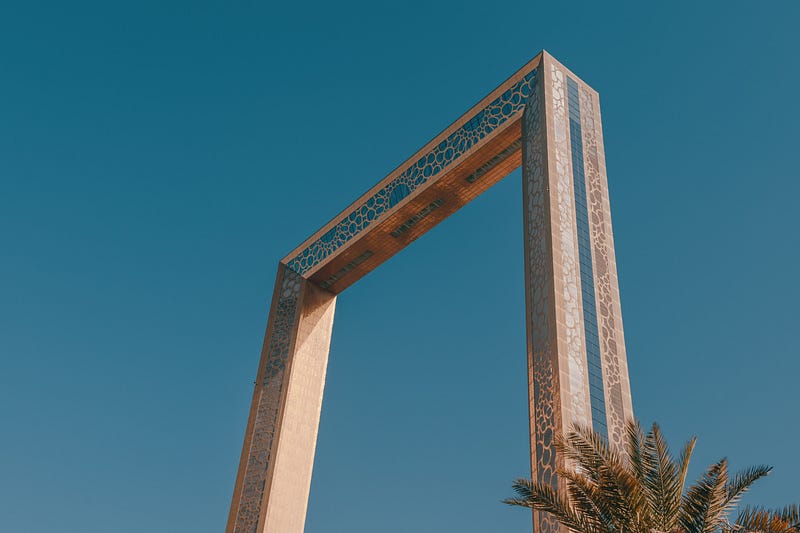
Photo by Petar Avramoski on Unsplash


Serving qualified investors

According to an announcement made by the company on Monday, Binance’s Dubai-based subsidiary, Binance FZE, has secured the operational Minimum Viable Product (MVP) license from VARA.

Eligible investors in Dubai, deemed as “qualified retail clients,” will now have access to authorized services such as compliant crypto-to-fiat exchanges, adhering to the guidelines set by the Financial Action Task Force (FATF). To qualify, investors must meet specific criteria, including being at least 21 years old and possessing a minimum of 500,000 United Arab Emirates dirhams ($136,000) in net liquid assets, supported by relevant documentary proof like bank statements and proof of funds.

Additionally, qualified investors are required to provide valid identification documents, including passports and visas, along with proof of a valid UAE address and contact details. This comprehensive verification process ensures compliance with regulatory requirements and enhances security measures for all parties involved.


Expanded service offering

The move is a significant development as it allows Binance to offer cryptocurrency exchange and virtual asset broker-dealer services to institutional and qualified retail investors in Dubai.

With the new license, Binance’s Dubai entity can now offer crypto-to-fiat exchange, conversions, transfer and custody solutions, brokerage facilities, as well as virtual asset payments and remittance services. The development builds upon Binance’s previous progress, having received the provisional MVP license in March 2022, followed by the preparatory MVP license in September 2022.


Licensing challenges

It’s worth noting that some crypto exchanges have faced challenges operating with preparatory MVP licenses due to limited capabilities, only serving a restricted set of accredited investors. Bybit CEO Ben Zhou had previously highlighted this concern. That said, Zhou still came to the conclusion recently that the regulatory approach in the UAE is superior by comparison with many other jurisdictions.

The news of Binance’s successful licensing comes shortly after VARA suspended the operational license of another crypto exchange, BitOasis, for not meeting required conditions within the set timeframes. BitOasis assured its commitment to fulfilling the remaining conditions in collaboration with VARA.

In April 2023, VARA sought additional information from Binance, aiming to tighten regulatory standards in the emirate. Binance promptly provided all requested information and looked forward to further collaboration with VARA as it prepared for the next phase of licensing.

Compliance with VARA’s framework includes adherence to compulsory rulebooks related to general operations, compliance, and market conduct requirements. The regulator has published key highlights of the regulations in 2023, underscoring its efforts to create a robust and well-regulated crypto market in Dubai.


Regulatory headwinds

Binance’s latest regulatory achievement indicates the exchange’s dedication to expanding its services and offerings in the region. It could potentially lead to something even more significant for the company in the Middle East as Binance has suggested that it would be more likely to expand in places such as Dubai, given an adverse regulatory approach elsewhere.

Over the course of the past three months, the company has been forced out of key markets such as Germany, Canada, Belgium, the Netherlands, and Cyprus, due to regulatory pushback.


More to Read
View All
Web3 & Enterprise·

Feb 15, 2024

Game company behind XPLA blockchain witnesses growth in revenue last year

Com2uS Holdings, the South Korean game publishing company behind Layer 1 blockchain XPLA, disclosed today that its revenue last year saw a 22.5% increase from 2022, reaching KRW 142.3 billion ($106.7 million). On the back of the revenue growth, the company's consolidated operating loss narrowed to KRW 14 billion, improving from 2022’s KRW 26.4 billion. Additionally, the net loss decreased to KRW 16.5 billion, down from the previous year’s KRW 70.6 billion. The operating loss for the fourth quarter stood at KRW 16.5 billion, showing an improvement from 2022 Q4's KRW 20.9 billion. During the same period, revenue reached KRW 21.4 billion, and the net loss was recorded at KRW 8 billion.Photo by Andrey Metelev on UnsplashGame sales and marketing expensesCom2uS Holdings attributed the increase in profits to game sales growth, which was encouraged by the release of more games. However, the company also noted a decrease in income from investments in associates and an increase in marketing expenses, which were driven by the launch of new games. Last year's operating expenses totaled KRW 156.4 billion. Labor costs, which constitute the largest portion of operating expenses, experienced a year-on-year decrease of 6.2%, amounting to KRW 46.7 billion. In contrast, there was an increase in spending across three areas: commissions rose by 43.8% to KRW 30.7 billion, loyalty expenses increased by 26.6% to KRW 25.1 billion and marketing saw a jump of 134.9% to KRW 21.1 billion. According to a report from local news agency Yonhap, Jung Chul-ho, CEO of Com2uS Holdings, emphasized at the earnings presentation today that the company is committed to growth in game publishing, blockchain projects and platform initiatives, all directed towards enhancing the company's value.Triple-A games on XPLA blockchainAs part of the company’s blockchain endeavors, the XPLA platform is set to focus on improving user convenience and incorporating major content, including a variety of triple-A games. Looking ahead, Com2uS Holdings anticipates that its idle role-playing game, Soul Strike, will contribute to the company's revenue for the first quarter. Since its debut last month, Soul Strike has been attracting attention not only in Korea but across Asia. The game publisher also outlined its global release plans for the MMORPG, Zenonia Chronobreak. Gamers in Taiwan can expect access to the game in the second quarter, while those in Japan and others will be able to play in the fourth quarter.

news
Policy & Regulation·

Oct 20, 2023

Busan Introduces Blockchain-Powered Cards for Multi-Children Families to Offer Social Benefits

Busan Introduces Blockchain-Powered Cards for Multi-Children Families to Offer Social BenefitsBusan Metropolitan City, home to South Korea’s largest port, announced on October 20 (local time) a revision in its criteria for “multi-children families” who enjoy social welfare benefits and the launch of new blockchain-powered cards for these families. The city will reduce the requisite number of children in these families from three to two to extend benefits and encourage a higher fertility rate. To qualify for these benefits, at least one child in the family must be under the age of 19.Photo by Minku Kang on UnsplashBlockchain integrationStarting October 31, eligible families can access these benefits through “family love cards,” which will be available on BPASS, a mobile identification card app developed with blockchain technology. Some of these family love cards will be issued in collaboration with credit card company Shinhan Card.Diverse benefitsThe benefits include discounts at public facilities, restaurants, cram schools (commonly referred to as hagwons), and daycare centers. Specifically, public parking lots and sports facilities will offer services at half the usual rate. Meanwhile, other establishments targeting adolescents and women will either waive their fees entirely or provide reductions.On November 1, Busan will host the 16th annual Multi-Children Family Day ceremony at the City Hall’s international conference center. Having started this event in 2008, Busan stands out as the only metropolitan municipality to celebrate this occasion each year.Efforts to boost fertility rateThis year’s ceremony will highlight Busan’s initiatives to enhance support for multi-child families. The event will honor outstanding families and a childbirth-friendly organization, as well as districts and counties that have been exceptional in implementing childbirth promotion policies. Additionally, the occasion will be marked by special commemorative performances.Busan Mayor Park Heong-joon affirmed the city’s dedication to nurturing children alongside their families. He added that Busan will persistently refine and improve its childbirth policies to offer full support.

news
Policy & Regulation·

Nov 11, 2025

Japan to tighten crypto lending rules as regulator backs bank stablecoin pilot

Japan’s Financial Services Agency (FSA) is moving to close gaps in crypto regulation and support a new bank-led stablecoin pilot, as markets watch for a potential Bank of Japan rate hike. Tougher oversight of crypto lending and IEOsAccording to a CoinPost report, at the fifth meeting of its Digital Asset Working Group held last week, the FSA discussed introducing new requirements to bring crypto lending clearly within the regulatory framework. While firms managing or staking crypto must register as exchanges, some operators have avoided registration by structuring services as borrowing schemes, which are not legally treated as asset management.Photo by Possessed Photography on UnsplashThe FSA flagged that users face both credit and volatility risks, yet operators are not required to segregate customer assets or use cold wallets. Some services offer returns around 10% or tie up funds for several years, with weak risk management and exposure to re-lending defaults and staking slashing. Under the new policy direction, operators will need stronger risk management for re-lending and staking, tighter custody controls, and clearer risk disclosures and advertising. Institutional-only borrowing not offered to the public will remain exempt. Some members questioned whether the new requirements would be practical to implement for off-chain operators, noting that staking is fundamentally on-chain. The group also examined initial exchange offerings (IEOs) lacking financial audits, particularly those aimed at retail investors. Members discussed limits similar to equity crowdfunding: investments over 500,000 yen ($3,000) capped at 5% of annual income or net assets, up to 2 million yen ($13,000). Most past domestic IEOs were under 500,000 yen ($3,200). Some warned such caps could be bypassed through secondary trading, where tokens are immediately tradable. Major banks pilot stablecoinAlongside stricter rules, the FSA will support a stablecoin pilot led by MUFG Bank, Sumitomo Mitsui Banking Corporation, and Mizuho Bank. CoinDesk Japan noted the project, the first under the Payment Innovation Project, will include three additional participants. Mitsubishi Corporation will oversee operations, while Progmat and Mitsubishi UFJ Trust and Banking will handle issuance and custody. The pilot, launching this month with implementation targeted within the year, will test whether a joint stablecoin by major banks can navigate regulatory and operational challenges. Rate hike speculation mountsJapan’s calibrated digital asset push comes as speculation grows over a possible Bank of Japan (BOJ) rate hike next month. Minutes from the BOJ’s October meeting, cited by South Korean outlet Edaily, show one board member saying most conditions for a hike have been met and that financial conditions would stay easy even after an increase. The BOJ kept its rate at 0.5% at that meeting. A rate hike was described as likely if firms are seen committing to wage increases ahead of next spring’s labor talks and if no major global shocks emerge. Markets, however, remain cautious, citing uncertainty over U.S. tariff effects and whether newly elected Prime Minister Sanae Takaichi will endorse such a hawkish stance. 

news
Loading