Top

Singapore and the Philippines Lead Crypto Interest in Southeast Asia

Markets·July 11, 2023, 12:51 AM

Singapore and the Philippines have emerged as the frontrunners in Southeast Asia’s crypto landscape in 2023, capturing the majority of regional interest.

Research carried out by Malaysian cryptocurrency data aggregator CoinGecko reveals that on a per capita basis, Singapore holds a 43.5% share of crypto interest, followed closely by the Philippines with 40.3%.

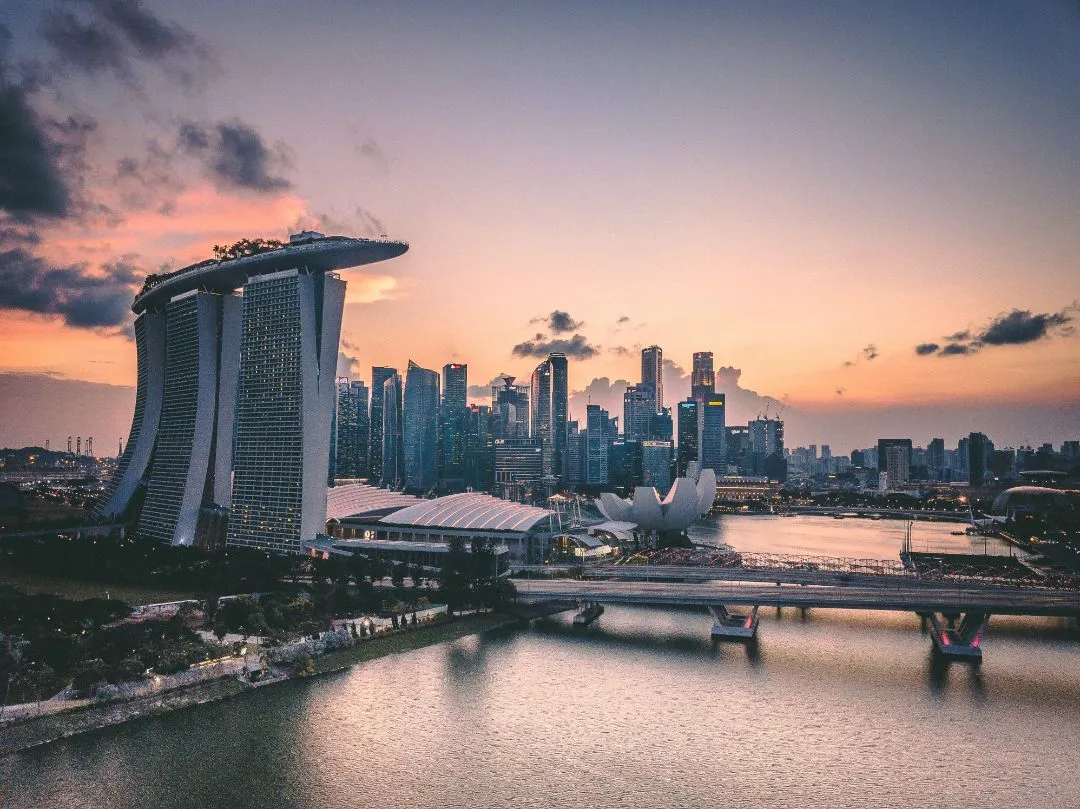
Photo by Kenneth Koh on Unsplash


Regional crypto hub

Singapore has established itself as a crypto hub not only within Southeast Asia but also in the wider Asia region. It was previously ranked as the third most crypto-curious country globally and has consistently been one of the top Web3 gaming countries for three consecutive years.

Other countries in Southeast Asia, including Malaysia, Thailand, Vietnam, and Indonesia, also contribute to the region’s crypto interest, although at more modest levels. Combined, these countries represent 14.7% of the per capita crypto interest in the region so far this year.


GameFi driving interest

In the Philippines, crypto interest is primarily driven by GameFi, and the country has maintained its position as the leading Web3 gaming country from 2021 to 2023. The Philippines witnessed the Axie Infinity mania, with local gaming guilds and inspiring rags-to-riches success stories. Additionally, it was among the top countries embracing meme coins earlier this year, alongside Malaysia.

Vietnam shares a strong interest in GameFi, placing it among the top Web3 gaming countries for three consecutive years. Thailand and Indonesia have witnessed substantial trading volumes on their crypto exchanges, with $37.94 billion and $23.97 billion respectively in 2022.

Notably, Malaysia has a significant presence in the crypto industry, despite its relatively smaller impact. The country is home to two prominent crypto data tools, CoinGecko and Etherscan, which were founded by Malaysian teams and are headquartered in the country.

In contrast, smaller Southeast Asian economies such as Cambodia, Myanmar, Brunei, Laos, and Timor-Leste have a combined share of only 1.5% of regional crypto interest per capita. While these markets remain largely untapped, their low adoption rates are unlikely to improve in the near term. Except for Brunei, which is a wealthy nation, the smaller Southeast Asian economies are categorized as lower-middle income countries.

Regarding the specific cryptocurrencies drawing attention in Southeast Asia in 2023, Layer 1, GameFi, meme coins, and DeFi-related crypto have emerged as the most popular categories. The top-ranking cryptocurrencies within these narratives account for 22.2% each of the region’s interest so far this year.

The Philippines, as the top Web3 gaming country, showcases three GameFi cryptocurrencies — Smooth Love Potion (SLP), Ronin (RON), and Wemix (WEMIX) — among its most popular choices. Malaysian investors also show interest in DeFi projects like Maple (MPL) and BoringDAO (BORING), in addition to Bitcoin.

Singapore’s popular crypto choices include The Graph (GRT), Bitcoin (BTC), and Pepe (PEPE). Vietnam demonstrates ongoing interest in Aptos (APT) and privacy tool Bob (BOB), while Thailand focuses on Gala (GALA) and Canto (CANTO). Finally, Indonesia monitors Not Financial Advice (NFAI) and AirSwap (AST).

Overall, Singapore and the Philippines lead the way in crypto interest within Southeast Asia, while other countries in the region also contribute to the evolving crypto landscape.

More to Read
View All
Markets·

Jun 27, 2023

Huobi Delists USDD Stablecoin Pairs

Huobi Delists USDD Stablecoin PairsHuobi Global, the Seychelles-headquartered cryptocurrency exchange, has made the decision to delist ten trading pairs, primarily involving tokens used in transactions with the USDD stablecoin issued by the TRON DAO Reserve.That’s according to an announcement published to Huobi’s website on Monday. These tokens are supported by TRON founder Justin Sun, who also acts as an advisor to Huobi. The delisting, effective from June 29, will impact several tokens, including the Cardano blockchain token ADA, Solana’s SOL, ApeCoin’s native token APE, MATIC from Polygon, FIL from Filecoin, and ETC from Ethereum Classic.Photo by Napendra Singh on UnsplashUnregistered securitiesAll of these tokens were offered on the Houbi platform in pairs with USDD. Additionally, trading pairs involving ARPA, GAS, QTUM, and ZKS with Bitcoin will also be removed from the platform. Huobi stated that these changes are aimed at providing users with an improved trading experience.Originating from China, Huobi has played a significant role in spot and derivatives trading for digital assets. The decision to delist these tokens follows their classification as unregistered securities in recent lawsuits by the US Securities and Exchange Commission against Binance and Coinbase. Prior to Huobi, Robinhood and eToro had already removed some of these tokens from their platforms.Stablecoins are designed to maintain a stable value by pegging them to less volatile assets like the US dollar. They achieve this by holding equivalent reserves of cash and cash-equivalent assets as collateral. Stablecoins are widely used by traders for transferring funds between exchanges and as a hedge against price volatility. This makes them some of the most heavily-traded tokens in the crypto space.USDD stabilityUSDD, the stablecoin at the center of this delisting, currently ranks as the eighth largest stablecoin by market capitalization, with approximately $750 million. Huobi is the primary exchange for buying and trading USDD, according to CoinGecko, a crypto market data provider. USDD is backed by various digital assets such as Bitcoin, Ether, and TRX, and it is issued by the TRON DAO Reserve. The TRON DAO Reserve operates as a decentralized autonomous organization (DAO), utilizing blockchain technology to automate voting and transaction processes.USDD is an algorithmic stablecoin, with the assets held in backing the coin over-collateralized to a level of 170%. Despite this, the stablecoin has had issues in maintaining its US dollar peg from time to time. The issue has been that the token is partly backed by the TRX token, the native token of the TRON ecosystem. If TRX backing is discounted, the stablecoin is only 49% backed.Reports indicate that Sun acquired a controlling stake in Huobi through a Hong Kong-based asset manager, reportedly paying around $1 billion in November. However, Sun hasn’t provided any details of any such ownership stake.Huobi’s decision to delist these trading pairs reflects the evolving regulatory landscape and the need for exchanges to ensure compliance with securities regulations. By removing tokens that have faced legal scrutiny, Huobi aims to maintain a robust and compliant trading environment for its users.

news
Web3 & Enterprise·

Nov 05, 2024

Gemini receives in-principle MPI license approval in Singapore

American crypto exchange and custodian Gemini announced via its blog on Oct. 29 that it has been awarded in-principle approval for a Major Payment Institution (MPI) license from the Monetary Authority of Singapore (MAS). In an X post on Oct. 23, Dan Clarke, who worked for Gemini in Singapore in an International Marketing & Operations role in 2021, outlined that back then the company ran the first crypto-related full page ad in the Straits Times with the slogan “We’re in Singapore. For Good.” Fast forward three years and it appears that Gemini is making good on that commitment through this latest regulatory-compliant milestone.Photo by Swapnil Bapat on UnsplashSingapore to play a crucial roleThe MPI license will enable Gemini to offer digital payment tokens and cross-border money transfer services in Singapore. Gemini’s Asia-Pacific (APAC) business is headed up by Saad Ahmed. Ahmed commented that Singapore has been at “the heart” of its operational expansion within the APAC region. Expanding on that further, he stated:“While the United States remains our largest market and global headquarters, Asia and Singapore in particular play a crucial role in our global strategy.”  Ahmed outlined that Singapore represents the company’s second-largest market, with plans to double its current Singaporean workforce and move to a larger office space. The Gemini executive believes that this in-principle licensing approval takes the company one step closer to offering services that cater to the needs of residents of the city-state.  Serving users across the APAC regionIn its blog announcement, the firm said that “since establishing our regional headquarters in Singapore, we’ve focused on expanding our footprint, ensuring that we bring a localized, secure, and compliant trading experience to users across the region.” With the regulatory environment in its home market being currently hostile to crypto, Gemini has pursued a strategy followed by many of its peers in looking for growth opportunities overseas instead. In April of last year, the company announced that it was in the process of opening an engineering center in India.  In June 2023 the company publicized its intention to pursue a crypto trading license within the United Arab Emirates (UAE). At the time the company’s co-CEOs, Tyler and Cameron Winklevoss, referred to the “hostility and lack of clarity” when it came to the regulatory environment within the United States. Regulatory clarity to drive growthAhmed believes that regulatory clarity in Singapore will be a driver of growth, leading to greater adoption across the region. With regard to the U.S., he has the expectation that the crypto industry will grow regardless of whether former U.S. President Donald Trump or Vice President Kamala Harris wins the upcoming presidential election.  Notwithstanding that, Gemini’s Winklevoss twins have donated over $2 million to Trump’s campaign, while also contributing funds to a super political action committee (PAC) supporting John Deaton, a Republican challenger to the Senate seat of fierce crypto critic Senator Elizabeth Warren.  Regulatory conditions in Canada have proven to be too much to handle for the company. At the end of September, Gemini announced that it would close all customer accounts in Canada by December 31 as a direct consequence of new regulations which have been introduced by the Canadian Securities Administrators (CSA).

news
Web3 & Enterprise·

Apr 01, 2024

Koscom strengthens ties with brokerages to boost security token platforms

As the South Korean capital market eyes the burgeoning potential of security token offering (STO) businesses, Koscom, a financial IT company, is increasingly coming into focus among securities firms for its dedicated STO platform. With four securities companies already in partnership, Koscom is actively seeking to expand its collaboration network further. Koscom is a technology subsidiary of Korea Exchange, the country’s only securities exchange operator.More partnerships with securities firmsAccording to its press release published a few weeks ago, Koscom inked a memorandum of understanding (MOU) with Yuanta Securities Korea, the South Korean branch of the Taiwanese retail broker. Through the partnership, the two entities pledged to collaborate on developing blockchain platforms and discovering new STO projects.  The MOU between Koscom and Yuanta is the fourth STO-related partnership Koscom has inked with a securities company. Koscom's other three brokerage partners are Kiwoom Securities, Daishin Securities and IBK Securities. With over four decades of experience in managing ledgers for brokerages, Koscom is highly skilled in constructing technical infrastructure for the capital market. As the operator of its own blockchain platform, this fintech company has been developing blockchain technology and acquiring relevant expertise.Photo by Shubham Dhage on UnsplashSecurity token issuance and distributionThe necessity for blockchain-based STO platforms provided by companies like Koscom for brokerages stems from regulations set forth by the Korean financial authority. The Financial Services Commission (FSC) mandates that the issuance and distribution of security tokens must be carried out by separate entities. This regulatory framework necessitates a platform that enables securities firms to connect and interact with each other. Koscom offers a joint STO platform designed to streamline transactions between brokerages, improving cost-effectiveness. In light of this, the financial IT company concentrates on developing such platforms with the aim of laying a solid foundation for the emerging STO market. According to local media outlet Etnews, Koscom has set its sights on completing the platform development within the first quarter, with plans to address additional requirements from brokerages subsequently. Striving to expand its network of partnerships to include companies both large and small, Koscom recognizes that a more diverse array of participating firms can enhance the efficiency of token issuance and distribution, which would in turn accelerate the adoption of STOs. Koscom’s strategy offers its partners an opportunity to test its STO infrastructure before the relevant legislation governing the management of security tokens is passed at the National Assembly. Regarding this development, Kim Sung-hwan, Head of the Digital Business Division at Koscom, said, “Koscom’s joint STO platform is emerging as an alternative method for brokerage firms to venture into the security token business. Factors such as costs and workforce requirements have made it difficult for many firms to proceed independently.” He added, “We will provide full technical support for our platform users, allowing them to focus on identifying reliable underlying assets for security tokens.” 

news
Loading