Top

Korean Soccer Fans Can Own Highlight Plays as NFTs through Klip Drops Marketplace

Web3 & Enterprise·July 05, 2023, 2:18 AM

Korean soccer fans will soon have the opportunity to purchase non-fungible tokens (NFTs) showcasing highlight plays from the Korean professional soccer league, known as the K League, through the digital art marketplace Klip Drops.

Photo by Chaos Soccer Gear on Unsplash


Expanding soccer NFT frontier

This development has been made possible through a memorandum of understanding (MOU) between Blade Creative, the operator of ELVN, a specialized soccer NFT platform, and Ground X, the operator of Klip Drops and a blockchain technology affiliate of Kakao, a well-known social media giant in Korea. That’s according to a report by local news agency Newsis.


Mutually beneficial marketing

By combining their respective expertise in the sports and blockchain industries, Blade Creative and Ground X aim to expand the NFT market while promoting their own brands through a mutually beneficial marketing strategy.

ELVN has garnered considerable attention from both K League enthusiasts and NFT fans due to its unique offering, allowing users to possess video clips featuring their favorite soccer plays and players.

Klip Drops offers limited editions of digital artworks to its users. Purchasers can store their artworks in their Klip wallet and receive corresponding NFTs that serve as proof of ownership. The captivating digital artworks can be enjoyed on smart televisions, providing a visually immersive experience for art collectors.

More to Read
View All
Web3 & Enterprise·

Jul 12, 2023

Nomura’s Laser Digital Expands Crypto Venture Capital Arm with New Partner

Nomura’s Laser Digital Expands Crypto Venture Capital Arm with New PartnerLaser Digital, the cryptocurrency subsidiary of Nomura, one of Japan’s leading financial services companies, is strengthening its venture capital business with the appointment of industry veteran Florent Jouanneau as a new partner.Despite a decline in funding levels across the industry, Laser Digital aims to expand its venture capital arm, according to a report published by The Block on Tuesday.With Jouanneau joining the team, Laser’s venture team now consists of seven members, according to Olivier Dang, the company’s General Partner and Head of Ventures. Laser Digital, launched in the fall of last year, currently employs about 65 people and offers asset management and trading services alongside its venture capital activities.Jouanneau’s previous experience includes positions at White Star Capital, a venture capital firm that invests in Web3 and DeFi startups. He also served as a structured credit and ABS trader at Bank of America, and held sales and trading roles at UBS and BPCE Group’s Natixis.Photo by Markus Winkler on UnsplashCrypto venture business expansionThe decision to expand the venture business comes at a time when VC investments in Web3 are declining. In the first quarter of this year, Web3 venture funding dropped by 80% compared to the same period last year, as reported by data from K33 Research. VC investment in Web3 totaled $2.8 billion in Q1 2023, a significant decrease from $13.5 billion in Q1 2022.Jouanneau acknowledged the market slowdown in 2022 and highlighted the current opportunity for investment. He stated: “We are seeing a lot of valuations being dragged down by effectively the lack of capital to be deployed.” This sentiment aligns with the perspective of many crypto venture capitalists who view the current bear market as a favorable time to invest, given the risk-reward dynamics and the potential for institutional participation.Crypto sector maturationDang expressed optimism about the maturation of the crypto industry, pointing to the increasing interest of traditional financial institutions, including BlackRock, in spot Bitcoin ETFs. Dang believes that as more institutions enter the space, the quality of deal flow and transactions in the venture capital sector will improve.He also emphasized the importance of robust institutional-grade infrastructure to support these institutions, noting that Laser’s association with Nomura has helped instill trust among investors.While Laser’s fund is currently backed exclusively by Nomura, Dang mentioned that they have started raising third-party capital. The fund has invested in early-stage startups focusing on areas such as DeFi, CeFi, Web3 tooling, and infrastructure. Among its portfolio companies are DeFi protocol Infinity Exchange and crypto trading firm CrossX.Dang disclosed that the team aims to make an additional ten investments throughout the rest of this year, prioritizing projects with institutional use cases. However, they remain cautious about ventures primarily focused on gaming and NFTs due to their limited expertise in those areas.As the industry continues to mature and attract institutional interest, it’s clear that Laser is attempting to position itself as a trusted player in the space, leveraging its expertise and partnerships to drive growth and generate value for its investors.

news
Web3 & Enterprise·

Oct 10, 2023

Kbank’s Upbit Customer Deposits Total $2.2B

Kbank’s Upbit Customer Deposits Total $2.2BKbank, an internet-only bank in South Korea, is facing criticism due to its relatively high proportion of cryptocurrency customer deposits compared to other banks. Kbank reportedly manages approximately KRW 3 trillion (equivalent to $2.2 billion) in deposits from customers of cryptocurrency exchange Upbit, which accounts for about 18% of its total customer deposits.This percentage stands out, being notably higher than other banks that provide accounts to the other four crypto-to-fiat exchanges in Korea. That is according to a report by Maeil Business Newspaper, which obtained documents submitted to lawmaker Kim Hee-gon by the Financial Services Commission (FSC).According to Korean law, crypto exchanges must secure real-name bank accounts from banks to offer crypto trading services against the Korean won. Kbank offers its accounts to Upbit, the dominant player in the Korean crypto market.Photo by David McBee on PexelsNotable exposure to crypto exchangeThe FSC documents showed that Kbank’s Upbit customer deposits totaled KRW 3.09 trillion, making up 18% of its total deposits, which amount to KRW 17.2 trillion.In a striking contrast, Nonghyup Bank had 0.2% of its deposits, equivalent to KRW 557.8 billion, in Bithumb, which is the nation’s second-largest cryptocurrency exchange. Kakaobank, another internet-only bank, had 0.3% (KRW 112.2 billion) of its deposits in Coinone. Shinhan Bank held 0.01% (KRW 43 billion) in Korbit, and Jeonbuk Bank had a similarly small 0.02% (KRW 4.2 billion) in Gopax.Lawmaker Kim pointed out that Kbank has become a bank dedicated to crypto trading. Kim proposed that financial authorities take proactive measures to assess the potential risks that may emerge when Kbank utilizes Upbit customer deposits as a basis for offering credit loans. Such risky financial practices could potentially result in higher loan defaults and the emergence of a greater number of individuals with poor credit histories, which could ultimately jeopardize the stability of the financial market.Regulatory gapThe current Financial Transaction Reporting Act mandates that virtual asset service providers (VASPs) segregate customer deposits from their own assets as a measure to combat money laundering. However, it has been noted that there are regulatory gaps stemming from the absence of specific guidelines for the custody of these deposits.According to the Financial Supervisory Service (FSS), Nonghyup and Kakaobank store deposits in separate accounts within the bank. On the other hand, Kbank and Jeonbuk Bank keep deposits in corporate accounts under their respective exchange partners’ names.When deposits are stored in separate accounts within the bank, only the bank has access to those funds, and they are essentially operated in a manner similar to a trust, preventing the bank from using the funds arbitrarily. In contrast, funds held in corporate accounts can be used by the bank as a source for lending. Lawmaker Kim warned that in scenarios such as exchange bankruptcies or similar situations, banks holding customer funds in corporate accounts could face difficulties in ensuring customer protection.Each of these banks receives reserve funds from crypto exchanges in anticipation of potential compensation requirements in the event of unforeseen losses. The FSS states that as of the end of last month, the reserve amounts held by each bank were as follows: Kbank had KRW 200 billion, Nonghyup Bank had KRW 100 billion, Kakao Bank had KRW 73 billion, and both Shinhan Bank and Jeonbuk Bank had KRW 30 billion.Kbank’s Upbit customer deposits are approximately 72 times larger than Shinhan Bank’s Korbit customer deposits. However, the reserve amounts held by Kbank are only 6.7 times greater than those held by Shinhan. Lawmaker Kim emphasized the importance of banks maintaining reserve funds that are proportional to the customer deposits held in their partner crypto exchanges.Signs of recoveryMeanwhile, the Korean cryptocurrency industry, which faced a downturn in the latter half of last year due to events like the Terra collapse and FTX’s bankruptcy, has exhibited signs of recovery in the first half of this year.The Financial Intelligence Unit (FIU) of the FSC recently reported that the cryptocurrency market cap in South Korea has reached KRW 28.4 trillion as of the end of June this year. This reflects a 46% increase compared to the end of last year when it stood at KRW 19.4 trillion. Additionally, the total operating profit of domestic exchanges surged by 82% to KRW 227.3 billion over the past six months, compared to the previous figure of KRW 124.9 billion.The total market’s max drawdown (MDD) was 62%. MDD assesses the extent to which an asset has declined in value from its highest point to its lowest point within a specific time frame, before experiencing a recovery. The FIU considers this MDD to be high, urging investor caution.


news
Web3 & Enterprise·

Mar 09, 2024

Nissan delves into metaverse on a heritage and safety theme

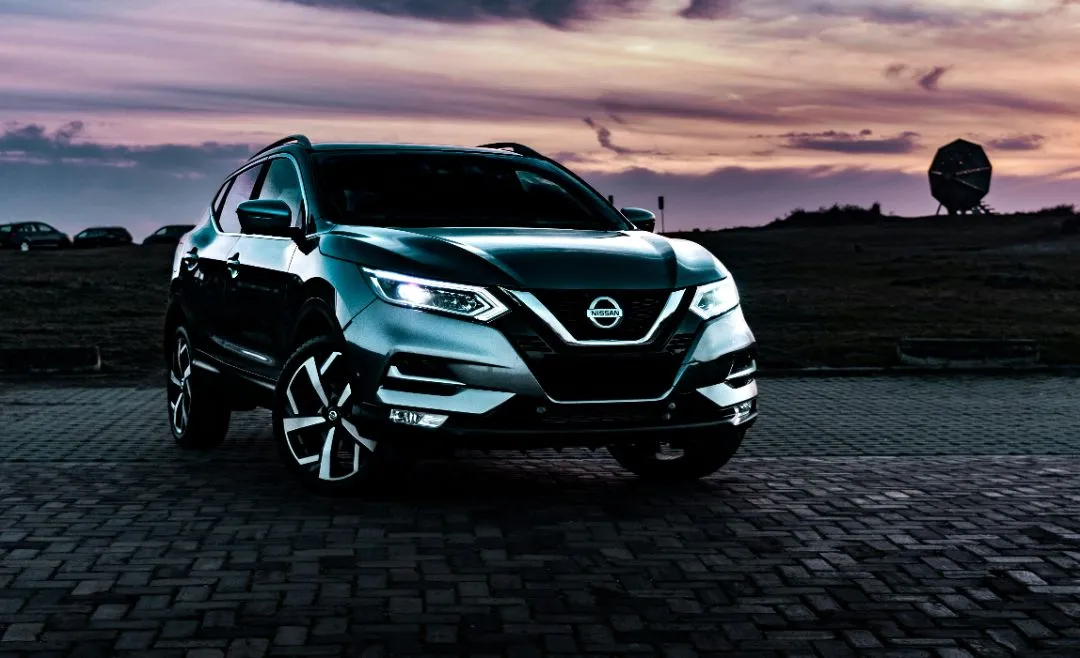
On March 7, Nissan Motor Co. introduced an innovative metaverse experience titled the "Heritage Cars & Safe Drive Studio," blending elements of automotive history with interactive safety education.Photo by Matthijs Waanders on UnsplashMarking 90 years in businessThe studio, launched to commemorate Nissan's 90th anniversary, features three iconic models from the company's past, recreated in virtual environments to reflect their respective eras. Among the showcased vehicles is the Silvia Q’s S13, renowned globally for its role in drifting culture. Users can explore this historic car from the 1980s while learning about the influence of pedestrian clothing colors on driver visibility. In another exhibit, users engage in a mini-game designed to educate on driver field-of-view and the impact of multitasking on safety. Alongside, the Skyline 2000GTX-E, famous for its presence in popular media like the Gran Turismo video game series and Fast and Furious movies, adds a touch of nostalgia and excitement, transporting users to the 1970s era. In a 1950s and 60s American diner and drive-in theater setting, the final exhibit offers a hands-on steering wheel spin exercise. These experiences aim to merge Nissan's heritage with vital safety knowledge, such as understanding the significance of pedestrian attire and the dangers of distracted driving. Developed in collaboration with Japanese university researchers, these immersive experiences are accessible through Meta Quest headsets, marking Nissan's continued exploration of virtual and augmented reality for customer engagement and education. Previous forays into the metaverseThis initiative aligns with Nissan's ongoing efforts to enhance its presence in the metaverse. It’s not the carmaker's first rodeo where the metaverse is concerned. It introduced its first virtual test drive and a virtual unveiling of its Sakura model in 2022. That same year, the company suggested it was interested in providing more in the way of virtual events, even going as far as to suggest the development of virtual customer support offices for clients. It followed that up in December 2023 with a revamp of four existing metaverse worlds, a project that also formed part of its 90th-anniversary celebrations. Nissan's latest foray into the metaverse coincides with advancements in augmented reality (AR) and virtual reality (VR) hardware. The recent launch of Apple's inaugural mixed-reality headset in February 2024 signals intensified competition among tech giants like Meta and Microsoft, who have been gradually expanding into consumer and enterprise AR/VR markets over the past decade. Broader auto industry interestNissan isn’t alone in the auto industry in taking initial steps into the metaverse. Rival Toyota has taken a different approach, pursuing an interest in creating remote workspaces for staff so that meetings can be held in the metaverse. Hyundai experimented with entering the metaverse as early as 2021. Through a partnership with Naver Z, the company offered virtual test drives of its Sonata model. Meanwhile Renault Korea has tipped its toes in the metaverse by offering consumers the ability to custom-build virtual cars on a metaverse platform. Through these metaverse updates, Nissan aims to stay at the forefront of automotive innovation, utilizing immersive experiences to engage customers and promote safety awareness in an increasingly digital world. 

news
Loading