Top

Singapore Looks to Prohibit Crypto Lending and Staking

Policy & Regulation·July 04, 2023, 12:30 AM

In a move to bolster investor protection and maintain financial stability, the Monetary Authority of Singapore (MAS) is introducing new guidelines for cryptocurrency platforms operating in the country.

Details of the measures were published by MAS on Monday. According to its statement, the measures “will mitigate the risk of loss or misuse of customers’ assets, and facilitate the recovery of customers’ assets in the event of a DPT [Digital Payment Token] service provider’s insolvency.”

The proposed guidelines outline several key measures. One such measure is the daily reconciliation of customer assets, which will help prevent discrepancies and safeguard against potential losses.
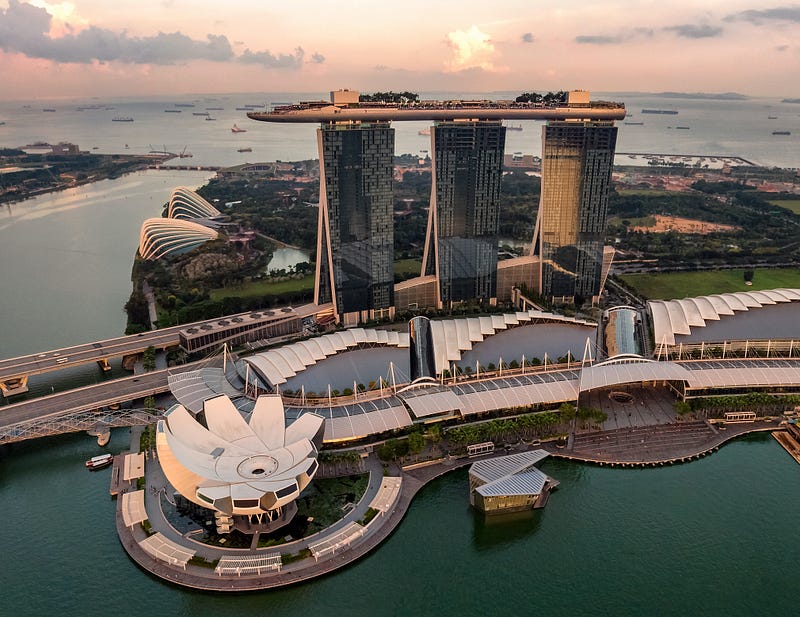
Photo by Hu Chen on Unsplash


Holding assets in trust

Additionally, the custody function, responsible for holding and safeguarding client assets, will be operationally separated from other business divisions to minimize the risk of mismanagement or unauthorized use. By the end of this year, it’s understood that crypto platforms will be required to store client assets in trust accounts, ensuring enhanced security and accountability.


Disclosures

Furthermore, licensed cryptocurrency service providers will be mandated to provide explicit disclosures to customers, clearly outlining the risks associated with holding and trading digital payment tokens (DPTs). Recognizing the speculative nature of digital token trading, the MAS acknowledges that regulations alone cannot fully protect consumers from potential losses.

To further protect retail investors, the MAS intends to prohibit cryptocurrency service providers from facilitating lending or staking activities. Lending and staking, where digital tokens are loaned or pledged to earn profits, are considered unsuitable for the general public due to their complex and high-risk nature.

These measures come as part of Singapore’s efforts to strengthen its regulatory environment for digital assets. The consultation process began last year, following the collapse of FTX, a cryptocurrency exchange.

Singaporeans suffered disproportionately with the collapse of FTX as previously, MAS had banned global crypto exchange Binance from operating within the city-state. That led to Singapore having more FTX customers than many other world regions. To compound matters, state-owned global investment firm Temasek, was an investor in the fraudulent crypto exchange.

MAS had called for feedback and proposals, with a focus on enhancing investor safeguards and promoting responsible trading practices. While the regulations aim to provide a safer environment for investors, the MAS also emphasizes the importance of individuals exercising caution when engaging in digital token trading.


Contrasting approaches

While Singapore is taking steps to tighten regulations, other cities like Hong Kong are adopting a more inclusive approach to the crypto industry. Hong Kong Legislative Council member Johnny Ng has voiced support for the local crypto business and has encouraged prominent exchanges like Coinbase to establish operations in the territory, aiming to foster greater engagement and growth within the sector.

As the crypto industry continues to evolve, regulatory frameworks play a crucial role in ensuring investor protection and maintaining market integrity. Singapore’s proactive approach to strengthening its regulatory environment reflects its commitment to striking a balance between fostering innovation and safeguarding the interests of investors.


More to Read
View All
Web3 & Enterprise·

Sep 11, 2023

Incheon Launches Blockchain Hub Center to Lead Web3 Era

Incheon Launches Blockchain Hub Center to Lead Web3 EraIncheon Metropolitan City announced Monday that it has established the Incheon Blockchain Hub Center at the heart of the city in an effort to establish itself as a blockchain hub in Korea and usher in the era of Web3.Photo by Hon Kim on UnsplashThe center, located in the Jemulpo Smart Town building, will house various facilities, including offices for the Incheon Technopark Blockchain Center, blockchain companies, and startups, as well as spaces for technological development and relaxation.Fostering innovation and cooperationThe center aims to undertake systematic and diverse projects that citizens and businesses alike can benefit from. This includes supporting tenants of the hub center, providing an environment for technology development and demonstration, and funding blockchain technology development. It will also serve as a spot for Incheon Technopark’s blockchain acceleration program, business model exploration and design, and events such as blockchain hackathons and conferences.The city is also set to hold an opening ceremony for the center on Wednesday, during which over 20 organizations and firms will gather for the inauguration of a committee dedicated to promoting mutually beneficial relationships between blockchain-based service providers and consumers. Among the consumers are central and municipal governments and state-run agencies. Initiating connections and making business support processes more efficient will constitute the committee’s core tasks, the city said.Incheon’s vision for Web3“The world is evolving to accommodate Web3, the new blockchain-based Internet, amid the global trend of digital transformation,” said Lee Nam-joo, Director of Incheon’s Future Industry Bureau. In accordance with this transformation, he said, the city of Incheon would push on to become a leading blockchain hub with a globally competitive edge by continually implementing various projects and policies through the committee — including joint projects between the public and private sectors — to provide support for business and technological development.In more efforts to build an active blockchain industry, Incheon is also currently operating a blockchain education program and regularly hosts events and hackathons to promote the widespread use of Web3 technology. Notably, a two-day conference dubbed “Global Blockchain Incheon Conference” is scheduled to take place from October 30 to 31 in the city’s southern district Songdo.

news
Policy & Regulation·

Feb 05, 2024

Korean banks to bolster AML measures for cryptocurrency exchanges

South Korean banks will soon have to be prepared with adequate anti-money laundering (AML) measures when issuing real-name bank accounts to cryptocurrency exchanges, according to a report by local media outlet News1. This requirement is part of the proposed amendment to the enforcement decree of the Financial Transaction Reports Act, with the Korean Financial Services Commission (FSC) issuing a legislative notice about it today. The FSC will be gathering feedback until March 4, prior to the implementation.Photo by Tuan P. on UnsplashAdequate staff and physical facilitiesThe new amendment requires banks supporting virtual asset service providers (VASPs) to employ adequate staff and establish and uphold physical infrastructure to combat money laundering and terrorist financing. Through this revised legislation, the FSC aims for banks to be equipped with the necessary resources to manage risks linked to the provision of real-name bank accounts to VASPs. With the issuance of real-name bank accounts, banks will face ongoing cautionary duties. The FSC plans to offer clearer guidelines to help banks decide whether to continue providing such accounts to VASPs. In its 2024 agenda, the FSC stated its plans to evaluate VASPs' readiness for their responsibilities ahead of the Virtual Asset User Protection Act, set to be implemented in July. Additionally, the regulatory body will develop infrastructure to improve its monitoring of the cryptocurrency market.Intelligence platform focused on financial securityMoreover, the FSC plans to create a specialized intelligence platform focused on financial security. This platform is aimed at enabling proactive responses to cyberattacks and supporting financial institutions in the agile management of risks associated with emerging technologies.

news
Policy & Regulation·

Jun 22, 2025

Iran curtails crypto exchange hours following $90M hack

While the crypto markets have not been immune to geopolitical developments, the sector in Iran experienced a more direct effect last week with a politically motivated $90 million exchange hack, prompting the authorities to introduce an exchange curfew. Blockchain analytics firm Chainalysis outlined on X on June 18 that Nobitex, Iran’s largest cryptocurrency exchange, had been hacked, with crypto assets to the value of $90 million having been drained from exchange-controlled wallets.Photo by Engin Akyurt on PexelsWeaponizing blockchain technologyThe hack had the hallmark of a politically-motivated attack given that rather than the digital assets being stolen, they were sent to vanity addresses, customized blockchain addresses involving user-defined sequences of characters. The vanity addresses contained “politically charged messages” and in sending the funds to them, the funds were effectively burned as they’re now permanently inaccessible.  The firm stated:”This incident highlights how crypto exploits aren’t always financially motivated. Bad actors can weaponize blockchain technology for geopolitical messaging, turning hacks into ideological statements rather than profit-driven crimes.” Pro-Israel hacker group Gonjeshke Darande, also known as “Predatory Sparrow,” appears to have carried out the hack, given that on June 18, it outlined on X that it would release Nobitex’s source code together with other internal information related to the firm’s internal network, while confirming that it had conducted cyberattacks against the company. The group made the following assertion:”The Nobitex exchange is at the heart of the [Iranian] regime’s efforts to finance terror worldwide, as well as being the regime’s favorite sanctions violation tool.” Rafe Pilling, director of threat intelligence at Sophos, a British cybersecurity company, told The Guardian that Predatory Sparrow “bears all the hallmarks of a false persona used by a government-sponsored threat group to conduct disruptive operations against targets” linked to the Iranian government. While Nobitex is estimated to have seven million users, an Open Source Intelligence (OSINT)-based investigation carried out in 2024 linked relatives of Ali Khamenei, Iran’s supreme leader, and other Iranian establishment figures to the crypto exchange. Minimizing systemic riskThe cyber attack has prompted a response from the Iranian government. In a blog post, Chainalysis outlined that the Central Bank of Iran has instructed all domestic crypto exchange platforms to curtail their service hours to between 10 a.m. and 8 p.m. The company speculated that this measure could be motivated by a desire to impose a higher level of oversight and control over the local crypto sector. However, it also suggested that it may be part of an attempt by the Iranian authorities to manage and minimize systemic risk. In recent years, Iran has been subject to extensive international sanctions applied by various entities including the United States, the European Union and the United Nations. Those sanctions have had a significant impact upon the country’s economy, triggering high inflation and currency devaluation.  With that, crypto has been increasingly viewed by the authorities as a means to circumvent sanctions. Last December, the Iranian authorities appeared to be working towards regulating crypto, embracing the asset class in acknowledgement of its growing importance to the Iranian economy. In February, Chainalysis reported that sanctioned entities worldwide had received $15.8 billion in crypto transactions in 2024.

news
Loading