Top

Ripple Pursues International Growth Via Dubai Expansion

Web3 & Enterprise·May 11, 2023, 1:13 AM

The Dubai Fintech Summit was held in the Venice of the Gulf earlier this week, bringing with it an announcement from Ripple outlining its plans to expand in the Middle Eastern location.
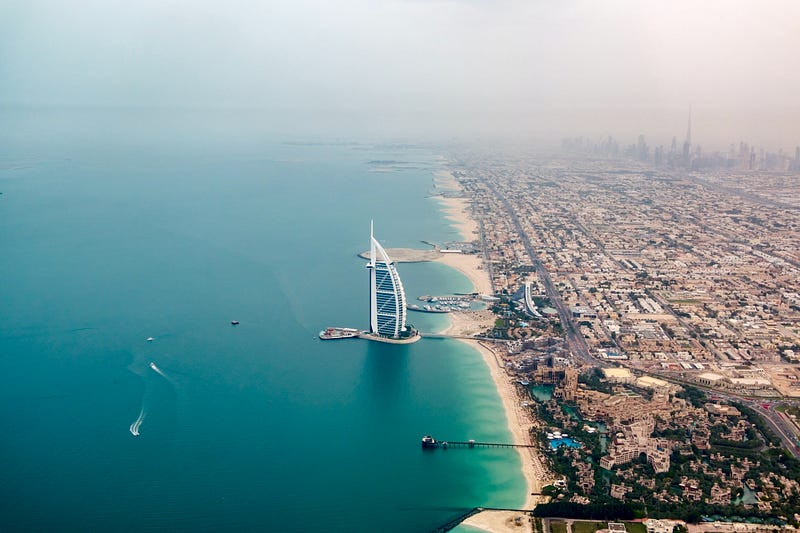
Photo by Christoph Schulz on Unsplash


Responding to the regulatory environment

Ripple CEO Brad Garlinghouse was a keynote speaker at the Summit on Monday, and he took that opportunity to outline the company’s plans within the region. Immediately following his speech, Garlinghouse took to social media to confirm those plans. He tweeted out:

“As I just shared on stage at #DubaiFintechSummit, @Ripple is expanding in Dubai. With 20% of our customers based in MENA and clear regulatory regimes being developed, it’s no surprise that Dubai is emerging as a key global financial hub for crypto innovation to thrive.”

It’s no coincidence that at the very same event, Coinbase CEO Brian Armstrong was present alongside the company’s executive team. Armstrong also spoke at the event and the outcome of that involvement saw Coinbase too, signaling that it sees potential in setting up a regional base in the United Arab Emirates (UAE).

In Coinbase’s case, it’s understood that it is considering the Emirate of Abu Dhabi as opposed to Dubai. Nonetheless, the rationale for pursuing such a move by both leading digital assets companies is the same. Both have been outspoken about the issues they have with the regulatory situation as it exists in the United States right now, relative to digital assets.


Office presence

As an initial step in that Middle East expansion, Ripple is opening an office in Dubai. The office will be located within the Dubai International Financial Centre (DFIC). In what appears like an effort to underscore the company’s official arrival in the United Arab Emirates, Ripple is holding its seventh annual customer conference in the country’s capital later this year.

This week, Garlinghouse confirmed that the company’s prolonged legal battle with the Securities and Exchange Commission (SEC) in the United States is projected to cost the company a whopping $200 million. The Biden administration is using all the major financial agencies in the US to clamp down on the sector. It’s little wonder, therefore, that companies like Ripple and Coinbase are seeking refuge overseas.

That regulatory and administrative landscape in the United States relative to crypto stands in total contrast to the experience of Navin Gupta, Ripple’s Managing Director of South Asia & MENA in respect of the UAE. In an interview with CoinDesk TV Gupta said that the “UAE as a market is very attractive to us, the Middle East as a market is doing very well.”

Gupta drew on his experience in working in Silicon Valley previously and recalling how back then it had three ingredients that made it function that he believes is now the case for the UAE: talent, venture capital investment and a workable regulatory approach.
More to Read
View All
Policy & Regulation·

Aug 29, 2023

OKX and Bybit Exclude Sanctioned Russian Banks from P2P Services

OKX and Bybit Exclude Sanctioned Russian Banks from P2P ServicesIn response to the mounting pressure on crypto firms to improve general compliance standards, prominent digital asset exchanges OKX and Bybit, based in the Seychelles and Dubai, have decided to delist sanctioned Russian banks from their peer-to-peer (P2P) services.Photo by Eduardo Soares on UnsplashThe move by the two exchange platforms, brought to light by Russian media reports, comes just days after Binance had done the same.Tinkoff Bank and Sberbank, two significant Russian financial institutions, have been expunged from the P2P platforms of OKX and Bybit. This effectively removes the option for Russian crypto users to exchange their assets for fiat through these banks. The decision sees the exchanges fall into line with Western sanctions imposed on the banks due to Russia’s actions in Ukraine.Enforcement difficultiesWhile the removal of these banks from the platforms is a significant step, the nature of P2P transactions introduces complexities in enforcing such bans comprehensively. Reports indicate that certain users are still engaging in P2P transactions with these banks through private channels, showcasing the challenges in regulating this decentralized method of exchange.In the case of OKX, at the time of publication, the platform still allows Russian users to receive fiat through accounts held with the Russian Standard Bank and the Russian branch of Raiffeisen Bank.This action aligns OKX and Bybit with Binance, which faced a similar scenario last week. Binance came under scrutiny when it continued to list the sanctioned banks as part of its payment methods. Following a report by The Wall Street Journal, Binance eventually removed the banks from its platform.Binance’s compliance effortsA spokesperson from Binance conveyed that while the banks have been delisted, the company remains committed to ensuring compliance by continuously updating its systems.“We regularly update our systems to ensure compliance with local and global regulatory standards,” they said. “When gaps are pointed out to us, we seek to address and remediate them as soon as possible.”Despite this stance and the latest action it has taken, users on Binance’s P2P platform are still posting ads for the sale of crypto using the “green bank,” referring to the sanctioned banks, as the preferred method of payment.Western-imposed sanctions have led to significant economic challenges in Russia, pushing individuals and institutions towards cryptocurrencies as a potential solution. In a country that has previously banned private cryptocurrencies, the attraction of decentralized digital assets has grown stronger as a means to break through the sanctions-induced financial stranglehold.Sanctions impactReports from Russian financial institutions reveal dramatic declines in profits, some as high as 90%, as they find themselves cut off from the global payments network SWIFT. Tinkoff Bank, for instance, reported a substantial decline of 67% in the second quarter of 2022, attributing the drop to escalating global tensions.In April, the Bank of Russia introduced a bill that could potentially allow cryptocurrencies to be used in international trade, a measure aimed at mitigating the impact of sanctions. While this could potentially open doors for cross-border transactions involving cryptocurrencies, the restrictions on local transactions remain intact.

news
Web3 & Enterprise·

Nov 08, 2023

OKX announces delisting of 26 trading pairs

OKX announces delisting of 26 trading pairsCryptocurrency exchange OKX has made a significant announcement regarding the delisting of more than 20 trading pairs, with a view towards its ongoing maintenance of strict listing criteria and performance monitoring. This decision will impact a considerable number of trading pairs across various cryptocurrencies, with the process scheduled to commence later this week.OKX outlined details of this recent trading pair purge in a statement published to its website on Monday. Among the trading pairs set for removal are CELO-USDC, AXS-USDC, APE-BTC and the HNT-USDT trading pair, which will be delisted on Nov. 10. Notably, Bytom (BTM), a Chinese crypto project, which has experienced a substantial 46% drop in value since Monday, is also among the tokens to be delisted.The exchange is advising users to manage their assets accordingly in preparation for the changes. Withdrawals for these tokens will cease on Jan. 10, 2024. During this transitional period, OKX recommends that users cancel any open orders linked to the impacted trading pairs to avoid automatic cancellations, which could result in processing delays.Photo by Maxim Hopman on UnsplashSAITAMA delistingDeposits for the affected tokens, including HNT, BTM, and SAITAMA, were halted by OKX on Nov. 3. SAITAMA, an Ethereum-centric ERC20 token, is the primary payment medium on the Saitama platform. There were mixed reactions to the delisting of the coin. One community member took to X, stating:“I will say I do think it isn’t cool for OKX to delist #Saitama considering we didn’t get on there for the reasons specified of delisting. The listing was won through hours of Spaces and helping people get VPNs to win a contest. Regardless of what the market is doing we won fairly.”Another Saitama project supporter took a more pragmatic view, stating:“Delisting Is a tragedy? I don’t think so. What did the OKX listing for the token price? What is the difference between holding or selling with or without okx? Volume was too low, and this isn’t a news, so they will delist. They will relist again….#SAITAMA”OKX has embarked upon several initiatives over the course of 2023 in an effort to further the user proposition offered by the platform. From a marketing perspective, the company took the decision in October to retire the Okcoin brand, rebranding its various sub-platforms instead to OKX.The Seychelles-incorporated company indicated in September that it expects to have secured a virtual asset service provider (VASP) license in Hong Kong by June of next year.Delisting banksTokens are not the only items to be delisted by the exchange recently. Alongside competitor Bybit, the company decided to delist sanctioned Russian banks Tinkoff Bank and Sberbank from its peer-to-peer exchange platform.This move by OKX reflects the exchange’s efforts towards maintaining a high level of integrity and performance. Listing coins that fall below a minimum acceptable level of liquidity and trading volume can leave them much more exposed to the risk of manipulation. By adhering to stringent listing criteria and promptly addressing issues, the company is making a greater effort towards maintaining a position as a trusted and secure trading platform for cryptocurrency enthusiasts and investors.

news
Web3 & Enterprise·

Jan 18, 2024

Night Crows pre-registration NFT collection sells out

South Korean gaming publisher Wemade opened sales for its “The Night is Coming” NFT collection on Jan. 11 to 12 to celebrate pre-registration for the global version of the massively multiplayer online role-playing game (MMORPG) Night Crows. All 341 NFTs were sold out, according to an official press release on Thursday (KST).Photo by Choong Deng Xiang on UnsplashUnveiling exclusive NFTsThe NFT Collection featured NFTs of different tiers, including Uncommon and Rare NFTs that went on sale on Jan. 11, as well as Epic, Legendary and Mythical NFTs that were available on NILE – short for “NFT Is Life Evolution,” a decentralized autonomous organization (DAO) and NFT marketplace on WEMIX3.0 – the next day. All NFTs were sold out within a day. Blockchain-backed fantasy gameBuilt on Unreal Engine 5, a three-dimensional computer graphics engine used for game and content development, Night Crows features high-quality graphics, an immersive world, realistic action and major in-game battles. It has topped the popularity and revenue charts on major app markets in South Korea since its launch in April last year. The global version of the game, which is scheduled for release in March, will harness blockchain technology and a multifaceted tokenomics system that tokenizes in-game items. It will also introduce character NFTs that keep character and player data in one place, connecting the game’s internal and external economies. Wemade also stated that owners of the NFTs can exchange them with CROW, the game’s native token, starting on April 1. The token’s value is stabilized by a minting process controlled by the Peg Stability Module (PSM), which allows users to swap a native stablecoin for other protocol-accepted stablecoins at a 1:1 rate.

news
Loading