Top

Four Pillars for Success in Korean Security Token Market

Policy & Regulation·April 10, 2023, 3:41 AM

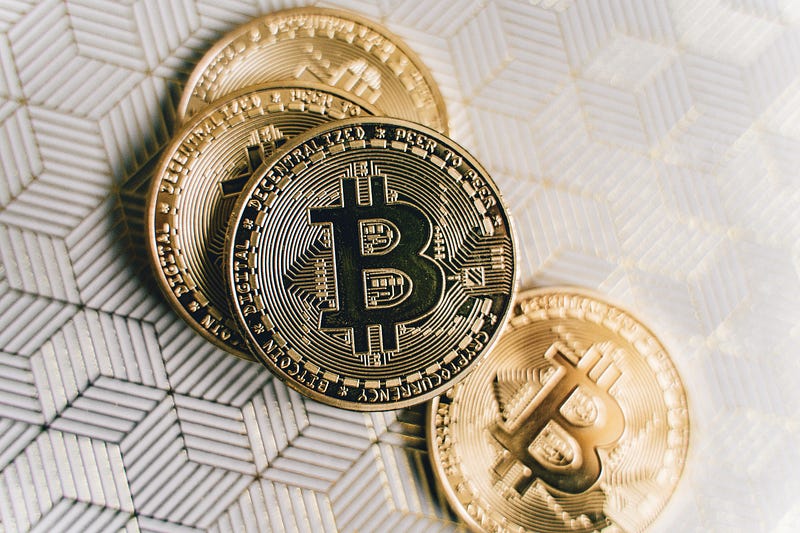
On Wednesday, blockchain experts in various fields gathered at the 2023 Blockchain Meetup Conference held in Seoul to discuss issues with security tokens and their outlook.
©Pexels/Alesia Kozik

What attracted security token businesses’ attention at the meeting was a presentation by Jung Eui-heon from Lambda256, a subsidiary of Korean crypto exchange Upbit’s operator Dunamu. He shared four pillars for success in the Korean security token market.


Security tokens gaining traction in Korea

Security tokens have been a trending topic in the Korean blockchain industry since the Korean Financial Services Commission (FSC) allowed the issuance and trading of security tokens last February. Furthermore, a 2022 report jointly published by Boston Consulting Group and Singaporean investment platform ADDX predicted that the total size of illiquid tokenized assets worldwide would reach $16 trillion by 2030.

Against this backdrop, here are the four keys to successful security token projects that Jung outlined.


Technology adaptation

First, he emphasized the importance of adopting rapidly changing technology. To tackle the issue, he suggested teaming up with advanced tech companies for long-term collaboration. When choosing tech partners, companies should ensure they are sustainable, possess technological prowess, hold credibility on high volume transactions, and maintain the security level of financial institutions, Jung advised.


Forging partnerships

The second point he mentioned was the need to forge partnerships. The FSC’s February guideline requires the issuance and distribution of security tokens to be managed separately. This means that security token projects require collaboration between issuers, distributors, account managers, asset holders, and tech companies.


New securities products

Jung also noted that discovering new securities products is crucial. Partnering with existing fractional investing companies may help accelerate the security token project initially, but in the long run, enterprises will eventually have to create products in various fields such as gaming, movies, and entertainment.


Token liquidity

Lastly, Jung underlined the token liquidity, which plays a crucial role in determining its prices. Issuers will need to find various distributors and vice versa. Securing liquidity requires the establishment of a technical standard that improves interoperability and compatibility, he highlighted.

More to Read
View All
Web3 & Enterprise·

Aug 04, 2023

Hyosung TNS and APoT Join Hands to Promote NFT Portal Service

Hyosung TNS and APoT Join Hands to Promote NFT Portal ServiceSouth Korean IT infrastructure and financial solutions provider Hyosung TNS announced that it is teaming up with APoT Platforms, a company specializing in developing blockchains for real-world assets (RWAs), to promote NFTtown — Hyosung TNS’ portal service dedicated to providing information, news, and educational content on NFTs.Photo by Andrey Metelev on UnsplashBringing real-world assets to blockchainAPoT Platforms is equipped with technology that is able to embed data on RWAs, such as artwork and luxury goods, thereby connecting them to the blockchain. The company also maintains an extensive network of collaborative relationships with various NFT artist organizations and communities both domestically and abroad.Hyosung TNS plans to bring APoT’s artist network to NFTtown, allowing users to easily access information regarding NFT artists and their works.The two companies will also work together on other efforts, including introducing NFT artworks, digital product transfers, and events for NFT holders.NFT art exhibitionAs the first step of their collaboration, they plan to exhibit and sell works by renowned NFT artists such as Han Kwang-suk, Quiet Eye, and HAN (Han Sun-ok) this month at the Lotte Department Store Ilsan’s Spazio We;R Gallery.

news
Web3 & Enterprise·

Jun 04, 2025

OSL set to acquire Indonesia’s Evergreen Crest

OSL Group, a publicly-listed digital asset and blockchain platform company headquartered in Hong Kong, is set to acquire Indonesia’s Evergreen Crest Holdings.Photo by Kelly Sikkema on UnsplashAs the proposed acquisition of Evergreen Crest, a business that includes a virtual assets exchange platform, will involve a share transaction, OSL filed details of the acquisition with the Hong Kong Stock Exchange on June 2. OSL will take a 90% stake in Evergreen Crest in return for $15 million worth of consideration shares, which will be issued by OSL to the seller. This share issuance will account for 1.48% of the total issued shares in the company. Once the acquisition goes through, Evergreen Crest will become a subsidiary of OSL Group, with Evergreen’s financial results consolidated into the overall financial statements of OSL going forward.  ‘Strategic benefits’The filing suggests that OSL management believe that the acquisition “will bring substantial strategic benefits to the Group,” as it opens up access for the company to the Indonesian digital asset market. The company is optimistic about the outlook for the Indonesian crypto market. It stated: “Indonesia possesses key attributes conducive to growth in this sector, including a substantial and youthful demographic, robust economic growth fundamentals, and a rapidly increasing rate of cryptocurrency adoption.” Acquiring licensesOne interesting aspect of the acquisition is that Evergreen Crest has acquired the requisite licensing to operate within the Indonesian market. Those cryptocurrency and futures trading licenses are likely to be of significant value to OSL as it means that through the acquisition, OSL can now enter the Indonesian market in a fully compliant manner. Using the existing compliant platform, OSL intends to expand the range of services offered within the Indonesian market. It indicated that it would do so in respect of payment finance (PayFi) and tokenized real-world asset (RWA)-related products and services, subject to acquiring the necessary licensing. OSL is encouraged by the opportunity that exists within Indonesia as far as tokenized RWAs are concerned. It claimed that the country has already demonstrated significant tokenized RWA-related activity. PT Multikripto Exchange Indonesia (also known as Koinsayang), the exchange business owned by Evergreen Crest, was awarded a virtual asset trading license by the Indonesian regulator, the Financial Services Authority (OJK), in March. At the time, the exchange outlined that it intended to expand its service reach, while creating a better trading experience for users located within Indonesia and overseas. In September 2024, the exchange was awarded a license to offer crypto asset perpetual futures contracts by Indonesia’s Commodity Futures Trading Supervisory Agency (Bappebti).  OSL expanding its reachOSL appears to be making a concerted effort to expand beyond its Hong Kong base. In February it acquired CoinBest, a Japanese crypto exchange, rebranding the business as OSL Japan. At the time it was reported that the company was also looking at opportunities to expand in European markets. OSL was amongst the first digital asset exchange platforms to be licensed in Hong Kong, receiving Type 1 and Type 7 licenses from the Securities and Futures Commission (SFC) in December 2020.

news
Policy & Regulation·

Nov 24, 2023

HTX and Heco Chain exploited with $115 million loss

HTX and Heco Chain exploited with $115 million lossSeychelles-incorporated cryptocurrency exchange HTX, linked to digital-asset entrepreneur Justin Sun, has fallen victim to a significant hack, only a few months after having suffered another hack in September.Photo by Markus Spiske on UnsplashSecond HTX hack in recent monthsThe last hack, involving a loss of digital assets to the value of $8 million, was resolved when the hacker agreed to return funds in October in return for a goodwill payment of around $400,000.This latest unfortunate incident follows another hack on Poloniex, also associated with Sun, just weeks ago. Sun acknowledged the HTX hack in a tweet, announcing the temporary suspension of deposits and withdrawals without specifying the exact amount pilfered.Separate Heco Chain hackIt is understood that approximately $30 million worth of cryptocurrencies was siphoned from the exchange wallet. The platform is actively investigating the breach, aiming to uncover the specifics surrounding the attack. Simultaneously, the HECO Bridge, which was established by HTX for cost-effective fund transfers across different blockchains, experienced a separate hack.This breach resulted in losses exceeding $85 million, including ETH, US dollar stablecoin Tether (USDT) and various other tokens. Although initially launched by HTX, HECO operates independently from the HTX exchange.Crypto community concernThese security breaches cast a shadow over Sun’s crypto ventures, especially considering the recent hack on Poloniex, which saw losses surpassing $100 million in various cryptocurrencies. A spokesperson for crypto security firm Hacken told Cointelegraph that these hacks could be the work of an insider.“We can see that all these attacks have the same target: Justin Sun’s projects,” the spokesperson stated. These related incidents are the cause of significant speculation within the crypto space, with some concern expressed about the financial health of HTX, given that the firm is currently offering unsustainable interest rates of up to 100% APY on a selection of digital assets.In response to the HTX hack, Justin Sun assured the community in a post on X (formerly Twitter) that HTX would fully compensate for the losses incurred in its hot wallet. The exchange has temporarily halted deposits and withdrawals as the investigation unfolds. Sun emphasized the commitment to resume services once the investigation concludes and the cause of the breach is identified.These incidents raise questions about the security infrastructure of platforms associated with Justin Sun. The crypto community awaits further details on the investigation’s outcomes and preventive measures that will be implemented to fortify these exchanges against future attacks.Such recent security breaches have not just affected Justin Sun-related enterprises. Earlier this month, decentralized exchange (DEX) KyberSwap was exploited to the tune of $46.5 million. Earlier this week, Kronos Research — a Taipei-based crypto trading, market making and venture capital platform — experienced a $25.6 million loss. The past twenty days have seen five major hacks resulting in an aggregate loss of a staggering $290 million.As the crypto industry grapples with increasing security challenges, the importance of robust protective measures cannot be overstated. These developments underscore the need for a cautious and diligent approach in safeguarding digital assets within the rapidly evolving cryptocurrency landscape.

news
Loading