Top

Bitget works towards goal of Bitcoin ecosystem support

Web3 & Enterprise·December 26, 2023, 1:19 AM

Bitget Wallet, a Web3 trading wallet offered by the Bitget Seychelles-based crypto derivatives platform, has unveiled a plan designed to bolster its support for and development within the Bitcoin ecosystem.
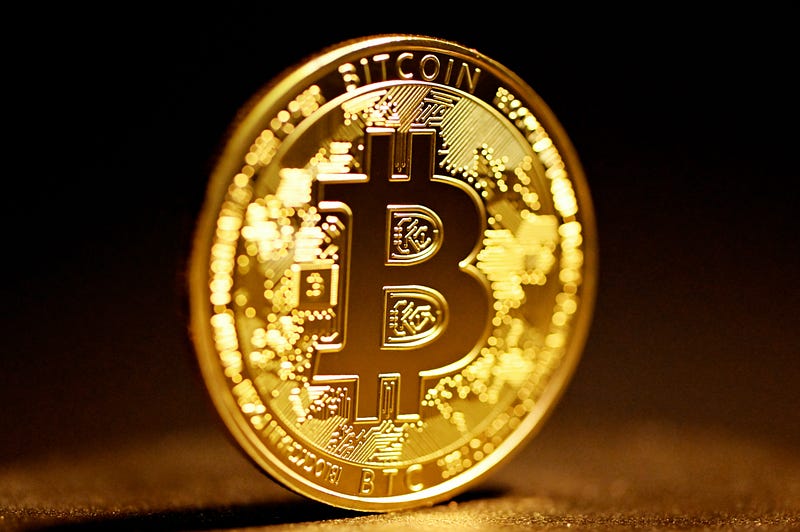
Photo by Kanchanara on Unsplash


Enhancing user experience

In an effort to elevate user experience and expand trading options, Bitget Wallet is committing to extensive product research, development initiatives and increased investments. The company plans on offering a wide array of services tailored to the Bitcoin ecosystem.

This includes robust support for BTC asset management, cross-chain swaps, on-ramping for externally owned account (EOA)-based wallets, multi-party computation (MPC) wallets, Taproot compatibility and streamlined asset transfers for both BRC-20 tokens and NFTs. In October, Bitget announced that it was taking the route of enhanced security by embarking on integrating MPC.


Integrated dApp browser

The platform also provides users with insights into macro and micro market trends through Bitget Swap, enabling interaction with popular projects via its dApp browser.

Bitget Wallet’s move has already garnered support from several Bitcoin ecosystem projects, with integrations on official websites such as Unisat, ALEX Lab, LifeRestart and Bitmap Explorer. The integrated dApp browser ensures convenient user access to these projects, fostering increased engagement and accessibility.

Looking forward, Bitget Wallet aims to capitalize on the medium to long-term market prospects within the Bitcoin ecosystem. The company is directing its efforts towards enhancing both technological infrastructure and product features, with a specific focus on critical areas such as Lightning Network, Nostr, Taproot Assets, BRC-20 and ARC-20 inscriptions.


Facilitating cross-chain transactions

An important facet of Bitget Wallet’s approach involves supporting multiple address formats, particularly within the Lightning Network. By doing so, the platform aims to improve asset transfer efficiency and introduce asset swaps between the Bitcoin mainnet and the Lightning Network. This move is geared towards facilitating cross-chain transactions between BTC and Ethereum Virtual Machine (EVM) assets on Bitget Swap, providing users with increased opportunities for portfolio diversification.

Alvin Kan, the Chief Operating Officer of Bitget Wallet, underscored the significance of Bitcoin as the foundational cornerstone of the crypto industry. He emphasized the platform’s commitment to becoming a key player in the growing Bitcoin ecosystem, providing users with robust and seamless ways to manage and grow their assets.

Formerly known as BitKeep, Bitget Wallet stands as Asia’s largest all-in-one Web3 trading wallet, boasting a five-year legacy and over 12 million users worldwide. On a global basis, the non-custodial wallet recently ranked fourth overall in terms of the number of wallet downloads.

Bitget acquired the Singaporean startup wallet project in June. Its addition helped the broader Bitget platform to achieve the milestone of 20 million users. The product was rebranded as Bitget Wallet shortly afterwards.

The company is keen to support other blockchain networks and ecosystems also. Earlier this month, the company announced an investment into Morph, a layer-2 blockchain that uses zero knowledge roll-up technology in an effort to focus on enhanced consumer experience.

Last week, the platform added support for ZKFair, a zero knowledge layer-2 network which is based on the Polygon CDK.


More to Read
View All
Policy & Regulation·

Jul 27, 2023

Korean Banks Impose Crypto Exchanges to Maintain a Reserve of at Least 3B KRW

Korean Banks Impose Crypto Exchanges to Maintain a Reserve of at Least 3B KRWIn a significant step towards regulating the cryptocurrency market and ensuring the safety of virtual asset users, South Korea’s Federation of Banks (KFB) has collaborated with financial authorities and virtual asset exchanges to establish the “Guidelines for the Operation of Real Name Accounts for Virtual Assets.” The KFB, as a group of banks and financial institutions, facilitates cooperation between its members and promotes the development of the financial industry.Photo by rc.xyz NFT gallery on UnsplashThe guidelines come as a response to the increasing need for stronger money laundering prevention measures and standardization in the crypto industry. The first step towards this was taken in 2018 when crypto exchanges became obliged to establish a real name account at a bank in order to provide Korean Won (KRW) deposit and withdrawal services to their customers. Currently, the exchanges that won such bank accounts are Upbit, Bithumb, Coinone, Korbit, and Gopax.However, this policy brought with it a set of challenges, including differing practices among various cryptocurrency exchanges, leading to inconveniences for users. Additionally, varying user protection measures, such as reserve requirements, caused confusion in the market.3 billion KRW in reservesTo address these issues, the new guidelines aim to clarify how banks operate cryptocurrency real-name accounts and bolster overall security. One of the key changes is the requirement for crypto exchanges to maintain a reserve of at least 3 billion KRW ($2.36 million). This reserve fund serves as a precautionary measure to address potential financial losses resulting from hacking incidents or system failures at crypto exchanges.Furthermore, the guidelines mandate banks to manage deposit and withdrawal limits by categorizing user accounts into limited and normal accounts. A limited account will not be converted to a normal account, which grants higher deposit and withdrawal limits, until the user’s transaction purpose and the source of funds are verified.Enhanced due diligenceIn addition, banks will perform annual enhanced due diligence (EDD) for individual account holders. This thorough review will encompass users’ identification, transaction purposes, and the origin of funds.User asset segregationTo safeguard users’ funds, crypto exchanges will be required to ensure that customer deposits are held separately or placed in trust. Regular due diligence at crypto exchanges will also be conducted by banks, with mandatory visits occurring at least once a month. Moreover, third-party services will be engaged to perform independent due diligence every quarter on crypto exchanges, providing an additional assessment of their operations.The official launch of these new guidelines is scheduled for January of next year. However, the requirement of depositing at least 3 billion KRW will come into effect earlier, starting in September of this year. Additionally, the implementation of guidelines for expanding deposit and withdrawal limits is anticipated in March of next year.

news
Markets·

Dec 14, 2023

WEMIX comes in 9th in CoinMarketCap’s TVL chain ranking

WEMIX comes in 9th in CoinMarketCap’s TVL chain rankingSouth Korean gaming publisher Wemade’s layer 1 blockchain network WEMIX has ranked 9th in CoinMarketCap’s list of largest blockchains in crypto ranked by total value locked (TVL). TVL refers to the U.S. dollar value of assets locked or staked on a blockchain. It is a key indicator of liquidity as well as investor and developer participation in a blockchain ecosystem.Photo by GuerrillaBuzz on UnsplashWEMIX’s statsAs of this writing, WEMIX’s TVL is $555.4 million, outpacing 10th place-holder Cardano by over $100 million. Its market capitalization is $1.27 billion. Staking accounts for the largest share of WEMIX’s TVL, which implies a high level of on-chain activity and trust among users in the blockchain’s stability and potential for growth.Expansive ecosystemWEMIX is building a large-scale ecosystem centered on the WEMIX3.0 mainnet, which features popular platforms like the blockchain gaming platform WEMIX PLAY; decentralized autonomous organization (DAO) and NFT platform NILE; and decentralized finance (DeFi) platform WEMIX.Fi.The firm’s more recently developed platform is its joint omnichain network with Chainlink Labs dubbed the Unbound Networking & Accelerating Growth Initiative, or “unagi,” which will serve as an interoperable Web3 gaming platform linking multiple blockchains. It is expected to boost WEMIX’s growth into an even larger mega-ecosystem.

news
Policy & Regulation·

Sep 05, 2023

Singapore Elects Crypto Skeptic as President

Singapore Elects Crypto Skeptic as PresidentGarnering 70.4% of all votes cast on Saturday, Singaporeans chose to elect Tharman Shanmugaratnam as their next president, a move that may have implications for Singapore’s outlook when it comes to digital assets.While many had hoped that he would be the nation’s first non-Chinese prime minister, the crypto industry has greeted his rise to this largely ceremonial role with mixed feelings. Shanmugaratnam’s previous stances on cryptocurrency and digital assets have been predominantly critical.Photo by Justin Lim on UnsplashFormer MAS ChairmanIn the past, the president-elect has referred to cryptocurrency as “slightly crazy” and “purely speculative.” His ascent to the presidency comes after a distinguished career that includes serving as the former finance minister, deputy prime minister, and chairman of the Monetary Authority of Singapore (MAS), the country’s central bank, from 2011 to 2023.Crypto platform collapsesIt was during his tenure at MAS that two prominent crypto companies, Three Arrows Capital (3AC) and Terraform Labs, faced catastrophic collapses.The demise of Terraform Labs, along with its TerraUSD (UST) stablecoin, triggered a severe “crypto winter” in May 2022, from which the industry is still struggling to recover. This downfall wiped out a staggering $500 billion in value over just two weeks, devastating the portfolios of numerous retail investors.The ripple effect of TerraUSD’s fall also engulfed 3AC, a significant cryptocurrency hedge fund headquartered in Singapore. The contagion spread across the cryptocurrency market, leading to the downfall of other major entities like crypto lending platforms Celsius Network and Voyager Digital, alongside Singapore-based Hodlnaut.Given that these catastrophic events unfolded during Shanmugaratnam’s tenure at MAS, it’s plausible that he bore the brunt of the consequences. That might explain why in speaking on the subject in 2021, he appeared to be more accommodative, suggesting that there may be a useful role that crypto could play and highlighting that Singapore had allowed crypto businesses to develop within the city-state.In June of last year, MAS reprimanded 3AC for providing misleading information and exceeding the allowed assets under management (AUM) threshold, thereby breaching its status as a registered fund management company.In January, Shanmugaratnam said that regulating the crypto sector would give credibility to speculation and on that basis, it would be best to leave it unregulated. He went on to suggest that crypto should be subject to existing regulation as laid down for traditional finance.Early stage concernsBack in 2018, when he was Singapore’s finance minister, Shanmugaratnam questioned the wisdom of broad regulation potentially legitimizing a speculative and “slightly crazy” market. During the 2018 World Economic Forum, he emphasized the importance of anti-money laundering measures and advocated for educating consumers about the risks inherent in the unregulated crypto sector.Although he acknowledged blockchain’s potential to enhance global payment systems, Shanmugaratnam favored integrating existing traditional payment mechanisms as an alternative to blockchain innovations.Singapore’s new president brings with him a history of skepticism towards cryptocurrency and digital assets. However, with a largely ceremonial role relative to day-to-day governance, he’s not in a position to take direct action that could hold the sector back although he will have the power to initiate corruption investigations upon the advice of the Singaporean cabinet.

news
Loading