Top

Standard Chartered joins China’s CBDC pilot trials

Policy & Regulation·November 29, 2023, 12:24 AM

Standard Chartered Bank has joined the advanced stages of China’s central bank digital currency (CBDC) pilot trials, making it one of the world’s largest multinational banks to partake in such an initiative.
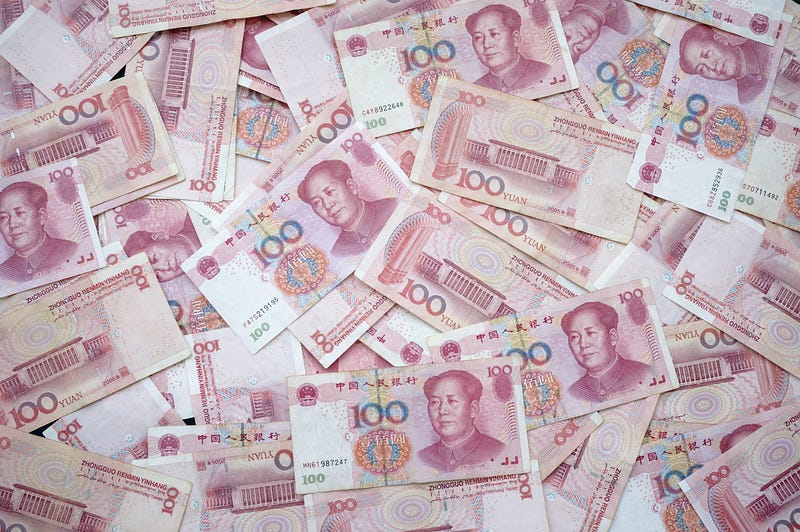
Photo by Eric Prouzet on Unsplash


Enabling e-CNY exchange

China initiated its CBDC pilot trials over a year ago, with it being much further ahead of other CBDC initiatives internationally in terms of development. It has now expanded its trials to include more lenders, with Standard Chartered China becoming the latest participant.

This development means that Standard Chartered Bank’s users in the Asian nation will soon have access to the digital version of the Chinese yuan by seamlessly integrating its platform with China’s dedicated CBDC app. According to an announcement by Standard Chartered Bank (China) Ltd. on Monday, the bank will be enabled, through partner firm City Bank Clearing Services Co., to offer its clients the ability to purchase, exchange or redeem e-CNY.

In its announcement, Standard Chartered China’s President, Zhang Xiaolei, stated:

“As an international bank rooted in the Chinese market for 165 years, Standard Chartered is optimistic about the development prospects of digital renminbi.”


Joining e-CNY testing program

The e-CNY pilot testing program in China has been extended to 26 cities and provinces. Standard Chartered’s Chinese subsidiary will involve itself with supply chain financing, trade financing and cross-border merchant payments as part of that pilot program.

The adoption of CBDCs is anticipated to reduce reliance on physical currency notes while ensuring transparent and tamper-proof transaction histories. China’s CBDC, known as the digital yuan or e-CNY (digital renminbi), has garnered international attention for its progressive approach to digital currency.


Broader digital assets sector involvement

Standard Chartered’s involvement in China’s CBDC pilot marks a milestone, emphasizing the bank’s commitment to digital innovation. However, the British banking conglomerate has had a broader approach to digital assets beyond this CBDC collaboration. A report by Nikkei Asia last month suggested that the banking group was making a concerted effort to develop its digital assets-related business within the Asian region through its Singapore-based investment arm, SC Ventures.

Earlier this month, SC Ventures unveiled Libeara, a platform which plans to offer the first-ever tokenized Singapore dollar government bond fund. Subsidiary companies include digital asset custodian Zodia Custody and institution-first digital asset marketplace Zodia Markets.

China has been at the forefront of CBDC experimentation, with initiatives like testing offline payment systems integrated with SIM cards. This innovative approach allows users to initiate CBDC payments by simply bringing their phones close to sale terminals. The trials, initially launched in major cities such as Shanghai, Beijing and Shenzhen, have encouraged residents to embrace e-CNY for everyday transactions.

While China’s advancements in CBDC trials are noteworthy, other nations, including India, Japan and the U.S., are also actively engaged in the advanced phases of CBDC-related research and development. These global efforts seek to diversify financial settlement options, providing individuals with a broader range of choices in the evolving landscape of digital currencies.

More to Read
View All
Web3 & Enterprise·

Jul 27, 2023

KuCoin Dismisses Notion of a Layoff Plan

KuCoin Dismisses Notion of a Layoff PlanAmidst recent rumors of significant layoffs at Seychelles-based cryptocurrency exchange KuCoin, the company’s CEO has come forward to deny any such plans.While not refuting the possibility of staff reductions, KuCoin’s CEO, Johnny Lyu, took issue with the term “layoffs,” asserting that it was a reevaluation of the organization’s structure rather than job terminations. The speculations about staff cuts were first reported by Colin Wu of Wu Blockchain on Twitter.Photo by Joao Viegas on UnsplashAlleged 30% workforce reductionAccording to his sources, KuCoin was planning to layoff around 30% of its workforce, attributing the alleged measure to a strict know-your-customer (KYC) policy that had impacted the firm’s profits.The KYC policy in question was introduced after KuCoin faced legal action from the United States. In March, the New York Attorney General accused the exchange of violating securities and commodities laws, leading to the implementation of the more stringent KYC measures.Routine bi-annual appraisalsInstead, Lyu has clarified that any adjustments to the company’s headcount were a result of routine bi-annual appraisals aimed at maintaining competitiveness in the market.Taking to Twitter on Tuesday, Lyu referred to the layoff reports as “rumors.” He emphasized that the company regularly evaluates its organizational structure based on employee performance and overall company development to ensure dynamism and competitiveness.The Kucoin CEO pointed to a recent report issued by the company as evidence of the exchange’s ongoing growth. The report revealed that the firm had added 300 new employees in the first half of the year. It also mentioned that KuCoin was in the process of upgrading its KYC authentication systems to enhance user asset security, comply with global compliance requirements, and create a safer trading environment.Despite the speculation and policy changes, KuCoin ranks 11th in terms of “trust score” among other exchanges, according to CoinGecko. Over the past day, the exchange notched up an impressive $327 million in trading volume.KYC policy changeRecently, KuCoin updated its KYC policy, requiring newly registered users to complete the KYC process to access the exchange’s products and services. Existing registered users who had not completed KYC by the deadline faced restrictions on their accounts, limiting certain activities but allowing fund withdrawals.The update to the KYC policy had a notable impact on KuCoin’s trading volume. A day after the announcement, trading volume skyrocketed to $6.8 billion from the previous day’s $500 million, according to CoinGecko data.Lyu has pledged to continue investing in the company’s core businesses while providing users with the exceptional trading experience they’ve been promised.KuCoin may have dispelled rumors of widespread layoffs and clarified that any staff adjustments were part of routine organizational development. However, there’s no doubt that the crypto exchange business is going through a difficult period.Most exchanges have suffered due to regulatory pushback, particularly those that have focused their activities in the United States. Earlier this month, global exchange Binance cut 1,000 jobs with plans to make further cuts in the future.

news
Web3 & Enterprise·

Dec 21, 2023

Starbucks Korea implements NFT initiative to boost sustainability efforts

Starbucks Korea implements NFT initiative to boost sustainability effortsStarbucks Korea is set to take on several eco-friendly initiatives in the new year to promote the use of personal reusable cups, including an NFT wallet and a new tumbler coupon policy, according to local news outlet Newsis on Thursday (KST).Photo by Battlecreek Coffee Roasters on UnsplashNFTs and eco-friendly effortsIn a newfound development, the brand also said that it would start issuing NFTs through a new NFT wallet on its mobile app next month as part of its eco-friendly consumption campaign. Until now, NFTs have been widely utilized in fields like art, music and entertainment due to their ability to prove individual ownership of digital assets. Starbucks’ adoption of the technology is a significant step in its implementation into daily life, which will lead to an increase in the number of real-world use cases and an acceleration in the transition to the era of Web3.To celebrate the launch of the NFT wallet, Starbucks plans to hold a promotional event where customers who use a reusable cup for one beverage ordered via the Siren Order function will receive one Eco Stamp. Up to three stamps can be collected per day. These can be exchanged for various types of NFTs, which are categorized as Basic, Creative and Artist, and each customer can only own one.Starbucks’ NFTs will be minted in collaboration with Seoul-based art platform and gallery Print Bakery (PBG) and PBG exclusive artist DADAZ, featuring images of unique cups, tumblers and more.The franchise plans to hold an offline exhibition to showcase images of the NFTs as well as its achievements in corporate sustainability at the Starbucks Jongno R store located in Jongno-gu, central Seoul, early next month.Sustainable sipsThe coffee franchise is also known for offering a complimentary beverage voucher to customers who purchase a reusable cup or tumbler. Next month, this voucher will be renamed the Eco Tumbler Beverage Coupon, which customers can exchange for a tall-sized beverage of their choice. This policy is aimed at encouraging the use of personal cups and providing tailored benefits to customers who embrace sustainable options.This new introduction was partially driven by the steady increase in the number of personal cups used at Starbucks stores around the country over the past three years. The annual number of cases has risen from 17.39 million in 2020 to 21.9 million in 2021, then 25.3 million last year.This figure has spiked significantly this year in particular, with the cumulative yearly number reaching 26.7 million last month, surpassing last year’s total. If this trend continues until the end of the year, the estimated figure is expected to be around 29.6 million, representing a 17% increase compared to 2022.This upward trend is attributed to the immediate KRW 400 discount offered to customers who participate, as well as an alternative benefit where customers can earn one “Star”, or reward point, for each purchase that they make. Until last month, the total value of benefits that were distributed via these two systems — with one Star valued at KRW 500 — exceeded KRW 12 billion. The ratio of immediate discount and Star rewards in this value stands at 30% and 70%, respectively.Green commitmentStarbucks also plans to continue its No Single-Use Cup Day campaign, a collaboration with the Korea Zero Waste Movement Network that has been ongoing for the past five years. The brand dedicates the tenth of every month as a day without single-use disposable cups, giving out merchandise like mugs, tumblers, coffee ground planting kits and stickers. Since last year, various events have been organized to celebrate the day, such as coupons gifted to customers who use reusable cups the most. Approximately one million people have participated in these promotions since the campaign’s inception in 2018.Starbucks expressed its hopes that these initiatives would act as a catalyst for positive changes in local communities by encouraging the reduction of waste.

news
Policy & Regulation·

May 15, 2023

Crypto Oasis Founder Thinks UAE Set Up For Crypto Success

Crypto Oasis Founder Thinks UAE Set Up For Crypto SuccessAs the dust settles on 2023's Dubai Fintech Summit, which took place last week, one takeaway offered by the Co-Founder of blockchain ecosystem firm Crypto Oasis is that the United Arab Emirates (UAE) has set itself up for success where crypto business is concerned.In speaking with crypto publication CoinTelegraph on the fringes of the Dubai Fintech Summit, Crypto Oasis Co-Founder and Managing Partner Saqr Ereiqat suggested that the regulatory infrastructure that the UAE has put in place provides an ideal foundation upon which crypto companies can develop and prosper.Photo by Mo Ismail on PexelsRegulatory infrastructureEreiqat pointed to some key fundamentals that crypto entrepreneurs and start-up founders should look at when deciding on the location that will best meet their needs and help to optimize their route to market and ultimate success. This includes the regulatory infrastructure.The UAE authorities and regulators at a national level, together with their colleagues within the regulatory agencies in the Emirates of Dubai and Abu Dhabi, have been doing some heavy lifting in this regard over recent months.They’ve all been working on establishing a workable regulatory framework, and as part of that, a licensing process. In the case of Dubai, its Virtual Assets Regulatory Authority (VARA) has started to issue preliminary or Minimum Viable Product (MVP) license approvals that enable crypto startups to get started, while providing them with a pathway towards obtaining Full Market Product (FMP) licensing at a later stage.Talent poolThe other key requirements that Ereiqat set out were digital infrastructure alongside an ability to attract and provide a pool of talent relative to the crypto assets space. In respect of these key considerations, Ereiqat believes that the UAE hits the target in each case.“The UAE’s regulatory framework is more streamlined and business-friendly compared to the complex and fragmented regulatory environment in the US,” he told the crypto media firm.To enhance these fundamentals, Ereiqat also alluded to a depth of capital that could potentially find its way into UAE-based crypto businesses, easing these start-ups’ efforts in executing on funding rounds as they look to achieve growth.Ereiqat maintains that the interest in the region is already evident, citing a data-point that suggests there are 1,800 Web3-centric businesses already operating in the region, with more than 8,000 people working for those start-up businesses. Speaking to that reality further, he said:“The Dubai FinTech Summit was a significant event that brought together stakeholders from the fintech industry […] The presence of crypto and Web3 leaders and projects at the event is an important indicator of the growing interest and adoption of these technologies in the region.”This enthusiasm and belief in the existence of the right Web3 business environment in the UAE was echoed at that event by both Coinbase Founder and CEO Brian Armstrong and Ripple Founder and CEO Brad Garlinghouse. Both industry figures featured as keynote speakers at the event. Armstrong alluded to the potential of Coinbase establishing a base in Abu Dhabi while Garlinghouse announced the opening of a Ripple office in Dubai.

news
Loading