Top

Singapore Prime Minister issues warning on AI-generated crypto scam

Policy & Regulation·January 02, 2024, 2:40 AM

In a recent announcement on Facebook, Singapore Prime Minister Lee Hsien Loong has raised alarm bells about a new form of cyber scam that exploits deep-fake technology.


Deep-fake technology

The Prime Minister highlighted the emergence of deceptive videos utilizing artificial intelligence (AI) to create false portrayals of him endorsing cryptocurrency scams. This development underscores the escalating sophistication of online scams and the deployment of advanced technology to mislead the public.


Deep-fake technology has emerged as a powerful tool for scammers, enabling them to manipulate genuine footage to produce highly convincing yet entirely fabricated content. In the latest incident, a deep-fake video features Prime Minister Lee Hsien Loong endorsing a nonexistent crypto investment platform purportedly associated with entrepreneur Elon Musk. This video, a manipulated version of an interview on CGTN, showcases the concerning level of realism achievable with deep-fake technology.


The incident emphasizes the growing trend of utilizing AI in perpetrating scams. Prime Minister Lee underscored the deceptive nature of these videos, articulating the potential damage they could inflict by leading unsuspecting individuals to invest in fraudulent schemes. The Singaporean government maintains a vigilant stance on such scams, consistently urging citizens to exercise caution and verify information from official sources.

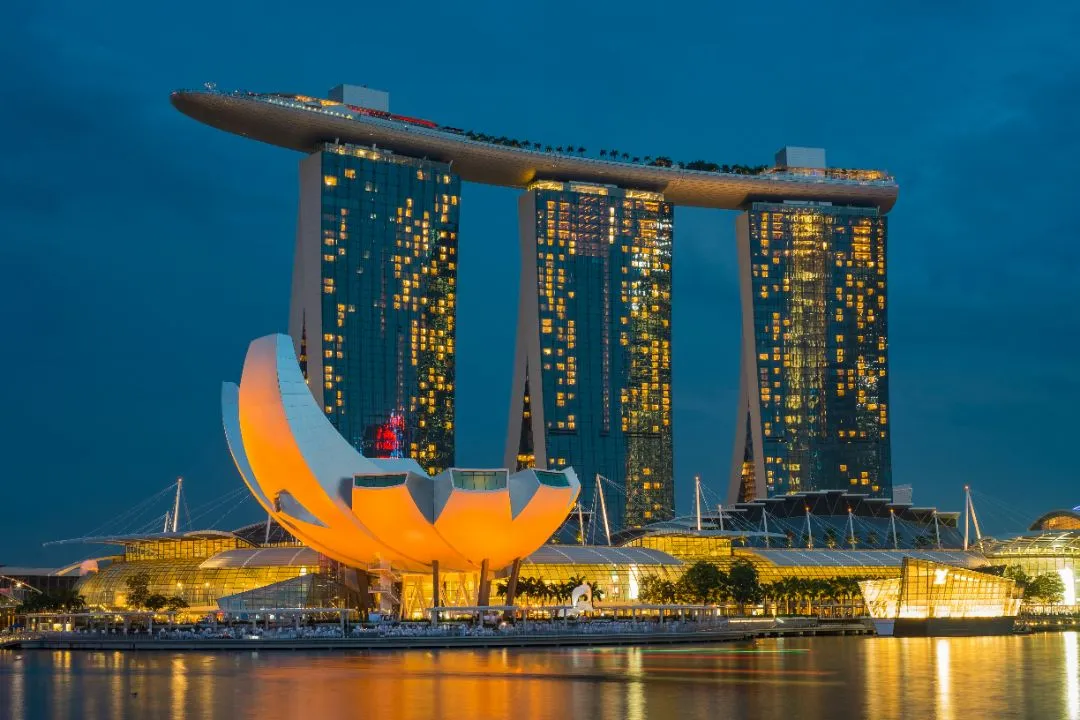
https://asset.coinness.com/en/news/d5d4ea99a0bf379f2ddebd4239153a09.jpg
Photo by Guo Xin Goh on Unsplash

Previous issues

The exploitation of public figures in financial scams is not a new phenomenon. Prime Minister Lee has been a recurrent target of such scams, dating back to 2018. At that time, the government issued public warnings about Bitcoin investment scams falsely claiming the Prime Minister’s endorsement. More recently, in July, another fake video featuring Lee Hsien Loong surfaced, prompting renewed public warnings.


In 2021, the Prime Minister’s name and photograph were used without his consent in an effort to sell cryptocurrency. The data was taken from his X (formerly Twitter) profile. At the time, Lee wrote:

“The site’s creators are anonymous, but I have sent an open tweet out to ask that my name and photo be removed from the site immediately, as I have nothing to do with the platform. I urge everyone to remain vigilant when dealing with cryptocurrency platforms.”


That was a much less sophisticated identity-related scam. More often than not, scammers and fraudsters tend to be early adopters of technology. That’s proving to be the case with the use of deep-fakes in this instance.


A need for caution

As he did in 2021, Prime Minister Lee has urged the public to exercise caution in light of this more recent incident. He advises against responding to scams promising guaranteed investment returns or giveaways.


There’s every sign that the Prime Minister’s warning is warranted. In September it emerged that six Singaporeans lost more than $100,000 when a scammer tricked them into buying tokens on a cryptocurrency trading platform. More recently, five Americans were conned out of $10 million in a scam that involved a spoofed domain of the former Singapore International Monetary Exchange (Simex).


This call for public vigilance is part of a broader government effort to address the surge in cyber fraud. These repeated incidents underscore the challenges posed by digital technologies in spreading misinformation and financial fraud.


More to Read
View All
Web3 & Enterprise·

Jun 30, 2023

Julius Baer Expands Crypto Wealth Management Services in Dubai

Julius Baer Expands Crypto Wealth Management Services in DubaiJulius Baer, a renowned Swiss private bank, is making strides in the world of digital assets with the expansion of its crypto wealth management services in Dubai.This move, reported by Bloomberg on Wednesday, represents the bank’s first major crypto product offering overseas. The Middle Eastern subsidiary of Julius Baer, JBME, has announced its intention to apply for a “digital assets license variation” to complement its existing permissions granted by the Dubai Financial Services Authority.If successful, this license variation will empower the company to offer advisory and custodial services for digital assets like Bitcoin, Ether, and other cryptocurrencies.Photo by Sascha Bosshard on UnsplashUAE “key geography”Jonathan Hayes, the head of digital assets development at Julius Baer, has underscored the United Arab Emirates (UAE) as a “key geography” for the bank’s expansion. He points to the region’s substantial economic development as a catalyst for venturing into the Dubai market.Julius Baer has already made strides in the crypto space within Switzerland by offering lending services to select crypto clients. This pioneering service allows customers to leverage their digital assets held by the bank. However, it is currently limited to clients with diversified portfolios that include traditional assets.Attracting international interestThe UAE, along with other individual Emirates in the country, has been actively striving to attract crypto businesses. As US authorities tighten regulations, numerous companies are seeking more crypto-friendly environments to operate in. It started to accept crypto business license applications in April. US crypto exchange Coinbase indicated its interest in locating a base there the following month.In Dubai, prominent cryptocurrency exchanges such as Binance Holdings Ltd., OKX, and Crypto.com have all submitted license applications to the Virtual Assets Regulatory Authority. Binance was among one of the first to secure a license while its understood that it may be looking towards the UAE as a strategic base for the company going forward. Meanwhile, another US crypto platform, Gemini, has suggested that it will now work towards obtaining a crypto license in the UAE.Julius Baer has witnessed a broad demand from affluent individual clients ranging in age from 25 to 70, according to Lucia Desmarquest, the Deputy Head of the bank’s central and eastern European division.Having first launched its crypto services in May of the preceding year, Julius Baer currently provides standard advice on digital assets to investors domiciled across 25 countries, including Luxembourg and Singapore.The bank’s wealth management services cover approximately the top 15 cryptocurrencies in the market. Each token undergoes meticulous due diligence and is subject to review by a dedicated panel.This expansion aligns with the broader trend of TradFi firms exploring opportunities in the digital assets space, as the industry continues to evolve and gain traction globally. Julius Baer’s expertise and established reputation position it well to navigate the evolving landscape of crypto wealth management and cater to the needs of its savvy clientele.

news
Policy & Regulation·

May 24, 2024

Thai regulator takes action against deceptive crypto ads

In an effort to safeguard crypto investors from falling prey to misleading advertisements, the Securities and Exchange Commission (SEC) of Thailand has intensified its scrutiny of promotional campaigns within the crypto sphere. Photo by Dave Kim on UnsplashBroker agent eventsOn April 29, the Bangkok Post reported that the SEC has raised concerns regarding the potential violation of local regulations through introducing broker agent (IBA) events. These events, the SEC clarified, may breach regulations as IBAs are only permitted to promote digital token services to deter speculation on cryptocurrencies, categorized as high-risk assets. IBAs, acting as local conduits for partner digital asset exchanges, typically earn commissions by onboarding clients within a specific market. Such practices are common for exchanges or brokers that don't directly operate in certain markets. Deputy Secretary-General Anek Yooyuen conveyed the commission's unease over crypto exchanges offering preferential treatment to onboard users. Yooyuen stated: "When operators organise sales promotions by offering rewards to entice people to use the service, this could encourage use of the service without considering the investment risks. This is especially the case for cryptocurrencies.” Warning of consequencesHe cautioned that failure to adhere to these guidelines would result in “punishment according to the law.” While cryptocurrency exchanges are legal in Thailand, they must secure local approval. Notably, last month, Thailand even greenlit asset management firms to launch private funds, offering Bitcoin exchange-traded funds (ETFs) exclusively to institutional and ultra-high-net-worth investors. Nonetheless, the country recently prohibited the sale of cryptocurrency lending products and mandated that exchanges prominently display risk warning messages. International regulatory trendThis move by the Thai SEC mirrors actions taken by regulators in other major crypto markets. For instance, the United Kingdom's Financial Conduct Authority (FCA) issued 450 alerts for illegal crypto ads in 2023 alone. Similarly, Spain’s principal securities market regulator, the National Stock Market Commission, denounced fraudulent crypto asset promotions in November 2023, emphasizing companies’ obligations to adhere to local laws. Thai advertising guidelines mandate businesses and advertisers to substantiate the “facts” presented in their campaigns, failing which could lead to legal repercussions. A recent incident provides a case in point. Hackers hijacked advertisements on Etherscan, redirecting users to phishing sites aimed at draining crypto wallets. Scam Sniffer, a blockchain investigation firm, attributed the widespread phishing campaign to the inadequate oversight by advertisement aggregators. The company made the following statement on the matter: “Etherscan aggregates ads from platforms like Coinzilla and Persona, where insufficient filtering could lead to exposure to phishing attempts.” The wallet drainer scam involves enticing users to counterfeit websites and coercing them to link their crypto wallets, enabling scammers to siphon funds into their own wallets without user authentication or consent. This is not the first time that the authorities in Thailand have homed in on crypto-related advertising. In August 2023, the Southeast Asian country’s Ministry of Digital Economy and Society (MDES) outlined that it had engaged with social media firm Meta, owner of Facebook, informing it that its response to the proliferation of fraudulent platform ads relative to crypto had been inadequate. 

news
Web3 & Enterprise·

Sep 29, 2023

Nomura Subsidiary Achieves In-Principle Approval in Abu Dhabi

Nomura Subsidiary Achieves In-Principle Approval in Abu DhabiThe digital assets subsidiary of Japanese financial services conglomerate Nomura has been granted in-principle approval by the Abu Dhabi Global Market (ADGM) to offer broker-dealer and asset/fund management services for both digital and traditional assets.Photo by Belinda Fewings on UnsplashPreliminary license to tradeThe development is a shot in the arm for Laser Digital Asset Management while serving to highlight Abu Dhabi’s growing prominence as a global center for digital assets, attracting prominent players such as Binance and Kraken.Led by CEO Jez Mohideen, Laser Digital is now on the path toward securing full financial services authorization in Abu Dhabi, subject to meeting undisclosed conditions specified in the approval. The company is enthusiastic about the ADGM’s transparent and comprehensive regulatory framework.Speaking to that, Mohideen stated: “We are thrilled to be part of their comprehensive and clear regulatory framework, which is creating a global hub for digital assets.”International free zoneThe ADGM, an international financial free zone situated in Abu Dhabi, covers nearly 15 square kilometers across two islands. It hosts a registration authority, regulatory authority, and a court system functioning under common law principles. This favorable regulatory ecosystem has been instrumental in attracting digital asset firms to establish a presence in the UAE’s capital.Laser Digital’s approval follows a series of recent cryptocurrency-related approvals in Abu Dhabi. Zodia Markets, backed by UK bank Standard Chartered, was recently granted permission to operate as a crypto broker, adding to the growing list of companies making strides in the region.Binance, one of the world’s largest cryptocurrency exchanges, received in-principle approval from the ADGM in April 2022 and subsequently obtained full financial services permission in November of the same year. Kraken, along with firms like UAE-based M2 and Bahrain-based Rain, have also received permissions to operate within the ADGM in recent years.Building on Dubai achievementLaser Digital’s approval in Abu Dhabi comes on the heels of its earlier achievement of obtaining an operating license from Dubai’s Virtual Asset Regulatory Authority (VARA). Alongside these regulatory milestones, Laser Digital introduced an institutional Bitcoin Adoption Fund in August. Despite its relatively short existence since its establishment in September 2022, the firm has made significant strides.Nomura’s engagement extends beyond Laser Digital, as it is also part of the Komainu joint venture alongside cryptocurrency firms CoinShares and Ledger. Komainu secured its operating license from Dubai’s VARA in August, contributing to the expanding community of crypto-focused businesses in the region.It is worth noting the UAE’s diversified approach to cryptocurrency regulation, offering five distinct regulatory regimes for cryptocurrencies, including the ADGM and VARA. Legal experts from White & Case have recently assessed these regulatory frameworks, highlighting the UAE’s commitment to fostering a progressive and well-regulated environment for digital assets.Nomura’s Laser Digital is well-positioned to play a pivotal role in the digital asset sector in Abu Dhabi, given that it’s leveraging the favorable regulatory environment of the ADGM and the UAE’s dedication to becoming a global digital asset hub.

news
Loading