Top

HashPalette acquisition sees Aptos Labs enter Japanese market

Web3 & Enterprise·October 04, 2024, 9:05 AM

Aptos Labs, the developers behind the Aptos layer-1 blockchain, has entered the Japanese market through the acquisition of HashPalette, a blockchain network concerned with the issuance, management and distribution of non-fungible tokens (NFTs).


HashPalette informed stakeholders of the development on Oct. through an X post, alongside a press release published on its behalf by Japanese public relations company PR Times. 

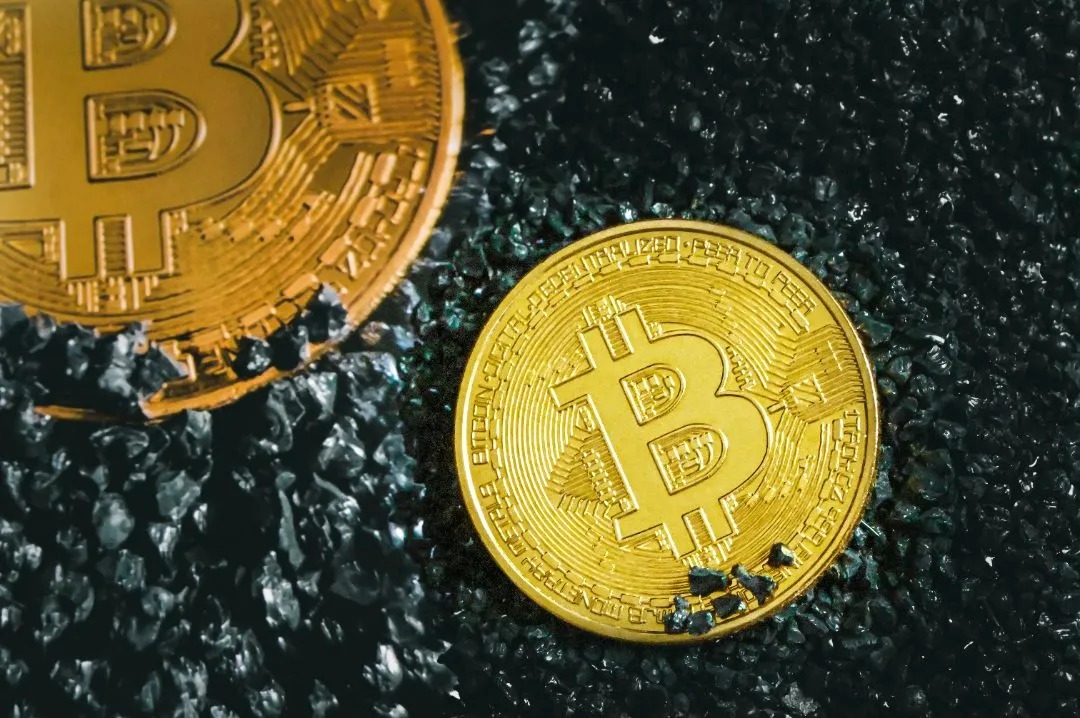
https://asset.coinness.com/en/news/ea0a2491a33f438772ea04aa4e435e84.webp
Photo by Tianshu Liu on Unsplash

Expanding Asian presence

Up until now, HashPalette has been a wholly owned subsidiary of HashPort, a blockchain-related consulting and infrastructure provider based in Tokyo. This acquisition sees the project transfer to being a wholly owned subsidiary of Aptos Labs. Accordingly, this will mean that applications developed by HashPalette will be migrated onto the Aptos Network. Similarly, the Palette Chain blockchain will migrate over to Aptos.


From Aptos Labs’ perspective, the acquisition enables it to expand its blockchain ecosystem in Japan and within Asia more broadly. Aptos Labs Co-Founder Mo Shaikh described the acquisition as an investment in “the talented builders and creators of the region.” 


Deal pending approvals, closing conditions

While the parties have announced the acquisition, the deal is still subject to required approvals being granted, together with various closing conditions related to the sale being met. Addressing the need to close out the deal, HashPalette tweeted:

“HashPort and Aptos Labs will work closely together in the transition and will take great care to ensure that all stakeholders, including PLT and ELF holders, are not disadvantaged by the migration.”


The PLT token is HashPalette’s native token. According to the project’s whitepaper, it has utility when it comes to the payment of NFT issuance fees and node management fees relative to the Palette Chain. Additionally, it can be used to pay for NFTs issued on the Palette Chain and for subscription payments related to applications developed on top of the network.


The ELF token is a crypto asset utilized within THE LAND ELF Crossing, an NFT farming game which was developed by HashPalette and issued on the Palette Chain. The game is being marketed in Japan with the assistance of Animoca Brands following a partnership earlier this year.


The companies have agreed to gradually migrate NFTs which had been issued on Palette Chain, relative to the EXPO2025 digital wallet developed by HashPort, to the Aptos Network. Once that migration has been achieved, it’s envisaged that the Aptos Network will become the only blockchain associated with the EXPO2025 digital wallet.


Unresolved Palette Chain issues

From the point of view of the development team behind HashPalette, it was outlined in the press release that the move goes beyond a simple financial transaction. It acknowledged that “Palette Chain still has many issues.” 


Against that background, the team believes that in order to further accelerate the social implementation of Web3, it has “considered how to make services built on Palette Chain more scalable and usable, and to enable smoother access to the global Web3 market.” That consideration has brought the project team to the conclusion that migrating to the Aptos Network offers the best path forward.


At the time of writing, Aptos’ APT token was trading at $8.93, up 12.44% over the course of 24 hours, according to CoinMarketCap data.

More to Read
View All
Web3 & Enterprise·

Apr 16, 2025

Bitdeer pivots amid onset of Trump’s tariff war

In response to U.S. President Donald Trump’s imposition of tariffs on foreign imports into the United States, Singapore-based and Nasdaq-listed Bitdeer has pivoted in an effort to handle this latest challenge. In a discussion with Bloomberg, Jeff LaBerge, the company’s head of capital markets and strategic initiatives, said that rather than concentrating on sales and exporting crypto mining rigs, the company plans to utilize those rigs itself within its own mining operations.Photo by Traxer on UnsplashLaBerge stated: “Our plan going forward is to prioritize our self-mining.” 90-day windowThe company is also planning to take advantage of a 90-day tariff suspension period that the Trump administration put in place earlier this month, to ship mining machines from Southeast Asia to the United States.  In tandem with this short-term push on U.S. exports, it is expected that miners will focus on buying hardware during this time. Jaran Mellerud, CEO of Hashlabs Mining, told Cointelegraph last week that in the short term, there is likely to be a spike in mining rig imports into the U.S. Some reports have suggested that U.S.-based mining firms have chartered flights in an effort to quickly import mining equipment and avoid tariffs of up to 104%. Additional capital overheads for U.S. minersOver the longer term, the crypto mining services company CEO believes that tariffs will hurt U.S.-based miners, increasing their capital costs to a greater extent than in the case of overseas-based mining operations. Earlier this month Kristian Csepcsar, chief marketing officer (CMO) at Bitcoin mining technology firm, Braiins, similarly claimed that Trump administration tariff policy would likely harm domestic mining companies, while benefiting those located in regions such as Russia and Kazakhstan.  In another effort to deal with the challenge of tariffs on its products entering the United States, Bitdeer anticipates that it will begin production of its mining equipment in the U.S. sometime during H2 2025. Much has changed for the Singapore-based firm over the course of a short period of time. A month ago LaBerge told CoinDesk about its efforts to challenge the leading ASIC Bitcoin mining equipment manufacturers, Bitmain and MicroBT. He said that Bitdeer wants to become “the top player in the market,” while believing that it has the technology and know-how to do so. Challenging market conditionsEven before this tariff war bubbled over recently, the environment for Bitcoin miners was already proving to be difficult. Miners had been selling off Bitcoin reserves in recent weeks, taking profits while anticipating lower Bitcoin prices in the near future. American multinational financial services firm JPMorgan estimated recently that the market cap of the 14 U.S.-listed Bitcoin miners had fallen by 25% in March, writing off $6 billion in value in what was the third worst month for miners on record. Last month Bernstein analysts cut their 2025 price targets for a range of publicly-listed Bitcoin miners. Miners have been adapting to their business environment by upgrading equipment, cutting costs and diversifying into AI data hosting.

news
Policy & Regulation·

May 12, 2023

MaskEX Gets Initial Regulatory Approval in UAE

MaskEX Gets Initial Regulatory Approval in UAEThe online cryptocurrency trading platform and wallet provider, MaskEX has been given initial regulatory approval by a regulator in the United Arab Emirates (UAE).Photo by Carlos Alberto Gómez Iñiguez on UnsplashThe trading platform received outline approval from the Virtual Assets Regulatory Authority (VARA) in Dubai, where the company is headquartered. While the business has been around since 2021, this first compliance step is significant as it seeks to build and extend its footprint within the UAE and the broader Middle East and North Africa (MENA) region.Regulatory significanceTo say that regulation has lagged the development of crypto assets on a global basis is an understatement. However, the high profile and spectacular crypto business failures in 2022 have really captured the attention of regulators and lawmakers. Many point to inadequate regulation as a key cause of those failures. With that, most regulators recognize that it won’t be acceptable to the broader public to have such a loss impact on ordinary investors in a rerun of the collapses of 2022.VARA has been one of the most proactive regulators in that respect. The Authority has developed a regulatory framework, culminating in its current licensing regimen for crypto businesses. It wouldn’t have been feasible for MaskEX to trade without obtaining regulatory approval.Regulatory actionIn February, VARA issued Open Exchange (OPNX), a platform that specializes in the trading of crypto bankruptcy claims, with a cease and desist order, relative to the establishment of that business in Dubai. Last month, the Regulatory Authority issued an investor alert related to OPNX, warning the investing public that OPNX was not regulated by them and that investing in or using the platform was risky.That culminated with VARA sending OPNXs founders and CEO a formal warning letter. With that sort of action playing out, it’s no surprise that MaskEX has tried to go the compliant route, acquiring that initial approval.The firm is not alone in taking that approach. On May 1, BitOasis, another crypto trading platform headquartered in Dubai, became the first entity to be awarded a broker-dealer license.This milestone event for MaskEX means that it can now complete entity formation, expand its team, secure banking services and generally, open for business. In its application MaskEX requested permission to engage in the activity of acting as an exchange, offer borrowing and lending services, as well as to act as a broker and crypto asset manager.Crypto market to be driven by ME and Central AsiaOn social media on Thursday, MaskEXs VP and Chief Strategy Officer (CSO) Ben Caselin, said that the initial approval forms part of the firm’s application for a Full Market Product (FMP) license. Caselin used the opportunity to post a video offering a sneak peek at the firm’s new Dubai offices. “MaskEX will be the first crypto exchange to publicly disclose their headquarters and even allow the general public to visit,” he said.Speaking at Finoverse Arabia this week, Caselin also said that “the next crypto bull market is once again going to be driven by Asia, and the unsurprising surprise will come from the Middle East and Central Asia.” That’s a prediction that’s being floated by quite a number of industry commentators, and with the US shooting itself in the foot in its approach to digital assets, it sounds like a reasonable prediction.

news
Web3 & Enterprise·

Nov 15, 2024

Coincheck to become first Japanese crypto exchange to list on Nasdaq

Coincheck, a subsidiary of Monex Group, a Tokyo-based global financial services firm, has gained U.S. Securities and Exchange Commission (SEC) approval to become the first Japanese crypto exchange to list on the Nasdaq, an American stock exchange.Photo by Denys Nevozhai on UnsplashSPAC mergerThe approval by the U.S. regulator was filed on Nov. 13. The listing has been enabled due to the company’s decision to enter into a merger with a special purpose acquisition company (SPAC), namely Thunder Bridge Capital Partners (TBCP).  A SPAC raises money through an initial public offering (IPO) to either acquire or merge with an existing company. Opting for a SPAC means that Coincheck can forego a lot of the time and expense that would be necessary if it attempted to effect an IPO on its own. Parent company Monex Group published a statement outlining that Coincheck CEO Yuko Seimei had “been diligently preparing for listing its common stock on the Nasdaq Global Market (“Nasdaq”) through a previously announced business combination with Thunder Bridge Capital Partners.” Possible Nasdaq listing on Dec. 10 In a press release issued by TBCP, the company claimed that the proposed merger is anticipated to close on or about Dec. 10, 2024. That eventuality is subject to stockholder approval, Nasdaq approval and specific closing conditions. Consequently, Coincheck’s Nasdaq listing could potentially happen as early as Dec. 10. TBCP is holding a shareholder vote on the merger on Dec. 5. If all conditions are satisfied to pave the way for listing, the company’s stock will be listed using CNCK as the Nasdaq stock ticker. Once the merger and Nasdaq listing have been accomplished, Coincheck will still remain a subsidiary of Monex Group. The merged business will gain access to $237 million, held in trust by TBCP, with Monex retaining an 82% stake in the company. Furthermore, Thunder Bridge CEO Gary Simanson will lead the new company. The $1.25 billion merger had been in the works since 2022, having faced multiple delays on the path towards merger completion and Nasdaq listing. Coincheck finally filed with the SEC to merge back in May. Parent company Monex has other interests in the digital asset sector beyond its involvement with Coincheck. Last December the company acquired a majority stake in 3iQ Digital Holdings, a Canadian crypto asset management company.Monex has just launched a new brand, Monex Web3, comprising of Monex’s Web3 business portfolio. It also offers a Web3 consulting business, using its local know-how to guide Web3 startups in entering the Japanese market. Coincheck has also engaged in partnerships to assist other firms in gaining access to the Japanese market. Earlier this year the leading Japanese crypto exchange partnered with USD Coin (USDC) stablecoin issuer Circle, in an effort to expand USDC access within the local market. In January 2018 the exchange suffered what was at the time the world’s largest ever digital asset theft, losing $534 million in virtual assets in a hack of the platform.

news
Loading