Top

UBS extends crypto ETF access to clients in Hong Kong

Web3 & Enterprise·November 11, 2023, 1:08 AM

Multinational investment bank UBS Group AG has followed suit with competitors like HSBC, enabling its wealthy clients in Hong Kong to engage in the trading of select crypto-linked exchange-traded funds (ETFs).
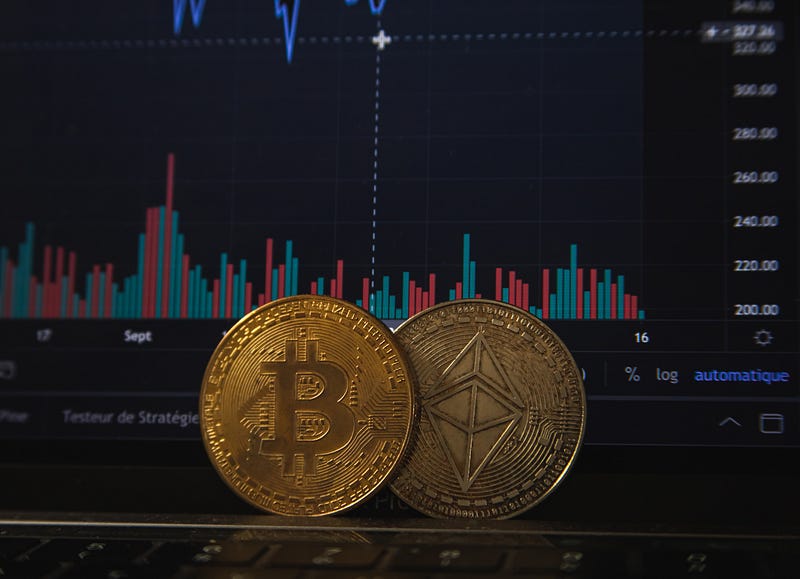
Photo by Pierre Borthiry — Peiobty on Unsplash


Regulatory approval to offer three ETFs

This move, reported by Bloomberg on Thursday, aligns with Hong Kong’s efforts to establish itself as a prominent digital asset hub. Citing an undisclosed source, Bloomberg outlined that three crypto ETFs, namely the Samsung Bitcoin Futures Active, CSOP Bitcoin Futures and CSOP Ether Futures, have received approval from the Securities and Futures Commission (SFC) and will be available on UBS’s Hong Kong platform starting this Friday.

The inclusion of these ETFs allows UBS clients to diversify their investment portfolios, offering exposure to the dynamic crypto market. Educational materials will also be accessible to clients, aiding in their understanding of associated risks. While UBS declined to comment on this development, it marks a strategic move by the Swiss bank to tap into the growing demand for crypto-related investment products.

In June, Hong Kong’s largest bank, HSBC, moved to expand its offering to include crypto ETFs. It has made available the very same crypto ETFs as UBS is about to offer.


Hong Kong’s crypto credentials

Hong Kong introduced a comprehensive digital asset regulatory regime on June 1, aiming to safeguard investors while fostering the Chinese autonomous territory’s emergence as a digital financial center. The SFC permits retail investors to trade major tokens on licensed exchanges under these regulations.

Despite these regulatory advancements, Hong Kong faced setbacks, notably with the recent issues surrounding the unlicensed JPEX exchange, which led to increased scrutiny. The establishment of a joint task force between the SFC and the police aims to monitor and prevent suspicious activities within the crypto industry.

Globally, financial institutions remain cautious about compliance risks in the crypto sector. However, signs of increased engagement are emerging. DBS, Singapore’s largest bank, has expressed its intention to seek a license to offer crypto services to Hong Kong customers. ZA Bank, the largest virtual bank in Hong Kong, plans to provide token-to-fiat currency conversions over licensed platforms. Furthermore, SEBA Bank, backed by the Julius Baer Group, has obtained a license for its unit to offer crypto services in Hong Kong.


Unlocking ETF potential

A report published by the Hong Kong Stock Exchange in April claimed that crypto ETFs possess the potential to unlock the next phase of digital asset expansion in Asia. Earlier this week, it emerged that regulators were open to the notion of allowing retail access to spot crypto ETFs in Hong Kong, provided that the necessary regulatory approvals and checks were in place.

The inclusion of the CSOP Bitcoin Futures and CSOP Ether Futures funds on UBS’s platform highlights the gradual recovery of the crypto sector from the market rout experienced in 2022. Despite the previous market challenges and collapses, the prospect of the U.S. allowing its first spot Bitcoin ETFs has contributed to a resurgence in the largest token’s price this year. The move by UBS aligns with the broader trend of financial institutions cautiously embracing the crypto economy, indicating a shifting attitude toward these digital assets in the financial mainstream.

More to Read
View All
Policy & Regulation·

Jan 13, 2024

Hong Kong lawmaker suggests action on ETFs as asset managers explore potential

In the immediate aftermath of the approval of spot bitcoin exchange-traded funds (ETFs) in the United States earlier this week, a Hong Kong legislator has spoken out to encourage a proactive response within the Chinese autonomous territory, while asset managers appear to be responding accordingly.Photo by Simon Zhu on UnsplashCompetitive responseLawmaker Johnny Ng has called on the local government to swiftly embrace the recent ETF approval in the United States. In a post on X, Ng emphasized the need for Hong Kong to proactively lead the way in the cryptocurrency space, fostering innovation to secure a global position amidst intense competition. Ng highlighted the Securities and Futures Commission's (SFC) previous expression of readiness to accept applications for spot bitcoin ETFs. He urged Hong Kong to capitalize on the rapidly evolving virtual asset sector, implementing policies and products that position the city as a global hub for virtual assets. "This presents an opportunity to solidify Hong Kong’s position as a global hub for virtual assets," Ng stated, emphasizing the importance of seizing this moment in the market's development. In December, Hong Kong's regulatory bodies, the SFC and the Hong Kong Monetary Authority (HKMA), reviewed their existing policies, releasing circulars that outlined the requirements for spot crypto ETFs. Fund managers explore ETFsHashKey, a licensed crypto exchange in Hong Kong, confirmed its potential participation in spot crypto ETFs through engaging in crypto transactions associated with ETFs and providing crypto custody services. The company, which obtained a license from the SFC to offer retail crypto trading services in August, positions itself to play a pivotal role in the emerging market. Livio Weng, COO of the Hong Kong-based crypto exchange, revealed that approximately ten fund managers, backed by Chinese capital and others from Asia and Europe, are exploring the launch of spot crypto ETFs in Hong Kong. Weng, in an interview with Chinese financial news media Caixin, disclosed that seven or eight of these fund managers have already been in contact with the SFC, forming teams to design investment products. Highlighting the importance of education in the crypto space, Ng called on the Hong Kong government to prioritize public education. He stressed the need to increase awareness of virtual assets among the public while simultaneously reducing opportunities for illicit activities involving digital assets. Substantial impactIn an interview earlier this week, Yat Siu, the co-founder of Hong Kong-based crypto venture capital and game software firm Animoca Brands, expressed the view that the spot bitcoin ETF approval in the U.S. would have a more substantial impact on the overall development of crypto in Asia. As Hong Kong prepares to pave the way for spot crypto ETFs, the SFC and the HKMA have already reviewed existing policies, outlining the requirements for such investment products. The December circular from the SFC emphasized that transactions involving spot crypto ETFs should occur through licensed crypto platforms or authorized financial institutions, ensuring regulatory compliance in the growing crypto market. 

news
Policy & Regulation·

Jun 27, 2025

Hong Kong releases ‘LEAP’ framework for digital assets

The Financial Services and the Treasury Bureau (FSTB), a policy bureau attached to the government of the special administrative region of Hong Kong, has released a new digital assets policy statement, incorporating its “LEAP” framework for the digital assets industry within the city. The document, outlining the government’s objectives and guiding principles relative to the digital assets sector, builds on its first policy statement for the industry which it published in October 2022.Photo by Harry Shum on PexelsA ‘LEAP’ towards an integrated digital assets ecosystemThe FSTB suggests that this new policy statement builds upon foundational initiatives pioneered through the initial policy statement, asserting that “Hong Kong is poised to 'LEAP' towards a trusted, sustainable, and deeply integrated [Digital Assets] ecosystem embedded within the real economy.” The government agency also suggested that this “Policy Statement 2.0” also builds on the “ASPIRe” digital asset regulatory roadmap introduced by the Securities and Futures Commission (SFC) in February, outlining the next phase of digital asset sector development in Hong Kong. Strengthening global hub statusThe government has set out to home in on strategic measures to bring about greater liquidity in digital asset markets and diversify digital asset product offerings, while strengthening the Chinese autonomous territory’s position as a global hub for the digital asset sector. “LEAP” is an acronym for the proposed initiatives that underpin the new framework, including: - Legal and regulatory streamlining- Expanding the suite of tokenized products- Advancing use cases and cross-sectoral collaboration- People and partnership development The framework focuses heavily on the tokenization of real-world assets (RWA), with particular emphasis on bond tokenization. In February 2023, Hong Kong pioneered the issuance of the world’s first-ever tokenized government green bond. Building on that, it now seeks to bring about the regularization of the issuance of tokenized government bonds. The Hong Kong government would also like to see tokenization efforts expanding into “a broader range of assets and financial instruments.” It cited sectors such as precious metals, non-ferrous metals and renewable energy as candidates for tokenization. Promoting tokenized ETFsThe authorities are also encouraging tokenized exchange-traded funds (ETFs), with plans to introduce a stamp duty waiver for these products as an incentive. Additionally, the Hong Kong government is interested in nurturing the development of secondary market trading of such tokenized ETF products, whether that’s through digital asset trading platforms or other channels. The framework considers the further development of stablecoins. The city’s new licensing regimen for stablecoin issuers commences on Aug. 1. The FSTB maintains that stablecoins have the potential “to transform payments, supply chain management, and capital market activities by offering a cost-effective and efficient alternative to traditional systems.” In order to capitalize on this potential, the Hong Kong government, together with the city’s regulators, intends to enable licensed stablecoin issuers in the city “to explore and implement different stablecoin use cases.” Cyberport, a Hong Kong business park and digital technology incubator that hosts in excess of 1,650 startups, will also extend its support through its incubation ecosystem to further the objectives set out in the Hong Kong government’s new digital assets policy statement.

news
Policy & Regulation·

Dec 23, 2023

3AC liquidators estimate 46% recovery while BVI court freezes $1B

3AC liquidators estimate 46% recovery while BVI court freezes $1BThe joint liquidators of the now-defunct Singaporean crypto hedge fund Three Arrows Capital (3AC) have provided creditors with an estimated 45.74% recovery rate for their claims in the bankrupt estate. Meanwhile, in parallel proceedings in the British Virgin Islands (BVI), a court has frozen $1 billion of founders’ assets.According to The Block, the details were disclosed in a December report to creditors by joint liquidators Russell Crumpler and Christopher Farmer of Teneo, the firm appointed to oversee the liquidation of the failed business.$1.16B in assetsAs of Dec. 18, the estimated value of 3AC’s assets was reported to be $1.16 billion, while claims totaling $2.7 billion are expected to be recognized for distribution. The liquidators highlighted that settlements in litigation against various parties, including DCG, Genesis and BlockFi, increased reported assets by an estimated $292 million. It’s important to note that the BlockFi settlement is still pending approval.A total of 154 claims, valued at $3.4 billion, were filed against the 3AC estate. The report indicates that $200 million of claims were not admitted for distribution, and $322 million in claims have either been rejected or are expected to be rejected. Additionally, $76 million in claims are currently under dispute. The report reveals that initial distributions to creditors are being planned for the first quarter of the upcoming year.Illiquid tokensThe breakdown of assets reveals that a large majority are illiquid tokens, subject to vesting periods, comprising 82% of the total. Only 6% of the portfolio is liquid, while equity and investments account for 6.9% and 4.8% is in cash. These illiquid tokens, totaling $563 million at current prices, consist of 13 different tokens with vesting schedules unlocking assets over the next three years, reaching $200 million by the end of 2024.To date, the liquidators have staked some of these tokens, resulting in $5.4 million in staking rewards. Liquidation efforts, including the sale of $34.5 million worth of liquid tokens and $15 million in NFTs, along with other asset sales, have generated a total of $66 million.Photo by Kemp Fuller on UnsplashFrozen assetsIn a related development, Bloomberg reported on Thursday that a British Virgin Islands court has frozen assets totaling $1.1 billion belonging to 3AC co-founders Su Zhu and Kyle Davies, along with Davies’ wife Kelly Chen. The liquidators filed a claim for insolvent trading against the founders for $1.078 billion, with additional claims against Davies for $66 million and Chen for $4.6 million.Teneo outlined the rationale behind the move in the following statement it made to Decrypt:“The worldwide freezing order has been sought in connection with claims that are being pursued by the liquidators that allege, amongst other things, that the Founders should be held responsible for causing 3AC’s position to deteriorate by an amount that is equivalent to the value of the freezing orders sought.”Su Zhu, who was under house arrest for the last few weeks, became free on Dec. 20. Zhu had been arrested in Singapore on Sept. 29 and sentenced to four months imprisonment, serving two-thirds of his sentence under house arrest.Throughout the bankruptcy proceedings, legal fees have accumulated to $49.7 million while the report suggests ongoing efforts to maximize creditor recovery.

news
Loading