Top

Suspects emerge in Taiwan in ongoing JPEX scandal fallout

Policy & Regulation·November 10, 2023, 12:43 AM

In the ongoing saga surrounding the collapse of Dubai-headquartered cryptocurrency exchange JPEX, Taiwanese prosecutors have identified new suspects, marking a significant development in the case.

The Taipei District Prosecutors Office (TDPO) has requested the custody of Chang Tung-ying, chief partner at JPEX’s Taiwan office, over allegations of fraud. That’s according to a report by local TV channel TVBS News on Thursday.
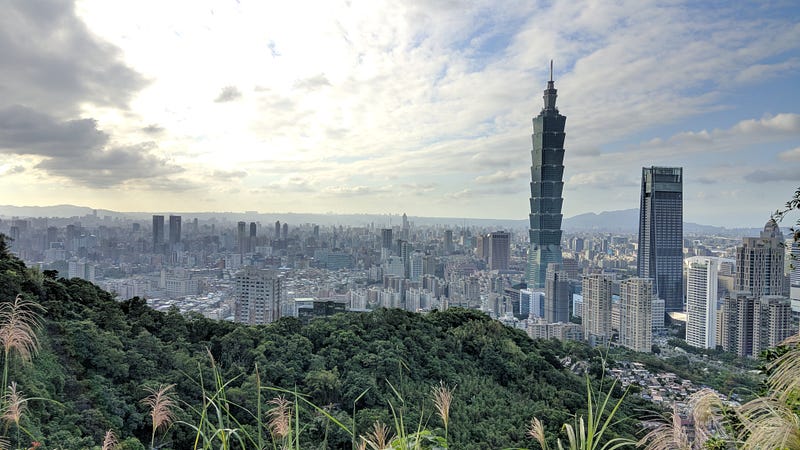
Photo by Ricky Zeng on Unsplash


Money laundering and Banking Act violations

This latest development brings a new twist to the scandal, which has largely been playing out in the Chinese territory of Hong Kong. The TDPO reportedly conducted searches at nine locations linked to the JPEX investigation. Chang, along with three other individuals, including JPEX lecturer Shih Yu-sheng (also known as Shi Yu), was summoned by the authorities. Chang and Shih are being investigated for violations of the Banking Act and the Money Laundering Control Act.

During the investigation, JPEX salespersons Liu Chien-fu and Niu Keng-sheng were released, with Liu being granted bail of 50,000 New Taiwan dollars ($1,550). Niu, the registered person in charge of JPEX Taiwan, was released after questioning.


Celebrity promoter focus

The report also revealed that Nine Chen, a Taiwanese celebrity and singer who previously served as a brand ambassador for JPEX, was summoned by prosecutors. He has cooperated with law enforcement in the role of a witness to the alleged fraud who has testified to illicit activity carried out by the platform. However, it is now understood that recent events have developed such that Chen is now being treated as a defendant.

This action resonates with actions taken by the authorities in Hong Kong some weeks ago in the earlier stages of investigation into this affair. In September, one of the first actions taken by Hong Kong law enforcement was the arrest and detention of social media influencer and former lawyer Joseph Lam, known to followers as “Jolamchok” on the Instagram platform.


Alleged liquidity crisis

JPEX, once a successful crypto exchange, abruptly halted some services in mid-September, citing a liquidity crisis triggered by alleged “unfair treatment” from institutions in Hong Kong. The sudden implosion led to accusations of misleading investors regarding the application for a crypto trading license and other issues.

The scandal surrounding JPEX has escalated into a major industry concern, prompting investigations by Hong Kong authorities. Over 2,000 complaints from JPEX users, reporting losses of nearly $180 million, have triggered significant regulatory attention.

As investigations progressed in Hong Kong, the authorities took the decision to block access to the platform, with the platform responding by advising customers to circumvent this restriction through the use of a virtual private network (VPN).

As of September 25, law enforcement has arrested at least 11 alleged suspects in the JPEX case, while the alleged masterminds remain at large. At that time, Hong Kong’s Securities and Futures Commission (SFC) pledged to renew its efforts to combat unregulated crypto platforms in Hong Kong.

A survey conducted by the Hong Kong University of Science and Technology (HKUST) business school has indicated that the affair has had a negative impact on public sentiment towards crypto more recently.


More to Read
View All
Markets·

Apr 21, 2023

True Potential of Asian Crypto ETFs Yet to Be Realized

True Potential of Asian Crypto ETFs Yet to Be RealizedA recently published report by Hong Kong Exchanges and Clearing Ltd. (HKEX), the Hong Kong stock exchange, has found that crypto exchange traded funds (ETFs) have the potential to play a significant part in unlocking the next phase of digital asset expansion in Asia.©Pexels/Burak The WeekenderThe report, titled “Crypto ETF: Key to unlocking the next phase of digital asset growth in Asia,” highlights how crypto ETFs could attract more institutional investors and lead to increased liquidity in the digital asset market. Furthermore, HKEX claims that the ETF investment mechanism can play its part in offering a more regulated and safe manner through which investors can gain exposure to digital assets.Regulatory progressWhile the report cites an Asian regulatory environment that is becoming increasingly more supportive of digital assets of late, it still identifies a need for further progress to be made to improve the level of regulatory clarity and to provide a truly standardized approach to digital assets. That, it says, will result in crypto ETFs becoming more accessible, offering a diversified way in which the investor can access and gain exposure to digital assets in Asia.Nonetheless, HKEX applauds the work done thus far by regulatory authorities in Hong Kong and Singapore, where regulatory frameworks relative to crypto ETFs have been implemented. Those are measures that the Hong Kong stock exchange believes will increase investor confidence, and in turn, bring about further adoption of digital assets.Modest daily trading volumeBetween December 16 and February 7 the two Bitcoin ETFs and one Ether ETF listed on the Hong Kong stock exchange achieved a daily trading volume of $1.19 million. That’s rather underwhelming when compared with the $3 billion in daily volume being achieved by the Chicago Mercantile Exchange (CME) relative to its Bitcoin and Ether futures ETF in the United States. On the New York stock exchange ProShares Bitcoin Strategy ETF achieves a daily average trading volume of $196 million.These findings are a bit counter-intuitive given the contrasting regulatory approaches in the two territories. In the US, regulators have failed to approve a physically settled Bitcoin ETF. Furthermore, the Securities and Exchange Commission (SEC) has denied the attempts of Grayscale Bitcoin Investment Trust (GBTC) to convert the Bitcoin fund into an ETF. Meanwhile, Hong Kong has much more regulatory clarity but yet trading volume in crypto-related ETFs remains minuscule by comparison with the United States.Despite that, the report remains upbeat with regard to what can be achieved in the market with crypto-related ETFs. It makes a case for crypto ETFs as a means for traditional financial institutions to enter the digital assets market with relative ease. Similarly, it sees a role for global stock exchanges in facilitating future growth of crypto-related ETFs and in developing new ETF products that could unlock access to specific digital assets or bespoke investment strategies.

news
Policy & Regulation·

Nov 02, 2023

Exhibition in Goyang City presents blockchain’s use in digital media

Exhibition in Goyang City presents blockchain’s use in digital mediaDigital Media Tech Show 2023 (DMTS 2023) is underway from today, Nov. 2, through Nov. 4 in Hall 4 at the Korea International Exhibition Center, commonly known as KINTEX, in Goyang City. The event gives audiences a chance to explore the present and future of digital content and cutting-edge technologies of the Fourth Industrial Revolution.Photo by Julius Drost on UnsplashFrom smart tech to NFTsThe exhibition explores cutting-edge realms, including smart technology, media and content innovations, extended reality and the metaverse as well as the ever-evolving world of NFTs and blockchain. These technologies not only enhance content creation and distribution but also amplify its value and reach.DMTS is hosted by Gyeonggi Province and Goyang City. It’s organized by KINTEX, the Goyang Industry Promotion Agency and the Korean Commission for Corporate Partnership, with sponsorship from the Ministry of Science and ICT.Last year, the show saw 153 companies display 419 booths and welcomed buyers from 24 countries. The event generated KRW 20.7 billion ($15.4 million) from consultations and KRW 12.1 billion from contracts.Two more simultaneous exhibitionsConcurrently, two other major exhibitions at KINTEX captivate visitors. The Digital Future Show in Hall 5 presents glimpses of future lifestyles, highlighting virtual reality and the metaverse. Meanwhile, Contents Korea in Hall 3 focuses on a wide range of content assets, including movies, games, and music. It also explores their ties to intellectual property, the technologies behind their creation, and marketing strategies. Hosting these shows simultaneously at KINTEX is anticipated to produce a synergistic impact, drawing domestic and international buyers.Lee Dong-hwan, Mayor of Goyang City, underlined the city’s strategic focus on nurturing emerging sectors like video production, content, and drones. He also conveyed his hope that the exhibition would enhance collaboration among top-tier companies and spotlight Goyang as a central gathering place for high-tech businesses.

news
Web3 & Enterprise·

Sep 29, 2023

Shanghai’s Blockchain Development Plan Paves the Way for Web3 Innovation

Shanghai’s Blockchain Development Plan Paves the Way for Web3 InnovationShanghai has set its sights on a global leadership role in blockchain technology by 2025. This commitment comes following the recent unveiling of an action plan by the Shanghai municipal government, designed to accelerate the city’s blockchain technical development.The plan, published on Wednesday, places emphasis on several critical aspects of the blockchain ecosystem, reaffirming Shanghai’s dedication to advancing Web3 technologies.Photo by Vin Jack on UnsplashTargeting key areas in blockchainUnder this comprehensive plan, Shanghai aims to achieve significant breakthroughs in multiple key areas within the blockchain realm. These include enhancing blockchain system security, advancing cryptographic algorithms, developing specialized blockchain processors, refining smart contract capabilities, achieving cross-chain interoperability, optimizing storage solutions, enhancing privacy computing, and establishing robust regulatory frameworks.These advancements will serve as pillars supporting the city’s digital transformation across various sectors, such as government affairs, cross-border trade, supply chain management, finance, the metaverse, and data element circulation.Human capital development stands as a central pillar of Shanghai’s blockchain strategy. To ensure a well-rounded and skilled workforce in the blockchain industry, the plan encourages research institutes and companies to leverage China’s foreign talent recognition standards to attract blockchain professionals.Furthermore, the city aims to guide educational institutions and businesses in nurturing young talents within the blockchain sector. Interdisciplinary and cross-industry platforms will be created to facilitate talent exchange and provide opportunities for growth and leadership.Zeroing in on ZK proofsOne notable objective within the plan is the advancement of zero-knowledge proofs, a cryptographic technique enabling parties to validate the authenticity of statements without disclosing specific information. Shanghai is committed to improving the efficiency and usability of zero-knowledge proof protocols, with a clear target of doubling efficiency by 2025.Major Chinese tech giants, including Alibaba and Tencent, have been actively developing their consortium blockchains while contributing significantly to the country’s leadership in blockchain innovation. Additionally, Beijing released a white paper in May with a strong emphasis on fostering growth and innovation in the Web3 industry. This positions the city as a global hub for digital economic advancements.Building upon 3-year action planShanghai’s determination to excel in blockchain development is not a recent occurrence. In June, the city unveiled a comprehensive document outlining its ambitious plans to enhance blockchain infrastructure by 2025. It also explored potential collaborations with international cities like Hong Kong and Singapore to test cross-chain applications. Despite China’s strict measures against cryptocurrency transactions in September 2021, the country remains optimistic about the potential of domestic blockchain technology.Shanghai’s ambitious blockchain development plan underscores China’s determination to lead in the blockchain space and reinforces its commitment to technological innovation and digital transformation. Leveraging its strengths in research, talent cultivation, and strategic partnerships, the city “on the sea” is positioning itself to make substantial contributions to the evolving landscape of Web3 technologies. By 2025, it aims to emerge as a global leader in blockchain innovation, setting a precedent for other cities worldwide.

news
Loading