Top

Seoul police arrest 24 in $11.6M crypto investment scam

Policy & Regulation·November 08, 2023, 3:30 AM

Forty-nine individuals involved with six investment fraud rings, which ran fraudulent cryptocurrency investment websites promising returns of 500% on the day of the investment, have been referred to South Korean prosecutors, according to a report by local news outlet Edaily. Korean police have arrested and detained 24 members of these syndicates and issued Interpol red notices for nine individuals, including two leaders based abroad.

The Cyber Investigation Unit of the Seoul Metropolitan Police Agency (SMPA) announced on Tuesday (local time) that they have handed over a total of 49 individuals involved in the fraudulent scheme to the prosecution. These individuals collectively defrauded 253 victims out of KRW 15.1 billion ($11.6 million) by masquerading as investment advisors and luring the victims into chat rooms designed to offer fake investment opportunities. The police have charged them with fraud and violating the law against hiding illegal earnings, confiscating KRW 1.6 billion of the illicit funds.
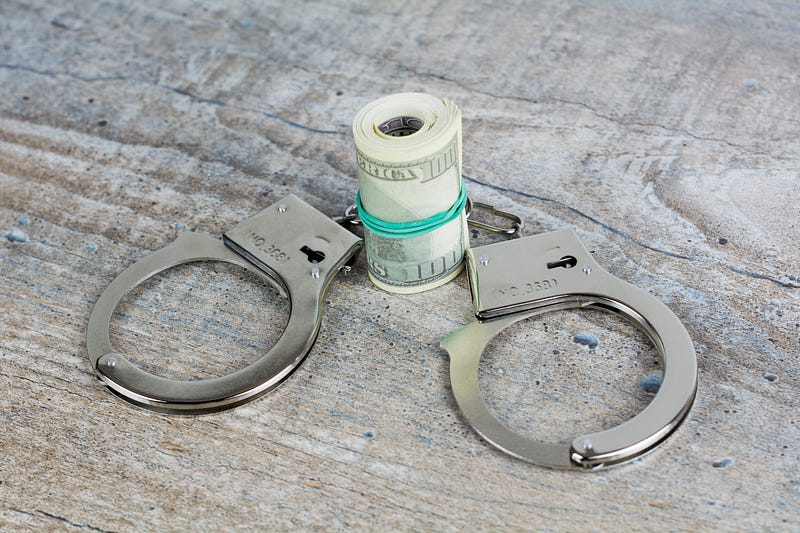
Photo by Bermix Studio on Unsplash


Overseas leadership

Two South Korean leaders are alleged to have orchestrated a crypto scam from the Philippines and other locations. Between September 2020 and April of last year, they recruited teams to work through Telegram, a messaging app, to execute various tasks, including withdrawing and laundering victims’ funds, managing bank accounts, running websites and enticing and defrauding victims. They imitated a legitimate investment firm to create a bogus cryptocurrency investment website and also operated chat rooms on Korean mobile messaging platforms to facilitate their scam.

The fraudsters involved in this cryptocurrency scam operated by employing a database containing 1.62 million pieces of personal information illegally obtained through Telegram. Using this information, they randomly invited potential victims into chat rooms.


Luring victims with promises of 500% returns

Participants in the scheme took on multiple roles to share fabricated success stories about investments to lure individuals to their fraudulent site. They enticed victims with promises of a 500% return on the day of investment.

Once lured to the site, victims were presented with manipulated images that showed fictitious investment returns, persuading them to invest money. The scammers would then entice victims to pay even more, citing taxes and extra fees. Eventually, the fraudsters would cut off the victims’ access to their accounts. The stolen funds, ranging from KRW 2 million to KRW 430 million per victim, were laundered through currency exchanges or by buying gift certificates.

After 253 similar complaints were filed nationwide, police consolidated these reports and initiated an investigation in January of last year. During the investigation, they uncovered the participation of several local teams in the fraudulent operation. From March 2022 to last month, all Korean members involved were apprehended, except for nine individuals now on Interpol’s wanted list. Police are working on extraditing one of the two masterminds orchestrating the scheme from abroad after the person voluntarily surrendered. The other ringleader remains at large, flagged as a fugitive by Interpol, and authorities are pursuing their extradition.

Oh Kyu-sik, who leads Cybercrime Investigation Unit 2 at the SMPA, has warned that chat rooms promising high returns on investments in virtual assets, stocks and futures should be approached with caution due to the high risk of fraud. He recommends that investors should verify the legitimacy of cryptocurrency investment sites by checking for any fraud reports listed on the Financial Intelligence Unit (FIU) website. Additionally, he suggests confirming the authenticity of investment companies through the FINE portal, which is operated by the Financial Supervisory Service (FSS).


More to Read
View All
Web3 & Enterprise·

Sep 26, 2023

Crypto Exchange Korbit Raises Daily KRW Deposit Limits From 300K to 5M

Crypto Exchange Korbit Raises Daily KRW Deposit Limits From 300K to 5MKorbit, one of the leading cryptocurrency exchanges in South Korea, raised the daily deposit limit for its customers as of 16:00 KST on September 25. This move aligns with the early implementation of the operation guidelines of real-name bank accounts for cryptocurrencies, which is scheduled to be introduced in January next year. Korbit collaborates with Shinhan Bank, utilizing its real-name accounts to facilitate Korean won transactions.Photo by manseok Kim on PixabayUser protection and AMLThe operation guidelines have been established to fortify the protection of virtual asset users and to bolster efforts against money laundering. Financial authorities, the Korea Federation of Banks, and cryptocurrency exchanges have collaborated to initiate these measures at every local exchange starting next January. Meanwhile, exchanges are obliged to maintain reserves in their banks beginning this month, ensuring they are poised to provide compensation for involuntary losses in the event of hacking incidents or system failures.Investor inconvenience and market confusionSince the introduction of the real-name bank account system in 2018, banks and crypto exchanges have had different terms of use and user protection measures, leading to varied deposit and withdrawal limits as well as reserve levels across different exchanges. These inconsistencies have resulted in inconvenience to customers and have sown confusion in the market. In response, the entities in question have agreed to implement a shared set of guidelines for real-name bank accounts from January next year.Daily limit of KRW 300K to KRW 5MWith the implementation of these guidelines, Korbit has elevated the current daily deposit limits from KRW 300,000 (approximately $222) and KRW 1.5 million to KRW 5 million. Moreover, once the bank authenticates the user’s transaction purpose — for instance, purchases of KRW 5 million or more in virtual assets in a month following the initial KRW deposit — and verifies the source of the funds, the constrained account can transition to a standard account. This adjustment allows the daily deposit and withdrawal limit of up to KRW 500 million.The limitations associated with constrained and standard accounts apply solely to fund transfers between the crypto exchange and the bank. When holders of Shinhan accounts initiate fund transfers to accounts in other banks, the limitations imposed by Shinhan continue to apply.Oh Sejin, CEO of Korbit, expressed enthusiasm that the higher deposit limit enabled by the new guidelines would improve investor convenience and draw in new customers. He added that the crypto exchange is committed to collaboration with Shinhan Bank, aiming to enhance user protection and anti-money laundering (AML) measures.

news
Markets·

Nov 05, 2025

StanChart CEO predicts blockchain will replace cash in everyday finance

Bill Winters, the American banker who heads the British financial group Standard Chartered, appeared at the Hong Kong FinTech Week conference earlier this week, where he predicted a future in which cash will give way to blockchain-based systems for everyday transactions. According to Cointelegraph, Winters’ view aligns with that of Hong Kong regulators. At the same time, he stressed the importance of continued experimentation, noting that it remains uncertain how this transformation will ultimately take shape. Winters also commended Hong Kong’s leadership in exploring the potential of digital finance. Tech-driven finance has certainly been one of the key initiatives Hong Kong has been exploring. Recently, the Hong Kong Monetary Authority (HKMA) released its e-HKD Pilot Programme Phase 2 Report, which showed public support for tokenized deposits.Photo by Shubham Dhage on UnsplashReal-world assets gain ground on the blockchainOn-chain data also underscores the rapid growth of the tokenization sector. According to RWA.xyz, the total value of real-world assets (RWAs) deployed on-chain has climbed to $35.63 billion, up 7.8% from a month ago. A study by Ripple and Boston Consulting Group (BCG) estimates that tokenized assets could be worth $19 trillion by 2033, about 530 times their current value. Among RWA assets, the BlackRock USD Institutional Digital Liquidity (BUIDL) Fund, Tether Gold (XAUT), and Paxos Gold (PAXG) currently lead the market in terms of value. Over the past 30 days, BlackRock’s BUIDL Fund slipped 0.06%, while the two tokenized gold products, XAUT and PAXG, jumped 46.65% and 14.19%, respectively. These gains mirror gold’s bullish run in October, when its price surpassed $4,000 per ounce for the first time on Oct. 7. The momentum has since eased slightly, with gold now trading at around $3,969.55 per ounce. Tokenization brings 24/7 markets and P2P flexibilityIndustry experts point to the convenience of tokenization as a key advantage. Speaking to Yahoo Finance, Will Peck, head of digital assets at WisdomTree, explained that tokenized gold allows for around-the-clock trading and direct peer-to-peer (P2P) transactions. He added that gold and Bitcoin act as complementary stores of value, both serving as deflationary assets. Ian Kane, CEO of fintech company Firepan, said tokenized gold appeals to investors as it enables them to retain ownership, leverage their holdings for loans, and generate extra yield, while preserving their principal against debasement or devaluation. These views are not new. Earlier this month, Robinhood Markets CEO Vlad Tenev described tokenization as “a freight train” that “can’t be stopped,” predicting it will eventually transform the global financial system. Similarly, in his annual letter to investors in April, BlackRock CEO Larry Fink said the tokenization of assets could fundamentally reshape the way people invest. By digitizing ownership, tokenized venture capital funds could move beyond their closed circles, giving ordinary investors a stake in early-stage innovation and greater control over their capital. Venture capital faces hurdles in tokenization pushWhile tokenization promises greater accessibility and liquidity, not all market segments are ready for it. According to TheStreet, tokenized venture capital (VC) funds could open a traditionally closed market to more investors, but the process is more complex than it appears. In an interview with TheStreet, Elena Obukhova, founder of Supermoon Ventures, said that liquidity, not technology, is the main obstacle. Unlike tokenized company shares that can be traded freely on public markets, VC funds invest in private startups whose value may take years to materialize through an exit or acquisition. Allowing such funds to trade freely could increase volatility and pressure founders, as interim valuations might distort perceptions and weaken confidence in early-stage ventures. Still, the promise of tokenized venture finance remains within reach. Firms are testing models that limit trading periods, protect investor data, and refine valuation methods to better reflect the illiquid nature of startup investments. Since liquidity events such as initial public offering (IPOs) or acquisitions typically occur only every one to two years for early-stage startups, the path forward will depend on creating systems that can maintain stable and accurate valuations in the interim. Tokenization is rapidly emerging as a transformative force in the financial world, offering greater accessibility, liquidity, and efficiency. As more assets, from gold to venture capital, make their way onto the blockchain, the potential to reshape investment and trading markets grows. While challenges remain, particularly around liquidity and valuation in sectors like venture capital, the continued advancements in tokenization demonstrate its key role in the future of finance.

news
Web3 & Enterprise·

Aug 08, 2023

OPNX Makes a Play for Struggling Crypto Lender Hodlnaut

OPNX Makes a Play for Struggling Crypto Lender HodlnautIn a strategic move OPNX, the crypto claims trading platform associated with the founders of failed Singaporean crypto hedge fund Three Arrows Capital (3AC), is eyeing the acquisition of Hodlnaut, a beleaguered crypto lender currently undergoing court-supervised restructuring in Singapore.Photo by Meriç Dağlı on UnsplashCompelling offerThat’s according to a person familiar with the matter cited by Bloomberg News on Sunday, together with a term sheet seen by Bloomberg. It’s understood that OPNX has presented a compelling offer to infuse Hodlnaut with a much-needed capital injection of approximately $30 million worth of FLEX digital tokens.These tokens are closely tied to CoinFLEX, a trading platform that ran into difficulty in 2022, co-founded by Mark Lamb and Sudhu Arumugam. The Seychelles-based company rebranded and relaunched as OPNX earlier this year with the 3AC founders on board. The FLEX token holds a current market valuation of around $647 million, according to CoinGecko data.Partial creditor payoutThe OPNX proposal aims to fund a partial creditor payout to facilitate the resolution of pending claims. This proposal comes on the heels of efforts by Hodlnaut’s directors to reach out directly to its users, a move that was met with objections by the interim judicial managers overseeing Hodlnaut’s restructuring. A letter dated July 29 from the administrators confirms this development.Under the terms of the deal outlined in a term sheet, OPNX’s capital injection through FLEX tokens would translate into a 75% ownership stake in Hodlnaut. The restructuring plan, if approved by creditors, would see these creditors receiving 30% of their claims in FLEX and other tokens. Alternatively, they would be entitled to a pro-rata payment of up to 95% of the total available corporate assets, whichever is more favorable to them.Hodlnaut, headquartered in Singapore with operations also in Hong Kong, got caught up in crypto market turbulence, leading to a suspension of withdrawals a year ago. Subsequently, it embarked on a court-monitored restructuring journey in Singapore. Neither Hodlnaut nor its judicial managers have provided immediate comments on the OPNX bid.The founders of Hodlnaut, Simon Lee and Zhu Juntao, had earlier proposed a business sale as a preferable alternative to liquidation. This proposal aimed to provide better outcomes for creditors, who had initially expressed preference for liquidation over a proposed restructuring plan earlier in the year.OPNX reprimandThe journey of both OPNX and Hodlnaut is also marked by legal and regulatory challenges. In April, authorities in Dubai reprimanded Su Zhu, Kyle Davies, Mark Lamb, OPNX’s CEO Leslie Lamb, and Sudhu Arumugam for operating and promoting OPNX without the required local license. Meanwhile, the liquidators of 3AC have alleged a lack of cooperation by Zhu and Davies, as they seek to recover $1.3 billion from the duo, reflecting the losses preceding the fund’s downfall.The 3AC founders recently claimed that they would donate OPNX profits to 3AC creditors. However, Kyle Davies is fighting the efforts of the 3AC liquidator to reclaim funds from the founders.

news
Loading