Top

Korbit and Shinhan Bank hold seminar to strengthen suspicious crypto transaction reporting

Web3 & Enterprise·November 06, 2023, 1:27 AM

Korbit, one of the top five cryptocurrency exchanges in South Korea, revealed on Monday (local time) that it conducted a seminar in collaboration with Shinhan Bank last month aimed at enhancing the effectiveness of suspicious transaction report (STR) filings.

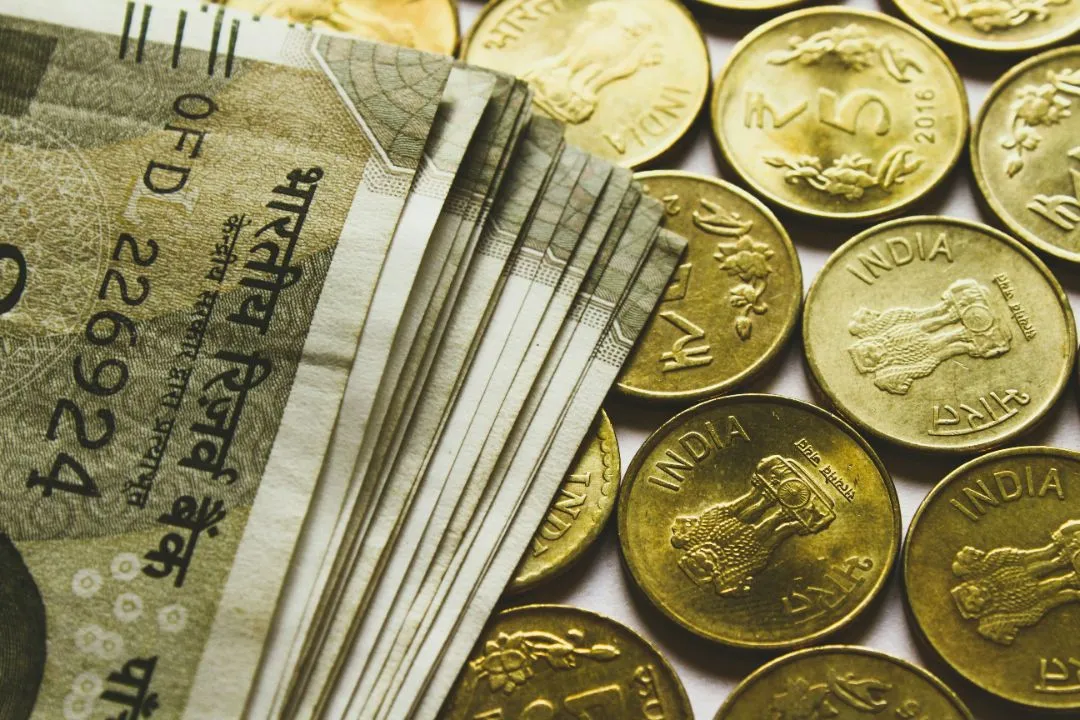
Photo by Nick Fewings on Unsplash


Enhancing suspicious transaction reporting

The seminar held at Korbit’s premises was a collaborative forum where experts from both the exchange and Shinhan Bank exchanged insights and engaged in a question-and-answer session. The agenda covered areas such as the writing of STR reports, monitoring based on particular themes and the education of staff members. The gathering featured key participants, including Jin Chang-hwan, Compliance Officer of Korbit, and Yoo Jung-yeol, Head of the Digital Assets Team at Shinhan Bank as well as personnel from both organizations involved in anti-money laundering (AML) initiatives.


Focus on compliance

Earlier this year, Korbit and Shinhan Bank held a meeting to go over the Financial Intelligence Unit’s (FIU) comprehensive evaluation of virtual asset service providers (VASPs). This evaluation examined how well VASPs complied with the Travel Rule. Additionally, the meeting allowed both organizations to exchange ideas on how to enhance their compliance processes. In a move ahead of the industry, Korbit in September became the first Korean crypto exchange to adopt new rules for real-name bank accounts, a policy that will become mandatory in January of the following year.

Oh Se-jin, Korbit’s CEO, highlighted the increasing significance of filing STRs, citing recent FIU data that showed VASPs submitted more STRs in the first three quarters of this year than in the entirety of last year. He affirmed Korbit’s dedication to establishing itself as a secure and reliable cryptocurrency exchange through ongoing collaborations with Shinhan Bank.

Meanwhile, Korbit has managed to cut down the review period for STRs to a third of its previous duration. Additionally, the exchange verifies the effectiveness of its STR rules by performing monthly evaluations and seeking advice from external consultants.


More to Read
View All
Policy & Regulation·

Jun 16, 2023

Tether Critics Point to Previous Chinese Securities Backing

Tether Critics Point to Previous Chinese Securities BackingUSDT stablecoin issuer Tether (USDT) has long faced persistent scrutiny and criticism due to the lack of transparency surrounding the assets backing their digital currencies. The latest allegations come in the form of a report by Bloomberg on Friday suggesting that the world’s largest stablecoin was once backed by securities issued by Chinese companies.Photo by Manuel Joseph on PexelsNYAG releases documentsThese findings were based on documents made public by the New York Attorney General (NY AG). The documents disclosed that Tether had listed securities issued by China’s state-owned Industrial and Commercial Bank of China, China Construction Bank, and Agricultural Bank of China as part of its reserves backing the USDT stablecoin.Rumors about USDT’s exposure to Chinese securities have circulated for a number of years. In 2021, a Bloomberg research report revealed that Tether’s reserves reportedly included billions of dollars in short-term loans to China-based companies, as well as a significant loan to the collapsed crypto lender Celsius Network.However, in February 2021, Tether reached a settlement with the NY AG’s office over accusations of providing misleading information about its reserves and losses. To address these concerns, Tether handed over documents such as letters, bank accounts, reserve holdings, and wallet addresses through the law firm Steptoe.Attestation reportTether’s latest attestation report for Q1 2023, released on May 10, offered further details about its reserves. According to the report, Tether’s reserves were valued at $81.8 billion at the end of the quarter, a significant increase from the earlier period of $14.8 billion. These reserves consisted of $53 billion in US Treasuries, $1.5 billion in Bitcoin, and $5.3 billion in loans described as “over-collateralized.”The disclosure of Tether’s previous backing by Chinese securities adds another layer of complexity to the stablecoin landscape, raising questions about the risk exposure and potential impact on the stability of these digital assets. Using Chinese commercial paper to back a US dollar stablecoin is a risky endeavor.It raises the same issues as we’ve seen with the plethora of crypto lenders that went bankrupt in 2022. In those cases, they were using customer money to speculate and turn a profit. That’s fine when it works but when it goes wrong, it is customers who suffer. In its defense, Tether has stated that it only held A1 rated banking sector Chinese commercial paper in 2022 in state-owned Chinese companies like Industrial & Commercial Bank of China Ltd., China Construction Bank Corp., and Agricultural Bank of China Ltd. It reduced this exposure to zero later that year.With the cryptocurrency community and regulators seeking greater transparency and accountability, the industry is likely to face increased scrutiny and calls for enhanced regulations to ensure the integrity of stablecoin operations moving forward.As regulators continue to assess and navigate the evolving crypto market, it remains to be seen how the industry will address these concerns and establish clearer guidelines for stablecoin issuers to ensure the trust and confidence of market participants.

news
Policy & Regulation·

Sep 16, 2023

Remitano Struck by $2.7M Alleged Hack

Remitano Struck by $2.7M Alleged HackHacks have been an unfortunate constant in the crypto and DeFi space with that reality having been compounded by news that Seychelles-based crypto exchange Remitano is believed to have been the victim of a $2.7 million heist.Photo by Growtika on UnsplashSuspicious transactionsIt’s understood that the firm encountered highly suspicious transactions, with the $2.7 million having seemingly vanished from its wallet, all at the hands of a single account. The incident unfolded on Thursday and has left blockchain analysts speculating about a potential security breach.The Remitano hot wallet initiated transfers to an address devoid of any prior transaction history. These transfers amounted to approximately $1.4 million in Tether (USDT), $208,000 in USD Coin (USDC), and 104,000 ANKR tokens (valued at $2,000 at the time). Those transfers raised concerns about the security of the platform.Israeli blockchain analytics platform Cyvers promptly sounded the alarm, notifying the crypto community about these suspicious transactions that had drained significant sums from Remitano’s coffers. This sudden event raised concern within the crypto space and naturally among Remitano customers.Tether freezes wallet addressAmid the growing apprehension, Tether, the issuer of USD stablecoin USDT, took decisive action by freezing the address associated with the alleged attacker. This swift intervention effectively halted any further movement of $1.4 million worth of drained cryptocurrency. Tether’s proactive response could potentially have prevented additional loss, preserving customers’ assets from further depletion.Remitano had remained notably silent initially in the wake of this incident, declining to issue any formal statement regarding the breach. It has since acted, as on Friday, it published a statement relative to the issue on its website. The absence of communication from the exchange had only fueled greater speculation surrounding the incident. However, the statement outlined:”On September 14, 2023, our Security Management team discovered a data breach from a third-party source that had compromised some of our sensitive information. As a result, a small amount of funds from the exchange’s hot wallets were transferred to suspicious wallet addresses through unauthorized withdrawal transactions.”Remitano, recognized as a peer-to-peer cryptocurrency exchange and payment processor, primarily caters to users in emerging markets across several countries, including Pakistan, Ghana, Venezuela, Cambodia, Kenya, Malaysia, India, South Africa, Vietnam, and Nigeria.The firm sought to reassure its customers:”As of now, Remitano ensures that users’ assets have NOT been and will NOT be affected by this incident. We are working tirelessly to uphold our commitment to ensuring the security and protection of your crypto assets.”Remitano was established in 2015; it is operated by Babylon Solutions Limited, which is headquartered in the Seychelles.Unfortunately, this episode adds to the troubling trend of cryptocurrency exchange hacks witnessed in 2023. Authorities in the United States have attributed these attacks to the Lazarus Group, a notorious cyber-crime organization allegedly linked to the North Korean government which has wreaked havoc globally although disproportionately so within the Asian region.

news
Policy & Regulation·

Oct 17, 2023

Former PBOC Governor: CBDC Development Must Focus on Security

Former PBOC Governor: CBDC Development Must Focus on SecurityZhou Xiaochuan, a former governor of the People’s Bank of China (PBOC), has issued a call for China to prioritize security and vigilance against potential misuse as it advances the development of its central bank digital currency (CBDC), known as the e-CNY.Photo by FLY:D on UnsplashSafeguarding the CBDC ecosystemXiaochuan made this appeal during the Digital Finance Forum, which was held in Beijing last week. He emphasized the necessity of safeguarding the CBDC ecosystem.The PBOC has been actively engaged in trials and innovations related to the e-CNY, even rolling out a pilot application in January 2022. The digital yuan’s journey, however, comes with significant responsibilities, particularly in terms of security and prevention of misuse.Thwarting potential abuseZhou acknowledged that in the realm of finance, security has always been a paramount concern, and this sentiment couldn’t be more accurate when applied to the realm of digital currency. He stressed that, as technology costs continue to decline and systems become more user-friendly, the risks associated with misuse also decrease. In this context, it becomes imperative for China to adopt stringent security measures and robust regulatory frameworks to thwart any potential abuse.Zhou underscored the illicit utilization of cryptocurrencies and stablecoins in facilitating various activities, including arms trafficking and drug trade. He pointed out that addressing these issues necessitates a concentrated effort, making it clear that a proactive approach to prevention is essential.The development of the e-CNY has seen impressive progress, with pilot projects initiated in 2019 and later expanded to 26 locations across 17 provincial-level cities and regions, including major metropolitan areas like Beijing, Shanghai, Shenzhen, and Suzhou.Last month another official from the PBOC spoke to the need to make the e-CNY accessible in all retail payment scenarios within China at a trade forum in Beijing. Digital yuan use is also being broadened to facilitate its availability in the special Chinese administrative area of Hong Kong.Proposing two-tier systemZhou advocated for a two-tier system in the operation of e-CNY, a structure already in place. The People’s Bank of China presides over the first tier, responsible for issuance and regulation, while the second tier comprises commercial institutions such as commercial banks, internet platforms, and telecommunications operators.This dual-layered design promotes dynamic evolution within the digital currency landscape, enhancing service quality and fostering innovation through healthy competition. Zhou stressed the importance of exploring cross-border transactions, an area that entails both technological advancements and policy orientation.Hong Kong has actively embraced e-CNY for cross-border payments, advancing into the second phase of technical testing and preparing to incorporate it into its predominantly local payment system.On a related note, Lu Lei, the deputy administrator of the State Administration of Foreign Exchange (SAFE), highlighted the programmable features of CBDCs as tools for enhancing monetary policy effectiveness.While current CBDCs are positioned as M0 currencies, strictly currency in circulation plus commercial bank reserve balances, he proposed that central banks could evolve them into M2 currencies. M2 is a measure of money supply that incorporates checking deposits and other forms of deposits that are readily convertible to cash, alongside cash itself.

news
Loading