Top

SEC seeks summary judgment against Terraform Labs

Policy & Regulation·November 04, 2023, 9:12 AM

The U.S. Securities and Exchange Commission (SEC) is making a strong push for a summary judgment in its ongoing legal battle against Singapore’s Terraform Labs and its co-founder Do Kwon. Such an outcome would spare the need for a protracted trial.

According to a motion filed by the SEC on Thursday, the record shows that there is “no genuine dispute as to any material fact and that the moving party is entitled to judgment as a matter of law.”

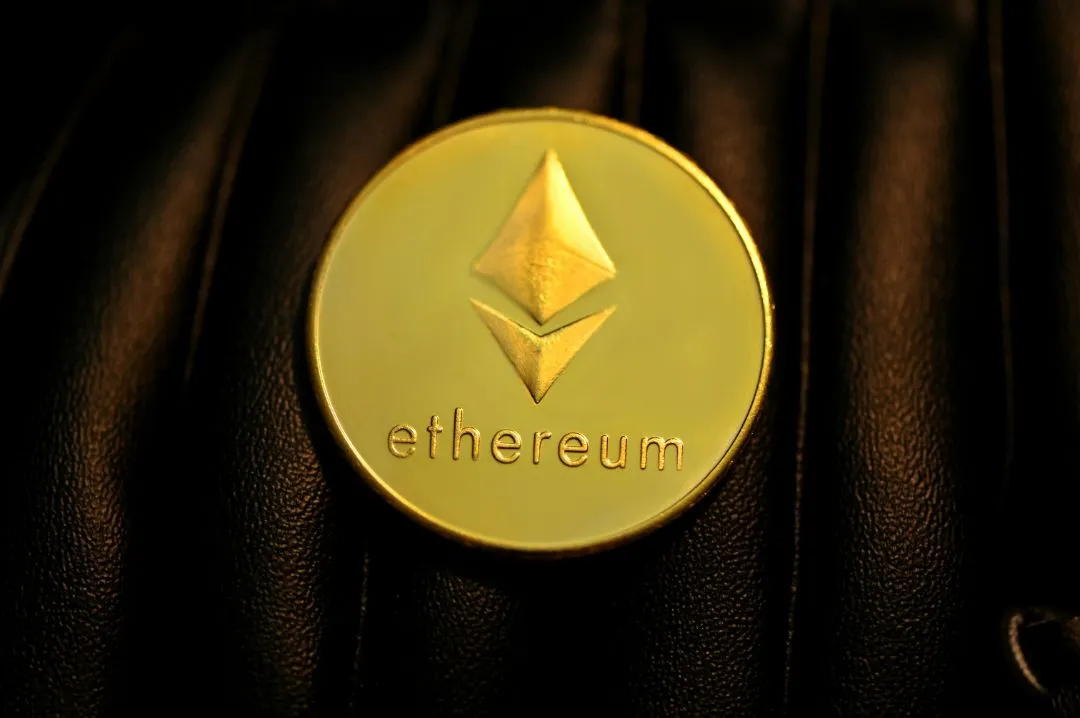
Photo by Caleb Fisher on Unsplash


Relying on the Howey Test

The SEC’s filing underscores its central argument that Kwon and Terraform Labs were involved in the sale of securities. The document categorically states:

“There is no dispute that purchasers made an investment of money, either through fiat currency or crypto assets, for each crypto asset — LUNA, wLUNA, MIR, and UST, thereby satisfying the first prong of Howey.” The Howey Test refers back to a U.S. Supreme Court case — SEC v. Howey — which took place in 1946. The case set a precedent and has subsequently become the cornerstone of determining what is or is not a security in the United States.

This argument hinges on the idea that funds were pooled in a common enterprise with the expectation of profits primarily derived from the efforts of the promoters.


Citing fraud as well as unregistered securities

The SEC’s assertion is two-fold, contending that not only did Terraform and Kwon engage in selling securities, but they also engaged in fraudulent activities and disseminated misleading information. The SEC reiterates these claims in its filing, emphasizing that the defendants committed fraud by duping investors about the stability of UST.

They allegedly falsely attributed the algorithm for price stabilization while orchestrating clandestine third-party interventions. This purported deception made their claims regarding the algorithm’s effectiveness deceptive and involved the omission of crucial information. The fallout from Terra’s collapse in May of the previous year resulted in the destruction of substantial investor wealth, totaling billions of dollars.


Similar defense team filing

The SEC’s move to seek summary judgment comes in the wake of a similar filing by Kwon’s defense team last Friday. Kwon is currently serving a sentence for document forgery in Montenegro, a situation stemming from his arrest at an airport with forged passports.

Notably, Terraform’s co-founder, Daniel Shin, who is currently on trial in South Korea, has attributed the collapse of Terraform Labs to Kwon’s mismanagement. Shin has claimed his separation from the company and its activities occurred two years before its eventual collapse.

In this legal battle that holds significant implications for the cryptocurrency and blockchain space, the SEC continues to emphasize its position, asserting that Kwon and Terraform Labs engaged in the sale of securities through deceptive means. The outcome of this case could have far-reaching consequences, setting precedents for future regulatory actions in the industry.


More to Read
View All
Web3 & Enterprise·

Nov 07, 2023

Okto commits $5 million treasury fund to support Vauld users

Okto commits $5 million treasury fund to support Vauld usersOkto, the self-custody DeFi wallet app offered by Indian crypto exchange CoinDCX, has pledged a $5 million treasury fund to provide support to Vauld users.Vauld, a Singapore-based crypto lending platform, brought a halt to all trading, withdrawal and deposit activities in 2022 as it ran into liquidity issues. The business has been undergoing a process of restructuring under the protection of the courts in Singapore ever since.Photo by Towfiqu barbhuiya on UnsplashIncentivizing user asset transferIn response, Okto has stepped forward with a proactive approach to assist Vauld users in their transition. Okto is offering a 2% bonus to users who opt to transfer their assets from Vauld to Okto.Neeraj Khandelwal, the Founder of Okto, emphasized the company’s overarching mission while unveiling this $5 million initiative. He said: “While this $5 million fund represents one of our initiatives to support the crypto ecosystem, our overarching vision is to empower the Web3 community through cutting-edge technology-backed platforms and apps designed to tackle the broader challenges within the ecosystem.”Self-custody assurance featureIn addition to this incentive, Okto is also offering a self-custody assurance feature. This feature allows users to gain complete ownership of their private keys, ensuring that access to their funds remains exclusively in their hands. Moreover, users can benefit from round-the-clock access to monitor their assets. That delivers a reassuring sense of control and peace of mind regarding the users’ cryptocurrency holdings, against a backdrop of those users having had the experience of being unable to withdraw their funds when the Vauld platform paused trading.The concept of self-custody is central to what crypto was supposed to be about. It grants complete ownership of assets to the user. Khandelwal outlined that Okto was established on the basis that it could strike a balance between security, convenience and custody. In this way, it felt that it could resolve what could be termed as the crypto wallet trilemma. “Okto’s enduring mission has been to provide users with a secure and user-friendly app, and we will persistently strive to achieve this objective,” Khandelwal added.Mitigating riskLaunched globally earlier this year, Okto is a keyless, self-custody Web3 wallet that ensures secure access to DeFi services while prioritizing the safety of users’ funds. This all-in-one Web3 app approach eliminates the cumbersome need to safeguard seed phrases, ensuring users have full control of their funds.Moreover, it mitigates the risk of a single point of failure through its state-of-the-art, custom-built, consensus-driven Multi-Party Computation (MPC) technology. With MPC, private keys required for fund access and control are never fully exposed, guaranteeing the constant security of users’ assets.Vivek Gupta, Chief Technology Officer at Okto, elaborated on the technology behind Okto’s product offering, stating:“Okto uses state of the art Multi-Party-Computation algorithms to create users’ private keys. Our MPC algorithm never produces a complete private key. Our MPC algorithm uses three nodes which communicate with each other under proprietary encryption channels and create a unique sensitive material on each node.”In addition to its security measures, Okto wallet boasts compatibility with multiple Web3 chains such as Polygon, BSC and Avalanche, along with protocols like Stader and WooFi, among others.

news
Policy & Regulation·

May 31, 2023

Bank of Japan Publishes Results of CBDC PoC

Bank of Japan Publishes Results of CBDC PoCThe Bank of Japan (BoJ) recently concluded the second phase of its central bank digital currency (CBDC) proof of concept (PoC) project, which began in April. The results of this phase were published on Monday, and they shed light on key aspects such as the comparison between account-based and token-based CBDCs and the management of holding limits for users with multiple accounts.Photo by Manuel Cosentino on UnsplashToken-based CBDCsThe experiments conducted by the central bank covered a wide range of topics. Among the most intriguing findings were the advantages and disadvantages of token-based CBDCs and how to effectively impose holding limits for users with multiple CBDC balances.Token-based CBDCs have garnered interest from various central banks, with some adopting the UTXO token model used by Bitcoin without the use of a distributed ledger. A UTXO or unspent transaction output, defines where a blockchain transaction starts and finishes. The Bank of Japan explored this model and analyzed its pros and cons.In the initial proof of concept, both account-based and token-based CBDCs were examined, considering scenarios where the central bank managed the ledger or shared it with intermediaries like banks. In the token-based model, fixed token denominations were used, similar to physical cash in countries like India, and a centralized ledger was employed. However, in the recent phase, the central bank utilized flexible value tokens similar to UTXO and shared ledger functions with intermediaries.The Bank of Japan favored the flexible value token model due to its ability to handle multiple requests simultaneously. However, it acknowledged that this model may require more technical resources compared to the account-based approach. Challenges may arise when implementing additional functions, such as holding limits, while maintaining optimal performance. The European Central Bank (ECB) also noted in a recent report that most payment providers are accustomed to account-based payments and would incur costs to adapt to token-based systems.Another significant aspect explored by the BoJ was how to impose holding limits when users have multiple CBDC balances through different intermediaries. The challenge lies in determining if the overall holding limit has been breached without compromising user privacy.Homomorphic encryptionOne possible solution discussed in the report is the use of homomorphic encryption, which enables computations to be performed on encrypted data without it first needing to be decrypted. That allows for the necessary checks without intermediaries accessing the specific data being checked. Although this solution may slightly increase processing time, it could introduce a higher risk of data inconsistencies.Alternatively, a simpler approach proposed by the central bank is to establish a per-account holding limit and a limit on the number of accounts a single user can hold, rather than imposing global limits. Ideally, users with multiple accounts would have a higher per-account holding limit compared to those with fewer accounts.Phase 3 underwayWith the next pilot phase already underway, the BoJ aims to test the end-to-end process flow and identify challenges related to integrating with external systems. Additionally, they are creating a CBDC Forum to gather input from the private sector, ensuring a collaborative approach to CBDC development.While investigation and research into CBDCs continues, the BoJ has said that it will make a final decision on CBDC implementation by 2026.

news
Policy & Regulation·

Nov 23, 2023

Mammoth Foundation signs deal with the Philippines’ AFAB for blockchain business collaboration

Mammoth Foundation signs deal with the Philippines’ AFAB for blockchain business collaborationThe Mammoth Foundation, a blockchain research and development company, announced on Thursday that it has signed a memorandum of understanding (MOU) with the Authority of the Freeport Area of Bataan (AFAB) of the Philippines to establish business partnerships in the blockchain field. Under this agreement, the Mammoth Foundation intends to bring its blockchain technology to the Philippines as a part of efforts to expand its global business.Photo by Sean Yoro on UnsplashFostering innovation in the PhilippinesAFAB is a free economic zone in the Philippines dedicated to pushing development, economic growth and sustainability through creating jobs and establishing technologically-relevant infrastructure systems. In particular, it is focusing on the adoption of cutting-edge technologies such as blockchain, artificial intelligence (AI) and fintech. As one of the oldest free economic zones in Asia, companies residing in the zone are granted preferential measures such as tax exemptions and special visas. Firms that operate innovative businesses can also receive licenses to support the development of the global IT industry — the Mammoth Foundation being one of these.Global expansion and daily engagementHeadquartered in Singapore with offices in the United Kingdom and several Asian countries, the Mammoth Foundation offers dApps in a range of fields such as healthcare, e-commerce, entertainment and gaming through its mainnet Giant Mammoth Chain (GMMT). GMMT is built on the BNB Chain Application Sidechain and is fully compatible with the Ethereum virtual machine (EVM).Participants in GMMT can acquire token rewards through Play-to-Earn (P2E) and Life-to-Earn (L2E) mechanisms by participating in everyday activities and hobbies like walking, shopping, gaming and reading comics. These tokens can then be used within the Mammoth ecosystem.“The Philippines’ market for advanced technologies such as AI and blockchain is expected to grow in the future,” said John Baek, Chairman of the Mammoth Foundation. “We will strive to expand GMMT globally.”

news
Loading