Top

CoinGecko Report Points to Q3 Market Contraction

Markets·October 26, 2023, 2:11 AM

The third quarter of 2023 was marked by a significant market downturn and market cap contraction. That’s one of a number of findings in a Q3 crypto industry report compiled by Malaysian cryptocurrency ranking platform CoinGecko.
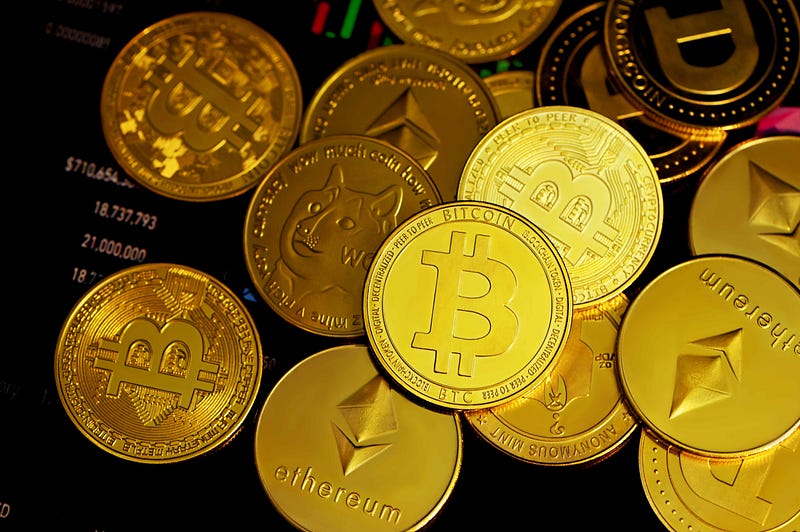
Photo by Kanchanara on Unsplash


Market cap contraction

The company released its latest research on Tuesday. In mid-August, Bitcoin (BTC) witnessed a sudden drop from approximately $29,000 to around $26,000, leading to a dip in the total cryptocurrency market capitalization from $1.2 trillion to $1.1 trillion.

The total crypto market capitalization recorded a nearly 10% decline, amounting to a drop of $119.1 billion. Since reaching its local peak on April 17, the total market capitalization has experienced a decline of 16.3%.

Notable shifts in the top 30 cryptocurrencies include Solana (SOL) climbing to #7, TrueUSD (TUSD) rising to #19, Litecoin (LTC) falling to #14, Avalanche (AVAX) dropping to #22, and Binance USD (BUSD) sliding to #27.


Stablecoin shrinkage

The top 15 stablecoins saw a 3.8% decrease in market capitalization during Q3 2023, reaching $121.3 billion. Tether (USDT) maintained its market cap during this period. USD Coin (USDC) experienced the largest absolute loss at -$2.26 billion (-8.3%), while Binance USD (BUSD) faced the most significant percentage decline of -45.3%, amounting to a drop of -$1.87 billion. TrueUSD (TUSD) was the sole gainer among the top 5, with a 12.8% increase in market cap.


NFT trading volume cut in half

Trading volume for NFTs declined by 55.6%, dropping from $3.67 billion in Q2 to $1.63 billion in Q3. Ethereum maintained its dominance, accounting for 83.2% of the NFT market during Q3. ImmutableX NFTs, driven by trading card game Gods Unchained, experienced a strong Q3, with a market share increase from 2.1% in Q2 to 3.9% in Q3.


Continued growth for RWAs

The Real World Asset (RWA) sector has continued to grow in 2023, with tokenized US treasury bills gaining popularity. The market cap for these tokenized T-bills increased from $114.0 million in January 2023 to $665.0 million by the end of September, marking a 5.84x gain. Traditional financial institutions led the way, with American asset manager Franklin Templeton controlling almost half of the overall market share, followed by Ondo Finance at 27%. Ethereum held 49% of the market cap share, while Stellar followed closely behind with 48%.


Spot DEX and CEX trading volume down

In Q3, spot trading volume on the top 10 decentralized exchanges (DEX) totaled $105 billion, a 31.2% drop from Q2. THORchain experienced a significant gain in volume, though this was partially attributed to illicit transfers.

Spot trading volume on the top 10 centralized crypto exchanges (CEX) amounted to $1.12 trillion, a decrease of 20.1% compared to Q2. Binance’s market share dropped to 44%, facing regulatory pressures and significant executive departures. Among the Asian exchange platforms, HTX, previously known as Huobi, secured the third spot with an 8% market share. Only Upbit and Bybit saw gains, while Kucoin was edged out of the top 10.

While Q3 may not have been the most positive industry quarter recently, things are looking a lot more promising as Q4 develops, with Singapore-based digital assets financial services platform Matrixport predicting a bitcoin unit price of $45,000 by year end.

More to Read
View All
Policy & Regulation·

Nov 28, 2023

Zipmex Thailand halts crypto trading citing SEC compliance

Zipmex Thailand halts crypto trading citing SEC complianceTroubled cryptocurrency exchange Zipmex Thailand has recently announced the temporary suspension of digital asset trading until early next year.Photo by Anh Tuan To on UnsplashTrading and deposits suspendedThe decision, outlined by the firm in a Facebook post on Saturday, is attributed to the platform’s efforts in ensuring full compliance with the standards set by Thailand’s Securities and Exchange Commission (SEC).In the Facebook post, Zipmex Limited addressed its customers, stating:“Dear customers, Zipmex Limited would like to ensure the proper and compliant conduct of the company’s business operations in accordance with the criteria set by Thailand’s Securities and Exchange Commission (SEC).”The suspension of digital asset trading and deposits of all types became effective from Nov. 25.Withdrawals remain openDespite the suspension, customers will retain the ability to withdraw Thai baht and digital assets from their Trade Wallet through the website and mobile application until Jan. 31, 2024. However, for digital assets categorized as “Trade Only,” customers are instructed to contact Customer Support for withdrawal. Beyond Jan. 31, 2024, when the withdrawal feature through the website and mobile application is suspended, customers will need to seek assistance from Customer Support.Zipmex Thailand also emphasized that the withdrawal process for digital assets may take between seven to 14 days, requiring customers to provide supporting documents for identity and account ownership verification.As a cryptocurrency exchange headquartered in Singapore and operating in multiple countries, including Thailand, Australia and Indonesia, Zipmex has already fallen foul of Thailand’s SEC. Earlier this year, it was hit with penalties related to allegations of improper use of a digital asset custodian service and the redirection of customers to the Singapore-based exchange, Zipmex Pte, creating a conflict of interest.Financial difficultiesThe exchange has faced financial challenges, including difficulties in repaying creditors after losses incurred from exposure to crypto lenders Babel Finance and Genesis in 2022. A planned $100 million buyout earlier in the year fell through when the buyer, reportedly V Ventures, withdrew from the purchase.Zipmex’s troubles date back to last summer when the exchange halted withdrawals due to volatile market conditions and a liquidity crunch resulting from exposure to the troubled crypto lender Babel Finance. Despite facing financial difficulties, the exchange expressed its commitment to maintaining the integrity of its platform.In August of the same year, Bloomberg reported that Zipmex intended to meet with potential investors and Thailand’s financial regulator to discuss a recovery plan. By November, the platform was in advanced discussions with venture capital fund V Ventures for the sale of a majority stake.Earlier this year, the Thai Securities and Exchange Commission announced an investigation into whether Zipmex breached local rules in its offering of certain digital-asset products. In April, the company filed a request to extend the moratorium period to enable the firm to work towards restructuring. Later that month, it appeared that the V Ventures investment deal had fallen through. By July, the beleaguered firm had sued the investor for breach of contract.The ongoing challenges faced by Zipmex underscore the complex landscape and regulatory scrutiny surrounding cryptocurrency exchanges in various jurisdictions.

news
Markets·

Dec 05, 2025

Institutional support expected to cushion crypto volatility, analyst says

Despite ongoing fluctuations in the cryptocurrency market, analysts suggest that sustained institutional activity is likely to underpin a near-term rebound. As Bitcoin recovered above $90,000 on Dec. 5, market observers began weighing potential risks against growing evidence of corporate and sovereign adoption.Photo by Austin Hervias on UnsplashStructural risks seen as limitedAccording to South Korean news outlet Etoday, Hong Sung-wook, a researcher at NH Investment & Securities, said that the recent slump in both Bitcoin and Strategy stock may weigh on shareholders but does not fundamentally threaten the company’s solvency. He noted that concerns that typically emerge during Bitcoin downturns seldom reflect new underlying risks. Addressing the potential removal of Strategy from the MSCI index, pending review results expected by Jan. 15, Hong indicated that the impact would likely be limited, as the firm has already exhausted its capacity to make additional Bitcoin purchases. However, he cautioned that prolonged share price weakness could force companies to reevaluate digital asset treasury (DAT) models. Such a shift, he warned, could trigger corporate sell-offs that would burden the broader market. Hong also addressed concerns related to stablecoins and future technology. Despite S&P Global Ratings assigning Tether its lowest grade of "weak," Hong observed that the issuer maintains reserves exceeding the USDT in circulation, rendering a mass withdrawal crisis unlikely. Regarding the threat of quantum computing, he argued that the timeline remains uncertain and that the Bitcoin network could mitigate future risks through consensus-driven protocol upgrades. Policy moves may offer market tailwindsLooking ahead, the analyst identified several constructive developments that could bolster the market, including the potential passage of a U.S. crypto market structure bill early next year. He also pointed to the anticipated nomination of Kevin Hassett as Federal Reserve Chair by President Trump. Hassett is expected to favor interest rate cuts, creating a potentially favorable macro environment. Additionally, Vanguard’s decision to permit the trading of select third-party crypto ETFs and mutual funds was cited as significant, given the asset manager’s historically conservative stance on digital assets. While the market has shifted into a broader risk-off mode, institutional demand for Bitcoin has continued to build, including activity that began well before the recent pullback. The Czech central bank recently established a $1 million test portfolio comprising Bitcoin, a USD stablecoin, and a tokenized deposit to research payment futures, though it clarified that it does not currently plan to add digital assets to its international reserves. In the academic sector, a Form 13F filing with the U.S. SEC revealed that Harvard Management Company, which oversees a $56.9 billion endowment, held 6.8 million shares of BlackRock’s iShares Bitcoin Trust ETF (IBIT) as of Sept. 30, a threefold increase from the previous quarter. Furthermore, BlackRock CEO Larry Fink reportedly stated at the New York Times DealBook Summit 2025 that multiple sovereign wealth funds have begun accumulating Bitcoin, according to Forbes. Korean banks advance crypto integrationThis shift toward institutional acceptance is also materializing within South Korea’s traditionally conservative banking sector. The Maeil Business Newspaper reported that Woori Bank recently became the first major South Korean lender to display real-time Bitcoin prices on its trading floor, allowing dealers to track the asset alongside equities and foreign exchange rates. Concurrently, Hana Financial Group announced a partnership with Dunamu, the operator of the Upbit exchange, to develop blockchain-based remittance services, according to The Korea Economic Daily. By leveraging Hana’s global network and Dunamu’s technology, the initiative aims to reduce settlement times and costs for cross-border payments. Hana intends to introduce the technology for transactions between its Korean offices and overseas branches as early as the first quarter of next year, with broader expansion planned as domestic regulations evolve. Hana intends to launch the service at overseas branches as early as the first quarter of next year, with gradual expansion planned as domestic regulations evolve. 

news
Policy & Regulation·

Mar 10, 2025

Government-owned bank enables crypto trading through digital app in Dubai

Dubai-based Emirates NBD, one of the United Arab Emirates’ (UAE) top banks, has enabled a crypto trading service via its subsidiary bank, Liv Digital Bank. Liv Digital Bank has launched the crypto trading service through its Liv X mobile banking app. App users now have the ability to buy, hold and sell a range of cryptocurrencies. Users will have access to custody solutions. They can control both virtual currencies and fiat currencies from within one application.Photo by Markus Winkler on UnsplashAquanow collaborationThe offering has been brought online through a collaboration with digital assets infrastructure provider Aquanow. Taking to X, Aquanow CEO Phil Sham said that "incumbent institutions like Emirates NBD will play a pivotal role in driving the next wave of digital asset adoption.” Aquanow has acquired the necessary licensing from the Virtual Assets Regulatory Authority (VARA) in Dubai to enable the service offering on a compliant basis. Sham told Cointelegraph that the collaboration “showcases how traditional banking and digital assets can coexist, providing consumers with seamless, secure, and compliant access to the evolving digital economy.” Zodia as digital asset custodianZodia Custody, a virtual asset custodian that serves institutional clients, has been chosen to custody assets held as a result of crypto trading on the app. The custodian, a subsidiary company of British multinational banking group Standard Chartered, launched its service in Dubai back in 2023. Emirates NBD is government-owned and the UAE’s second largest bank. The service will facilitate users in trading Bitcoin (BTC), Ethereum (ETH), Solana (SOL), XRP, Cardano (ADA) and some other cryptocurrencies. The bank’s Group Head of Retail Banking and Wealth Management, Marwan Hadi, commented on the development, stating: “Offering cryptocurrency on Liv X is the next step towards the overall vision of Liv being a pioneer in innovation and excellence.” He added that “with the highest crypto adoption rate in the UAE, [Emirates NBD is] keen to launch [its] own virtual asset offering to capitalise on this trend.” This is not the first touch point with the crypto sector for the Emirates NBD subsidiary. Last year, Liv Digital partnered with tokenized real-world assets (RWA) firm Ctrl Alt. Accessing Ctrl Alt’s RWA tokenization expertise, Liv is opening investing opportunities for its customers in the area of tokenized assets. In November 2024, Emirates NBD signed up as a member of the Partior Network, the distributed ledger technology (DLT) clearing and settlement network. Partior uses tokenized instruments for the wholesale settlement of cross-border payments in conjunction with correspondent banks. In the past, the Dubai-based bank had made efforts to educate its customers with regard to the benefits of cryptocurrency and blockchain. Last year, American blockchain analysis firm Chainalysis reported that the Middle East and North Africa (MENA) accounted for 7.5% of global digital asset trading volume over the course of 12 months from July 2023 to June 2024. Chainalysis itself chose Dubai to set up its regional headquarters in May 2024.

news
Loading