Top

Seoul and Baobab Partners Face Controversy Over Unpaid Prize Winnings for SWF2023 Hackathon

Policy & Regulation·October 24, 2023, 8:53 AM

The city of Seoul has come under public scrutiny for failing to pay the winners of the Seoul Web3 Festival (SWF2023) Hackathon a cash prize worth KRW 150 million (approximately $112,000). The Seoul Metropolitan Government has argued that since it was simply a naming rights sponsor, the responsibility for paying the prizes lies with Baobab Partners, who co-hosted the event. However, critics argue that the city did not properly vet Baobab Partners more rigorously before hosting the event.
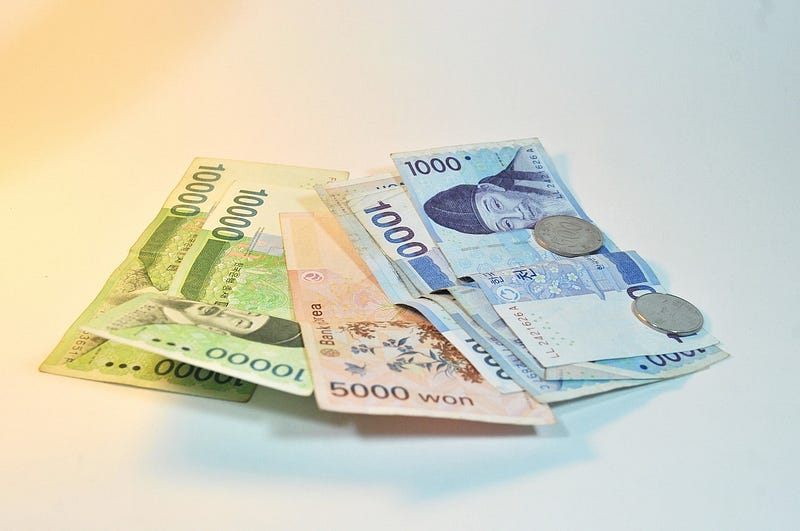
Photo by okaybuild on Pixabay


Unpaid prizes linger

The SWF2023 Hackathon took place from July 31 to August 2 at Dongdaemun Design Plaza (DDP) and was co-hosted by the city of Seoul, the Seoul Design Foundation, and Baobab Partners. It offered a total prize pool of KRW 150 million attracting 417 participants who made up 115 teams.

However, although over two months have passed since then, the winners are yet to be paid their prize money. “Baobab Partners initially proposed the SWF2023 event, and they were responsible for gathering the necessary sponsorship funds to run the event,” said a city representative.

According to industry sources on Monday, the company’s CEO, Choi Jin-beom, issued a handwritten apology last Friday regarding the incident. “We promised to pay the winners by today, but we were unable to deliver on that promise. We explored multiple avenues, including investors, new contractors, and other assets, but were ultimately unable to secure the funds to do so,” he said. “The narrative that the funds were diverted elsewhere or invested in cryptocurrencies or stocks is untrue,” he added, clarifying that related information was transparently disclosed to the city of Seoul.


Baobab Partners’ swift rise raises industry eyebrows

Baobab Partners had previously participated as an event planner at last year’s Blockchain Week in Busan, which turned out to be a success. “We also spoke with the Busan city government, who gave a positive opinion of the company,” the representative added. It was under this context that Seoul entered into a naming rights agreement with Baobab Partners. The agreement stipulated that the company would be in charge of attracting and managing sponsorships, and the prize money and operational costs would be covered by corporate sponsorship funds.

Nevertheless, questions have arisen within the industry about Baobab Partners’ short track record and its successive collaborations with public organizations. Baobab Partners is a startup that was founded in May 2021. In November of the same year, the firm signed memoranda of understanding with three blockchain companies during NFT Busan 2021, a large-scale NFT fair held in the southern port city to share the latest blockchain trends. As a result of its efforts, it was listed alongside prominent companies such as Coinone and Onther despite only six months passing since its establishment. Subsequently, Baobab Partners relocated from Seoul to Busan, and the following year, it participated as an event planner at Blockchain Week in Busan.


Accumulating allegations

Speculation suggests that this success was not solely due to Baobab Partners’s capabilities. The company’s CEO is believed to have political connections, according to an anonymous industry insider. Choi denied such claims and stressed that its technical expertise should not be downplayed, citing the fact that Baobab Partners was the first entity in Korea to develop virtual reality (VR) banking technology and had received a KRW 15 billion investment from Finger, a KOSDAQ-listed company.

Baobab Partners has also been mired in controversy over supposedly unpaid wages. In response to a claim made by an industry source that many former employees of Baobab Partners have still not received their due wages, a Seoul representative stated that there is no such dispute according to conversations with company representatives, seeking to dispel the dispute. Choi further explained, “We didn’t have wage disputes until last year. The difficulty in paying wages began in January this year due to the failure to execute promised investment funds.”

The city said that it is currently conducting legal examinations and looking into necessary measures for two matters involving Baobab Partners, including the handling of hackathon winnings.


More to Read
View All
Markets·

May 16, 2025

Tokyo's Relic launches fan-driven anime project using NFT and blockchain

Relic, a Tokyo-based provider of business co-creation services, has launched a fan-driven short anime project using NFT and blockchain technology in collaboration with MetaMe, a metacommunication service developed by mobile carrier NTT Docomo.Photo by Dex Ezekiel on UnsplashFan empowerment through DAO and NFTsAccording to a press release on PR TIMES, the project, set to officially launch on June 19, 2025, aims to be accessible even to newcomers to NFTs or Web3. It will strive to ensure sustainability through transparent fund management and community-driven decision-making. The project introduces a new anime production model called "Anime DAO," starting with a near-future anime set in Neo Tokyo in 2050 that features characters and the world of the popular NFT collection "NEO TOKYO PUNKS." Funding will be raised through crowdfunding and the sale of celluloid art NFTs. Supporters will have the opportunity to vote on production decisions and own iconic scene NFTs once the anime is completed. The finished anime will premiere on MetaMe, followed by exclusive streaming on d-anime Store, while also integrating with the blockchain game GT6551, where fans can use anime characters and vehicles. This cross-media project combines anime, NFTs and e-sports, enhancing both fan engagement and user experience. Growing blockchain adoption in animeThis further demonstrates how the animation industry is embracing blockchain technology. In January, the Animecoin Foundation—whose early key contributors include Los Angeles-based NFT project Azuki—introduced the ANIME token on Ethereum and Arbitrum. Its tokenomics indicate a total supply of 10 billion tokens. The Foundation aims to connect the global anime fan base to blockchain, enabling creators to gain clearer insights into fan engagement and attribution, potentially unlocking new revenue models to support their intellectual property (IP). Although established in March 2024, the Animecoin Foundation traces its origins to Azuki’s mission of building an open anime universe. Azuki focuses on using blockchain technology and community involvement to develop decentralized anime IP and enrich the fan experience.  In a separate development, South Korea’s blockchain gaming platform WEMIX inked a memorandum of understanding (MOU) with Japan’s Toei Animation late last year. Known for producing iconic titles such as Dragon Ball, One Piece and Slam Dunk, Toei Animation brings its storytelling and IP expertise, while WEMIX provides blockchain technology. The partnership aims to create an innovative blockchain-based gaming experience for a global audience.

news
Web3 & Enterprise·

Dec 06, 2023

Bitcoin records this year’s highest in Korean market, surpassing KRW 60M

Bitcoin records this year’s highest in Korean market, surpassing KRW 60MBitcoin, the world’s largest cryptocurrency, exceeded the KRW 60 million (approximately $45,700) mark in the South Korean market on Wednesday (local time), reaching its highest value of the year.So far today, the nation’s leading crypto exchange, Upbit, saw Bitcoin’s price soaring to a daily peak of KRW 60,642,000. Meanwhile, another major trading platform, Bithumb, observed Bitcoin’s value touching a daily high of KRW 60,775,000.Photo by André François McKenzie on UnsplashHighest since November 2021This is the first time Bitcoin went above the KRW 60 million mark since November 2021. Amid this development, the Kimchi premium, a term indicating the gap in crypto prices between Korean exchanges and their foreign counterparts, has exceeded 4%. According to data from crypto information platform CoinNess, at the time of publication, the average price of Bitcoin on Korean platforms is KRW 59,986,250, while the average price of Bitcoin on foreign platforms is KRW 57,605,406.Ethereum prices are also on the rise. On Upbit, Ethereum reached its highest point of the day at KRW 3,163,000, and on Bithumb, it peaked at KRW 3,162,000.Rate hike halt and Bitcoin halvingThe ongoing surge in Bitcoin’s value is widely believed to be influenced by a halt in global interest rate hikes and the anticipated Bitcoin halving event scheduled for April 2024. Additionally, the potential approval of spot bitcoin exchange-traded funds (ETFs) by the U.S. Securities and Exchange Commission is seen as another significant factor contributing to the rise in the digital currency’s prices.Meanwhile, the Crypto Fear and Greed Index from software comparison platform Alternative.me currently indicates a sentiment of “Greed” with a score of 72. This index assesses various factors, including volatility, market momentum and volume, social media buzz, market dominance and trends. The scale ranges from 0 to 100, where 0 signifies “Extreme Fear” and 100 represents “Extreme Greed.” Scores nearer to 0 suggest increasing fear among investors, potentially signaling a buying opportunity. On the other hand, scores approaching 100 imply growing greed, hinting at the possibility of a market correction.Korean won as the top fiat trading pairDuring this latest Bitcoin rally, where the cryptocurrency climbed to over 50% of its highest price in almost two years, South Korean crypto traders have played a significant role, Bloomberg reported, citing data from CCData. In November, the South Korean won exceeded the U.S. dollar as the top fiat trading pair in the crypto market for the first time.

news
Policy & Regulation·

May 12, 2023

China Launches National Blockchain Center to Develop Talent

China Launches National Blockchain Center to Develop TalentHaving initially been announced in February, China’s National Blockchain Technology Innovation Center was formally launched on Wednesday. The center is based in China’s capital city of Beijing, and plans to collaborate with existing crypto and blockchain businesses, think tanks that concern themselves with blockchain and digital assets, and local universities in an effort to further advance blockchain technology within China’s borders.Photo by Hanson Lu on UnsplashEnterprise blockchain developmentEncompassed within the National Blockchain Technology Innovation Center lies the Beijing Academy of Blockchain and Edge Computing. The academy’s leading achievement to date has been its development of the ChainMaker blockchain. The state-sponsored blockchain incorporates clusters of high performance servers of 1,000 units or more, and it claims to achieve a throughput of 240 million transactions per second.The blockchain is being geared towards enterprise use, and the sharing of information between businesses. The ChainMaker project team has also developed an immutable storage mechanism called “Hong”. It’s understood that the team plans to open-source that technology in due course. The storage system is being used by around 80 government departments in Beijing to collect and store data.ChainMaker is collaborating with fifty corporations, with most of them being state-owned entities.Linking up separate networksIn these efforts to advance China’s blockchain sector, the Center is being backed by China’s Ministry of Science and Technology. One of its key objectives is to ensure that the research center enables a comprehensive, nation-wide network to link together disparate blockchain systems, including those already built, within China. Furthermore, the Chinese authorities want the Center to support existing industries, serving them by bringing blockchain technology to their operations, and in that way advancing businesses with that added competitive edge.Zheng Zhiming, a leading academic at the Chinese Academy of Sciences said that existing blockchain projects are isolated from each other. Zhiming believes that this is holding them back, impeding their growth. This latest approach through the National Blockchain Technology Center is geared to address that shortcoming.It’s interesting to note that while the Chinese authorities have taken a very hard line in relation to cryptocurrencies, they are very much trying to advance their blockchain sector. Likewise, they are pulling out the stops for China’s central bank digital currency (CBDC) project, the digital yuan or e-CNY.It emerged last week that the Bank of China has partnered with French international banking group BNP Paribas, in an effort to promote further use of the digital yuan among the bank’s corporate clients.A dual strategyMeanwhile in China’s autonomous territory of Hong Kong, the city has been given an implicit mandate from the Chinese central government to open its doors to cryptocurrency-related businesses. Cleverly, the Chinese are covering both eventualities. While they don’t want citizens within mainland China to have access to decentralized cryptocurrencies and dApps, they still don’t want to miss out on any upside that the technology and its innovation may bring.On that basis, Hong Kong has been given the space and freedom to compete for crypto business on a global basis, competing in that respect with other emerging centers such as Singapore and Dubai.

news
Loading
