Top

Korbit Joins Hands with Shinhan Card and Good Neighbors for NFT Campaign

Web3 & Enterprise·September 21, 2023, 9:35 AM

Korean crypto exchange Korbit said Thursday that it is participating in the Cambodia Youth Independent Tuk-tuk Transportation IG Group organized by the Good Neighbors Global Impact Foundation to help create jobs and support economic stability for youths in Kampot, southern Cambodia. To do so, the exchange has launched a campaign with Korean credit card company Shinhan Card and the Good Neighbors Global Impact Foundation to issue environmental, social, and governance (ESG) donation certificates minted as non-fungible tokens (NFTs).
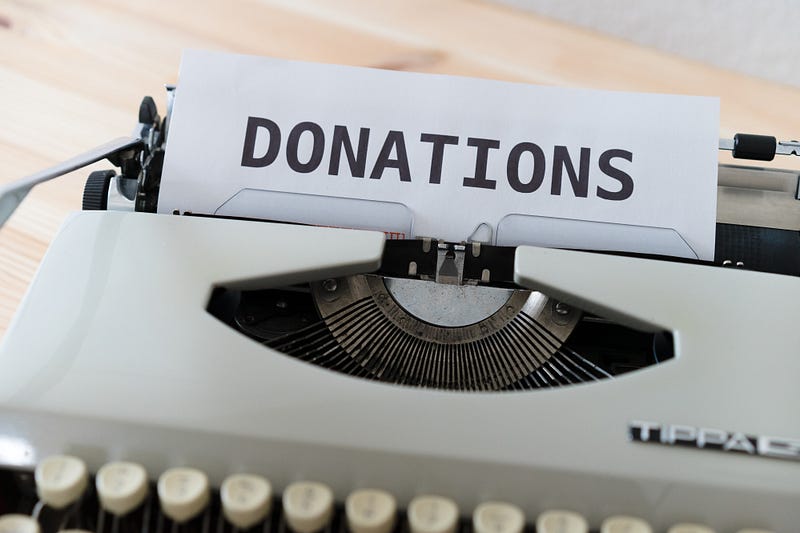
Photo by Markus Winkler on Unsplash

Tuk-tuks, or auto rickshaws, are the main mode of transportation in Cambodia, offering a larger job market for youths who are looking to become financially independent. Yoo Tae-hyun, Head of the Platform Business Group at Shinhan Card, expressed his hopes that the campaign will empower the youths and help them become more independent.


Campaign participation

Shinhan cardholders who wish to participate in the campaign can select “Tuk Tuk Donation Certificate NFT Campaign” found under the Areumin section in Shinhan’s app service Shinhan pLay. They can then make a donation with their card or card points and apply for an NFT. Korbit said that it would airdrop all NFTs to donors at the end of the campaign in December, which can be verified on Korbit’s NFT marketplace and Shinhan pLay app’s MyNFT service. The images minted on the donation NFTs, which depict Cambodian youths on tuk tuks, are a contribution from Park Hye-geun, an artist who has worked on children’s books, educational materials, and more.

Notably, during a memorandum of understanding (MOU) signing ceremony last Monday, the three entities opted for an NFT certificate confirming their partnership instead of directly signing a document as a means to further implement NFTs into their collaboration.


Boosting ESG efforts

“We are pleased to contribute to creating a trend of making donations through NFTs and will continue to uphold our ESG management to have a positive impact on society,” said Oh Se-jin, CEO of Korbit. Meanwhile, Hyun Jin-young, CEO of the Good Neighbors Global Impact Foundation, applauded Korbit’s efforts to promote a culture of donation and address global social issues through the use of NFTs. He also stated that he looks forward to various technological collaborations with Korbit in the future.

Korbit has previously worked with Shinhan Card on various cultural and artistic ESG activities, such as hosting an art fair in April in Seoul, where some 200 artists showcased their artworks.


More to Read
View All
Web3 & Enterprise·

Sep 30, 2023

Bitfinex Forges Strategic Partnership with Zodia Custody

Bitfinex Forges Strategic Partnership with Zodia CustodyCryptocurrency exchange Bitfinex has formed a strategic partnership with digital assets custodian Zodia Custody to fortify the security of its institutional clients’ assets.The deal struck with Zodia Custody, a subsidiary of the UK multinational banking titan Standard Chartered, aligns with a growing trend within the digital assets sector, one that emphasizes separating asset custody from trading activities. Such a division will result in heightened security measures while better meeting regulatory compliance.Photo by Ketut Subiyanto on PexelsSecuring digital assetsThis collaboration provides an opportunity for institutional clients who maintain accounts with both Bitfinex and Zodia Custody. They can now seamlessly replicate their custodial assets on Bitfinex’s cutting-edge trading platform, all while basking in the security offered by Zodia’s off-exchange settlement solution, aptly named Interchange.With this innovation, the need for actual asset transfers becomes obsolete as the settlement process unfolds periodically on the blockchain. This approach not only ensures efficiency but also provides greater security when interacting with the platform.Industry trendBitfinex’s move towards segregating trading and custodial functions aligns with best practices in the crypto industry but also signifies a wider trend observed among cryptocurrency exchanges as they increasingly adopt a more conventional approach akin to traditional financial institutions.Paolo Ardoino, the Chief Technology Officer (CTO) of Bitfinex, shared the exchange’s perspective, stating:“We are committed to shaping the future of digital market infrastructure and enabling institutional customers to thrive in this space. Working with Zodia Custody is a significant part of that strategy, and together we can look to enable even more institutions to enter or further participate in digital assets.”This partnership serves as a testament to Bitfinex’s continuous efforts to collaborate with reputable custodians, building upon past successful alliances with firms like Koine in 2020 and Digivault in 2022.The significance of segregating asset custody from trading operations has taken on greater importance, primarily in the aftermath of the collapse of FTX, where management gambled with customer’s assets.Zodia’s market expansionZodia Custody, with the backing of Standard Chartered Bank, has recently expanded its footprint into Singapore, offering digital asset custody services to financial institutions in the burgeoning Asian market.Not content with that, in May it launched its crypto custodian service in Dubai. The following month the fledgling firm announced a partnership with blockchain infrastructure firm Blockdaemon relative to crypto staking for institutional clients. There’s been no let up in the firm’s roll-out of services as earlier this month it commenced a yield offering on stablecoins in partnership with Singapore-based DeFi platform OpenEden.Bitfinex’s history includes one of the most infamous hacks in the cryptocurrency sphere, with the pilfering of 120,000 BTC, now valued at over $3 billion. Nevertheless, the exchange has undergone a transformative journey and presently boasts an extensive array of cryptocurrencies and trading pairs.As the regulatory landscape continues to evolve, the practice of separating custody from trading is poised to become a standard procedure, further enhancing the legitimacy and security of the cryptocurrency market.

news
Policy & Regulation·

May 20, 2024

Hong Kong digital yuan pilot lacks P2P capabilities

Hong Kong has launched a pilot program for the digital yuan, marking the People’s Bank of China's (PBoC) central bank digital currency’s (CBDC) first major deployment outside mainland China.  This initiative, facilitated by the Hong Kong Monetary Authority (HKMA), represents another step forward in the integration of the digital yuan into Hong Kong's financial ecosystem.Photo by bady abbas on UnsplashCross-border transactions rather than P2PAccording to a press release, the HKMA and PBoC are working together to enable Hong Kong users to set up personal e-CNY wallets using just their Hong Kong mobile phone numbers. The faster payment system (FPS) will support these e-CNY wallets, allowing users to top up their wallets through 17 retail banks in the Chinese autonomous territory. However, the e-CNY wallets are primarily designed for cross-border payments between Hong Kong and the mainland, and currently do not support person-to-person transfers within Hong Kong. This pilot aims to facilitate transactions for Hong Kong residents using their digital yuan wallets, marking the first integration of a CBDC through a major central bank. The Digital Currency Institute (DCI) is managing the interoperability infrastructure between the FPS and the digital yuan, with a focus on enhancing cross-border payments, a key objective on the G20 countries' roadmap. More functionality promisedLike blockchain protocols, the digital yuan pilot offers 24/7 payment capabilities. Eddie Yue, the chief executive of the HKMA, stated that the e-CNY application and wallet would gradually gain more functionality as the HKMA and PBoC work to encourage more retail merchants to adopt the system. Yue stated: “By expanding the e-CNY pilot in Hong Kong and leveraging the 24x7 operating hours and real-time transfer advantages of the FPS, users may now top up their e-CNY wallets anytime, anywhere without having to open a Mainland bank account, thereby facilitating merchant payments in the Mainland by Hong Kong residents.” The HKMA and DCI are planning upgrades to the e-CNY wallets through real-name verification, aiming to enable corporate use cases for cross-border trade settlements in the future. Adoption strugglesWith at least 140 countries exploring CBDC pilots, China's digital yuan is among the most advanced. China has been actively promoting its CBDC, even paying monthly salaries in e-CNY to government workers and employees of state-owned enterprises. However, as reported by the South China Morning Post, many recipients are hesitant to use the digital yuan due to privacy concerns and other limitations. China's central bank aims to increase the use of the yuan in Hong Kong, especially in tourist areas. Last June, digital yuan ATMs were installed in the resort city of Sanya in an attempt to target use of the currency by tourists. Although the city of Jinan embarked upon an initiative last year to enable digital yuan payments on its bus system, the currency is not yet widely accepted for public transportation across China.  Meanwhile, Hong Kong is in the second phase of its own CBDC pilot, the e-HKD, and has launched a regulatory sandbox for stablecoins to foster communication between regulators and issuers of fiat-pegged stablecoins in the region. 

news
Policy & Regulation·

Jan 14, 2025

Indian Railways to issue NFT train tickets for world’s largest religious festival

Indian Railways (IR), the state-owned manager of India’s railway network, plans to issue non-fungible token (NFT)-based train tickets to transport pilgrims to Maha Kumbh Mela, the world’s largest religious festival. The Hindu festival is of particular significance given that it only occurs once every 144 years. ChainCode Consulting partnership According to a report published by Indian news outlet Pune.news on Jan. 13, IR has collaborated with ChainCode Consulting, a Bangalore-headquartered enterprise blockchain development and consulting firm, to provide the digital tickets. The Polygon blockchain has been chosen as the network upon which the NFT tickets will be minted. The tickets will then be made available to end users via NFTtrace, a real-world assets (RWA) tokenization and traceability platform run by ChainCode Consulting.Photo by Choong Deng Xiang on UnsplashLong-running collaborationService users and railway personnel will be free to check the validity of tickets on the public blockchain. This announcement is just the latest installment of a long-running collaboration between ChainCode Consulting and IR. In March 2024, a similar project was pursued by both parties. On that occasion, the collaboration involved the release of a series of NFT tickets for use on a train line running from Lucknow, the capital of the Indian state of Uttar Pradesh, to the Indian capital, New Delhi.  In that instance, NFTs were minted on the Hyperledger blockchain. A previous collaboration, earlier in 2024, saw NFTs minted on Polygon for digital tickets covering journeys to the sacred Hindu city of Ayodhya. Commenting on the choice of Polygon relative to this latest collaboration, Alok Gupta, CEO of ChainCode Consulting, stated: “By partnering with IRCTC and leveraging the Polygon blockchain, we are enabling a digital-first experience that complements the spiritual and traditional significance of the Mahakumbh while introducing a new level of engagement through NFTs.” Polygon is an Ethereum ecosystem scaling network. With that, it has fast throughput and low gas fees and it's on this basis that it’s understood that Polygon was chosen in this instance. Aishwary Gupta, global head of payment and fintech at Polygon Labs, the key developer behind the Polygon blockchain, told Cointelegraph that public blockchains are playing an important role in doing away with middlemen and intermediaries.  The Polygon Labs executive stated that at both state and central government levels in India, Polygon has been used on a number of projects. He added: ”With its low cost and high throughput, we are sure that the NFTs being issued around Maha Kumbh Mela would be yet another great success.” $94 billion market opportunityTicketing remains one of the proposed use cases for blockchain technology that has the potential to gain traction. That potential hasn’t gone unnoticed by ticketing industry leader Ticketmaster. In 2023 the company rolled out token-gated ticket sales. The feature enables artists to reward fans who hold NFTs with access to exclusive pre-sale events, prime concert seating and many other incentives and rewards. NFT technology offers a solution to a number of issues experienced within the events industry, including ticket scalping, fake tickets and security issues. The live events business is a $94 billion industry, underscoring the opportunity available to be exploited by innovative NFT-based ticketing startups. 

news
Loading