Top

Zodia Custody to Commence Yield Offering on Stablecoins

Web3 & Enterprise·September 20, 2023, 12:42 AM

In a play that’s designed to entice institutional investors, Zodia Custody, a portfolio company of Japanese financial services conglomerate SBI, is gearing up to offer a yield on digital assets.

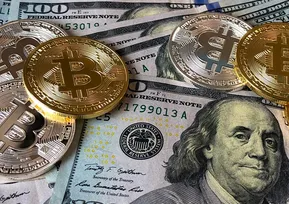
Photo by CoinWire Japan on Unsplash


Introducing “Zodia Custody Yield”

The crypto startup has introduced “Zodia Custody Yield,” a crypto staking option designed to reward holders of crypto assets stored within its platform. The initiative has been launched in partnership with Singapore-based DeFi platform OpenEden. It promises returns on stablecoins although full details on the offering remain undisclosed.

Jeremy Ng, Co-Founder of OpenEden, expressed his belief in the potential of cryptocurrencies to generate substantial passive income for their holders. Ng stated:

“There are billions of dollars worth of stablecoins sitting on the sidelines when they could easily be generating yields for investors.”


TradFi embracing digital assets

Zodia’s move aligns with a growing trend in the financial industry. Yesterday, a leading US bank, Citi, disclosed its collaboration with Maersk to facilitate services that convert funds into digital assets. The primary goal is to enable the bank’s customers to execute nearly instantaneous payments, unrestricted by traditional business hours.

Simultaneously, several prominent asset management firms are awaiting a pivotal decision from the Securities and Exchange Commission (SEC) regarding their applications to launch a spot Bitcoin exchange-traded fund (ETF). This list includes major players such as BlackRock, Invesco, WisdomTree, ARK Invest, Valkyrie, and Franklin Templeton. BlackRock, the frontrunner in the efforts being expended towards ETF approval, submitted its application for a spot Bitcoin ETF on June 16.

In a recent interview, Bloomberg analyst Eric Balchunas said that he expects $150 billion in capital to flow into the Bitcoin market within two years of a spot Bitcoin ETF approval in the US.

The financial strategies of these entities now prominently feature blockchain and crypto-based products, once considered niche but now integral to their operations. Nonetheless, even with widespread anticipation of the approval of BlackRock’s ETF, the firm faces substantial obstacles. US regulators have subjected BlackRock to intense scrutiny due to concerns regarding its ties to China. Additionally, political figures have criticized the asset manager for prioritizing environmental, social, and governance (ESG) criteria over investor returns.

Zodia was spun out of British multinational banking firm Standard Chartered. The bank has a positive outlook relative to crypto. In a bold prediction made in June, the UK-based bank forecasted that the value of Bitcoin could potentially surge to $50,000 by the end of the year, with an even more optimistic projection of $120,000 for 2024.

In 2021 Standard Chartered, in collaboration with Northern Trust, a leading asset servicing firm, founded Zodia Custody. Since its inception, the venture has garnered a respectable level of success. It successfully secured $36 million in investments and solidified a partnership with SBI Digital Asset Holdings, enabling its expansion into the Japanese market.

In May, the firm launched its crypto custodian service in Dubai, having signed a memorandum of understanding (MOU) with the Dubai International Financial Center (DIFC). In June, Zodia partnered with blockchain infrastructure provider Blockdaemon, in an effort to further its crypto staking offering. Earlier this month, the company announced its arrival in Singapore, with a view towards expanding its digital asset custody service there.

More to Read
View All
Web3 & Enterprise·

Dec 06, 2023

Korbit CEO partakes in anti-drug relay campaign

Korbit CEO partakes in anti-drug relay campaignSouth Korean cryptocurrency exchange Korbit’s CEO, Oh Se-jin, has joined the No Exit anti-drug campaign — a nationwide relay campaign launched in April by the National Police Agency, the Korean Association Against Drug Abuse and other relevant institutions to raise public awareness about the dangers of drug addiction and promote a collective effort to prevent drug-related crimes, according to local news outlet ET News on Wednesday (local time). So far, numerous figures across various sectors and industries have participated, including actor Choi Bool-am and the president of the Korean Nursing Association Kim Young-kyung.Photo by Hal Gatewood on UnsplashEncouraging collective vigilanceThe campaign’s slogan draws a metaphor between drugs and a maze that cannot be escaped once it has been entered. Participants in the campaign are obligated to share photos with a message that reads, “Do not start drugs — it is a maze with no exit”, and nominate the next participants.“I hope that all citizens will realize the seriousness of drugs through the No Exit campaign, and I aspire to contribute to creating a safer society. Korbit will fulfill its social responsibility in the cryptocurrency industry and contribute to building a healthier society,” Oh said.Next participantsOh was tagged in the campaign by Lee Hyo-jin, CEO of the peer-to-peer (P2P) financial services company 8Percent. In turn, he nominated Lee Sang-ho, CEO of HSBC’s Korea office, and Kim Ji-yun, CEO and Co-founder of DSRV Labs, as the next participants.

news
Web3 & Enterprise·

Oct 10, 2023

Kbank’s Upbit Customer Deposits Total $2.2B

Kbank’s Upbit Customer Deposits Total $2.2BKbank, an internet-only bank in South Korea, is facing criticism due to its relatively high proportion of cryptocurrency customer deposits compared to other banks. Kbank reportedly manages approximately KRW 3 trillion (equivalent to $2.2 billion) in deposits from customers of cryptocurrency exchange Upbit, which accounts for about 18% of its total customer deposits.This percentage stands out, being notably higher than other banks that provide accounts to the other four crypto-to-fiat exchanges in Korea. That is according to a report by Maeil Business Newspaper, which obtained documents submitted to lawmaker Kim Hee-gon by the Financial Services Commission (FSC).According to Korean law, crypto exchanges must secure real-name bank accounts from banks to offer crypto trading services against the Korean won. Kbank offers its accounts to Upbit, the dominant player in the Korean crypto market.Photo by David McBee on PexelsNotable exposure to crypto exchangeThe FSC documents showed that Kbank’s Upbit customer deposits totaled KRW 3.09 trillion, making up 18% of its total deposits, which amount to KRW 17.2 trillion.In a striking contrast, Nonghyup Bank had 0.2% of its deposits, equivalent to KRW 557.8 billion, in Bithumb, which is the nation’s second-largest cryptocurrency exchange. Kakaobank, another internet-only bank, had 0.3% (KRW 112.2 billion) of its deposits in Coinone. Shinhan Bank held 0.01% (KRW 43 billion) in Korbit, and Jeonbuk Bank had a similarly small 0.02% (KRW 4.2 billion) in Gopax.Lawmaker Kim pointed out that Kbank has become a bank dedicated to crypto trading. Kim proposed that financial authorities take proactive measures to assess the potential risks that may emerge when Kbank utilizes Upbit customer deposits as a basis for offering credit loans. Such risky financial practices could potentially result in higher loan defaults and the emergence of a greater number of individuals with poor credit histories, which could ultimately jeopardize the stability of the financial market.Regulatory gapThe current Financial Transaction Reporting Act mandates that virtual asset service providers (VASPs) segregate customer deposits from their own assets as a measure to combat money laundering. However, it has been noted that there are regulatory gaps stemming from the absence of specific guidelines for the custody of these deposits.According to the Financial Supervisory Service (FSS), Nonghyup and Kakaobank store deposits in separate accounts within the bank. On the other hand, Kbank and Jeonbuk Bank keep deposits in corporate accounts under their respective exchange partners’ names.When deposits are stored in separate accounts within the bank, only the bank has access to those funds, and they are essentially operated in a manner similar to a trust, preventing the bank from using the funds arbitrarily. In contrast, funds held in corporate accounts can be used by the bank as a source for lending. Lawmaker Kim warned that in scenarios such as exchange bankruptcies or similar situations, banks holding customer funds in corporate accounts could face difficulties in ensuring customer protection.Each of these banks receives reserve funds from crypto exchanges in anticipation of potential compensation requirements in the event of unforeseen losses. The FSS states that as of the end of last month, the reserve amounts held by each bank were as follows: Kbank had KRW 200 billion, Nonghyup Bank had KRW 100 billion, Kakao Bank had KRW 73 billion, and both Shinhan Bank and Jeonbuk Bank had KRW 30 billion.Kbank’s Upbit customer deposits are approximately 72 times larger than Shinhan Bank’s Korbit customer deposits. However, the reserve amounts held by Kbank are only 6.7 times greater than those held by Shinhan. Lawmaker Kim emphasized the importance of banks maintaining reserve funds that are proportional to the customer deposits held in their partner crypto exchanges.Signs of recoveryMeanwhile, the Korean cryptocurrency industry, which faced a downturn in the latter half of last year due to events like the Terra collapse and FTX’s bankruptcy, has exhibited signs of recovery in the first half of this year.The Financial Intelligence Unit (FIU) of the FSC recently reported that the cryptocurrency market cap in South Korea has reached KRW 28.4 trillion as of the end of June this year. This reflects a 46% increase compared to the end of last year when it stood at KRW 19.4 trillion. Additionally, the total operating profit of domestic exchanges surged by 82% to KRW 227.3 billion over the past six months, compared to the previous figure of KRW 124.9 billion.The total market’s max drawdown (MDD) was 62%. MDD assesses the extent to which an asset has declined in value from its highest point to its lowest point within a specific time frame, before experiencing a recovery. The FIU considers this MDD to be high, urging investor caution.

news
Markets·

Oct 08, 2025

Korean crypto faces retail slowdown while eyeing institutional future

South Korea’s retail-heavy crypto market is losing momentum ahead of broader institutional access to trading. Data from the Financial Services Commission (FSC) and the Financial Supervisory Service (FSS), cited by Financial News, shows that in the first half of 2025, Korean-won balances held at the country’s five licensed fiat-to-crypto exchanges sank 42% to 6.2 trillion won ($4.4 billion), signaling less dry powder waiting on the sidelines for trading. Only five platforms are permitted to support won-denominated trading, and the drop in parked cash underscores a broader cooling. By the end of June, the Korean crypto market cap stood at 95.1 trillion won ($67.5 billion), down 14% from six months earlier. The global market also contracted, but the decline was more modest at about 7% over the same period.Photo by Y K on UnsplashTrading slows but retail base expandsTrading activity eased as well. Average daily volumes across 25 domestic virtual asset service providers (VASPs) fell 12% to 6.4 trillion won ($4.5 billion) in the first half. Paradoxically, the number of market participants climbed 11% to 107.7 million across those platforms. Nearly all were individuals, as only 220 were institutions, reflecting long-standing restrictions on institutional won trading. That retail skew has consequences. Data submitted by the FSS to a lawmaker, cited by Digital Asset, reveals that the top 10% of users by trading volume accounted for roughly 90% of activity at the five fiat on-ramps. By exchange, the figures were Upbit (89.36%), Bithumb (97.97%), Coinone (97.54%), Korbit (97.52%), and Gopax (97.95%).  Market lawyers warn that this concentration heightens manipulation risk. Lee Seung-min of SEUM Law Firm said volatility may be more pronounced in tokens listed only on Korean venues, but added that deeper institutional participation could help reduce such volatility and support longer market cycles.  Regulators are inching in that direction. Earlier this year, authorities allowed universities and nonprofits to sell their crypto holdings. By year-end, the FSC plans to let about 3,500 publicly traded companies and professional investors, excluding financial institutions, open accounts at the licensed platforms for trading. Exchanges pour cash into promotionsWhile regulators are preparing to bring more institutional players into the fold, exchanges continue their long-running effort to draw in retail users. Another Digital Asset report noted that from 2023 through July 2025, promotional outlays by the five won-enabled platforms totaled 190.3 billion won ($135 million). Bithumb alone accounted for 180.3 billion won ($128 million), far outspending Upbit (9.4 billion won), Coinone (1.7 billion won), Korbit (1.6 billion won), and Gopax (100 million won). The gap suggests Bithumb, which ranks second in market share, has pursued a particularly aggressive approach to expand its customer base. Taken together, the numbers depict a subdued market, with less capital parked on exchanges and lighter trading while activity remains heavily concentrated among a small cohort of traders. Even so, the expanding base of individual accounts represents a bright spot, underscoring the market’s continued dependence on retail investors. If policymakers follow through on opening the door to a broader set of corporate and professional players later this year, Korea’s crypto landscape could shift from retail-driven fluctuations toward steadier, institution-supported flows. 

news
Loading