Top

BitMEX Returns to Derivatives Arena with Prediction Market

Web3 & Enterprise·September 14, 2023, 2:14 AM

BitMEX, a name synonymous with the early days of crypto derivatives, has made a return to its core focus with the launch of a prediction market.

Through this new product, the company aims to captivate traders by offering them the opportunity to wager on real-world events, effectively extending the boundaries of crypto derivatives trading.
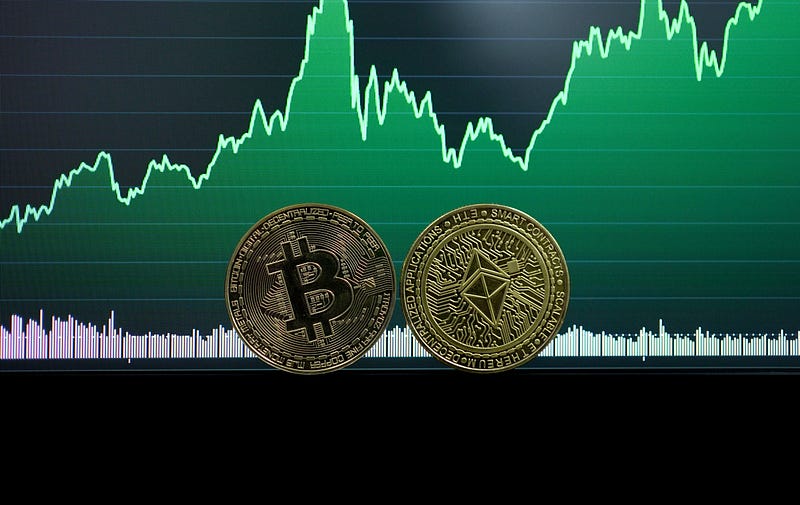
Photo by Amjith S on Unsplash


Betting on the outcome of real-world events

This shift in direction is being overseen by Stephan Lutz who took the helm as CEO and group CFO in 2021.

In a blog post announcing the product launch on Tuesday, the firm expressed its vision for the prediction market, asserting that it would introduce an entirely new dimension to crypto derivatives trading.

The product is designed to diversify traders’ portfolios and yield returns based on predicting the outcomes of real-world occurrences, an offering that the company feels holds significant promise. Especially in bear markets characterized by subdued volatility, the prediction market could serve as a valuable instrument for traders seeking to enhance their strategies.


Novel initial wagers

BitMEX’s inaugural move into the prediction market sees the firm offer an array of contracts for traders to explore. Among those initial offerings are contracts enabling wagers on various outcomes, such as the percentage recovery rate of FTX’s bankruptcy claims and the likelihood of the US Securities and Exchange Commission (SEC) approving a Bitcoin exchange-traded fund (ETF) by October 17. These contracts underscore BitMEX’s intent in covering a wide spectrum of topics, with the firm promising to introduce more options in the near future.

The prediction market holds the potential to revolutionize the way traders engage with real-world events, introducing a novel form of participation that transcends traditional trading boundaries. This launch has significant potential for BitMEX as it endeavors to reclaim its position in the competitive crypto derivatives market.


Change of strategy

Under the stewardship of former CEO Alexander Höptner, BitMEX embarked on a diversification strategy termed “beyond derivatives,” delving into areas like spot trading and exploring new business avenues. However, the departure of Höptner in October ushered in a change in direction for the firm. The introduction of the prediction market now symbolizes BitMEX’s return to its foundational business model, with a renewed focus on derivatives.

In May, the Seychelles-headquartered firm introduced perpetual contracts relative to SUI and PEPE tokens. Later that month, it launched a dedicated virtual asset service to Hong Kong-based customers. Hong Kong was its original center of operations when the company was first formed. It has since moved those operations to Singapore while maintaining its corporate presence in the Seychelles.

BitMEX’s fresh foray into the derivatives space not only signifies a return to its roots but also presents traders with a means to trade relative to real-world events. By offering an eclectic range of contracts, the platform seeks to attract traders who crave more than conventional crypto trading. This strategic move could serve as a catalyst for BitMEX as it strives to regain its foothold in the competitive crypto sector.

More to Read
View All
Policy & Regulation·

Jan 17, 2024

Crypto exchange Flybit passes post-audit for ISMS-P certification

South Korean cryptocurrency exchange Flybit, which is operated by the Korean Fintech Industry Association, has passed the post-audit for its Information Security and Privacy Management System certification (ISMS-P), according to local news website News1 on Wednesday (KST).Photo by FlyD on UnsplashRigorous certification standardsThe ISMS-P is a security management system jointly operated by South Korea’s Ministry of Science and ICT and the Personal Information Protection Commission, representing the highest level of security management in the country. It combines 80 requirements for Information Security Management System (ISMS) certification and 22 requirements for Personal Information Management System (PIMS) certification, totaling 102 requirements that must be met. Once obtained, certification is valid for three years, and annual post-audits are required to maintain its validity. Flybit’s commitment to security"Cryptocurrency exchanges are businesses that manage customers' valuable assets. All Flybit members approach their work by recognizing the fact that the protection of personal information is our most important value,” the exchange said. "We will continually strive to maintain security accidents since the establishment of the exchange." Flybit first obtained the ISMS certification in December 2020 and the ISMS-P certification two years later in December 2022. The most recent ISMS-P follow-up audit was conducted last month. After a thorough examination, the results of the audit were delivered by the Korea Internet and Security Agency (KISA) on Dec. 12, which stated that the exchange could maintain its certification. In October last year, the firm also received the highest rating in the comprehensive anti-money laundering (AML) evaluation conducted annually by the Financial Intelligence Unit (FIU) under the Financial Services Commission.

news
Policy & Regulation·

Oct 13, 2025

UAE deepens its crypto push as Bybit wins full license and institutions move in

The United Arab Emirates (UAE) advanced its push to become a leading digital asset hub as crypto exchange Bybit received a full virtual asset platform operator license from the Securities and Commodities Authority (SCA). The permit enables Bybit to provide its entire range of products to UAE residents, the company said in an Oct. 9 press release. The clearance marks the culmination of a process that began when Bybit received preliminary approval from the SCA in February. The exchange says it is the first to complete the full licensing journey and notes that 2025 has been a year of major compliance wins, including new credentials in Europe and a return to the Indian market.Photo by Atikah Akhtar on UnsplashBitGo broadens institutional reach in DubaiInstitutional infrastructure is expanding alongside retail access. Crypto custody firm BitGo secured a broker-dealer license from Dubai’s Virtual Assets Regulatory Authority (VARA). The new authorization allows BitGo MENA to deliver regulated trading and intermediation services across the region through an integrated OTC desk and a digital platform supporting spot crypto trading in both dirhams and U.S. dollars. The UAE’s welcoming attitude toward digital assets is changing how major investors think about wealth. The Bitcoin Historian said on X that The Kanoo Group, which oversees about $20 billion in assets, intends to invest in Bitcoin. Bloomberg has reported that affluent families across the region are gradually diversifying beyond real estate and private enterprises. With around $1 trillion expected to shift to younger generations soon, many heirs are looking to allocate more toward cryptocurrencies, tokenized funds, and tokenized real-world assets (RWAs). New fund marks progress in tokenized financeThat growing appetite for digital exposure is now being met with new products. Last month Qatar National Bank (QNB) Group joined forces with Standard Chartered and DMZ Finance to launch the first regulated tokenized money market fund in the Dubai International Financial Centre. Using blockchain technology, the QCD Money Market Fund brings traditional financial assets on-chain, creating new yield opportunities for investors within the digital economy. The fund is managed by QNB Group, uses infrastructure provided solely by DMZ Finance, and has Standard Chartered serving as custodian of its assets. As the UAE deepens its role in global finance, regulators are also working to align with international standards. By 2027, it expects to adopt the OECD’s Crypto-Asset Reporting Framework (CARF), with cross-border data exchanges to begin in 2028. The Ministry of Finance has already signed the Multilateral Competent Authority Agreement to make this happen. The framework promotes automatic sharing of crypto-related tax information among member countries, underscoring the UAE’s commitment to global transparency as it expands its financial footprint. Recent developments show the jurisdiction striving for growth while strengthening oversight. Exchanges are gaining clarity on what they can offer, institutions are building trading rails, and investors are embracing tokenized products. They signal a market finding its balance between innovation and regulation. The coming years will reveal how well that balance can hold. 

news
Policy & Regulation·

Apr 20, 2023

Do Kwon Loses Fight to Conceal Singapore Records

Do Kwon Loses Fight to Conceal Singapore RecordsDo Kwon, the founder of Terraform Labs has failed in his attempt to deny the United States’ Securities and Exchange Commission (SEC) from accessing company records in Singapore.©Pexels/George BeckerIn February, the SEC filed a complaint against Terraform Labs and its founder in a US court. The move followed an investigation that the agency had carried out into the collapse of a number of digital assets established by the company. The lawsuit claims that both the company and Do Kwon had engaged in fraud, together with the sale of unregistered securities to US citizens.Jurisdictional challengeLawyers for Do Kwon had claimed that in trying to access documents related to the Singapore-domiciled company, the SEC was acting far beyond its jurisdiction. According to court filings, his defense team argued that Do Kwon is a Singapore resident while Terraform Labs is a Singapore-based company that operates on a global basis and not specifically in the United States.The filing pointed to the fact that the Terraform Labs CEO had “limited contact with the US.” “Most of the company’s business is essentially global, and it’s not specifically aimed at the United States,” it stated.His lawyers had filed a request for the SEC to withdraw its documentation request. In a recent hearing, US District Judge Jed Rokoff turned down Terraform’s request. The documents are understood to be held by the Monetary Authority of Singapore (MAS) although the specific nature of the documentation sought remains unclear.The SEC claims that in founding the Terra US dollar stablecoin (TUSD) and associated cryptocurrency LUNA, Terraform Labs and Do Kwon were responsible for wiping out more than $40 billion dollars in value following their collapse. The Luna Foundation Guard (LFG), which was established to provide funds to keep the TUSD stablecoin at a $1 value, is another entity that the SEC intends to access documents from with the court’s permission. Singaporean police had stated last month that they had launched an investigation into the collapse of the TUSD stablecoin.Meanwhile, both the South Korean and US authorities are seeking the extradition of Do Kwon to face related charges. He was arrested last month in the southeastern European country of Montenegro where he was charged with having used forged documentation to enter the country. Although he had denied it on social media, in effect Do Kwon had been on the run from the reach of South Korean authorities over the course of a number of months, spending a portion of that time in Montenegro.Asset huntAn investigation by authorities in South Korea in recent weeks revealed that they were unable to find any assets held in the country owned by the Terraform Labs founder. The trail in chasing down any such assets has led to the United States. It is understood that Do Kwon bought real estate in the United States under his mother’s name. This is a common tactic for those who attempt to evade future confiscation of assets.Earlier this week, South Korean prosecutors confirmed that they are investigating a transfer of funds by Do Kwon to a leading law firm based in Seoul.

news
Loading