Top

SEBA Bank Receives Conditional Approval for Crypto Services in Hong Kong

Web3 & Enterprise·August 31, 2023, 1:43 AM

Swiss-based crypto-centric SEBA Bank has secured conditional approval from Hong Kong’s Securities and Futures Commission (SFC) to offer crypto services within the autonomous Chinese territory.

While there are stipulations yet to be met before the license is fully granted, the development marks a significant progression when it comes to SEBA’s global business ambitions.

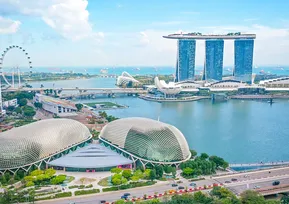
Photo by Ruslan Bardash on Unsplash


Expanding in Asia

The “approval-in-principle” comes as part of SEBA’s strategic efforts to expand its foothold in the Asian crypto market. Once the conditions are fulfilled and the license is formalized, SEBA will be well positioned to provide Hong Kong with a range of comprehensive crypto services.

This includes securities dealing encompassing crypto-related structured products, as well as consultation and management of both digital assets and traditional securities. SEBA sees potential in the offering of derivative products as it has identified demand for derivatives and structured products within the Asian crypto market.

This step forward for SEBA follows earlier reports that the bank was actively growing its workforce in pursuit of digital asset licenses for both Hong Kong and Singapore. The company has grown its headcount from seven to 20 across these locations, as it looks to establish a strong presence in the Asian market.

The move aligns with Hong Kong’s evolving stance on cryptocurrency and digital finance. Introduced in June, the virtual asset service provider (VASP) license was intended to regulate virtual asset services within Hong Kong’s legal framework. Currently, only two crypto exchanges have secured these licenses.

Cryptocurrency exchange HashKey, alongside digital assets platform OSL, became one of the first licensed crypto exchanges in Hong Kong recently. Since then, it has expanded its offerings to retail users, allowing them to purchase Bitcoin and Ethereum using US dollars. Leading up to that licensing approval, it had also launched a wealth management service for high-net-worth individuals and institutional investors. The majority of publicly accessible VASPs remain unregulated, according to a recent statement by the SFC.


Regulatory balance

The Hong Kong Monetary Authority (HKMA) has also shown interest in fostering relationships between established financial institutions and crypto exchanges, further signaling the region’s growing engagement with the crypto space. It’s also pointing towards getting the balance right between enabling digital asset innovation and having sufficient regulation in place to protect investors. In May, its CEO, Eddie Yue, stated that Hong Kong wouldn’t be a place for light touch regulation.

The licensing process in Hong Kong hasn’t been without its difficulties. The interest in obtaining crypto trading licenses caught the SFC flat footed as it found itself understaffed to work through the licensing applications that arrived at its door. The backlog prompted commentary from SEBA’s CEO for the Asia Pacific (APAC) region, Amy Yu, back in May, with Yu highlighting that the backlog had increased significantly over the course of nine months.

While SEBA has broken into the market in the APAC region via its efforts in Hong Kong, it’s understood that the bank has plans to develop its business in Singapore further over the course of the coming months.

More to Read
View All
Web3 & Enterprise·

Nov 10, 2023

Shinhan Bank to issue NFTs at 2023 Blockchain Grand Week in Seoul

Shinhan Bank to issue NFTs at 2023 Blockchain Grand Week in SeoulShinhan Bank, one of South Korea’s leading financial institutions, is set to issue non-fungible tokens (NFTs) and operate a promotional booth in celebration of its participation in the upcoming 2023 Blockchain Grand Week, scheduled for next Wednesday, according to a report by local news outlet Newspim.The Blockchain Grand Week, an annual event since 2018, is hosted by the Ministry of Science and ICT and organized by the Korea Internet and Security Agency (KISA), the National IT Industry Promotion Agency (NIPA) and the Institute of Information and Communications Technology Planning and Evaluation (IITP). Its objectives are to increase public awareness of blockchain technology and to facilitate the broader adoption of its ecosystem.Photo by Pete Linforth on PixabayNFTs to first 2,000 visitorsThe event is set to take place at the Convention and Exhibition Center, better known as COEX, in Seoul over two days. It will feature a conference centered around the theme “Adding Trust to Digital Platforms” and will include several academic seminars. Various blockchain companies will also be showcasing their products and services at their respective booths. For this event, Shinhan Bank is collaborating with Hexlant and Vircle to introduce their NFT project. They also plan to offer NFTs to the first 2,000 visitors to their booth.The NFTs will be distributed through Shinhan Bank’s NFT wallet, SOL Wallet, and will come with practical perks such as tickets for events at the booth and coffee coupons. Furthermore, these NFTs will be transferable to others.A representative from Shinhan Bank expressed hope that visitors will have the opportunity to experience the bank’s NFTs and gather diverse information related to blockchain technology. The official also emphasized the bank’s commitment to continually developing and introducing blockchain services that can be integrated into customers’ daily lives.Shinhan Bank’s endeavors in blockchainShinhan Bank’s efforts in the blockchain sector have been marked by various accomplishments in recent years. In 2021, the bank received the Ecosystem Transformation Award at the Enterprise Blockchain Awards, now known as the Web3 and Blockchain Transformation Awards (W3B Awards). This January, Shinhan integrated the SOL Wallet service into its financial services application. The bank remains dedicated to spearheading client-centric blockchain initiatives, one such effort being the development of NFT technology in collaboration with Hexlant and Vircle for corporate marketing purposes.Prohibition on discussing virtual assetsMeanwhile, there has been some dissatisfaction among industry insiders regarding the event’s restrictions. Those operating booths are prohibited from mentioning virtual assets in their projects. The application form for booth holders explicitly stated that exhibitions related to virtual assets are not allowed. This cautious approach is believed to be a response to recent cryptocurrency scandals, such as the $40 billion Terra-LUNA crash and the controversy surrounding a Korean lawmaker’s crypto holdings.

news
Policy & Regulation·

May 13, 2024

Worldcoin resumes services in South Korea after two months of suspended operation 

Sam Altman’s iris-scanning project Worldcoin (WLD) has resumed its service in South Korea following two months of suspended operation, according to Digital Today. The project utilizes a device dubbed “Orbs” to collect personal biometric data from users who agreed to have their iris scanned by the machine.  The service was suspended after a number of complaints were filed against Worldcoin in February for its data collection practices. In the following development, Korea’s Personal Information Protection Committee (PIPC) launched an investigation into Worldcoin to examine if any local privacy law has been violated by Worldcoin. This led to suspension of six Orbs installed in several areas in Seoul, including Yeouido and Yeoksam areas.  While these Orbs have resumed operations, the investigation is still underway. The South Korean regulators are yet to decide what legal measures to take regarding Worldcoin, according to the press. Photo by Amanda Dalbjörn on UnsplashProof of personhood: Crypto tokens for simply being human Meanwhile, Worldcoin argues that it is impossible to identify an individual person by solely relying on the iris bio-data. It claims that the data will be only used in providing “proof of personhood” to distinguish humans from artificial intelligence (AI). The project aims to offer its WLD token to users “simply for being human” as universal basic income, whose jobs will be potentially replaced by artificial general intelligence (AGI) in the future.  A Worldcoin official added that the project has addressed potential privacy concerns by eliminating data custody processes and allowing users to remove their sensitive data at will. However, major countries including France and Spain have issued orders to suspend Worldcoin’s operation within their jurisdictions, citing risks involving personal data tracking and breaches.  A PIPC official stated that the government authority will continue the investigation and take further action in line with the Personal Information Protection Act.  

news
Web3 & Enterprise·

Sep 25, 2023

Korea Investment and Securities Completes the Construction of Security Token Infrastructure

Korea Investment and Securities Completes the Construction of Security Token InfrastructureKorea Investment and Securities (KIS) recently announced that it has become the first securities firm in South Korea to successfully establish an infrastructure for security token offerings.Photo by Joshua Sortino on UnsplashReal-world assetsSecurity tokens are a new class of securities that are based on distributed ledger technology, allowing individuals to invest in real-world assets (RWAs) that can be tokenized. Such assets include real estate, ships, airplanes, and artworks.In March, KIS initiated a security token consortium named “Korea Investment ST Friends,” collaborating with Internet-only banks KakaoBank and Toss Bank, AI company Kakao Enterprise, and blockchain developer Open Asset. Since May, the consortium has been diligently working with the principal objective of constructing an infrastructure leveraging distributed ledgers. Consequently, the group has finalized the development and testing of a system that manages the entire trajectory of security token projects, from issuance to liquidation.Cloud systemSpecifically, KIS has built its infrastructure on a cloud network, bearing in mind that the regulatory framework for security tokens is still in development. This cloud system is capable of adapting to regulatory modifications and implementing improvement updates. Moreover, it utilizes an agile development approach to encourage rapid decision-making and productive collaborations, enhancing time efficiency.Compatibility with the traditional systemThe newly established security token infrastructure is also compatible with the traditional security trading system. Achieving this compatibility posed numerous technical challenges as the new system operates on distributed ledgers, whereas the existing one relies on centralized servers.KIS is preparing to file patents for some of the technologies incorporated into the new system. These technologies encompass the payment of dividends through smart contracts, assurance of immediate settlements using deposits on distributed ledgers, and the management and safeguarding of personal information. By demonstrating the infrastructure’s capability and stability, the securities firm aims to gain a technological edge.Choi Seo-ryong, the head of the platform division at KIS, expects the new infrastructure to mark a significant milestone as distributed ledger technology merges with traditional finance. He further mentioned that the securities company will discover blue-chip assets meeting investor needs while committing to the stable establishment of the regulatory framework and the protection of investors.Moving forward, ST Friends will continue to enhance the stability and functionalities of the infrastructure through a series of field tests related to the entire process of security token products. Aiming to construct a security token ecosystem, the group will also concentrate on developing products by collaborating with various firms, including Korean content investment platform Funderful and real estate trading platform Valuemap.

news
Loading