Top

OPNX Makes a Play for Struggling Crypto Lender Hodlnaut

Web3 & Enterprise·August 08, 2023, 12:46 AM

In a strategic move OPNX, the crypto claims trading platform associated with the founders of failed Singaporean crypto hedge fund Three Arrows Capital (3AC), is eyeing the acquisition of Hodlnaut, a beleaguered crypto lender currently undergoing court-supervised restructuring in Singapore.
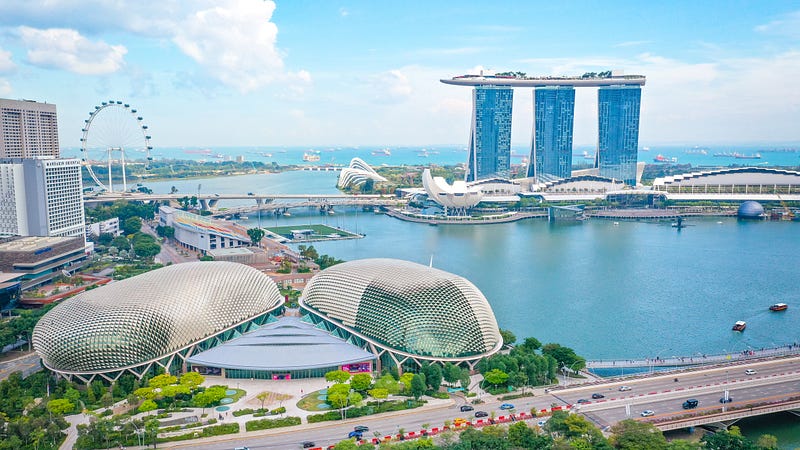
Photo by Meriç Dağlı on Unsplash


Compelling offer

That’s according to a person familiar with the matter cited by Bloomberg News on Sunday, together with a term sheet seen by Bloomberg. It’s understood that OPNX has presented a compelling offer to infuse Hodlnaut with a much-needed capital injection of approximately $30 million worth of FLEX digital tokens.

These tokens are closely tied to CoinFLEX, a trading platform that ran into difficulty in 2022, co-founded by Mark Lamb and Sudhu Arumugam. The Seychelles-based company rebranded and relaunched as OPNX earlier this year with the 3AC founders on board. The FLEX token holds a current market valuation of around $647 million, according to CoinGecko data.


Partial creditor payout

The OPNX proposal aims to fund a partial creditor payout to facilitate the resolution of pending claims. This proposal comes on the heels of efforts by Hodlnaut’s directors to reach out directly to its users, a move that was met with objections by the interim judicial managers overseeing Hodlnaut’s restructuring. A letter dated July 29 from the administrators confirms this development.

Under the terms of the deal outlined in a term sheet, OPNX’s capital injection through FLEX tokens would translate into a 75% ownership stake in Hodlnaut. The restructuring plan, if approved by creditors, would see these creditors receiving 30% of their claims in FLEX and other tokens. Alternatively, they would be entitled to a pro-rata payment of up to 95% of the total available corporate assets, whichever is more favorable to them.

Hodlnaut, headquartered in Singapore with operations also in Hong Kong, got caught up in crypto market turbulence, leading to a suspension of withdrawals a year ago. Subsequently, it embarked on a court-monitored restructuring journey in Singapore. Neither Hodlnaut nor its judicial managers have provided immediate comments on the OPNX bid.

The founders of Hodlnaut, Simon Lee and Zhu Juntao, had earlier proposed a business sale as a preferable alternative to liquidation. This proposal aimed to provide better outcomes for creditors, who had initially expressed preference for liquidation over a proposed restructuring plan earlier in the year.


OPNX reprimand

The journey of both OPNX and Hodlnaut is also marked by legal and regulatory challenges. In April, authorities in Dubai reprimanded Su Zhu, Kyle Davies, Mark Lamb, OPNX’s CEO Leslie Lamb, and Sudhu Arumugam for operating and promoting OPNX without the required local license. Meanwhile, the liquidators of 3AC have alleged a lack of cooperation by Zhu and Davies, as they seek to recover $1.3 billion from the duo, reflecting the losses preceding the fund’s downfall.

The 3AC founders recently claimed that they would donate OPNX profits to 3AC creditors. However, Kyle Davies is fighting the efforts of the 3AC liquidator to reclaim funds from the founders.


More to Read
View All
Policy & Regulation·

Dec 30, 2023

Indonesian authorities crack down on illegal crypto mining facilities

Recent reports from local media outlets indicate that Indonesian authorities have conducted raids on crypto mining sites, accusing them of illicitly siphoning electricity from the utility poles of the state-owned electricity company. The government’s intervention comes as part of a broader effort to address energy theft and regulate the cryptocurrency mining industry in the country.Photo by Fré Sonneveld on UnsplashTen mining sites raidedOfficials from the state-owned electricity company PLN highlighted the importance of coordinated efforts in exposing the unauthorized mining operations that were tapping into the national grid without approval. According to the reports, the ten illegal bitcoin mining sites which were raided incurred a financial loss of approximately 1.4 billion Indonesian rupees, equivalent to $100,000 for the state. The impact of energy theft extended beyond financial concerns, raising environmental and community-related concerns. Local students, alarmed by the potential consequences, urged PLN and regional police to investigate the mining operations. Subsequent action revealed that the theft was indeed taking place, prompting PLN officers from the Bukit Barisan Customer Service Implementation Unit (UP3) to conduct a raid. However, the officers faced threats and resistance, leading to a close coordination between PLN and the North Sumatra Regional Police. The raid uncovered a total of 1,300 bitcoin mining machines engaged in illegal operations, with each machine consuming a substantial 1,800 watts of electricity. Inspector General Agung Effendi, the North Sumatra Police Chief, disclosed that the illicit activities had been ongoing for an estimated six months, resulting in the arrest of 26 individuals across the ten locations.PLN reassured stakeholders of continued collaboration with the police to prevent further electricity theft and safeguard the national grid from such unauthorized activities. Worldwide concernThe incident in Indonesia reflects a global concern over the energy consumption of cryptocurrency mining operations generally, but also with regard to illegal activity. In recent years, the environmental impact of these operations has become a focal point in public policy debates, with climate activists emphasizing the harm caused. Government officials, on the other hand, express concerns about the potential disruption to the total distribution network if not properly regulated. In September, neighboring Malaysia identified illegal crypto mining activities in the state of Sarawak as the reason for recurrent power disruption. Meanwhile, in Singapore in August, authorities uncovered a crypto mining scam that cheated investors out of $1.3 million dollars. Indonesia joins other countries that have conducted raids on crypto mining operations accused of running large-scale, unregistered facilities. Malaysia has witnessed multiple arrests related to digital asset mines, while in Venezuela, authorities seized bitcoin machines and weapons from a recaptured prison controlled by a criminal gang. Legitimate mining potentialNotably, this marks the first such incident in Indonesia, and energy theft charges in the country are punishable by up to five years in prison or 200% of the stolen energy’s value. Despite these problems, Indonesia also understands the opportunity that exists where legal bitcoin mining is carried out. In May, Ridwan Kamil, Governor of the province of West Java, participated in a fireside chat titled “The Indonesia Bitcoin Mining Campaign.” During that event, Governor Kamil recognized the potential that bitcoin mining offers Indonesia. He stated: “[Indonesia has] the second most geothermal potential in the world — more than 800 rivers with hydropower. As bitcoin allows the transformation of energy into money, bitcoin could be transformative for Indonesia.” The global trend of addressing energy consumption in crypto mining is evident in Kazakhstan, where regulators seek to limit miners’ access to the national grid unless they operate solar-powered mines. Indonesia, with its pro-crypto population, is also moving towards increased regulation, mandating all crypto exchanges to register with the Commodity Futures Exchange (CFX) to continue operations beyond August 2024.  

news
Policy & Regulation·

Sep 26, 2023

Japan’s Cryptoasset Group Proposes Self-Regulatory Reforms for IEO System

Japan’s Cryptoasset Group Proposes Self-Regulatory Reforms for IEO SystemThe Japan Cryptoasset Business Association (JCBA) has revealed a preliminary draft advocating for reforms in self-regulation to bolster the soundness of the initial exchange offering (IEO) system. This draft has been submitted to the Japan Virtual and Crypto Assets Exchange Association (JVCEA).IEOs serve as a mechanism enabling various enterprises to accrue funds and broaden their user base by orchestrating token sales on cryptocurrency exchanges for Web3 projects. This fundraising method holds the potential to enhance trust as crypto exchanges, supervised by the Japanese Financial Services Agency, undertake evaluations of project feasibility and maintain ongoing oversight.Photo by Takashi Miyazaki on UnsplashPositive regulatory developmentsThe ameliorating regulatory landscape is also a positive development, highlighted by this year’s tax law amendment, which grants exemptions to enterprises’ self-issued tokens from year-end corporate taxation. In Japan, four IEOs have been conducted so far, with the inaugural IEO amassing over 900 million yen (approximately $6 million). The cumulative amount from the four IEOs has surpassed 4.4 billion yen. However, given that the IEO is a relatively nascent fundraising method, improvements in token price stability and operational modalities are required to ensure that businesses and users can engage with it confidently.Enhanced user protectionAgainst this backdrop, JCBA, an organization comprised of various enterprises involving virtual assets and Web3, has been discussing the direction of the IEO system from a corporate viewpoint since May of this year. Establishing price stabilization measures and selling restrictions within the Japanese IEO system will contribute to user protection by allowing investors to manage their assets under domestic regulations. JCBA stated that users will find domestic exchanges more secure in comparison to foreign ones.As this proposal represents an initial draft, deliberated and formulated only within the JCBA, the group intends to consult and assess the feasibility of the self-regulatory rules with each pertinent organization as necessary.Four key pointsThe document submitted by JCBA to JVCEA presented four key points concerning the IEO. Pertaining to pricing, it suggested the diversification of calculation methods customized to each project and the specification of price-related disclaimers. On liquidity, it posited that liquidity objectives should be established at the time of listing, and an environment conducive to securing liquidity should be developed. JCBA also pointed out the necessity of establishing rules for price stabilization measures at the time of listing. Finally, regarding selling restrictions, it was noted that both token issuers and exchanges should adhere to a minimum three-month lock-up period for tokens.

news
Policy & Regulation·

Jun 06, 2023

Do Kwon Out On Bail Following Appeal

Do Kwon Out On Bail Following AppealDo Kwon, the South Korean Co-Founder of Singapore-headquartered Terraform Labs, has been granted bail in Montenegro following a court appearance last week.Photo by Tingey Injury Law Firm on UnsplashAppeal dismissalThe appeal brought by state prosecutors was dismissed by a Montenegrin court according to a statement released by the courts on Friday. The Basic Court in Podgorica confirmed that the State Prosecutor’s Office’s appeal against an earlier bail agreement was rejected, allowing Kwon and Terraform Labs’ chief financial officer Han Chang-joon to await further legal proceedings under house arrest in Montenegro.The court reinstated the original bail terms set during a hearing on May 12, requiring both individuals to pay 400,000 euros ($436,000) each to secure their release from custody. Kwon and Han are now under strict bail conditions and are not permitted to leave Han’s legal residence in Montenegro.According to the court statement: “The court appreciated the fact that they are persons who are not Montenegrin citizens, which is why it accepted their statements about the value of the property they own, which were supported by concrete evidence.”The Montenegrin court found, following the first appeal, that the original decision to permit bail was not based on a sound assessment of “concrete evidence.” That allowed prosecutors to overturn that original decision, which has itself been overturned to permit bail once again.Local police will closely monitor both individuals, and any violation of the supervision measures or departure from the residence will result in the forfeiture of the bail amount. To ensure compliance and discourage flight attempts, Kwon and Han provided personal and financial information to the local authorities, including evidence of property ownership and a sales contract for an apartment, parking space, and basement owned by Han. Kwon also submitted an invoice for a vehicle and bank account statements.Alleged fake passportsKwon and Han were arrested in Montenegro in March 2023 for allegedly using false travel documents while attempting to leave the country. Their original passports had been confiscated in South Korea in October 2022.The court acknowledged that verifying the authenticity of the Belgian passports and identity cards held by the defendants would require additional time. However, it deemed the agreed-upon bail amount sufficient to ensure their presence during legal proceedings.International interestDespite being granted bail in Montenegro, Kwon remains wanted in multiple jurisdictions. South Korean authorities seek to extradite him for investigation into the collapse of the Terra ecosystem, which caused an estimated $40 billion loss in the cryptocurrency market in June 2022. Interpol has also issued a Red Notice for Kwon in connection with the charges in South Korea, and he faces several fraud charges in the United States.The recent decision in Montenegro allows Kwon and Han temporary freedom while they await further legal proceedings. However, their legal troubles extend beyond Montenegro, with ongoing investigations and charges in South Korea and the United States casting a shadow over their future.The pair are due back to appear before a Montenegrin court once again on June 16. Prosecutors have three days in which to file another appeal of the latest bail decision.

news
Loading