Top

Japanese Startup Drives Asian Digital Payment Network Initiative

Web3 & Enterprise·August 10, 2023, 12:23 AM

Soramitsu, a pioneering fintech developer from Japan that focuses on blockchain-based solutions, is spearheading an initiative aimed at constructing a seamless cross-border payment system for Asian countries.

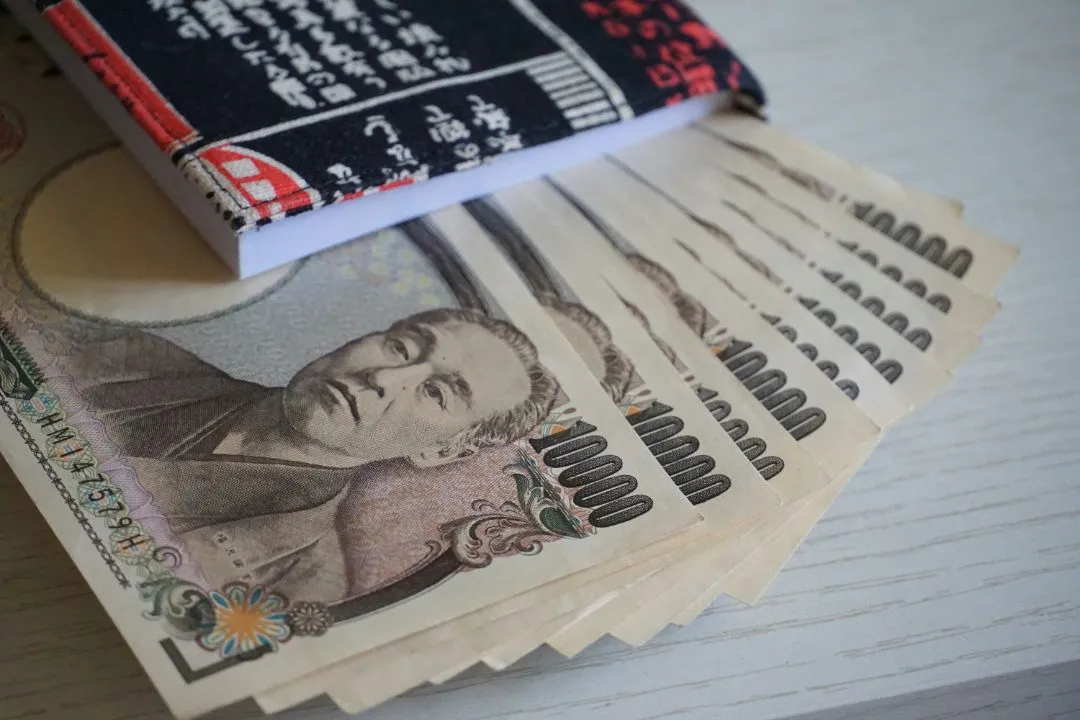
Photo by Conny Schneider on Unsplash


CBDC project involvement

At the core of this emerging international network is Cambodia’s central bank digital currency (CBDC), Bakong, which has garnered increasing attention for its potential to revolutionize digital payments within the region.

Soramitsu has played a pivotal role in facilitating the issuance of Asian CBDCs, supporting both Cambodia’s Bakong and Laos’ Digital Lao Kip. Notably, Bakong has already demonstrated its prowess by facilitating QR code-based digital transactions between Cambodia and neighboring nations such as Malaysia, Thailand, and Vietnam. As of the close of 2022, Bakong boasts an impressive user base of 8.5 million individuals and has facilitated approximately $15 billion in payments.


Replicating Cambodian CBDC success

Tokyo-based news outlet Nikkei reported on Tuesday that the firm’s strategic focus is now on replicating the success of Bakong by enabling comparable cross-border payments between India, China, Laos, and potentially Japan. To this end, Soramitsu’s initial step involves establishing a dedicated Japanese exchange platform for stablecoins.

The envisioned system would enable streamlined transactions between countries, converting payments denominated in one CBDC to a stablecoin pegged to the recipient’s currency.


Low transaction fees

A key advantage of this innovative framework lies in its remarkably low transaction fees. By circumventing conventional interbank networks and intermediary banks, stablecoins can be directly transferred with minimal overhead costs.

Although the precise fee structure for the stablecoin exchange remains under consideration, Soramitsu envisions a nominal charge, likely in the range of tens of yen per transaction — a fraction of the cost associated with conventional cross-border transfers.

While exchanging stablecoins issued on the same blockchain is straightforward, the challenge arises when dealing with stablecoins issued on disparate blockchains. Soramitsu is actively collaborating with Mitsubishi UFJ Trust and Banking, one of the world’s largest financial services groups, and other prominent partners in Japan to develop the intricate exchange infrastructure necessary to facilitate such cross-blockchain transactions.

Japan’s payment landscape received a significant boost in June with the implementation of revisions to the payment law, enabling banks to issue stablecoins. In line with these regulatory changes, local startup JPYC and regional banks are poised to launch yen-denominated stablecoins, some of which are anticipated to debut by 2024.

Soramitsu’s vision for constructing a robust cross-border payment network has culminated in the formation of a dedicated project team. Collaborating with Tokyo-based digital services firm Vivit and the Tama University Center for Rule-making Strategies, Soramitsu is also exploring partnerships with major e-commerce platforms to maximize the network’s reach and impact.

The underlying motivation is to harness the potential of CBDCs and stablecoins to bridge the gap between Japanese small and medium-sized enterprises and individuals and businesses in Southeast Asia. Given the region’s high smartphone penetration and limited access to traditional banking services, this initiative could prove transformative, granting previously underserved populations greater financial inclusion.


More to Read
View All
Web3 & Enterprise·

Jul 20, 2023

Former FTX COO Finds New Role at Sino Global

Former FTX COO Finds New Role at Sino GlobalConstance Wang, previously known for her executive roles at FTX, has recently joined crypto venture capital firm Sino Global Capital.That’s according to sources Bloomberg cited in a recent report as being familiar with the matter. Wang held the role of Chief Operating Officer at FTX and was also the Co-Chief Executive Officer of FTX Digital Markets, the affiliate of the now-defunct crypto exchange, which was based in the Bahamas. Her responsibilities at FTX included overseeing global business expansion, token listings, and public relations and marketing.Following the collapse of FTX and its sister trading firm Alameda Research, Wang has reportedly spent a significant amount of time in China, according to an undisclosed source.Sino Global Capital, founded in 2015 by Beijing-based American investor Matthew Graham, had revealed its early investment in FTX after the exchange’s collapse. The management team stems from a background in consulting, Wall Street, private equity, government, and corporate spheres. A year prior, the venture capital firm launched a $200 million fund with FTX as a key investor. Sam Bankman-Fried, the Founder of FTX, expressed gratitude for Sino Global’s support, stating that they believed in the FTX vision from the beginning and assisted in making it a reality.Photo by Henry Kobutra on UnsplashLawsuitGraham was quite public in his support of FTX and Sam Bankman-Fried. He appeared frequently on podcasts, always explaining that the FTX founder was a genius. On investing in FTX and in projects in general, Graham stated repeatedly that Sino Global maintained a high level of due diligence. Most of the leading venture capital investors in FTX (including Sino Global) have been subject to class action lawsuits filed by creditors. It’s claimed that many of these investors didn’t simply invest capital but also got involved in actively marketing what turned out to be a fraud.In January, the court-appointed management team overseeing the FTX bankruptcy proceedings sought permission to subpoena Wang and other former executives of the company. Court filings indicate that Wang has not been accused of any wrongdoing in relation to the collapse of FTX or Alameda.Prior to her tenure at FTX, Wang briefly worked at the crypto exchange Huobi in Singapore as a Business Development Manager. She also spent two years as an analyst at Credit Suisse.New rolesIn recent months, other former FTX employees have also reappeared in new roles. Amy Wu, who left Lightspeed Venture Partners to lead FTX Ventures, announced her joining Menlo Ventures, one of the oldest venture firms in Silicon Valley. Brett Harrison, former President of FTX US until his sudden resignation in September 2022, has founded a startup with plans to provide a “GPT-4-powered trading algorithm code generator.”The transition of Constance Wang and her fellow FTX alumni into new positions at face value seems like a logical progression. However, all of the FTX c-suite executives remain under ongoing scrutiny. Having brought charges against Bankman-Fried, Caroline Ellison, and Nishad Singh some months ago, Southern District of New York (SDNY) Attorney Damian Williams stated clearly that more arrests would follow.

news
Policy & Regulation·

Mar 06, 2024

Korea Exchange to conduct CBDC pilot test in H2

Amid the heightened excitement about the potential incorporation of virtual assets into the traditional financial system, the Korea Exchange (KRX), the country’s only securities exchange operator, plans to run a pilot test on central bank digital currency (CBDC) transactions using distributed ledger technology (DLT). The pilot test is scheduled in the second half of this year, as part of KRX’s effort to respond to rapidly evolving financial technologies, Yonhap Infomax reported.  The KRX is targeting the carbon trading market for this pilot test, aiming to develop a DLT-driven carbon trading system. The objective of this initiative is to check the feasibility of applying the Delivery versus Payment (DVP) to carbon credit trading facilitated by dedicated tokens. The project will be undertaken in cooperation with the Bank of Korea (BOK), with whom the KRX signed a memorandum of understanding last year to forge digital financial infrastructure. Additionally, the exchange is planning to create a cloud-based settlement and payment system for brokerage and non-brokerage firms.Photo by Marcin Jozwiak on UnsplashLG CNS, an integrated security system provider, and Koscom, a financial IT company, will supervise the CBDC pilot program. They are tasked with conducting a comprehensive assessment of the entire process, from developing the decentralized ledger payment system to assuring its quality.  Broad application of DLTA DLT system records all transactions on a peer-to-peer network and verifies them through every participant. This eliminates the need for a central authority, thereby increasing its reliability and transparency. Currently, the DLT is of particular interest to many financial institutions worldwide, including the SIX Swiss Exchange. These financial institutions are actively experimenting with CBDC to improve the security and efficiency of their DVP settlements.  In particular, the carbon credit market is experiencing a significant integration with the DLT. A KRX official said that the exchange plans to test the maturity of DLT systems and the interoperability between the BOK’s network and those of other organizations. This will evaluate DLT’s effectiveness within the carbon credit market. The person added that this pilot test aims to establish technological standards regarding the CBDC payment and blockchain network registration, which will provide a critical reference for future technical experiments in the industry. 

news
Web3 & Enterprise·

Jun 10, 2025

Metaplanet raises funds to fulfill 2027 Bitcoin goal

Japanese Bitcoin treasury company Metaplanet, whose shares are listed on the Tokyo stock exchange (3350/TYO), has taken an important step towards its goal of holding 210,000 BTC by 2027. ‘Asia’s largest-ever equity raise’The firm’s CEO, Simon Gerovich, took to the X social media platform on June 6 to outline details of what he termed “Asia’s largest-ever equity raise.” Gerovich stated that Metaplanet had raised 770.9 billion yen ($5.4 billion) by means of moving strike warrants, implicating 555 million shares. Moving strike warrants are a type of equity warrant through which the strike price changes over time. Photo by Cullen Cedric on UnsplashGerovich claimed that the warrants were issued at a premium to the market due to Metaplanet’s “high volatility and deep liquidity.” The Metaplanet CEO stated that the firm is targeting 100,000 BTC by the end of 2026 and 210,000 by the end of 2027. On June 2, the firm announced that it had acquired its latest tranche of Bitcoin, adding another 1,088 BTC to its corporate treasury. The company paid an average Bitcoin unit price of 15,519,019 yen ($107,000). Metaplanet has adopted the treasury playbook first pioneered by Michael Saylor’s Strategy (formerly MicroStrategy), acquiring the leading crypto asset through a combination of equity issuance, debt financing and opportunistic buying.  Russell Okung, a former professional American football player and well-known Bitcoin proponent, took to X on June 6 to highlight that Saylor “lit the match” through Strategy in the United States.  Okung stated: “Metaplanet just launched the rocket in Asia. When capital moves, narratives follow.”He added that “Metaplanet didn’t just buy Bitcoin. They’re directing global attention toward Japan.” Both Metaplanet and Strategy have appealed to investors who are otherwise not in a position to gain exposure to Bitcoin directly, either as a result of regulatory issues or concerns with regard to the custody of the digital asset.  Corporate treasuries adopting BitcoinIn addition to these companies who have led first with a Bitcoin treasury as their primary attraction, other corporates have added Bitcoin to their corporate treasuries while maintaining their focus on other business activities.  Announcements have come thick and fast over the course of recent weeks, particularly in the Asian region.  A number of Nasdaq-listed companies, including Hong Kong-based Reitar Holdings, Indonesian fintech firm DigiAsia, Malaysia-based Treasure Global and South Korea-based K Wave Media, have all announced the addition of Bitcoin to their corporate treasuries.  Metaplanet’s new funding round will put it on track to achieve the goal of obtaining 210,000 BTC by 2027, equating to approximately 1% of the entire Bitcoin supply. The Japanese firm’s shares have risen in price by over 275% since the beginning of this year. According to BitcoinTreasuries.net, Strategy remains the largest corporate treasury holder of Bitcoin with 582,000 BTC. It’s followed by MARA Holdings, Twenty One, Riot Platforms, Galaxy Digital Holdings and CleanSpark. Tesla, Hut 8 Mining Corp and Coinbase Global also feature prior to Metaplanet which comes in tenth place.

news
Loading