Top

Metaplanet raises funds to fulfill 2027 Bitcoin goal

Web3 & Enterprise·June 10, 2025, 5:15 AM

Japanese Bitcoin treasury company Metaplanet, whose shares are listed on the Tokyo stock exchange (3350/TYO), has taken an important step towards its goal of holding 210,000 BTC by 2027.


‘Asia’s largest-ever equity raise’

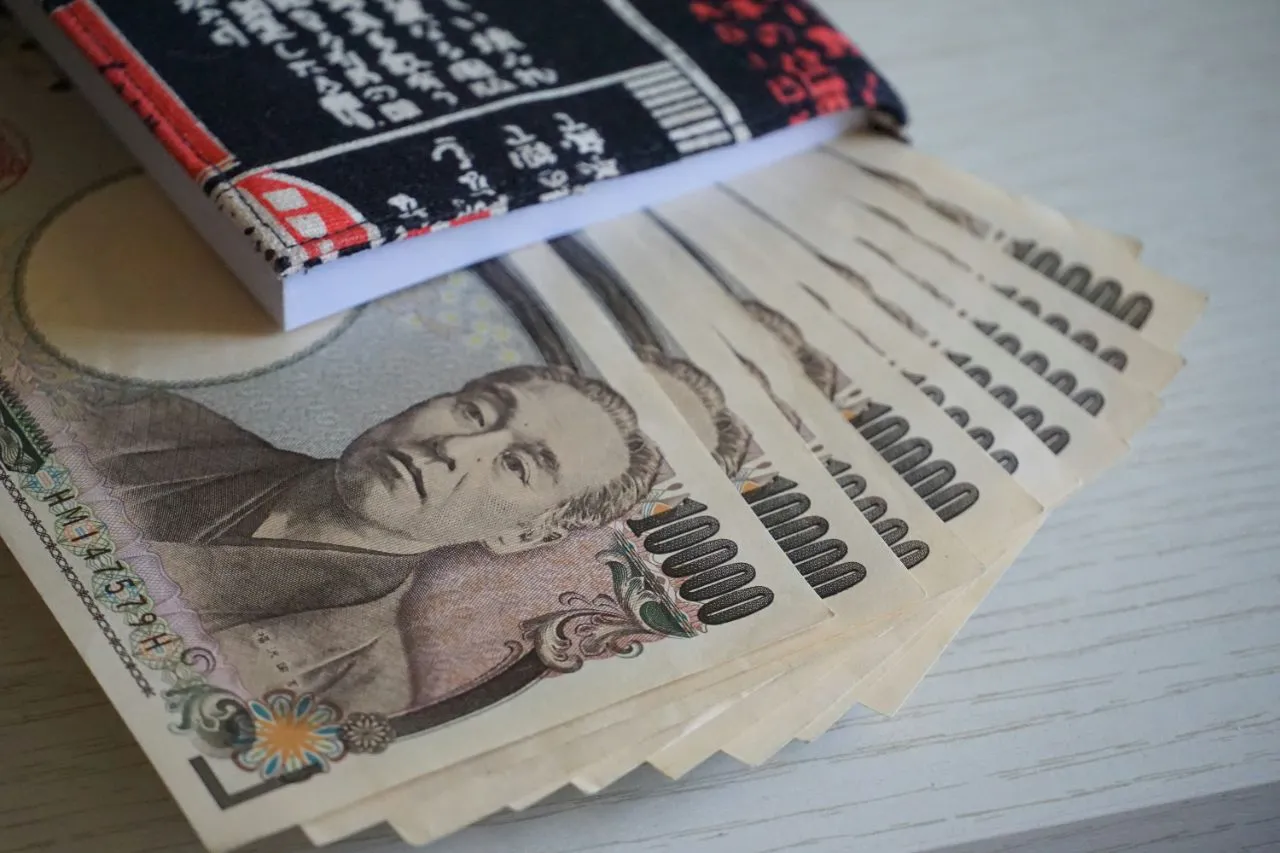
The firm’s CEO, Simon Gerovich, took to the X social media platform on June 6 to outline details of what he termed “Asia’s largest-ever equity raise.” Gerovich stated that Metaplanet had raised 770.9 billion yen ($5.4 billion) by means of moving strike warrants, implicating 555 million shares. Moving strike warrants are a type of equity warrant through which the strike price changes over time. 
https://asset.coinness.com/en/news/6e8bb6216002c99d3d900144f67cfc6d.webp
Photo by Cullen Cedric on Unsplash

Gerovich claimed that the warrants were issued at a premium to the market due to Metaplanet’s “high volatility and deep liquidity.” The Metaplanet CEO stated that the firm is targeting 100,000 BTC by the end of 2026 and 210,000 by the end of 2027.


On June 2, the firm announced that it had acquired its latest tranche of Bitcoin, adding another 1,088 BTC to its corporate treasury. The company paid an average Bitcoin unit price of 15,519,019 yen ($107,000).


Metaplanet has adopted the treasury playbook first pioneered by Michael Saylor’s Strategy (formerly MicroStrategy), acquiring the leading crypto asset through a combination of equity issuance, debt financing and opportunistic buying. 


Russell Okung, a former professional American football player and well-known Bitcoin proponent, took to X on June 6 to highlight that Saylor “lit the match” through Strategy in the United States. 


Okung stated:


“Metaplanet just launched the rocket in Asia. When capital moves, narratives follow.”

He added that “Metaplanet didn’t just buy Bitcoin. They’re directing global attention toward Japan.”


Both Metaplanet and Strategy have appealed to investors who are otherwise not in a position to gain exposure to Bitcoin directly, either as a result of regulatory issues or concerns with regard to the custody of the digital asset. 


Corporate treasuries adopting Bitcoin

In addition to these companies who have led first with a Bitcoin treasury as their primary attraction, other corporates have added Bitcoin to their corporate treasuries while maintaining their focus on other business activities. 


Announcements have come thick and fast over the course of recent weeks, particularly in the Asian region.  A number of Nasdaq-listed companies, including Hong Kong-based Reitar Holdings, Indonesian fintech firm DigiAsia, Malaysia-based Treasure Global and South Korea-based K Wave Media, have all announced the addition of Bitcoin to their corporate treasuries. 


Metaplanet’s new funding round will put it on track to achieve the goal of obtaining 210,000 BTC by 2027, equating to approximately 1% of the entire Bitcoin supply. The Japanese firm’s shares have risen in price by over 275% since the beginning of this year. 

According to BitcoinTreasuries.net, Strategy remains the largest corporate treasury holder of Bitcoin with 582,000 BTC. It’s followed by MARA Holdings, Twenty One, Riot Platforms, Galaxy Digital Holdings and CleanSpark. Tesla, Hut 8 Mining Corp and Coinbase Global also feature prior to Metaplanet which comes in tenth place.


More to Read
View All
Policy & Regulation·

Mar 05, 2024

South Korea investigates Worldcoin for its personal data collection

On Thursday, South Korea’s Personal Information Protection Committee (PIPC) launched an investigation into Worldcoin’s personal data collection, processing and potential overseas transfer of sensitive personal data, the PIPC announced today via its official website. This comes after a number of complaints were filed against Worldcoin for its data collection practices.  Sam Altman’s crypto project Worldcoin gathers people’s personal data who signed up to have their irises scanned by “orbs” devices, which are currently installed in about 10 locations in Korea, including Yeouido, Pangyo and Apgujeong. The project started with the aim of distributing universal basic income to people whose jobs will be potentially replaced by artificial general intelligence (AGI) in the future. Photo by Colin Lloyd on UnsplashThe PIPC said the regulators will examine if any local privacy law has been violated by Worldcoin, and take further action in line with the Personal Information Protection Act. Following the launch of the investigation on Feb. 29, Worldcoin has withdrawn six orbs devices in Korea and stopped accepting new members. It has also suspended the distribution of the Worldcoin token (WLD) to members who have already signed up, media outlet Chosun Biz reported.  Free crypto tokens in exchange for personal data For individuals who have their irises scanned, Worldcoin rewards three WLD tokens every two weeks, which are worth approximately $22.5 (KRW 30,000) at the time of writing. The price of WLD has soared by nearly ten-fold from about KRW 1,300 last year to over KRW 13,000 today, according to the data from the local crypto exchange Bithumb. This price surge followed OpenAI’s launch of a text-to-video AI tool, Sora. The current circulating supply of WLD stands at around 100 million tokens. According to Worldcoin’s white paper, the WLD’s total supply cap will remain fixed at 10 billion tokens during the first 15 years following its launch.  The data collected from the eyeball scanning is shared on the Worldcoin blockchain, which is protected by the zero-knowledge proof technology that prevents the data from being tracked or shared with other applications. The personal data remaining in the orbs devices is deleted.  Ongoing overseas investigation on Worldcoin South Korea is not the only country that is examining Worldcoin’s personal data collection practices. The project’s processing of information has raised concerns in other jurisdictions as well, including the U.K., France, Argentina and Kenya. In the U.S., the issuance of WLD tokens has been banned by the country’s authority. 

news
Web3 & Enterprise·

Jan 31, 2025

Crypto.com launches institutional trading platform in the U.S.

Crypto.com, the Singapore-based cryptocurrency exchange and digital asset brokerage, announced that it introduced an institutional trading platform in the United States. In a statement published on its website on Jan. 21, the company outlined that U.S. institutional and advanced traders can now access the new platform. The firm believes that the offering complements its retail-facing Crypto.com app., which currently serves the U.S. market.Photo by Joshua Hoehne on Unsplash480 trading pairsThe institutional-grade platform will enable access to over 300 cryptocurrencies and 480 trading pairs. The product is likely to appeal to a similar market segment as those clients targeted by the Crypto.com Custody Trust Company, a digital asset custodian, which was established last month. At that time, Crypto.com co-founder and CEO Kris Marszalek said that launching the digital asset custodian was the latest step on the company’s product roadmap, with a view towards building a business and a market presence within the U.S. and Canada.  Responding to this latest product offering, Marszalek stated: “We took the time to build the best possible product for institutional and advanced users around the world and we are now incredibly excited to fully introduce it in the market we continue to be bullish about – the U.S.” Marszalek added that Crypto.com has invested heavily in the exchange’s technological capabilities and banking rails. The Crypto.com CEO believes that this investment has resulted in exponential global growth for the company, with the platform becoming a leading U.S. dollar-supporting exchange. Regulatory tailwindsCrypto.com’s bullishness regarding the U.S. market currently stands in contrast with developments in June 2023 when the company decided to shut down its institutional exchange offering, citing limited demand amid a bleak market landscape for crypto in the United States.  At the time, the company was one of several to look towards opportunities outside of the U.S. Shortly afterwards, Crypto.com obtained a crypto trading license in Dubai. Competitors Gemini and Coinbase followed a similar strategy, looking at growth opportunities in the Middle East and Asia. It’s clear that a regulatory crackdown in the U.S. at that time curbed the expansion plans of many cryptocurrency platforms. Many industry experts are of the belief that there will be a pro-crypto Securities and Exchange Commission (SEC) in the U.S. as part of the newly seated Trump administration.  Regulatory clarity is necessary for institutional involvement in the digital assets sector. Last week, Mark Uyeda, Acting Chairman of the SEC, announced the formation of a crypto task force with the objective of creating a clear regulatory framework for crypto. The U.S. is home to the world’s largest capital markets. A report produced by New York-headquartered blockchain analysis firm Chainalysis late last year identified that 70% of North American crypto transactions involved transfers that had a value in excess of $1 million, pointing to the level of institutional activity within that market.  Earlier this month, Crypto.com added the ability for U.S. platform users to trade stocks and exchange-traded funds (ETFs).

news
Policy & Regulation·

Apr 11, 2023

Dubai Increases Monitoring of Crypto License Holders

Dubai Increases Monitoring of Crypto License HoldersDubai is scrutinizing crypto license holders and license seekers more closely as a direct consequence of the collapse of Bahamas-based cryptocurrency exchange FTX, last year.On Wednesday Bloomberg cited people familiar with the matter who told it that Dubai’s Virtual Assets Regulatory Authority (VARA) has recently requested more information on the ownership structure, governance, and auditing procedures of applicants like global crypto exchange, Binance.©Pexels/Aleksandar PasaricCloser scrutinyAll international companies seeking permits are being asked for similar information. This stricter approach is a potential problem for Binance CEO Changpeng Zhao (CZ), who lives in Dubai and has made it a central point of expansion in the Middle East. The Emirate is attempting to balance fostering innovation with proper oversight of an industry that has been the subject of high-profile scandals in the past year.According to Sam Blatteis, CEO of The MENA Catalysts, which provides government-relations advice to fintech multinationals expanding in the Persian Gulf, “VARA wants to turn Dubai into a capital for the digital-assets economy while safeguarding its business ties with Western jurisdictions like Europe that are adopting more muscular crypto regulations.”CFTC lawsuitIn March, the US Commodity Futures Trading Commission sued Binance and CZ for allegedly violating derivatives regulations, claiming the firm had inadequate compliance procedures. Binance expressed disappointment with the lawsuit.The company claimed at the time that it had provided all necessary information to VARA regarding its ownership structure and external auditor, as well as answering any other queries on a proactive basis. VARA officials are also seeking information on the ownership, auditing, and board procedures at the global group level of Binance.Steering clear of FATFDue to its size and complexity, addressing these queries is taking longer. Binance’s complicated corporate structure includes several holding companies, three of which are named in the CFTC lawsuit, and multiple local entities. In February, a senior executive said Binance was attempting to hire an auditor for its entire balance sheet.Dubai is trying to get off the “gray list” of global money laundering and terrorist financing watchdog the Financial Action Task Force (FATF). To that end, it has cracked down on unlicensed over-the-counter (OTC) crypto exchanges, according to anonymous sources. Dubai belongs within the United Arab Emirates (UAE), with the foreign ministry of the UAE declining to provide any comment on the matter to Bloomberg. Komainu, Hex Trust, GC Exchange and Crypto.com are the four companies, in addition to Binance, that are licensed in the UAE, with the former three having only Preparatory Minimum Viable Product (PMVP) permits.Hex Trust said that providing additional information on ownership, auditing and board procedures didn’t prolong the application process for its Operational MVP license. Laurent Girouille, the head of Komainu’s regional office in Dubai, said the regulatory requirements were stringent. Meanwhile, Binance is awaiting the launch of Binance FZE, which is audited by Mazars and has a board of directors, while it upgrades to an Operational MVP license before applying for a Full Market Product permit.

news
Loading