Top

RaonSecure Partners with Korean Savings Banks to Build Mobile ID Verification System

Web3 & Enterprise·August 08, 2023, 7:32 AM

RaonSecure, a South Korean tech security firm and blockchain solutions developer, announced yesterday its partnership with the Korea Federation of Savings Banks (KFSB) to build a system that verifies customers’ identities through mobile identification cards, according to local news outlet Financial News.

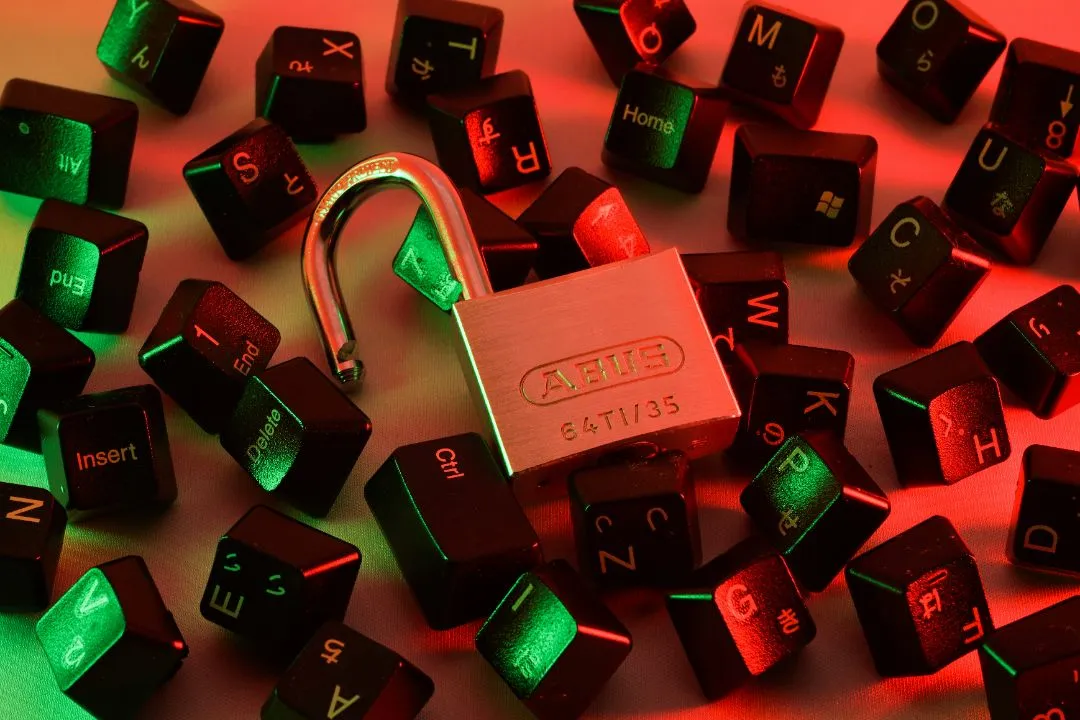
Photo by Brett Jordan on Unsplash


Improving customer convenience

The KFSB has undertaken the establishment of a mobile ID verification system with the goal of improving customer convenience. This system enables mobile ID cardholders to easily verify their identities during the know-your-customer (KYC) procedures of savings banks, whether they are conducted remotely or in-person. In pursuit of this objective, RaonSecure was chosen through a selection process that sought out a company with experience in constructing mobile IDs.


Blockchain-powered DID solution

RaonSecure CEO Lee Soon-hyung said the company has demonstrated its technological prowess by providing cutting-edge services based on its blockchain-powered decentralized identity (DID) platform, OmniOne. These offerings include an application tailored for civil servant IDs, along with an app specially crafted to support citizens who entered or completed military service.

Under this agreement, RaonSecure will develop a system designed to ensure both convenience and security in verifying mobile IDs across the integrated computer network of KFSB’s member banks. The company has future plans to extend its services to individual banks, aiming for wider implementation and utilization.

During the initial phase of the service rollout, verification will be limited to driver’s licenses. However, RaonSecure’s overarching objective is to establish a dynamic and adaptable system capable of accommodating a broader array of identification documents, such as resident registration cards, in the future.

Most Korean commercial banks have already accepted mobile IDs for their identification processes. Other financial institutions, including insurance companies and card companies, are also embracing this trend and introducing similar services. This collective shift is anticipated to expedite the growth and expansion of the industry.

More to Read
View All
Web3 & Enterprise·

Jan 13, 2024

Telcoin makes users whole in exploit recovery

Singapore-regulated Telcoin, a developer of financial applications for mobile users, has successfully restored user balances following an exploit that saw approximately $1.2 million worth of funds transferred from affected accounts.Photo by Martin Sanchez on UnsplashUnauthorized withdrawal of assetsThe incident, which occurred in late December, was attributed to an error in the interaction between Telcoin's digital wallet and a proxy contract on Polygon. In a blog post which was published on Wednesday, the company shared a full post-mortem analysis report which it commissioned Hong Kong-based blockchain security firm BlockSec to carry out, relative to the exploit. The fault in the proxy contract's implementation caused a technical conflict that allowed for the unauthorized withdrawal of assets. Fortunately, no admin keys were compromised, ensuring that the broader Telcoin ecosystem remained unaffected. In response to the security breach, Telcoin took action by immediately freezing the use of its application as a precautionary measure. The team initiated an investigation and committed to releasing updates promptly to address the issue and restore normalcy. The identified address associated with the exploit was 0x35d2775e5f95596509951b140d68fc5b9185ff98. TEL token freefallDespite the initial market turbulence, with the price of the Telcoin (TEL) token plummeting, the cryptocurrency has demonstrated resilience. On Dec. 25, TEL fell from a peak price of $0.00235146 to $0.00122535, representing a 48% decrease. At the time of writing, the price has slightly rebounded, trading at $0.001335. Nevertheless, it's still down 40% over the course of the past month's trading. In a social media direct message to CoinDesk recently, Telcoin's founder and CEO, Paul Neuner, expressed pride in how his team responded to the issue, stating: “Making the decision to preemptively restore affected user wallets from our company treasury was a no-brainer, and I’m proud of the team for making that happen in record time.” Regulatory standingTelcoin's regulatory standing played a crucial role in instilling confidence during this challenging time. Although headquartered in Tokyo, the company is regulated in Singapore as a Major Payment Institution (MPI) by the Monetary Authority of Singapore (MAS). The firm is also registered and regulated in other global markets, including Canada and Australia. Telcoin maintains offices in Singapore, Tokyo, Dubai and Los Angeles. The company had been active in trying to shape regulation in the United States in 2023, with company executives having made repeated visits to Washington D.C. to meet with Financial Services Committee members and staffers on Capitol Hill. In April of last year, the company extended its service offering to the European market, starting out initially in Lithuania.It appears that the restoration of Telcoin's application services led to a significant boost in user confidence. The company reported a 400% increase in deposits compared to the previous month. Users responded favorably to Telcoin's swift resolution of the security breach, with a ratio of $3.60 being deposited for every $1 withdrawn in the first day since the service restoration. Telcoin's measures, collaboration with security experts and the surge in user deposits appear to have resulted in a resilient recovery. The saga highlights the importance of prompt and transparent responses in maintaining trust in the face of crypto security issues.  

news
Policy & Regulation·

Sep 19, 2023

HKMA Issues Warning Against Crypto Firm Misrepresentation

HKMA Issues Warning Against Crypto Firm MisrepresentationThe Hong Kong Monetary Authority (HKMA), the central bank for the Chinese autonomous territory, has taken a stand against cryptocurrency businesses that falsely present themselves as “banks” and market their products as “deposits,” issuing a public advisory to raise awareness about the issue.Photo by Marcel Eberle on UnsplashBanking ordinance violationsIn a press release published to its website on Friday, the HKMA said that instances had arisen where crypto firms had labeled themselves as “crypto banks,” “crypto asset banks,” and “digital trading banks.” The regulatory authority underscored that such misrepresentations could be in violation of the Banking Ordinance in Hong Kong.In addition to adopting misleading bank-related titles, these crypto firms have been advertising “savings plans” as “low risk” with “high return,” potentially misleading the public into believing that these entities are authorized banks in Hong Kong, where they can securely deposit their funds.The HKMA stressed that only entities such as licensed banks, restricted license banks, and deposit-taking companies, collectively referred to as “authorized institutions” and holding a license granted by the HKMA, are legally permitted to engage in banking or deposit-taking activities in Hong Kong.Furthermore, funds held on crypto exchanges are not covered by Hong Kong’s Deposit Protection Scheme. “Under the Banking Ordinance, only licensed banks, restricted license banks and deposit-taking companies, which have been granted a license by the HKMA can carry out banking or deposit-taking business in Hong Kong,” the HKMA stated.Misuse of banking termsAny entity using the term “bank” in its business name or implying that it offers banking services in Hong Kong is committing an offense, according to the central bank. The same rule applies to any entity engaging in deposit-taking activities in Hong Kong or soliciting the public to make deposits.It’s important to note that crypto firms not officially recognized as banks in Hong Kong are not subject to the oversight of the HKMA.The HKMA advised the public to exercise caution. In cases of uncertainty regarding an entity claiming to be a bank or soliciting deposits in Hong Kong, individuals are encouraged to consult the register of authorized institutions on the HKMA’s website, and if doubts persist, it suggests that they should contact the authority via its Public Enquiry Service hotline.According to section 97 of the Banking Ordinance, only a bank or a central bank can use the term “bank” or its derivatives in its business name in Hong Kong without the written consent of the HKMA.Additionally, sections 11 and 12 of the Banking Ordinance stipulate that only entities possessing a valid banking license or recognized as authorized institutions are permitted to engage in banking or deposit-taking activities in Hong Kong. As per section 92 of the Banking Ordinance, only an authorized institution is authorized to issue advertisements inviting the public to make deposits, with certain exceptions.The HKMA’s advisory serves as a stern reminder to the crypto industry that regulatory compliance and transparency are essential, particularly when using terms associated with traditional banking, to protect the interests of the public.

news
Policy & Regulation·

Aug 08, 2023

LH Leverages Blockchain to Certify Legally Important Documents

LH Leverages Blockchain to Certify Legally Important DocumentsThe Korea Land and Housing Corporation (LH) is set to build a certification platform to replace paper documents as the sole form of legal certification. The initiative aims to bring the credibility of traditional methods like contents-certified mail to electronic documents by leveraging blockchain technology.Photo by Liam Truong on UnsplashContents-certified mail — transitioning from postal to digitalContents-certified mail refers to a specific type of mail service provided by the post office, which offers special guarantees regarding the delivery and content of a document. When a document is sent using contents-certified mail, the post office provides certain assurances that can be beneficial in legal and official contexts.Amidst the rise in demand for digital administrative services due to increased remote technologies in the post-COVID-19 era, the ongoing expansion of Web3, and enhanced customized administration, there has also been a growing need for the digitization of documents related to compensation for land and buildings.According to industry sources, LH plans to automate document transmission and management functions through the platform, establishing a digital environment for generating, sending, receiving, viewing, and storing electronic documents.Factoring in blockchain techA key feature of the proof platform is its integrated blockchain technology. “Utilizing blockchain allows accurate documentation of LH as the sender, as well as the timestamps of delivery and reception. This will subsequently enhance transparency and security,” LH said.Going paperlessBy establishing the digital platform, LH will be able to introduce a more convenient method of sending legally significant documents, essentially replacing the manual method of sending them through postal services. This could include sending them via platforms used nationwide like Naver or KakaoTalk or through text messages sent by the country’s major telecommunication companies.This innovation can contribute to the proliferation of paperless methods, addressing the expected increase in postal delivery failures tied to the rise of single-person households.“By constructing this platform, we can better protect user rights and provide administrative services that transcend the temporal and spatial constraints of registered mail,” LH said. “We will broaden our legal, institutional, and technical discussions to innovate processes for verifying the validity of electronic documents.”The project is currently in operation in certain areas related to compensation. According to LH, the plan is to expand the project’s scope to encompass all areas of compensation by next year and then to other areas such as the management and sale of rental apartments.The corporation said that it posted a bidding notice last Wednesday to hire a company that can build the blockchain-powered platform that certifies legally important documents. LH is currently undergoing a selection process.Employing smart contractsLH also mentioned that it is preparing a smart contract system. The system programs the terms agreed upon by involved parties in advance, embeds them in an electronic contract, and enables automatic execution of the terms of the contract when all conditions are met.

news
Loading