Top

Ripple and the Republic of Palau Collaborate to Mint First PSC Stablecoin

Policy & Regulation·July 27, 2023, 12:10 AM

In a groundbreaking partnership, the Republic of Palau has teamed up with Ripple Labs to introduce its inaugural stablecoin, the Palau Stablecoin (PSC).

This occasion was shared by Jay Hunter Anson, the Director of Palau’s Digital Residency Program and a member of Palau’s Ministry of Finance, who took to Twitter on Wednesday to shed light on the collaboration between the Palau National Treasury and Ripple Labs.

The event unfolded at the National Capitol in Ngerulmud, Palau, where representatives from both the Palau National Treasury and Ripple gathered to celebrate the successful launch of the Palau Stablecoin. Anson emphasized that this marks a significant step in their joint exploration of the stablecoin’s potential use cases within the Micronesian island nation.
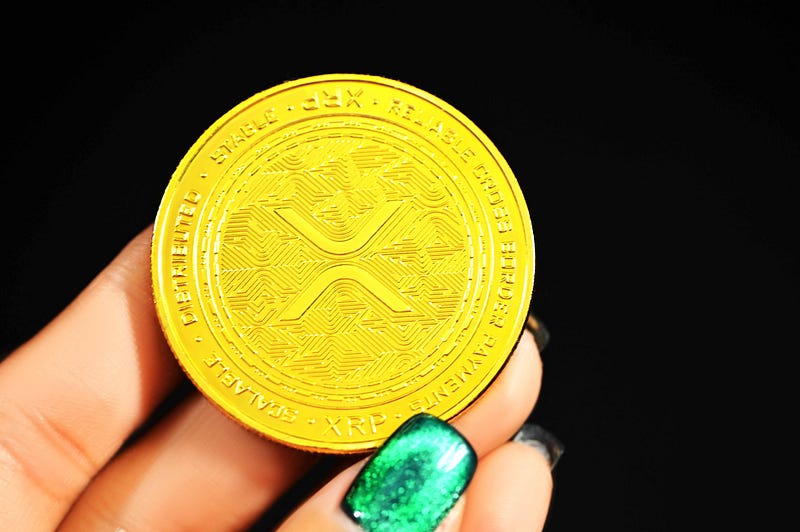
Photo by Kanchanara on Unsplash


Reducing payment costs

Palau’s Ministry of Finance initiated the Stablecoin project to address specific needs within the nation’s financial landscape. By sponsoring this project, the ministry aims to reduce payment costs within the Republic of Palau and enhance access to financial services, especially for underserved communities and various socio-economic groups, utilizing digital solutions.

Notably, the Palau Stablecoin operates on the XRP Ledger (XRPL), demonstrating Ripple’s technology as the backbone of this financial initiative.

Anson’s tweets also shed light on the meticulous approach taken in developing the Palau Stablecoin. Controlled and limited PSC pilot tests have been conducted to assess the effectiveness and efficiency of the solution co-designed with Ripple. These pilot experiments provide valuable insights into the stability and usability of the Palau Stablecoin before its potential public release.


Extensive testing

Already, the Palau Stablecoin pilot program has seen volunteer users actively participating in the testing phase. Videos shared by Anson on Twitter showcased smooth transactions at partner vendors in Palau, promptly confirming the transaction receipts.

The successful implementation of the Palau Stablecoin pilot program has drawn attention from the XRP community, and anticipation is building for the official joint press release scheduled for July 27, Thursday morning in Ngerulmud, Palau, as Anson revealed.

The collaboration between Ripple and the Republic of Palau was initiated at the end of 2021, with launch originally scheduled to take place in 2022. Ripple has claimed to be in dialogue with in excess of twenty governments relative to enabling central bank digital currency (CBDC) issuance.

Given that the island state lacks a functioning central bank and the US dollar is recognized as the primary medium of exchange throughout the country, the creation of a USD-backed stablecoin is a significant achievement resulting from the national stablecoin initiative. The president described this as a “step towards our own central bank digital currency.”

There has been plenty of activity in Micronesian nations relative to cryptocurrency in recent times. Tonga is understood to be considering introducing bitcoin as legal tender. The Marshall Islands is considering issuing a CBDC although it is being discouraged by the International Monetary Fund (IMF) in that endeavor. Meanwhile, the government of Vanuatu announced its support for the Satoshi Island project.

With a strategic focus on addressing financial needs and enhancing accessibility within Palau, this partnership sets the stage for a new era of digital financial solutions for the Micronesian nation.


More to Read
View All
Policy & Regulation·

Jun 01, 2023

Korean Crypto Exchange Alliance Reveals Standardized Regulation Guidelines

Korean Crypto Exchange Alliance Reveals Standardized Regulation GuidelinesThe Digital Asset eXchagne Alliance (DAXA), consisting of five leading cryptocurrency exchanges in South Korea, today revealed standardized regulation guidelines, according to a report by news media The Asia Business Daily.Photo by Nick Fewings on UnsplashStandardized guidelinesTwo important documents — the standardized internal control framework and the code of conduct and ethics — were released by DAXA today. These documents were developed based on data provided by financial investment firms and member exchanges. Reviewed by DAXA members and advisors, this documentation represents a significant milestone as it is the first of its kind to address the unique characteristics of the crypto industry. The establishment of unified rules and regulations through the collaborative efforts of the member exchanges stands as a commendable achievement.Internal control frameworkThe internal control framework consists of five parts, encompassing a total of 68 articles. These parts cover general provisions; governance of virtual asset service providers (VASPs); organization and standards for internal control; compliance officers and internal control system management; and compliance details.Code of ethicsThe code of conduct and ethics comprises five chapters with 24 articles. These chapters focus on general provisions, customer ethics, employee ethics, corporate management ethics, and societal ethics.DAXA Vice Chairman Kim Jae-jin expressed optimism that these guidelines will serve as a valuable reference for all VASPs, fostering the development of a fair, trustworthy, and globally competitive crypto market.DAXA’s websiteLast month marked the launch of DAXA’s official website, and their YouTube channel has been active since January. The alliance is made up of five member exchanges: Gopax, Bithumb, Upbit, Korbit, and Coinone. At the helm of the alliance is Chairman Lee Sirgoo, who concurrently serves as CEO of Dunamu — the company operating Upbit, the largest cryptocurrency exchange in the nation.

news
Web3 & Enterprise·

Oct 04, 2024

Circle moves towards further APAC expansion via MHC Digital partnership

MHC Digital Group, an Australian digital assets management platform, has entered into a partnership with USDC stablecoin issuer Circle Internet Financial, with a view towards increasing the circulation of USDC within Australia and the Asia-Pacific (APAC) region. MHC was founded by well-known venture investor Mark Carnegie, with the company having offices in Sydney and Singapore. The firm will work with Circle to distribute USDC in Australia and within the APAC region. MHC has been marketing its services towards institutional investors and it’s that same client group that the two firms want to target in order to increase USDC circulation. The firm will provide “cost-effective and efficient USDC access” where institutional clients are concerned.Photo by Catarina Sousa on PexelsCrypto ‘a better mousetrap’ In a media release published on behalf of the two companies, Carnegie claimed that while many people still claim that there is no use case for crypto, hundreds of billions move globally at a fraction of the cost experienced via the traditional financial system. “Crypto is simply a better mouse trap for the vast majority of international payments,” he added. Commenting on the development in an interview with the Australian Financial Review, Carnegie stated:“I’m hoping we can show there are hundreds of millions of dollars of forex [foreign exchange] trading fees, where super funds are getting their faces ripped off by Macquarie Bank and the other incumbent banks.” Appealing to pension funds Carnegie wants to get large pension funds on board in using USDC. He pointed to the fact that global banks make $170 billion from corporations and individual investors through the movement of funds over the SWIFT network. He can see that major savings can be made if USDC is used relative to these fees. Despite all this, Carnegie acknowledges that it will be a hard sell to get them on board. As part of these plans, MHC Digital will be launching an over-the-counter (OTC) trading desk, which will be targeted towards hedge funds, crypto enterprises and high-net-worth individuals. APAC opportunity Kash Razzaghi, Circle’s chief business officer (CBO), identified APAC as presenting with an adoption opportunity beyond institutional clients. Razzaghi stated: “With its young, mobile-first and digital wallet-ready population, the Asia Pacific region is ahead of the curve when it comes to digital asset adoption." Carnegie appears to be similarly enthusiastic when it comes to the APAC region. In an interview with CNBC back in January, he suggested that the crypto bull run was “an Asian story this time round.” It’s understood that the two companies are also considering collaborating on the issuance and distribution of an Australian dollar (AUD) denominated stablecoin. This development is the latest in a string of initiatives taken by Circle to bring about USDC adoption in the APAC region. In 2023 the company partnered with SBI Holdings with the objective of enhancing the circulation of USDC within the Japanese market. The very same rationale resulted in it partnering with Tokyo-based crypto trading platform Coincheck in February 2024. The company has also tried to trigger adoption at a retail level, through collaborations with FamilyMart convenience stores in Taiwan and Southeast Asian super app Grab. 

news
Web3 & Enterprise·

Jan 25, 2024

Tokenpost and PUNKPOLL launch open beta service for Web3 news polling service

Tokenpost, a South Korean media outlet covering news on blockchain and crypto, launched the open beta version of its Web3 news polling service jointly developed with PUNKPOLL – a voting and polling platform based on the MINA protocol – that provides random surveys based on daily news for readers to participate in.Photo by Element5 Digital on UnsplashProviding the backbone for digital democracyThe polling service utilizes MINA's zero-knowledge blockchain (zkBlockchain) technology to protect personal information and operate an independent news polling system free from centralized management. It aims to realize the core values of direct democracy in the digital realm by enabling readers to express their opinions through polls. Users’ identities are verified through PUNKPOLL’s Social Graph Authentication, a decentralized method where multiple users mutually verify each other’s identities. The service is most easily accessible through the KakaoTalk messaging app. Readers who participate in the survey will be rewarded with Tokenpost Tickets and PUNK tokens. Tokenpost Tickets can be used to enter prize sweepstakes via the Ticket Store, and PUNK tokens can be exchanged for MINA tokens at a 1:1 ratio starting from a minimum of 5 PUNK tokens.  This collaboration between Tokenpost, PUNKPOLL and MINA Protocol is expected to be an important step in introducing a new model of direct democracy for the digital age. About Tokenpost and PUNKPOLLTokenpost was founded in February 2017 as the first blockchain-focused media outlet in South Korea. It has been providing key information on the blockchain and cryptocurrency market. In 2018, it was the first media enterprise in the world to introduce a news platform that offers user rewards, and in 2019, it preemptively released a system for blockchain notarization of news articles, leading the way in utilizing Web3 technology in the media industry. PUNKPOLL is known for its secure and transparent decentralized voting platform that leverages distributed technology and the MINA protocol, allowing users to participate anonymously and reap the benefits of direct democracy. The company aims to resolve the problems of the existing voting system in an innovative way.

news
Loading